
Peter Thiel’s 477-acre property at Damper Bay on Lake Wānaka is one of the better-known data points in the billionaire doomsday prepping conversation. The PayPal co-founder, worth around $17 billion, paid NZ$13.5 million for the property in 2015. But the property that makes the sharpest argument for how seriously the ultra-wealthy are taking civilizational risk sits underground, not in New Zealand. A $300 million complex is opening in Virginia this year – built to house 625 people in underground suites staffed by robots and equipped with AI-powered medical suites. The people buying into it are not fringe preppers. They are among the most powerful individuals on earth.
The question worth asking is not whether billionaire doomsday prepping is real. The evidence is extensive. The more unsettling question is what it reveals about how the people who have done the most to shape our economic and technological systems actually assess the state of the world – and what they plan to do about it.
Their answer, increasingly, is: build a bunker. And that choice is a political one, whether or not it is framed that way.
The Scale of Billionaire Doomsday Prepping Is Staggering
In the summer of 2026, a Virginia-based firm called Safe (Strategically Armored & Fortified Environments) is unveiling Aerie, its flagship underground complex near Washington, D.C., at a construction cost of $300 million. The project plans to expand to a network of luxury doomsday residential bunkers across 50 U.S. cities, with 1,000 affiliate locations worldwide. Residences can cost up to $20 million each. Aerie is not a product for survivalists buying freeze-dried food in bulk. It is a product for a class of people so wealthy that spending $20 million on a contingency plan barely registers as a line item.
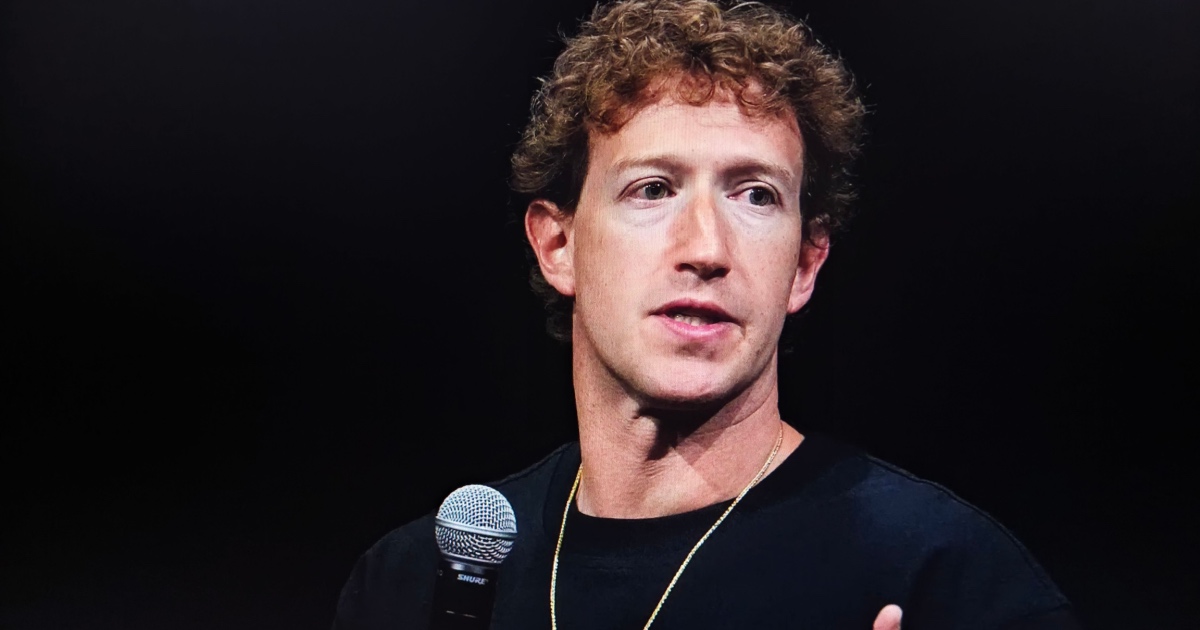
Mark Zuckerberg is building an underground bunker on the remote Hawaiian island of Kauai as part of a broader 1,400-acre compound. He has described it as “just like a little shelter.” According to plans reported by Hawaii News Now and confirmed by Wired, the structure spans around 4,500 square feet, includes roughly seven bedrooms, and is sealed behind a blast-resistant door reached by an underground access tunnel. PayPal co-founder Peter Thiel purchased a 477-acre property at Damper Bay on Lake Wānaka for NZ$13.5 million in 2015, with plans for a bunker-style compound embedded in the hillside.
These are not isolated cases. Reid Hoffman, co-founder of LinkedIn, told The New Yorker in 2017 that more than 50% of Silicon Valley billionaires had acquired some form of “apocalypse insurance,” often in the form of nuclear-hardened properties or land in New Zealand. That estimate has only been reinforced by what builders have reported since. By 2025, firms in the luxury bunker market were describing surging demand from celebrities and CEOs, with some reporting order volumes several times higher than a decade prior.
New Zealand has become the destination of choice. According to a 2020 CNN report, Rising S Bunkers, a Texas-based manufacturer, had delivered around 10 private bunkers to New Zealand in the years prior, while Vivos claimed to have installed a 300-person bunker on the country’s South Island. As of April 2025, New Zealand’s government allows wealthy individuals to qualify for residency by investing at least NZ$5 million to NZ$10 million – a golden visa essentially designed for people hedging against civilizational collapse in their home countries.
What the Billionaires Are Actually Afraid Of
Media theorist and CUNY professor Douglas Rushkoff got an unusually direct look at this fear. In his book Survival of the Richest: Escape Fantasies of the Tech Billionaires, he describes being invited to speak to some of the world’s wealthiest people about the “future of technology.” When he arrived, he found himself answering one urgent question from five extraordinarily powerful men: How do I survive what’s coming? These billionaires were asking how to insulate themselves from the social unrest, climate change, and technological disruption that their own ventures had helped to cause – with solutions ranging from fortified bunkers to escape plans for New Zealand to launching into space.
Hoffman has said that for many in this world, the worry is specifically that AI may lead to vast unemployment, and that public opinion might turn against Silicon Valley bosses to the extent it’s no longer safe for them. The question being asked, in Hoffman’s own words: “Is the country going to turn against the wealthy? Is it going to turn against technological innovation? Is it going to turn into civil disorder?”
They are not primarily afraid of asteroids or pandemics. They are afraid of us – of the people below them on the wealth ladder, and of the social consequences of the inequality they have helped build. That fear is an implicit acknowledgment that the current distribution of wealth and power is indefensible, and that they know it.
The Numbers That Make the Bunkers Obscene
According to Oxfam International, billionaire wealth surged by $2 trillion in 2024, equivalent to $5.7 billion per day, as global inequality reached levels that researchers were struggling to find historical precedents for. The wealthiest 10% of the world’s population controls roughly three-quarters of all global wealth, while the bottom half holds just 2%.
The people buying $20 million bunker suites exist at the absolute apex of a structure so lopsided it barely resembles a distribution. One year of wealth accumulation at the top funded the Aerie bunker complex more than six times over, with change to spare. The argument that these individuals cannot afford to invest in the systems that might prevent the catastrophes they fear is not credible. The choice is not between survival and bankruptcy. It is between personal escape and collective investment, and they are choosing escape.
In Rushkoff’s own original 2018 essay – which became the foundation for his book – he identified the belief underpinning all of it: that with enough money and technology, you can insulate yourself from the problems you are creating with money and technology. That is a fantasy, and not a harmless one. It licenses continued extraction by reframing the consequences as a logistics problem rather than a moral one.
The Strongest Argument for the Other Side
The counterargument is not trivial. Wealthy people face genuine and disproportionate security risks. They are targets for kidnapping, political violence, and organized crime in ways that ordinary people are not. Building secure facilities is, in part, a rational response to those specific threats – not necessarily a statement about civilization’s imminent collapse.
A secure compound and a doomsday bunker can occupy the same structure. Not every blast-resistant door signals a belief that democracy is about to fail. There is also a version of the argument that says private preparedness reduces the burden on public emergency systems. If the ultra-wealthy can sustain themselves through a grid failure or a pandemic, they’re not competing with everyone else for limited public resources.
These points don’t hold under pressure, though. Massive, well-publicized underground complexes would almost certainly become targets in any real societal breakdown, as people without preparation look for food and shelter. Rushkoff reported that the billionaires he met were already aware of this problem – one had lined up a dozen ex-Navy SEALs to guard his compound on command. But they also worried about how to keep those guards loyal once money stopped holding its value.
Security guards don’t stay loyal in a collapsed civilization because their employer has a nicer bunker. Social trust, community resilience, and functional institutions are the things that actually protect people when systems fail – and those require investment in the world outside the blast doors, not inside them.
Why This Is Everyone’s Problem, Not Just a Wealth Story
Rushkoff argues in Survival of the Richest that these escape plans are symptoms of a deeper delusion: the belief that money and technology can insulate the ultra-wealthy from the interconnected systems on which all human life depends. The delusion has a cost beyond the moral one.
When the people with the most capital, the most political access, and the most technological leverage decide that the correct response to systemic risk is private escape, they withdraw from the project of collective repair. They stop having skin in the game of civilization. A society where the most powerful actors are actively planning to leave is a society that will not be fixed. Why patch a roof you’re planning to abandon?
Rushkoff calls the underlying philosophy “The Mindset” – a Silicon Valley-style certainty that technology and wealth can break the laws of physics, economics, and morality to escape a disaster of their own making. The bunkers are not the cause of this mindset. They are its most literal physical expression. The real problem is the worldview that treats human civilization as an externality – as someone else’s problem once the blast doors are sealed.
The wealth gap between the ultra-wealthy and everyone else has been widening for decades, but billionaire doomsday prepping represents something qualitatively new: the formalization of that gap as a survival strategy. The wealthy are not just living differently from the rest of us. They are planning to survive differently. That ought to change how the rest of us think about what we owe each other – and what we have a right to demand.
What This Means for the Rest of Us
The risks being hedged against – climate instability, AI disruption, social unrest – are real. They affect all of us, regardless of net worth. Mocking billionaires for being afraid of them misses the point entirely.
The point is that billionaire doomsday prepping, at the scale we’re now seeing, is a political statement dressed up as a real estate decision. It says: I have given up on the shared project. I am going to protect my family and let the rest of you work it out. Every dollar spent on a $20 million underground residence is a dollar that will not fund the renewable energy transition, the retraining programs, the mental health infrastructure, or the democratic institutions that might make the catastrophic scenarios less likely in the first place.
The scale of what’s being built – from Aerie’s Washington, D.C. opening this year to Zuckerberg’s Kauai compound to Thiel’s New Zealand retreat – tells us something precise about where we are as a society. The people with the clearest view of the risks are choosing the most individualistic possible response. And they’re doing it with enough money to have chosen otherwise.
What This All Means
Awareness matters here, because the political and economic consequences of billionaire exit from collective life don’t stay contained to the people doing the exiting. When those with the greatest resources opt out of shared systems, those systems deteriorate faster for everyone who remains. Public infrastructure, democratic accountability, and social trust are all commons – they weaken when the most powerful members of society treat them as optional.
The practical implication is straightforward: pay attention to where concentrated wealth goes. Philanthropic investment in climate resilience, workforce transition, and community infrastructure is not equivalent to building a bunker, even if both are funded from the same fortune. Citizens, journalists, and policymakers who track how the ultra-wealthy allocate capital will have a better picture of how seriously the people at the top actually believe the threats they claim to fear – and whether they are investing in solutions or just in their own survival.
Read More: Why Do Rich People Live Longer? The Science Behind the Wealth-Health Gap
Disclaimer: This information is not intended to be a substitute for professional financial advice, investment advice, tax advice, or legal advice, and is provided for informational purposes only. Always seek the guidance of a qualified financial advisor, accountant, or other licensed professional regarding your personal financial situation or investment decisions. Do not make financial, investment, or tax decisions based solely on information presented here. Past performance is not indicative of future results, and all investments carry risk, including the potential loss of principal.
AI Disclaimer: This article was created with the assistance of AI tools and reviewed by a human editor.