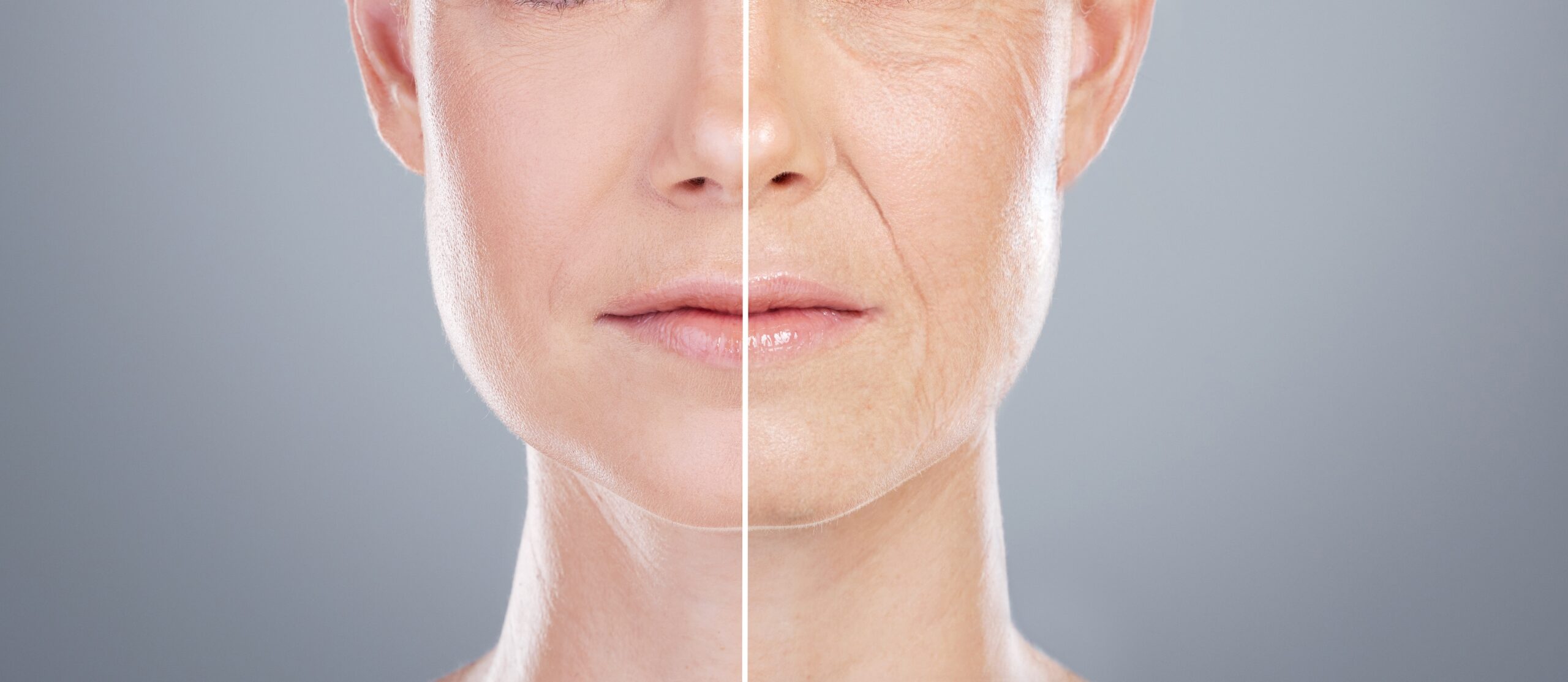

A 93-year-old woman living in public disaster-relief housing in Rikuzentakata, a coastal city in Iwate Prefecture, Japan, went in for a routine health check in September 2023. The nurse conducting the exam suspected his equipment had malfunctioned. He rechecked the readings against those of other patients at the center. Everything else was normal. The machine was fine. The numbers were just that hard to account for.
Her name is Hide Sato. The health check, later noted by The Asahi Shimbun, found that her basal metabolic rate – the calories her body burns at rest – placed her in the range of a woman in her mid-thirties. Her vascular measurements were equally striking. At 93, her arteries showed the functional profile more typical of someone in her twenties.
The story went viral across Japan and beyond, and with it came the inevitable simplification: a 93-year-old with a “biological age” of 36. That headline requires one significant qualification.
What “body age” actually measures
“Biological age” and “chronological age” are not interchangeable terms, but they are constantly treated as though they are. Chronological age counts the years since your birth. Biological age tries to capture how your cells, tissues, and organ systems are functioning relative to what’s typical for your years. The number it produces depends heavily on which test you use.
A 2024 literature review in Frontiers in Aging found no consensus on how biological age is best measured, and noted that different methods may yield different results for the same person. Epigenetic clocks examine chemical modifications on DNA. Vascular metrics look at arterial stiffness. Basal metabolic rate reflects how much lean muscle mass a person carries, since muscle is a critical tissue for metabolism and thermogenesis.
What Sato’s check reportedly measured – her basal metabolic rate and vascular age – captures two meaningful things. It does not tell us her cellular aging rate, her epigenetic profile, or dozens of other systems that contribute to overall health. A different test on the same day might have produced a different number. Sato is one person, not a clinical trial. Her result is striking and worth examining, but it is not proof that she literally has the physiology of a 36-year-old across the board, or that any single habit directly caused what was measured.
Her daily habits, however, map closely onto what the research literature on healthy aging consistently supports – and that is where the useful information lies.
Movement, without the gym
Hide Sato has never used a gym. She describes no structured workout program. Every morning at six, she follows NHK’s national radio calisthenics broadcast – slow, rhythmic, full-body stretching and movement. Every evening around 11 PM, she soaks in a warm bath and kicks her legs 500 times. Given a choice between stairs and an elevator, she takes the stairs. Always.
Exercise physiologists call this kind of accumulated daily movement NEAT – non-exercise activity thermogenesis, the energy the body burns through all physical activity beyond deliberate exercise. Research published in the Journal of Exercise Nutrition and Biochemistry shows NEAT can account for anywhere from 15 to 50 percent of total daily energy expenditure. It varies between individuals by up to 2,000 kcal per day, according to a study in Arteriosclerosis, Thrombosis, and Vascular Biology. Sato’s constant low-level movement – stairs, walking, morning calisthenics, nightly bath exercises – accumulates in exactly this way.
The stair habit alone carries meaningful cardiovascular weight. A 2024 meta-analysis in the European Journal of Preventive Cardiology found that stair climbing was associated with a 39% lower risk of cardiovascular disease death and a 24% lower risk of all-cause mortality, across a pooled analysis of more than 455,000 participants.
Her bathing exercises are an effective form of resistance training for her lower body. A 2025 systematic review of aquatic exercise in older adults found that water-based exercise significantly improved balance, stiffness, and walking ability. The warm water reduces joint stress while the resistance keeps her leg muscles working – the same muscle groups most vulnerable to age-related decline.
Low skeletal muscle mass is associated with a 57% increased risk of all-cause mortality, according to a 2023 study in PLOS ONE. Sato’s daily movement – bath exercises, morning calisthenics, and stair climbing – addresses this risk without a single barbell.
For a practical benchmark: climbing more than five flights of stairs per day has a measurable association with reduced cardiovascular risk. Starting there requires no equipment and no schedule.
What she eats – and what she avoids
Sato eats traditional Japanese food: fish, rice, vegetables, fruit, and fermented staples like miso. She doesn’t rely on supplements or specialty health products. She consciously limits salty foods and fried foods.
This pattern mirrors what large-scale research on the traditional Japanese diet consistently finds. A 2022 systematic review and meta-analysis published in Nutrients found that higher adherence to the Japanese dietary pattern was associated with a 20% reduction in stroke mortality risk and a 19% reduction in heart disease mortality risk, across prospective cohort studies covering hundreds of thousands of participants. Much of that benefit is attributed to high fish intake, which supplies substantially more omega-3 fatty acids per day than typical Western diets.
A 2025 study in Signal Transduction and Targeted Therapy examined how lifestyle and physiological risk factors – including hypertension, hyperglycemia, and sedentary behavior – accelerate the gap between chronological and vascular age. Sato’s diet systematically avoids several of the highest-risk inputs, including high-sodium foods that elevate blood pressure.
Identifying the highest-risk elements in your own diet – excess salt and deep-fried foods are a reasonable starting point – and reducing them consistently over time is what the evidence supports. Wholesale replication of every detail of a traditional Japanese diet is not required.
The brain stays busy
During the day, Hide Sato sews and makes dolls. She reads physical magazines. She visits a day care center once a week, interacts with people, and stays engaged with the routines of everyday life.
A 2025 study in Nature Communications found that engaging in creative experiences – music, dance, visual arts – can slow brain aging and promote healthier brain function. Researchers across 13 countries examined brain data from more than 1,400 participants and found that sustained engagement in creative activities was consistently associated with measurably younger-functioning brains.
Sewing demands fine motor coordination, spatial reasoning, sustained attention, and pattern recognition simultaneously. These demands build and maintain cognitive reserve – the accumulated density of neural connections that acts as a buffer against decline. The Sanders-Brown Center on Aging at the University of Kentucky includes challenging crafts, arts, and games among the brain-health activities its Brain Health Activities program recommends, based on research into keeping the brain active.
Sato also barely uses a smartphone, keeping her attention largely undivided during the activities she engages in. Sustained, focused engagement with demanding tasks is what builds and maintains the neural infrastructure associated with cognitive resilience in older age.
Read More: 9 Habits of The Longest-Living People In The World
Sleep as a consistent anchor
Sato maintains a consistent sleep routine. She goes to bed and wakes at roughly the same time each day, with her 11 PM bath-exercise ritual serving as a nightly wind-down signal.
A large-scale analysis in the journal Sleep, covering 88,975 participants from the UK Biobank, found that sleep regularity – the day-to-day consistency of sleep and wake timing – was significantly associated with mortality risk. Stable sleep timing is associated with better metabolic regulation, vascular integrity, cognitive resilience, and longevity across a range of study designs.
Sato’s warm bath before bed likely compounds this effect. The drop in core body temperature after leaving a warm bath is a well-established physiological signal that accelerates sleep onset. Her routine programs the same body-clock cue every night, reinforcing the circadian consistency that the research links to reduced mortality risk.
The practical implication: before focusing on whether you’re getting seven hours or eight, establishing consistent bed and wake times is supported by the current evidence as the higher-leverage change.
Resilience and the context behind the numbers
Hide Sato’s life has not been easy. In March 2011, when she was 80 years old, the Great East Japan Earthquake and the tsunami that followed destroyed her home in Rikuzentakata. She lost relatives. She was relocated to public housing for disaster survivors, where she still lives today. The remarkable health metrics recorded twelve years later came from a woman who had survived profound loss and displacement in her eighties.
Exceptional health outcomes at advanced ages are not simply the product of optimized habits – Sato did not live in controlled conditions. Longevity researchers are increasingly examining the role that psychological resilience – the ability to continue with purpose and routine in the face of adversity – plays in physical aging.
After 2011, Sato maintained the habits described here. She continued visiting the day care center, kept sewing, kept taking the stairs, continued her morning calisthenics, cooked her food, and went to bed on a schedule. Continuity of purposeful routine, even after catastrophic disruption, may be its own longevity variable.
What this means for you
Hide Sato is a single person, not a controlled experiment. Her reported “body age” was based on two specific measurements – basal metabolic rate and vascular age – and different tests would likely produce different numbers. No causal chain runs cleanly from any one of her habits to her specific results.
Her story does offer a coherent, research-supported picture of how multiple habits, maintained consistently over decades, address the biological systems most associated with healthy aging: cardiovascular function, muscle preservation, cognitive engagement, and circadian stability. None of these habits requires a gym membership, a supplement stack, or significant expense. Stairs instead of elevators. Warm water movement. A creative manual hobby. Consistent mealtimes and bedtimes. A diet that limits salt and fried food.
Across studies of NEAT, vascular aging, muscle mass, sleep regularity, and cognitive engagement, the direction of these habits is consistently supported by the evidence. Sato’s numbers are striking. The habits behind them are replicable.
Disclaimer: This information is not intended to be a substitute for professional medical advice, diagnosis, or treatment and is for information only. Always seek the advice of your physician or another qualified health provider with any questions about your medical condition and/or current medication. Do not disregard professional medical advice or delay seeking advice or treatment because of something you have read here.
AI Disclaimer: This article was created with the assistance of AI tools and reviewed by a human editor.
Read More: Popular Aging Myth Was Just Debunked by a New Brain Study