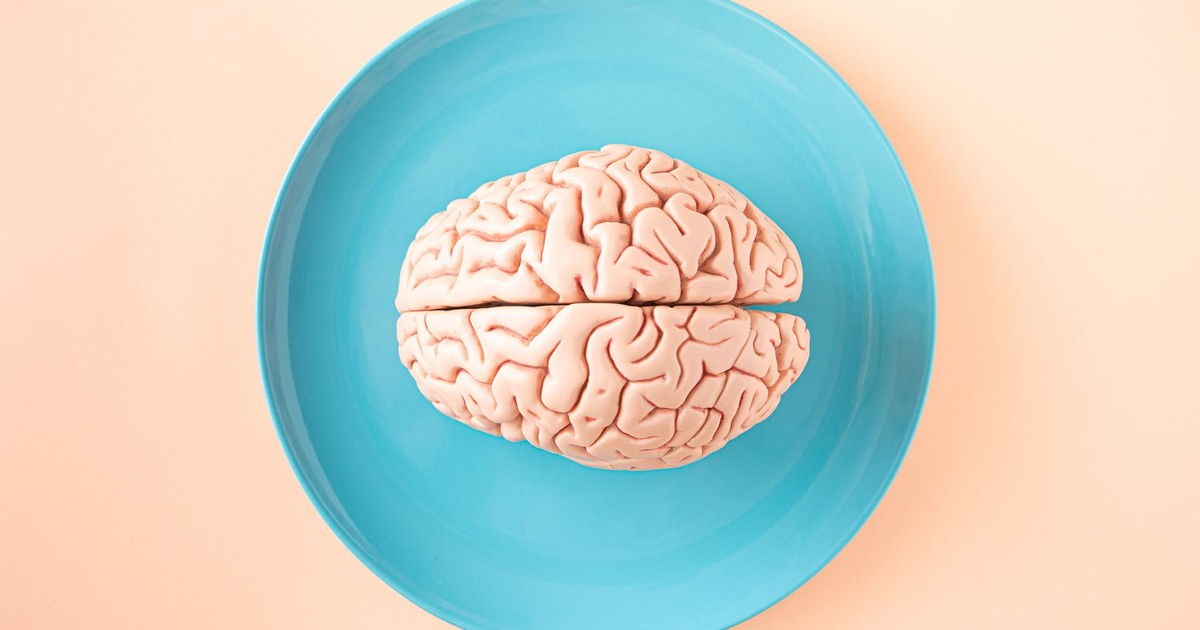

Your brain doesn’t simply shut down when you fall asleep. While you’re resting, it goes through a kind of overnight maintenance, with waves of fluid moving through the brain and helping carry away waste that builds up during the day.
Scientists have been trying to understand this process, known as the glymphatic system, because it appears to be closely tied to deep sleep and may have implications for brain health as we age. Now, researchers at MIT have found a surprising way to influence it: sound.
In a 2026 study published in Science Translational Medicine, researchers delivered tiny bursts of pink noise while people slept inside an MRI scanner. But simply playing relaxing sounds wasn’t enough. Each burst lasted just 50 milliseconds and had to be delivered at precisely the right point in the brain’s slow-wave cycle.
When researchers got that timing right, something remarkable happened. The brain’s slow electrical waves became stronger, and the waves of cerebrospinal fluid moving through the brain grew larger as well.
The finding is still very early, but it raises an intriguing possibility: could scientists eventually use something as simple as carefully timed sound to enhance one of the brain’s natural nighttime maintenance processes?
What the brain does while you sleep
The brain glymphatic system is a pathway that clears waste while you sleep. Like the lymphatic system, it uses fluid to wash away what the brain doesn’t need. It has emerged as a critical process for clearing waste from the brain’s interstitial tissue, which lacks distinct lymphatic vessels.
During the day, waste products such as lactic acid and worn-out proteins build up in the brain. When we sleep, waves of cerebrospinal fluid help wash away this waste. Cerebrospinal fluid is a clear liquid that surrounds and cushions the brain and spinal cord, protects the brain from injury, helps provide nutrients such as glucose, and removes waste products secreted by brain cells as they burn energy.
The glymphatic system is most active during non-rapid eye movement (NREM) sleep, particularly the N3 stage – the deepest stage. Delta waves are slow, low-frequency electrical rhythms the brain produces during deep sleep, typically cycling at up to four times per second, and they are the foundation the new MIT study was built on.
The 2019 discovery that made this possible
In 2019, Laura Lewis – now the Athinoula A. Martinos Associate Professor at MIT’s Institute for Medical Engineering and Science – published research showing that large waves of CSF move in and out of the brain during sleep and that these waves are tightly coupled with slow electrical brain waves associated with deep sleep. That 2019 paper in Science used functional magnetic resonance imaging (fMRI) to capture CSF waves in sleeping participants for the first time.
If slow brain waves drive CSF movement, then anything that could strengthen slow waves might also strengthen the fluid flush that follows. Lewis, who leads her lab at MIT’s Picower Institute for Learning and Memory, became the senior author on the new study building from that foundation. The pink-noise bursts increase the amplitude of slow electrical waves, which then enlarges the CSF waves – larger slow waves mean bigger surges of fluid, and bigger surges potentially mean more thorough waste clearance.
How the experiment actually worked
The study used a crossover design in which all participants received both the stimulus – a 50-millisecond burst of auditory pink noise – and a sham (no auditory stimulation) condition. Pink noise differs from the white noise familiar from sleep machines: its lower frequencies are stronger than its higher ones, giving it a softer, more balanced quality. Many people describe it as resembling steady rainfall or a distant waterfall – present but not jarring, and not loud enough to wake a sleeping person.
The 50-millisecond bursts last about as long as a single eyeblink. When they land at the right moment in a slow brain wave’s cycle, the effect is cumulative. Pushing a playground swing at exactly the wrong moment dampens the arc; a push at the peak transfers cleanly into momentum. The researchers needed their sound to arrive at the peak of each slow wave.
The researchers developed a real-time processing pipeline to eliminate fMRI-generated electrical interference from EEG recordings in under 100 milliseconds. To compensate for that lag, they also built an algorithm that could predict when the next slow-wave peak would occur and deliver the pink-noise burst at the correct moment. Running simultaneous EEG and fMRI is technically demanding because MRI scanners generate interference that corrupts EEG recordings; this closed-loop system solved that problem fast enough to make precise timing viable.
In tests of 14 healthy volunteers, the auditory stimulus increased the amplitude of both the slow electrical brain waves and the CSF waves during sleep. The fluid waves grew measurably – in a system that, as the researchers noted, had no prior method for increasing CSF flow wave size.
The blood vessel connection
The fMRI data also revealed that slow waves cause blood vessels to constrict and dilate in a repeating rhythmic pattern tightly linked to the electrical slow waves. This vascular movement appears to act like a pump, driving CSF through the glymphatic network in coordinated pulses – blood vessels narrowing and widening, squeezing fluid through surrounding brain tissue.
If blood vessel oscillations are the mechanical driver of CSF movement, then anything that modulates vascular tone during deep sleep – including sound-enhanced slow waves – could, in theory, boost the downstream washout of brain metabolites. The MIT study is the first to demonstrate that this chain of events can be deliberately triggered in sleeping humans.
Why Alzheimer’s researchers are paying attention
The proteins most closely associated with Alzheimer’s disease – amyloid beta and tau – are exactly the kind of metabolic debris the brain glymphatic system is meant to clear. Dysfunction of the glymphatic system has been proposed as a mechanistic link between sleep disruption and Alzheimer’s disease, and in animal models, glymphatic impairment alone can drive Alzheimer’s pathology.
A 2026 randomized crossover trial published in Nature Communications, involving 39 participants, found that glymphatic clearance during normal sleep increased morning plasma levels of Alzheimer’s biomarkers compared to sleep deprivation – direct evidence that the glymphatic system moves these proteins out of the human brain during sleep, a finding previously demonstrated only in animals.
Sleep disruption may promote Alzheimer’s pathology by increasing activity-dependent amyloid beta release, impairing glymphatic clearance of amyloid beta and tau, and spurring neuroinflammation. A separate 2026 study in Alzheimer’s & Dementia found that sleep fragmentation correlates with amyloid beta deposition detectable at brain autopsy, adding tissue-level evidence to what had previously been mostly biomarker data.
The MIT team was careful to stop short of claiming that any of this translates directly into Alzheimer’s prevention. The researchers hope to explore whether enhanced CSF flow could improve cognitive function, support memory, or slow the progression of neurodegenerative diseases – but those are questions for future trials, not conclusions from this one.
For more on how your sleep position may also influence glymphatic clearance, sleeping on your left side has been studied for its potential to support the brain’s overnight waste-removal process.
What this study is – and isn’t
The MIT study enrolled 14 healthy adults. It demonstrates that closed-loop slow-wave neurofeedback can amplify waves of CSF flow and provides a technique for simultaneous modulation and imaging of CSF movement during sleep. That’s a proof of concept, not a clinical treatment.
The researchers measured fluid movement, not downstream protein clearance. They didn’t track amyloid beta levels before and after, and they didn’t run a memory test. They showed that a physical process inside the sleeping brain can be amplified using precisely timed sound – which is what needed to be demonstrated before any larger study could be designed.
Joshua Levitt, who recently earned his PhD from Boston University and served as a visiting graduate student in Lewis’s lab, is the paper’s lead author. Levitt has started a company that hopes to develop a wearable device – such as a headband – that people could use at home to deliver an auditory stimulus at the right time and increase CSF flow. That transition from research tool to consumer device will require additional rounds of testing, regulatory scrutiny, and long-term safety data that don’t yet exist.
Playing a pink noise playlist before bed or running a pink noise app overnight is not equivalent to what was done in this study. Each 50-millisecond burst was timed in real time to the peak of a specific brain wave, using a custom algorithm running faster than the human eye can blink. No off-the-shelf audio app replicates that.
Read More: 6 Ways To Support Your Glymphatic System and Brain Health
What this means for you
For now, this is a proof of concept, not a new sleep treatment. The researchers studied just 14 healthy adults, and while they successfully increased cerebrospinal fluid waves, they did not show that the technique removed more amyloid or other waste, improved memory, or protected against diseases such as Alzheimer’s.
What makes the study interesting is that researchers were able to deliberately influence a process happening deep inside the sleeping brain without drugs, surgery, or an implanted device. Precisely timed sound was enough to strengthen slow brain waves and amplify the fluid waves associated with them.
That precision also matters. Playing pink noise or rain sounds from a phone isn’t the same thing. In the experiment, researchers developed a system that monitored brain activity and predicted exactly when each tiny burst of sound needed to arrive.
Researchers now want to know whether this effect can eventually translate into something meaningful, such as improved waste clearance, memory, or brain health. Lead author Joshua Levitt has also started a company that hopes to develop a wearable device, such as a headband, capable of delivering the stimulation at home. But that idea will require considerably more testing before it could become an established treatment.
For now, the discovery is less about pink noise itself and more about what it reveals about the sleeping brain. Its nighttime cleaning system may not be entirely passive. Under the right conditions, it may be possible to influence the rhythms that help drive it
Disclaimer: This information is not intended to be a substitute for professional medical advice, diagnosis, or treatment and is for information only. Always seek the advice of your physician or another qualified health provider with any questions about your medical condition and/or current medication. Do not disregard professional medical advice or delay seeking advice or treatment because of something you have read here.
AI Disclaimer: This article was created with the assistance of AI tools and reviewed by a human editor.
Read More: Why Your Sleeping Position Could Be Shortening Your Life