
For eleven years, Bryan Johnson’s doctors flagged chronically low iron levels in his blood work, ran tests, checked the numbers, and kept moving – never finding the source. The man who has spent roughly $2 million a year tracking nearly every measurable signal his body produces had a disease hiding in plain sight the entire time.
The diagnosis finally arrived in May 2026. Johnson announced in early July that he’d been diagnosed with autoimmune gastritis, an incurable condition in which the immune system attacks the stomach’s acid-producing cells. His response was not to grieve the diagnosis. His response was to announce that he had cloned himself.
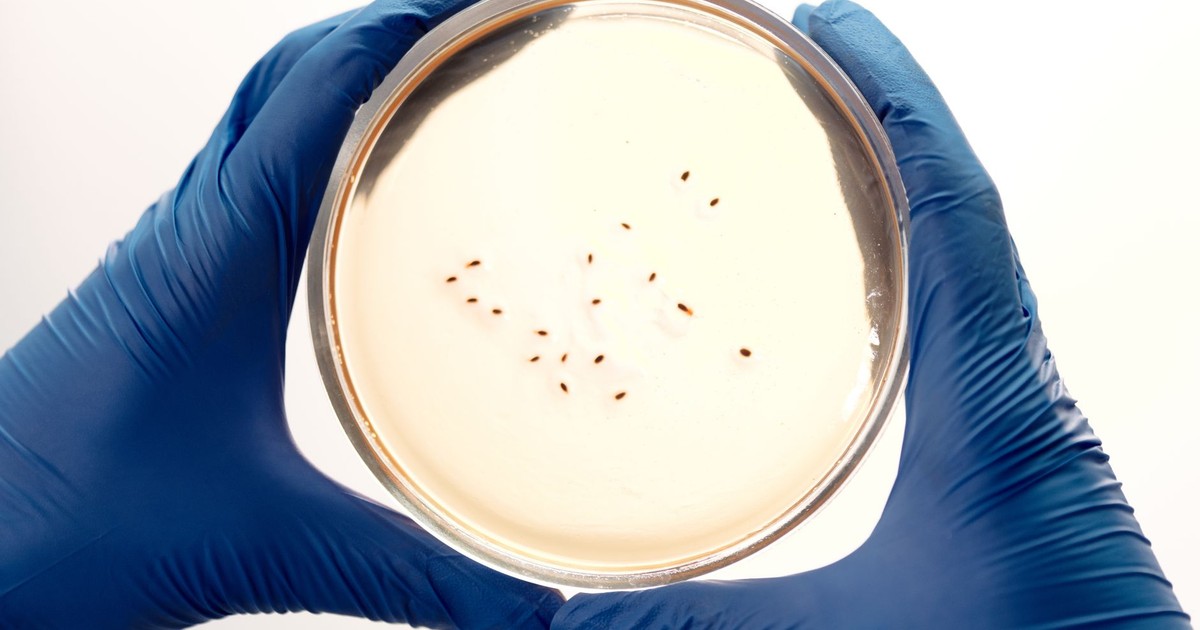
Johnson, 48, posted on X that “with this clone, I can become my own blood boy, test therapies on the clone, grow organs for transplantation, develop new treatments and inject young cells.” He described a petri dish version of himself – “baby Bryan” – as the first example of a new path forward. The internet, predictably, lost its mind. What followed reveals something genuinely important about both a disease that affects far more people than is recognized, and a technology that scientists have been working toward for nearly two decades.
I just cloned myself…as a newborn
— Bryan Johnson (@bryan_johnson) July 21, 2026
With this clone, I can:
+ become my own blood boy
+ test therapies on the clone
+ grow organs for transplantation
+ develop new treatments
+ inject young cells
This baby-bryan lives in a petri dish for now.
This may be scary to some… pic.twitter.com/Ved8ij9Col
What Autoimmune Gastritis Actually Does
Autoimmune gastritis is an autoimmune disorder that damages the stomach’s parietal cells and can interfere with the body’s ability to absorb vitamin B12 and iron. Parietal cells are the stomach lining’s workhorse. They do two critical jobs: they produce stomach acid, and they secrete a protein called intrinsic factor that the body needs to absorb vitamin B12 from food. When the immune system destroys them, gastric acid secretion falls – impairing the release of vitamin B12 from food – and the production of intrinsic factor drops, further blocking B12 absorption, according to guidance from the UK’s National Institute for Health and Care Excellence.
The intrinsic factor piece matters enormously. B12 is essential to the body’s ability to produce healthy red blood cells, so autoimmune gastritis can lead to anemia and nerve damage. Loss of parietal cells also reduces gastric acid secretion needed for the absorption of inorganic iron, making iron deficiency a common early finding in the disease.
Johnson’s medical team found his diagnosis only after a decade of unexplained low ferritin – a stored form of iron – despite normal hemoglobin. A colonoscopy, a bi-directional endoscopy, and blood tests showing elevated anti-parietal cell antibodies led to stomach biopsies that confirmed early-stage autoimmune gastritis. Johnson himself posted that his stomach was “eating itself.”
The use of this kind of condition as a case study for treatment is telling: the limitations of organ transplantation, plagued by lack of organ availability and problems with immune rejection, have long led researchers to seek alternative approaches. Johnson seems to be betting that his condition opens a door.
A Disease That Hides for Years
One of the more unsettling aspects of autoimmune gastritis is how effectively it stays invisible. The disease causes irreversible damage to the lining of the stomach and often develops silently and asymptomatically over the course of years. Diagnosis is often delayed because of the absence of typical symptoms, and clinical guidelines are lacking, which results in inadequate treatment and poor cancer screening.
Autoimmune gastritis is a chronic immune-mediated disease characterized by anti-parietal cell antibodies and corpus-predominant atrophy, yet epidemiological data remain limited, as a 2025 study in BMC Gastroenterology from Renji Hospital in Shanghai noted, particularly in populations with high rates of H. pylori infection. Published prevalence figures range from 0.1% to 4.5% of the general population – a wide spread that reflects how many cases go undetected until a secondary problem, such as persistent anemia, nerve tingling, or unexplained fatigue, forces a proper investigation.
The long-term stakes are not trivial. Autoimmune gastritis has been associated with a three-to-seven-fold increased risk of developing gastric cancer, with reported incidence rates ranging from 0.9% to 9%. Long-standing gastric atrophy also increases the risk of type I gastric neuroendocrine tumors. Standard management focuses on monitoring and replacement therapy – B12 injections, iron infusions – rather than any attempt to halt the immune destruction itself.
There is currently no cure for autoimmune gastritis. Treatment focuses on managing nutrient deficiencies through B12 injections and iron infusions. Johnson, who has publicly stated that no condition should be presumed incurable simply because no one has tried to cure it with today’s tools, has other ideas.
Johnson was first diagnosed with autoimmune hypothyroidism at age 21, and autoimmune gastritis frequently co-occurs with thyroid autoimmunity. The condition often coexists with other organ-specific autoimmunities, notably thyroid disease, contributing to a wider spectrum of complications through micronutrient deficiencies and altered mucosal immunity. His immune system has a documented history of attacking his own tissue.
The Science Behind “Baby Bryan”
No infant, embryo, fetus, organ, or second Bryan Johnson was created by the procedure he described. By Johnson’s account, scientists took mature cells from an adult and attempted to return those cells to a much earlier developmental state. The “cloning” language is dramatic shorthand for something more precisely described as induced pluripotent stem cell reprogramming.
Johnson said the process involved doing a blood draw, extracting his cells, exposing them to Yamanaka factors and resetting them to an “embryonic-like state.” Yamanaka factors – the proteins Oct4, Sox2, Klf4, and c-Myc – are the biological switches that can rewind a mature, specialized cell back to a state where it can theoretically become any cell type in the body. The discovery won Shinya Yamanaka the Nobel Prize in Physiology or Medicine in 2012, jointly with Sir John B. Gurdon, “for the discovery that mature cells can be reprogrammed to become pluripotent.”
The induced pluripotent stem cell (iPSC) technology has transformed in vitro research and holds promise for regenerative medicine, as a 2024 review in Signal Transduction and Targeted Therapy detailed. iPSCs have the capacity for almost unlimited expansion, can be engineered genetically, and can be differentiated into most somatic cell types – and have been widely applied to model human disease, screen drugs, and develop cell therapies.
The key advantage Johnson is banking on is immunological. Unlike embryonic stem cells, which come from donated embryos, iPSCs are created from a patient’s own adult cells. This means they carry the patient’s genetic code, making them useful for personalized medicine and sidestepping many of the ethical concerns associated with embryonic stem cell research. Johnson put it more simply: “My body will accept them because they’re my cells.”
Longevity research and cellular reprogramming technology have been converging rapidly in recent years, and Johnson’s case illustrates exactly why that intersection is drawing so much attention from scientists and biohackers alike.
Where the Science Actually Stands on Human Cloning Organs
The ambition to use human cloning organs – or more accurately, iPSC-derived organs – for transplantation is not science fiction. It is not yet clinical reality either, and that distinction matters.
As of 2026, no iPSC-based therapy has completed a full three-phase clinical trial and received FDA approval. However, a number of iPSC-derived therapies are currently in clinical trials globally, targeting conditions in neurology, ophthalmology, and oncology, and early safety data has been encouraging.
A phase I/II trial published in Nature in 2025 followed seven patients aged 50 – 69 with Parkinson’s disease who received bilateral transplantation of dopaminergic progenitors derived from induced pluripotent stem cells at Kyoto University Hospital. Primary outcomes focused on safety and adverse events over 24 months. There were no serious adverse events, and MRI showed no graft overgrowth – a meaningful early signal, though seven patients in a phase I trial is a long way from growing a replacement stomach lining, liver, or kidney from a petri dish.
Johnson has not yet released full technical details, data, or independent verification beyond his own explanation. The organs, transplants, and cell injections he describes remain goals – not current capabilities. He argued that advances in artificial intelligence, stem-cell engineering, and genetic technologies mean diseases once considered untreatable should no longer be viewed as such.
The public reaction split predictably along skeptic-believer lines. Johnson’s plan quickly drew criticism online, with some calling it unsettling and others calling it outright wrong. Others defended the experiment, arguing that breakthroughs in medicine often begin with ideas that initially appear unconventional.
Read More: Bryan Johnson Spent Millions to Live Forever. His Stomach Had Other Plans.
What This Means for You
The most actionable part of this story isn’t the stem cells – it’s the diagnosis that triggered them. Autoimmune gastritis is systematically underdiagnosed, often for a decade or more, and the warning signs are easy to dismiss. Chronically low ferritin or iron that doesn’t respond well to dietary changes, unexplained fatigue, or a history of another autoimmune condition (particularly thyroid disease) are all reasons to ask a doctor specifically about anti-parietal cell antibody testing. A standard blood panel won’t catch it.
Johnson’s iPSC experiment is best understood as an early-stage research bet, not a proven treatment path. The underlying technology is real and advancing – clinical trials are actively running for Parkinson’s, macular degeneration, and heart disease – but growing replacement organs from reprogrammed cells remains years away from any clinical application. What Johnson has in his petri dish right now is a line of reprogrammed cells. The organs, the transplants, the rebuilt biology: those belong to a plan that is still on paper.
For anyone with an autoimmune diagnosis, the more immediate takeaway is to treat nutritional monitoring as non-negotiable. B12 levels, ferritin, and iron should be checked regularly – not just when symptoms appear. By the time anemia or neurological symptoms develop in autoimmune gastritis, significant and irreversible damage to the stomach lining has typically already occurred. Early detection, in this case, genuinely changes the outcome.
Disclaimer: This information is not intended to be a substitute for professional medical advice, diagnosis, or treatment and is for information only. Always seek the advice of your physician or another qualified health provider with any questions about your medical condition and/or current medication. Do not disregard professional medical advice or delay seeking advice or treatment because of something you have read here.
AI Disclaimer: This article was created with the assistance of AI tools and reviewed by a human editor.