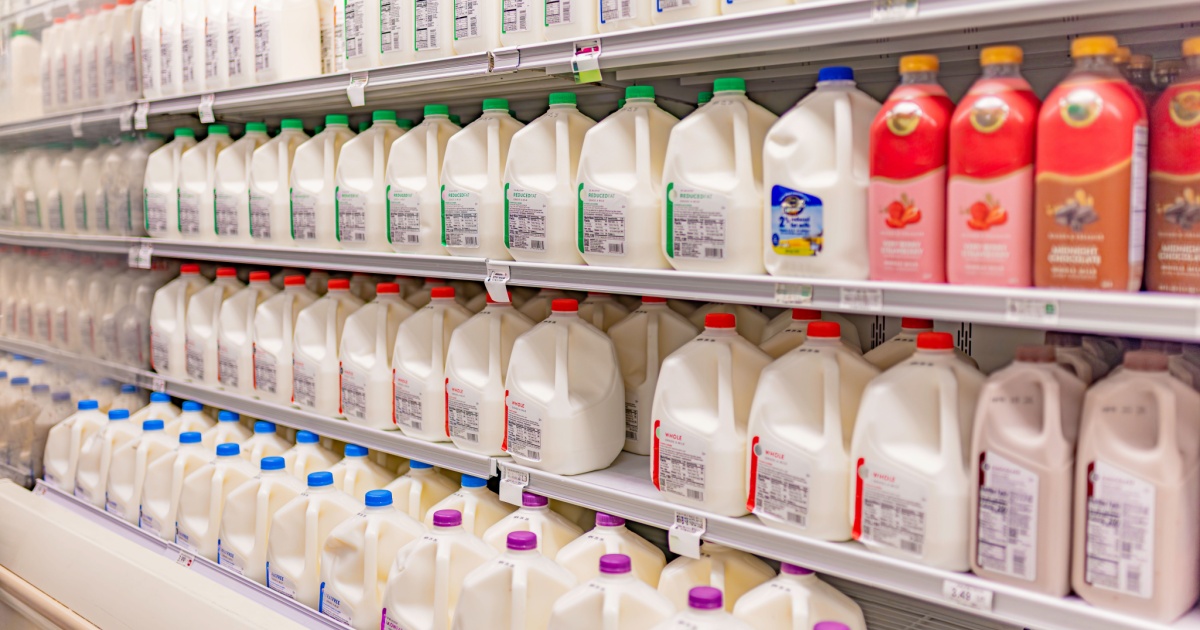

Most grocery shoppers have seen it at some point: a milk carton sitting on the shelf that looks subtly inflated, its sides bowing outward like something inside is pushing back. Most people walk past and grab the next one without a second thought. A bulging milk carton can result from something as simple as a change in air pressure – or from active bacterial fermentation happening inside the container right now.
Bloating in a milk carton has two fundamentally different causes, and they carry very different consequences. One is a physics problem. The other is a food safety one.
The bacterial version happens because microbes act on lactose, the natural sugar in milk, and produce gas – including carbon dioxide – as a byproduct. That gas has nowhere to go inside a sealed carton, so it accumulates and pushes against the packaging from the inside. The carton expands. A firm, persistent bulge often reflects ongoing bacterial fermentation rather than a simple shift in atmospheric pressure.
The phenomenon has an actual industry name: “bulging defect,” sometimes called “abnormal fermentation.” It doesn’t happen randomly. Some causes include improper processing of milk or inadequate sanitization of cartons, and it can also occur when packaging is defective and allows air into the container, which encourages further bacterial growth.
What a Bulging Milk Carton Actually Tells You
Microbiologist Jason Tetro, host of the Super Awesome Science Show, explains it this way: air pressure bloating is usually gentle and reversible, while microbial growth produces hard, lasting bloating that does not resolve on its own. Pressing gently on the sides of a carton before you buy gives you a quick, practical read on which kind you’re dealing with. “Bloating can occur due to air pressure changes or microbial growth,” Tetro says. “Usually, air pressure is gentle bloating and reversible, whereas microbial growth is hard bloating and irreversible.”
If you’re already at home with a carton that concerns you, Tetro suggests shaking it to check for solidified chunks, then placing it in the fridge to see whether the swelling decreases. If it does, the cause was likely air pressure. If the carton stays bloated, it’s best to throw it out.
When excess air gets into a carton through compromised packaging, bacteria are given the conditions they need to flourish. Those bacteria then release gas, which causes the swelling you see on the outside. This is why a firm, persistent bulge is more concerning than a soft, flexible one – it often reflects ongoing bacterial fermentation, not a simple shift in atmospheric pressure.
Pranav Vashisht, a continuous improvement specialist at Idaho Milk Products Inc. and member of the Institute of Food Technologists’ dairy foods division, notes that consuming milk from a bloated carton is unsafe due to high levels of bacterial growth, and drinking it can lead to gastrointestinal issues, including nausea, diarrhea, abdominal pain, and vomiting – and in some cases, more severe effects.
Why Milk Goes Bad Faster Than You Might Expect
Temperature is the single biggest variable in how quickly bacteria multiply in milk. At body temperature, bacteria present in milk can double their numbers in as little as 20 minutes. That rate slows dramatically in a cold fridge, but it never stops entirely.
If milk is stored above 40°F (4°C), it will begin to develop signs of spoilage, including a sour odor, off-flavor, and curdled consistency. The FDA recommends keeping your refrigerator at or below 40°F (4°C) to slow bacterial growth in dairy and other perishables. Milk should never sit at room temperature for more than two hours – and if the ambient temperature is above 90°F, that window drops to one hour.
The back of the refrigerator, not the door shelf, is where milk should live. According to the American Dairy Association, the back of the fridge tends to be the coldest and most consistent area, making it the right place to store milk after you unpack your groceries. The door shelf experiences temperature swings every time you open the fridge, which accelerates spoilage even in a carton that looks perfectly fine.
The Pathogen You Might Not Think About
Most people associate bad milk with an obvious sour smell and visible curdling. Those signs are real, but they’re not the only risk. One pathogen in particular defies the usual logic of food spoilage: Listeria monocytogenes. Unlike most harmful bacteria, it can survive and grow even under refrigeration.
Foods including ready-to-eat refrigerated items, unpasteurized (raw) milk, and foods made with unpasteurized milk may be contaminated with Listeria, which the FDA identifies as the third leading cause of death from food poisoning in the United States. Listeria infections can be fatal, particularly for unborn or newborn babies, adults over 65, and people with weakened immune systems. In pregnant women, listeriosis can lead to miscarriage and stillbirth.
Pasteurized milk is significantly safer than raw milk in this regard – pasteurization kills Listeria. But post-pasteurization contamination (contamination that occurs after the heat treatment, during filling, packaging, or handling) remains a documented risk. The longer ready-to-eat refrigerated foods contaminated with Listeria are stored, the more opportunities the pathogen has to grow. That’s why a milk carton with a compromised seal – the kind that might also show a bulging defect – is worth taking seriously.
For anyone in a higher-risk group, the CDC’s guidance on raw milk and foodborne illness is clear: symptoms from contaminated milk can include diarrhea, stomach cramping, and vomiting, and severe cases can require hospitalization.
Sell-By Dates Don’t Tell the Whole Story
There’s a common assumption that a milk carton within its sell-by date is automatically safe. That’s not quite right. The sell-by date tells the store how long to display the product for inventory management. It’s not a safety date.
Pasteurized milk kept at or below 40°F can remain good for three to seven days beyond its sell-by date. But if the carton has been stored inconsistently – whether in transit, in the store’s loading dock, or on your fridge door shelf – that margin shrinks. A carton still within its sell-by date can contain milk that has already begun to spoil if the cold chain was ever interrupted.
This matters at the grocery store too. When you pick up milk, choose cartons that are cold to the touch, not just refrigerated in appearance. And do your dairy shopping last, so the carton spends as little time as possible warming up in your cart before you get home.
You can apply the same thinking to other produce at the store. If you’ve ever wondered about the freshness signals on other perishables, this guide to 7 signs you should never buy those blueberries covers a similar approach to spotting quality issues before you buy.
How to Check Milk Before You Drink It
A bloated carton is one red flag, but there are others. A sniff test can detect off odors caused by bacterial fermentation – sour, yeasty, or sulfurous smells all point to spoilage. Checking the expiration date, shaking the carton to test for solids, looking for curdling, flakes, or gas bubbles, and smelling for tangy or rancid odors are all reliable ways to assess whether milk is safe.
If a carton makes a hissing sound when you open it, consider it spoiled – even if the date on the label hasn’t passed. That hiss is pressurized gas escaping, which is a direct sign of bacterial fermentation inside the container.
If a carton stays bloated after you bring it home, it’s best to discard it. Also check for visual defects like gas bubbles, flakes on the inside walls, curdling, or anything settling at the bottom.
Read More: 13 Foods That Pose Health Risks After Expiration, According to Food Safety Researchers
What to Do Now
The practical rules here are straightforward. At the store: skip any milk carton with a noticeable outward bulge, especially if the swelling feels firm rather than soft. Choose cartons that are genuinely cold, not just cool, and grab your dairy last so it has the least time in a warm cart.
At home, store milk at the back of the refrigerator, which stays coldest, and keep your fridge at or below 40°F. Before pouring, give the milk a quick sniff and tilt the carton to check for any unusual texture or visible lumps. Milk stored above 40°F will begin showing signs of spoilage including sour odor, off-flavor, and curdled consistency – trust those signals.
A sell-by date is a shelf management tool, not a freshness guarantee. A carton in perfect condition, consistently stored cold, can outlast it by several days. One that’s been mishandled – stacked too warm in a warehouse, left on your counter, or packed with a small defect in its seal – can go bad before the date even arrives. The bulge you see on a grocery store shelf is the carton telling you something went wrong somewhere along that chain. Listen to it.
Disclaimer: This information is not intended to be a substitute for professional medical advice, diagnosis, or treatment and is for information only. Always seek the advice of your physician or another qualified health provider with any questions about your medical condition and/or current medication. Do not disregard professional medical advice or delay seeking advice or treatment because of something you have read here.
AI Disclaimer: This article was created with the assistance of AI tools and reviewed by a human editor.