

In January 2025, Canadian MP Elizabeth May stirred public conversation with a bold idea: inviting U.S. states like California, Oregon, and Washington to join Canada in order to gain access to free healthcare. Her remarks, made with a mix of humor and seriousness, quickly drew attention across North America. At a time when millions of Americans remain uninsured or underinsured, the suggestion struck a chord. May’s message wasn’t just a jab at the U.S., it was a proud endorsement of Canada’s public health system.
However, U.S. President Donald Trump was the first to suggest that Canada should become the 51st state, which struck a chord with Canadians. Whether Trump was serious or not, Canadians did not take the remark lightly. The resulting exchange opened the door to deeper questions about national identity, sovereignty, and the systems people want to live under.
Read More: White Coat Syndrome: When Medical Anxiety Affects Your Health
A Cross-Border Healthcare Fantasy?
May’s comments were rooted in longstanding frustrations with the U.S. healthcare system. The idea of free healthcare remains elusive for many Americans. In contrast, Canada’s universal medical care system is viewed by many Canadians as a point of national pride. May suggested that West Coast U.S. states, already aligned with Canada on issues like climate action and social policy, might prefer being part of a country that treats healthcare as a right, not a privilege.
Her comments echoed the concept of Cascadia, a bioregional idea that envisions British Columbia, Washington, and Oregon as a culturally and ecologically united zone. While the concept has never gained political traction, it reflects the growing sentiment that some regions in the U.S. are increasingly out of step with federal leadership. May’s suggestion tapped into that divide, and used government-funded healthcare as a symbol of shared values.
The Appeal of a Shared System
Reactions to May’s proposal ranged from amused curiosity to serious reflection. Many Americans expressed envy over Canada’s free healthcare, especially those burdened by insurance premiums and out-of-pocket costs. For residents of states like California, where progressive policies already mirror those in Canada, the idea of aligning with a country that provides universal health coverage doesn’t seem so far-fetched.
Canadians, meanwhile, largely took May’s statement as a moment of light-hearted patriotism. But beneath the humor was a clear message: Canada’s social model is worth defending, and possibly exporting. With Trump back in his second term, the contrast between the two countries’ systems has become even starker. Canadians are increasingly aware of how fragile their public health care model can be in the face of global economic pressures and political influence from the south.
Read More: How UnitedHealthcare Came to Represent Everything Wrong With U.S. Health Insurance
Trump’s Response and the 51st State Remark
Just days after May’s comments, Donald Trump made headlines of his own. While speaking at a campaign event, he floated the idea that perhaps Canada should become the 51st U.S. state. Framed as a joke, the remark nonetheless fit a familiar pattern. During his presidency, Trump frequently clashed with Canada on trade, tariffs, and dairy policy. He often treated America’s northern neighbor as a junior partner, sometimes even a rival.
The comment came at a time of renewed tension. Trump’s allies had been pressuring Canada to back off a proposed digital services tax aimed at U.S. tech giants. When Ottawa paused the tax, critics accused Canada of caving to U.S. pressure. The Guardian described it as a case of “submission” to economic threats.
In that context, Trump’s “51st state” jab felt less humorous and more pointed. It reminded many Canadians of the power imbalance that still defines cross-border relations, and why protecting things like free healthcare remains a top priority.
Shared Borders, Divided Priorities
At the heart of this back-and-forth is a growing identity gap. Elizabeth May’s vision emphasizes cooperation, shared values, and mutual benefit. Trump’s rhetoric focuses on dominance, influence, and control. The difference is striking, and increasingly relevant.
For Canadians, the idea of joining the U.S. under Trump’s leadership is unthinkable. From public health services to gun laws, the contrast between the two nations is stark. Canadians generally value consensus, equity, and collective responsibility. These ideals are embodied in their universal medical system, which stands in direct opposition to the privatized approach still prevalent in the U.S.
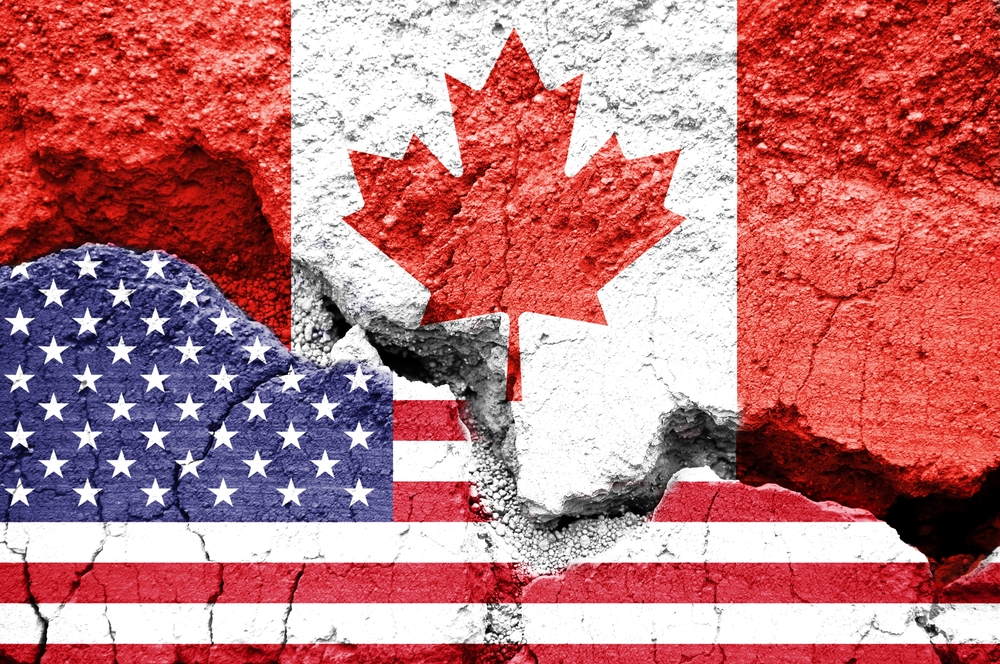
May’s suggestion, however tongue-in-cheek, was about more than merging borders. It was about aligning with people who value the same things. The idea of absorbing progressive U.S. states wasn’t about expanding Canada’s territory. It was about expanding its community of shared principles.
Final Thoughts: More Than a Joke
Neither May’s nor Trump’s remarks were intended as formal policy. Yet both sparked important conversations. They forced people to examine not only national boundaries but the systems that define daily life, especially access to free healthcare.
For many Americans, the fantasy of joining Canada is less about geography and more about values. And for Canadians, the idea of letting in like-minded neighbors is a way of reinforcing what makes their country unique.
In a divided world, small suggestions can carry big meaning. Elizabeth May’s proposal might not change any maps, but it just might change a few minds.
Read More: How to Lower Dementia Risk After 50: 7 Key Things to Do