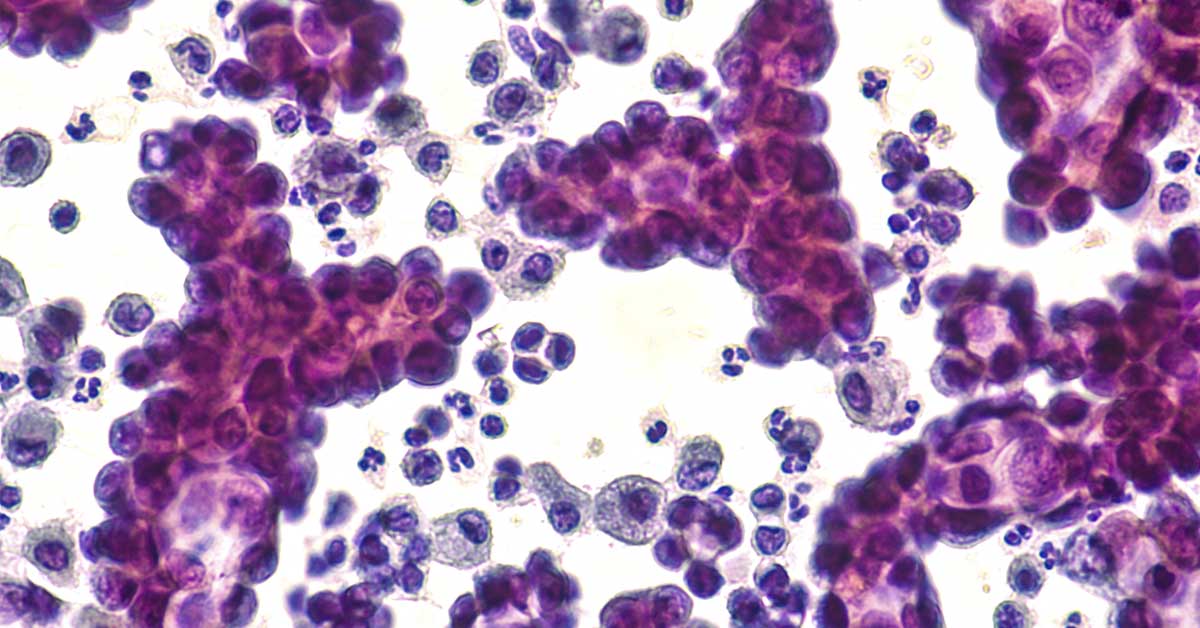

Researchers have recently discovered a sugar compound produced by deep-sea bacteria that has the potential to destroy cancer cells. Microbes living in our oceans produce a substance that triggers cell death (pyroptosis), causing the cancer cells to essentially self-destruct. This compound has been shown to stop tumors from growing and activate the immune system in animal and lab tests. This could potentially lead to new cancer treatments derived from marine organisms’ sugars.
Promoting Pyroptosis

Triggering programmed cell death, or pyroptosis, is showing great promise as a cancer treatment. In a recent study, researchers purified a long-chain sugar molecule from deep-sea bacteria and showed that it could promote pyroptosis. Produced by the Spongiibacter nanhainus bacterial strain, this compound consists of glucose and mannose and is called EPS3.9. The researchers discovered that EPS3.9 can attach to five different types of fat molecules in cell membranes and kill leukemia cells.
According to the study’s author, Chaomin Sun, PhD, “Our work not only provides a theoretical basis for developing more carbohydrate-based drugs but also highlights the importance of exploring marine microbial resources.” Pyroptosis is a type of programmed cell death that assists our bodies in fighting diseases and infections. Unlike apoptosis, or regular cell death, this type of cell death is fiery and dramatic. The cells start to swell before bursting open and releasing inflammatory signals that trigger the immune system into action. The immune cells then help clean up the dead cancer cells, additionally attacking others nearby. Carbohydrate-based drugs are especially promising since sugars typically exhibit high biocompatibility and low toxicity.
The Power of the Ocean

The bacteria that produce EPS3.9 live in places where the sunlight never reaches, deep in the ocean. It is due to these extreme environments that the bacteria are forced to evolve in unique ways, often producing chemicals that cannot be found on land. In fact, many other medical breakthroughs can be traced back to the ocean. For example, there are cone snails that use venom to paralyze their prey in the ocean. Ziconotide is one of the ingredients of that venom and has been used to develop a powerful painkiller. It’s particularly useful for people who don’t respond well to opioids. There are also seas squirts that live near the Caribbean that contain trabectedin.
This substance is now used to help treat soft tissue sarcoma and ovarian cancer. Trabectedin works by attaching to the DNA of cancer cells and preventing them from multiplying. Sea squirts also contain Didemnin B and Plitidepsin. These compounds have been shown to effectively fight tumors and viruses. Plitidepsin has also shown great promise for the treatment of COVID-19. There is also a tiny organism that looks like sea moss called Bugula neritina. It contains bryostatin, which is being researched for the treatment of cancer, Alzheimer’s, and HIV latency.
Halichondrin B is a compound found inside Japanese deep-sea sponges. It was subsequently used to produce Eribulin, which is used to treat liposarcoma and late-stage breast cancer. The unique substances that marine organisms produce often work differently from land-based drugs. Some of them have evolved to defend against infection or predators, which has provided them with powerful bioactive effects. Some are able to target specific cells or proteins, which makes them more effective. Therefore, the ocean has become a new focus of pharmaceutical research, especially antibiotics.
The Next Steps

EPS3.9 is still in the very early stages of research, but so far, the results are promising. Next, the researchers will need to examine its effectiveness across different types of cancer and safety profile. Ultimately, clinical trials will reveal whether these types of compounds will effectively serve as a cancer treatment in humans. Around the world, various research teams are currently building biobanks of marine microorganisms. These biobanks will contain genetic samples of various rare deep-sea bacteria, algae, and other organisms that can be studied. Using techniques such as chemical synthesis and genetic sequencing, researchers are able to reproduce these compounds. This will enable them to study their effects without having to constantly harvest organisms from the ocean.
While the discovery of EPS3.9 is a vital step forward, it’s by no means an isolated breakthrough. It represents a part of a growing trend to harness the medical potential of the ocean. Marine organisms have already helped improve lives with medications ranging from pain relief to cancer treatments. Initially discovered as a defensive measure against viruses and bacteria, pyroptosis is growing to become a popular subject in cancer research. This is due to the fact that promoting pyroptosis inside tumor cells not only directly destroys them, but additionally encourages the immune system to defend the body. In essence, the tumor is turned into a signal that calls the body to respond and fight back against the cancer.
Read More: Eerie Perfect Circles Discovered on Ocean Floor Leave Scientists Baffled