The COVID Tax Refund Deadline Is July 10 — Most Americans Don’t Know It Exists
Most people got through the pandemic, paid whatever the IRS told them they owed, and moved on. Penalties for filing late. Fees for missing a payment deadline. Interest that added up quietly month by month. It felt painful at the time, but you paid it, closed the chapter, and got on with life. What almost nobody told you was that a federal court has since ruled those charges may never have been legally owed in the first place, and that you may have a very short window to get that money back.
There’s a specific covid tax refund deadline you need to know about: July 10, 2026. That date is the result of a court ruling, a legal clock, and a gap in public awareness that the government’s own watchdog has described as a serious fairness problem. Miss it, and the window closes permanently, regardless of what happens in court later.
The IRS is not sending you a letter about this. Your tax software will not flag it. Most tax professionals, unless they’ve been following an obscure piece of litigation, won’t bring it up either. The people most likely to know are those who have already hired specialists to look for it. For everyone else, the clock is ticking on one of the largest potential refund opportunities to emerge from the pandemic era.
What a Federal Court Found About COVID-Era Penalties
The story starts with a piece of tax law called IRC Section 7508A(d), which Congress updated in 2019. The provision requires federal tax deadlines to be automatically postponed during a presidentially declared disaster, for the full length of that disaster period plus 60 days. COVID-19 was declared a federal disaster on January 20, 2020. The disaster declaration ran through May 11, 2023. Add 60 days, and you get July 10, 2023. Under a plain reading of the statute, every federal tax deadline that fell inside that window should have been extended to July 10, 2023, without anyone having to ask.
The IRS interpreted the law differently. The agency issued administrative notices and argued that relief was capped at one year, not the full 3.5-year disaster period. It kept assessing penalties as though taxpayers were late. The IRS accrued interest and penalties as if the statute didn’t exist.
Then came the ruling that changed the calculation. In Kwong v. United States, 179 Fed. Cl. 382 (Nov. 25, 2025), the U.S. Court of Federal Claims interpreted IRC Section 7508A(d) and found that the provision required automatic postponement of federal tax deadlines for the entire COVID disaster period. Judges determined that filing and payment deadlines should have been automatically postponed from January 20, 2020, through July 10, 2023. “By the court’s logic,” National Taxpayer Advocate Erin M. Collins wrote in an April 30 blog post, “the IRS should not have assessed penalties for late filing or payment during that 3.5-year period, nor charged interest on those amounts.” Collins heads the Taxpayer Advocate Service, an independent organization within the IRS.
The Scale of What May Be Owed
The numbers behind this ruling are staggering. The IRS had assessed more than 120 million penalties against tens of millions of taxpayers for filing late returns, failing to pay taxes, or failing to make required estimated tax payments between January 2020 and July 11, 2023.
Impacted taxpayers represent a broad cross-section of the public, including individuals, small businesses, large corporations, estates, and trusts. The issue reaches taxpayers with obligations related to income, employment, estate, gift, and excise taxes. To put that in practical terms, if you filed your 2020 or 2021 return after the original deadline, paid the IRS’s failure-to-file or failure-to-pay penalty, and simply moved on, you may have handed over money you were never legally required to pay.
The penalties themselves are not small. The failure-to-file penalty is 5% of your unpaid taxes monthly, up to 25%, while the failure-to-pay penalty is 0.5% of your balance monthly, with the same cap. On a tax bill of $10,000, five months of late filing penalties alone could have added $2,500 to what you paid. Multiply that across millions of households filing late during a global pandemic, and the aggregate figure runs into billions of dollars. In fiscal year 2022 alone, the IRS levied more than 12 million estimated-tax penalties and over 16 million failure-to-pay penalties totaling more than $12 billion. The IRS previously refunded about $1.2 billion in penalties to roughly 1.6 million taxpayers under a narrower 2022 relief notice, but tax professionals say the legal theory at issue in Kwong reaches far more taxpayers.
Why the IRS Has Not Already Fixed This
Here’s where the situation gets complicated. The government disagrees with the court. According to a BDO analysis published in May 2026, the government filed a Notice of Appeal on May 15, indicating it will contest the Court of Federal Claims decision. The Treasury Department has publicly stated it believes the ruling is a misreading of the statute, and the IRS has no plans to voluntarily process refunds or abate penalties while the appeal works through the courts.
The Kwong ruling builds on a 2024 U.S. Tax Court decision, Abdo v. Commissioner, 162 T.C. 148 (2024), which similarly held that the disaster postponement was mandatory and self-executing. Together, the two decisions reject the IRS’s narrower regulatory reading that capped pandemic relief at one year. Tax practitioners note the cases are also a downstream effect of the Supreme Court’s June 2024 decision in Loper Bright Enterprises v. Raimondo, which ended the longstanding doctrine requiring courts to defer to federal agencies’ readings of ambiguous statutes. Courts now interpret tax statutes independently, and in Kwong, that reading favored the taxpayer.
The appeal means that no one can be certain the ruling will stand. The case will likely take years to fully resolve. That legal uncertainty is the entire reason the July 10, 2026, covid tax refund deadline matters so much.
What July 10, 2026 Actually Means, and Why It Cannot Move
Tax law gives most taxpayers three years from the date their return was due to file a refund claim. Under the reasoning of Kwong, the due date for pandemic-era returns would be July 10, 2023. For most affected taxpayers, the three-year deadline for a refund claim for their 2019 through 2022 tax year returns would therefore fall on July 10, 2026, three years from that postponed due date.
Relief is not automatic. Most taxpayers must file refund claims on or before July 10, 2026, to protect their rights. Miss that date and the statute of limitations (the legal time limit for filing a claim) expires. Miss that date, and the door closes. Even if the Kwong decision is upheld on appeal and the IRS ultimately agrees to issue refunds, taxpayers who did not file a claim in time will likely be left out entirely.
Many taxpayers affected by this issue have low and moderate incomes. These taxpayers are less likely to have professional representation and to learn about complex legal developments like this one. As a result, they face a greater risk of missing the opportunity to claim refunds to which they may be entitled.
The National Taxpayer Advocate issued a public alert in April 2026 warning of exactly this problem. The Taxpayer Advocate Service has raised a core concern: when relief exists but is difficult to access, taxpayers, especially those without representation, are at risk of losing benefits. That outcome undermines fundamental taxpayer rights, including the right to be informed, pay no more than the correct amount of tax, and receive fair and just tax administration.
How to Find Out If You Qualify
Start with your IRS account transcripts. A tax account transcript can help identify whether penalties and interest occurred during the COVID-19 disaster relief period, from January 20, 2020 through July 10, 2023. Taxpayers don’t need to decode every line. The focus should be on dates and transaction entries, paying close attention to penalty assessments, interest charges, and the dates those entries fall.
People eligible for a potential refund or abatement include those who filed a tax return late between January 20, 2020, and July 11, 2023; paid penalties for filing or paying late during that period; owed IRS penalties even if they have not yet paid them; or filed an international information return late.
You can access your transcripts through your IRS Individual Online Account at IRS.gov. Look for tax years 2019 through 2022. Any penalty or interest entry dated between January 20, 2020 and July 10, 2023 is potentially in scope. Taxpayers whose original due date preceded January 20, 2020, may still have relief arguments for the portion of interest or penalties that accrued within the disaster period. Estimated tax penalties and certain information-return penalties may also be eligible for protective claims.
How to File Your Claim Before the Deadline
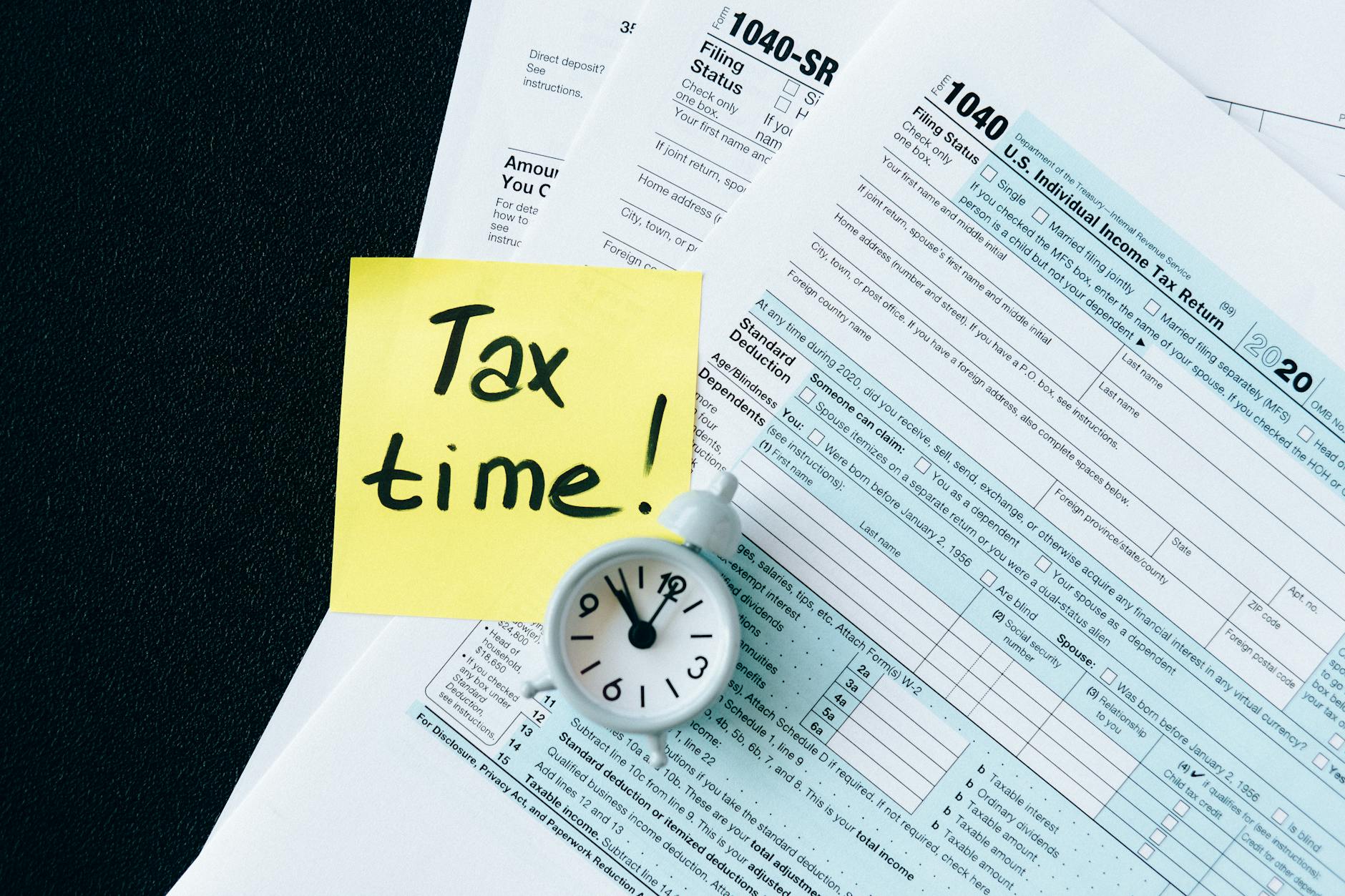
If you are claiming Kwong-related refunds for interest and penalties and are not revising your underlying tax liability, you should file Form 843, Claim for Refund and Request for Abatement. This is the correct form whether you want a refund of amounts already paid or an abatement of amounts assessed but not yet paid.
Because the appeal is still pending, most tax professionals recommend filing what is called a protective claim. A protective claim is a refund claim filed before the statute of limitations runs, while the underlying legal question is still being resolved by the courts. Its purpose is to preserve the taxpayer’s right to a refund in case the law ultimately develops in their favor, even if the IRS does not yet recognize the claim as valid.
Taxpayers generally need to file Form 843, writing “Protective Refund Claim Pursuant to Kwong Case” or similar language across the top, and filling in as much detail as possible. In most cases, taxpayers must file a separate Form 843 for each tax period and each type of tax.
Form 843 cannot be filed electronically. It must be submitted on paper. That protective claim language is what preserves your rights pending the appeal. Send it Certified Mail with Return Receipt Requested. This gives you documented proof of timely filing. Mail it to the IRS service center where you would file a current-year return for the tax involved. For an individual income tax matter, that generally means the service center for your Form 1040 filing address.
One important distinction: if you have already paid the amounts at issue, you are requesting a “refund.” If the IRS has assessed penalties and interest but you haven’t paid yet, you are requesting an “abatement.” Either situation is covered by Form 843.
The IRS typically holds protective claims in suspense until the underlying issue is resolved by the courts, and the claim can be perfected by providing the final numbers based on the court’s decision. That process could take years. But filing now is what keeps you in the running.
The clock on the covid tax refund deadline is not going to stop. July 10, 2026 is weeks away, and this is one of those situations where waiting to gather more information is a real financial risk. Filing costs very little. Not filing forecloses any possibility of recovery.
The first practical step is pulling and analyzing your IRS account transcripts for each tax year and entity in scope. The transcripts identify which penalties were assessed, when they were assessed, when they were paid, and how much remains. Without this review, it’s impossible to determine which penalty assessments fall within the qualifying window.
Once you’ve reviewed your transcripts, consider whether the amounts at stake justify filing on your own or consulting a tax professional. While some filers may be able to complete Form 843 themselves, determining which penalties are eligible can get complicated. “If everything was paid during the Kwong window, it’s pretty easy to calculate what you should get back,” one tax attorney told CNBC. “If there are partial claims, though, it’s incredibly difficult to determine the right amount without a tax background.”
If you paid any significant combination of failure-to-file penalties, failure-to-pay penalties, underpayment interest, or estimated tax penalties on returns due between January 20, 2020 and July 10, 2023, the math of whether to file is simple: not filing forecloses any refund, while filing costs little. A protective claim preserves your place in line while the courts sort out whether the IRS owes you the money.
The opportunity to recover penalties and interest may be significant, but it is not guaranteed. What is certain is that the July 10, 2026 deadline is real, it is approaching fast, and it will not be extended for people who didn’t know about it. The taxpayers who come out ahead will be the ones who acted, even without certainty about the outcome. Pull your transcripts, review the dates, and decide whether to file. That is the entire playbook, and right now, time is the only thing working against you.
Disclaimer: This information is not intended to be a substitute for professional financial advice, investment advice, tax advice, or legal advice, and is provided for informational purposes only. Always seek the guidance of a qualified financial advisor, accountant, or other licensed professional regarding your personal financial situation or investment decisions. Do not make financial, investment, or tax decisions based solely on information presented here. Past performance is not indicative of future results, and all investments carry risk, including the potential loss of principal.
AI Disclaimer: This article was created with the assistance of AI tools and reviewed by a human editor.