
Critical conservation
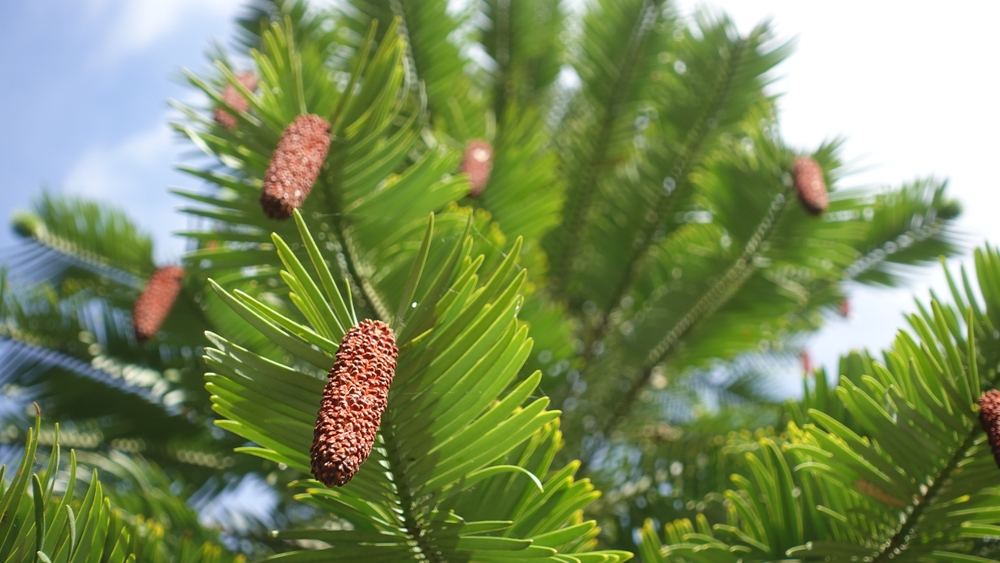
The trees have a unique look that hints at their ancient history. They become multistemmed as their age, and one specimen can grow 40 trunks at once, all with dark auburn bark with bubbly-looking nodules. The fern-like leaves tend to grow up to 8 cm (about 3 inches) long. They look narrow and flattened, and line both sides of the branches. Male and female cones appear on different branch ends, and one can contain over 300 small winged seeds, according to Britannica.
Today, the exact location of the dinosaur trees in Wollemi National Park is kept a secret. As of now, fires and human disturbance are the biggest threats to the species’ existence. Unauthorized visits can seriously compromise the fragile trees, whether it involves trampling seeds, damaging exposed roots, harming soils, and introducing weeds and pathogens like root rot. Therefore, this site is inaccessible to the public, says National Parks NSW. However, dinosaur trees are available for viewing at public botanical gardens across Australia and in other parts of the world. Moreover, dinosaur tree saplings are available in some garden nurseries, so anyone can plant them in their yards or in pots.
Read More: Ancient tree tells chaotic tale of Earth’s magnetic field reversal