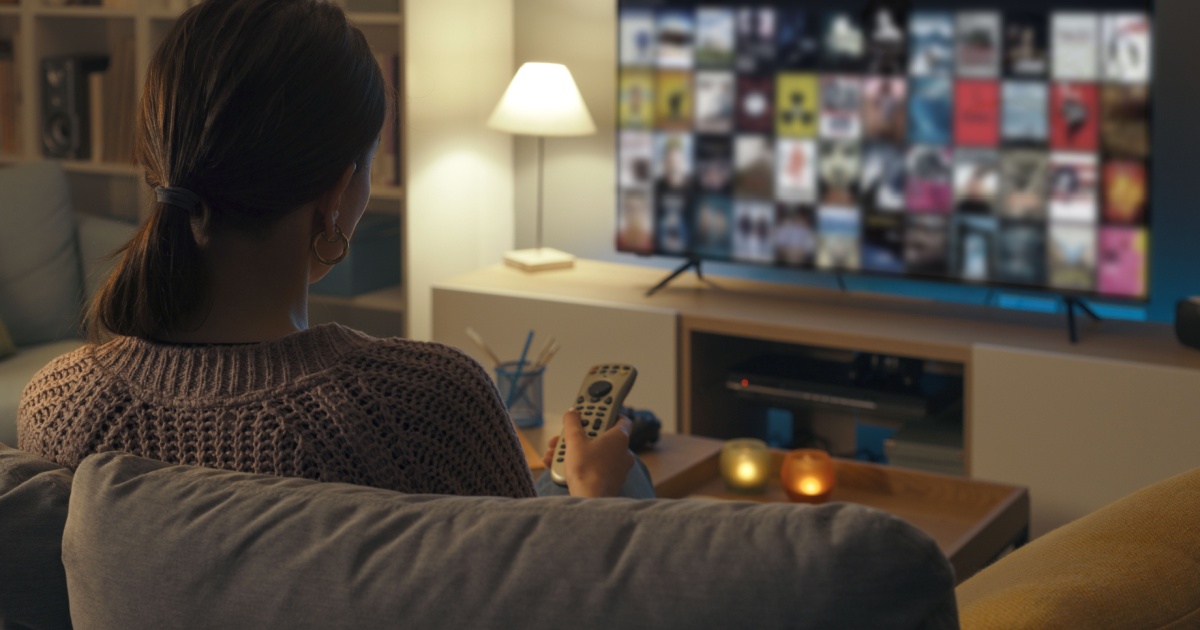

Your smart TV may know far more about your viewing habits than you think.
Hidden behind an obscure setting called Automatic Content Recognition, or ACR, many modern TVs continuously analyze what’s appearing on the screen. The technology can identify shows, movies, commercials, games, and even content coming from devices plugged into the TV through HDMI.
Researchers from UC Davis, University College London, and Universidad Carlos III de Madrid examined the network traffic of Samsung and LG smart TVs as part of a 2024 peer-reviewed study published in the Proceedings of the ACM Internet Measurement Conference. Their findings suggest the tracking was happening with remarkable frequency. In some cases, the TVs were generating screen fingerprints often enough to effectively capture around 120 snapshots of on-screen content in the time it takes to read a single sentence.
Most owners have never heard of ACR. Fewer still know where to find the setting that controls it—or that turning it off once may not always be enough.
What ACR Is Actually Doing
The process works in three steps: the TV takes tiny samples of the sound or picture on your screen, turns those samples into a compact digital fingerprint, then compares that fingerprint to a giant database of known shows, movies, channels, and ads to find a match. Companies claim ACR improves the user experience by delivering tailored content suggestions or more relevant ads, but it also transmits detailed viewing habits – tied to your IP address – back to corporate servers, revealing what you watch, when you watch it, and how often.
ACR gathers data such as viewing history, location, and user pathways, which can then be sold to third parties, such as advertisers, to assist them develop audience targets. The financial stakes make the incentive obvious. According to official annual results, LG’s ad business generated nearly $700 million in 2024 alone. Vizio has been even more explicit about the business model: Vizio reported that its data and advertising revenue officially surpassed its hardware profit in 2023. For these companies, the TV you bought is partly a data collection device that funds a separate, highly profitable advertising operation.
One thing the TV brands have been careful to do is disguise what ACR is. Every major smart TV platform ships with ACR enabled by default, but the setting is buried under names like “Viewing Information Services” (Samsung), “Live Plus” (LG), “Samba Interactive TV” (Sony), and “Viewing Data” (Vizio). Roku labels it “Smart TV Experience.” The names sound like optional content features. They are, in practice, a surveillance layer that ships with every device and is switched on by default.
Smart TV menus may look polished and user-friendly, but their structures differ significantly across brands. Samsung, LG, Sony, Vizio, and Roku-powered TVs all have unique navigation paths, and wherever you begin – from the home menu or a settings button – the basic path typically leads through something labeled “Settings,” followed by “Privacy,” “General,” or “Support,” with the real levers buried in sub-menus from there. Most users rush through TV setup screens, eager to start streaming. That rush is exactly what TV manufacturers count on.
The Lawsuits Forcing Manufacturers to Answer for It
The scale of the problem became legally concrete in December 2025. Texas Attorney General Ken Paxton filed suit against five major television companies – Sony, Samsung, LG, Hisense, and TCL – for spying on Texans by secretly recording what consumers watch in their own homes. The suits were filed under the Texas Deceptive Trade Practices Act, alleging unlawful collection and monetization of viewing data through what the AG called “mass surveillance programs.” According to the filings, ACR software can capture screenshots of a user’s television display every 500 milliseconds, monitor viewing activity in real time, and transmit that information back to the company without the user’s knowledge or consent.
Attorney General Paxton secured a temporary restraining order against Hisense that stops the company from collecting, using, selling, sharing, disclosing, or transferring the data – the first such court order ever issued against a smart TV manufacturer. On February 26, 2026, Paxton secured a major agreement with Samsung that will ensure Samsung no longer collects ACR data without consumers being fully informed; as part of the agreement, Samsung must halt any collection or processing of ACR viewing data without obtaining Texas consumers’ express consent and must promptly update its smart TVs to implement clear and conspicuous consent screens. The settlement applies only to Texas residents. The equivalent suits against Sony, LG, and Hisense and TCL Technology are still ongoing.
There’s also a geopolitical dimension the Texas AG has raised. The complaints argued that data collected by Hisense and TCL could be subject to China’s National Security Law, which can compel companies to share data with the government. Potential penalties under the Texas law range from $10,000 to $250,000 per violation per consumer.
This isn’t the first time ACR has drawn regulatory attention. In 2017, the FTC charged Vizio with collecting viewing data from 11 million smart TVs without users’ consent – matching that data to IP addresses and individual household identifiers. Vizio agreed to pay $2.2 million to settle charges brought by the FTC and the New Jersey Attorney General. Nearly a decade later, the same basic practice is still running on most smart TVs – just with updated branding.
You can read more about the broader landscape of smart TV data collection in this related piece from The Hearty Soul: Your Smart TV May Be Tracking You – Here’s How to Disable It
The Security Risk That Goes Beyond Advertising
ACR tracking isn’t the only reason to audit your TV’s settings. The FBI has warned that smart TVs can function as gateways for hackers to enter a home network: “Cyber criminals gain unauthorized access to home networks by either configuring the product with malicious software prior to the users purchase or infecting the device as it downloads required applications that contain backdoors.”
In June 2025, the FBI issued a public service announcement about the Badbox 2.0 botnet, urging smart home users to check their connected devices for signs of compromise. Cyber criminals gain unauthorized access to home networks through compromised IoT devices, such as TV streaming devices and digital projectors. Most of the infected devices were manufactured in China. The FBI warns that over 1 million smart TVs, streaming boxes and other devices have been infected with Badbox 2.0 malware. The botnet is primarily used to turn infected devices into residential proxy nodes, providing hackers with anonymous access to real home IP addresses – meaning your TV could unknowingly help cybercriminals bypass security systems or commit ad fraud while hiding behind your internet connection.
How to Disable TV ACR on Every Major Brand
The navigation paths differ by brand, but the goal is the same on every one: find the ACR or viewing data toggle and switch it off. Here’s where to look.
Samsung calls its ACR system “Viewing Information Services.” Press the Home button on your remote and select Settings, then scroll to Support. Select Terms and Privacy, go into Viewing Information Services, and disable the toggle. Also turn off Internet-Based Ad Personalization in the same menu while you’re there.
LG uses the name “Live Plus” for its ACR layer. Press the Settings gear icon, go to All Settings, then General, then System, then Additional Settings, and turn off Live Plus. Also enable Limit Ad Tracking in the same area to reduce ad profiling.
Sony TVs running Google TV use a third-party ACR provider called Samba Interactive TV. Press Home, go to Settings, then Device Preferences, then Usage and Diagnostics, and turn all reporting off. This disables the Samba ACR integration and general telemetry used for ad targeting.
Vizio uses the most straightforward label of any major brand. Press Menu on your remote, go to System, then Reset and Admin, scroll to Viewing Data, and switch it to Off. Turning off Viewing Data restricts content recognition and halts behavioral ad tracking through SmartCast.
Roku TVs (which includes many TCL and Hisense models running Roku’s platform): From the Roku home screen, go to Settings, then Privacy. Uncheck or toggle off Personalize Ads to stop use of your advertising ID for interest-based ads.
Hisense models running the brand’s own Vidaa OS have a different path. The ACR settings live under Settings, then System, then Viewing Information. Disable Enhanced Viewing and Interactive Advertising.
Read More: Younger Generations Are Ditching Smartphones for Dumbphones
One Change That Probably Won’t Stick
The quick fix of toggling ACR off is a fine first step, but it’s not a permanent solution. Firmware updates can reset settings toggles. Menus get renamed. New tracking settings appear. And even when every toggle appears to be off, your TV may still reach out to endpoints the settings don’t control.
Kentucky’s House Bill 692 addresses privacy concerns arising from ACR technology embedded in smart televisions and monitors. The bill, signed by Governor Andy Beshear on April 13, 2026, amends the Kentucky Consumer Data Protection Act by defining “automatic content recognition” as technology that identifies displayed content in real time by analyzing audio or video fingerprints – including content from broadcast, cable, satellite, streaming services, or external inputs. Effective July 1, 2027, the amendment classifies ACR data collected via smart TVs and smart monitors as sensitive data, meaning manufacturers must obtain affirmative consent before harvesting viewing habits. No other state has specifically targeted the surveillance technology built into modern smart TVs in this way, though privacy advocates expect others to follow.
For now, assume the default is tracking unless you live in a state with specific protections and own a TV sold after that state’s law took effect. Set a recurring reminder every three to six months to check your TV’s privacy settings after each firmware update – the settings you turned off today may quietly be on again after the next software release.
What to Do Now
ACR is on by default on virtually every smart TV currently in use. The manufacturers designed it that way, named it something innocuous, buried the off-switch in sub-menus most people never visit, and built a billion-dollar advertising business on the data it collects. Courts and state legislatures are beginning to push back, but enforcement is slow and geographically limited – Samsung’s February 2026 settlement protects Texas residents only.
Go to your TV’s settings tonight and disable TV ACR using the steps above for your specific brand. While you’re in those menus, also turn off interest-based advertising and usage diagnostics – these are often separate toggles that contribute additional viewing and behavioral data to the same ad-targeting pipeline. If your TV has a built-in camera or microphone you don’t use, disable those too. The FBI’s own guidance reminds owners that smart TVs are potential gateways for hackers, not just passive data collectors. The same two minutes you spend disabling ACR will close off multiple vectors at once. Do it, then do it again after every firmware update.
AI Disclaimer: This article was created with the assistance of AI tools and reviewed by a human editor.