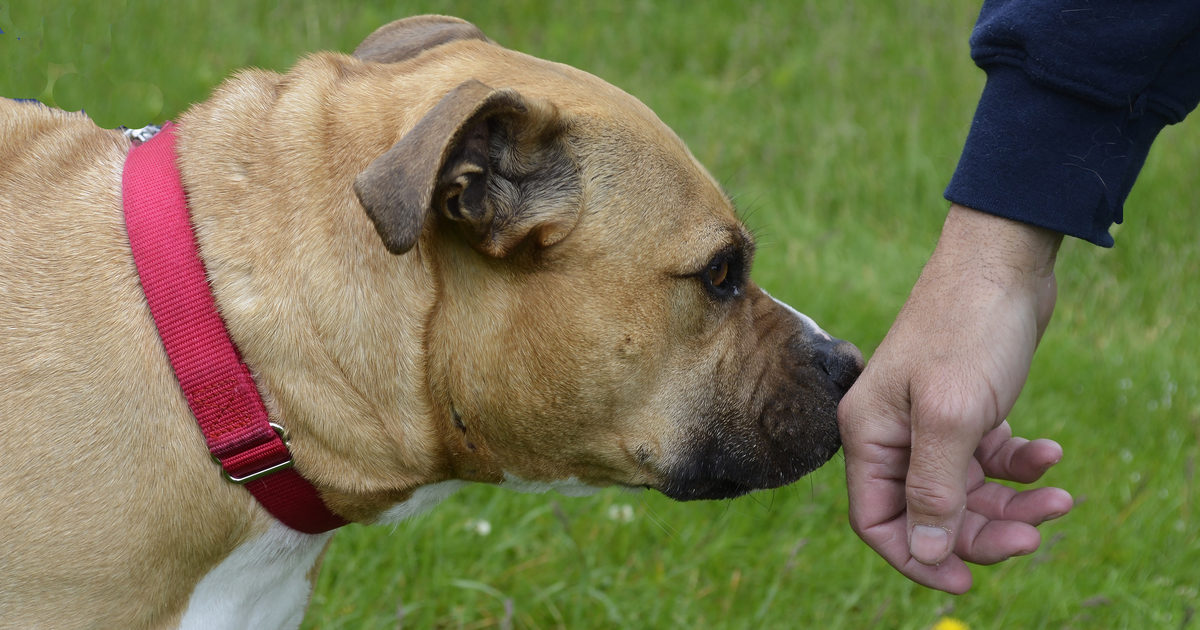

Thirty untrained pet dogs may be able to pick up something different in sweat collected during a seizure. None of them had ever been near a seizure before, and none had any medical detection training. Fourteen of the 30 dogs walked up to the seizure sweat sample first. ScienceAlert reported that this was 40 percent more often than chance alone would predict. The research was published in the Annals of the Italian National Institute of Health. The dogs had never met the patient whose sweat was collected. The authors describe what they saw as spontaneous olfactory attention, which means the dogs noticed the smell on their own without being taught. (Olfactory simply means related to the sense of smell.) The study does not prove that dogs can predict or diagnose epilepsy.
About 50 million people worldwide live with epilepsy, according to the World Health Organization, and seizures can strike without warning. If dogs can notice something different in seizure sweat without any training, that would hint that a seizure gives off a steady scent signal. It would also mean dogs are drawn to it before any learning takes place.
The research is early, the sample is small, and the authors point out key limits themselves. Even so, it adds a new piece to the growing science on dogs that sniff out seizures and other health conditions.
What Did the Milan Study Find?
Researchers at the University of Milan collected sweat samples from a 6-year-old girl with epilepsy who was not in the hospital. They then offered those samples to 30 dogs of different breeds, both mixed and purebred. None of the dogs had been around a seizure before. Each dog, with its owner, had two minutes to freely check out three scent stations in a room. One station held ictal sweat, which means sweat collected during a seizure. One held sweat collected six hours before or after a seizure. The third was a clean gauze pad used as a blank control.
The trial was blinded, so neither the dog owners nor the researcher watching knew which station held the seizure sample in each trial. Researchers watched over a live video stream and noted which station each dog went to first.
In total, 14 of the 30 dogs went to the seizure sample first, which was 40 percent more often than expected by chance. The authors report a Monte Carlo probability value of 0.029. This is a way of measuring how likely a result is to happen by random chance, and a value of 0.029 suggests the result is unlikely to be pure luck. Even so, one small test like this is far from the kind of proof doctors need.
There were no differences in how long the dogs spent sniffing each sample, or in how often they came back to a scent. The dogs went to the seizure sample sooner than to the others, but they did not linger over it longer. The researchers say this fits with a chemical difference that a dog can pick up fast. Something in seizure sweat seems to catch a dog’s attention at first sniff without a long inspection.
Read More: Dogs Can Smell If You’re Stressed or Relaxed and Adjust Their Behavior For You
To get more dogs to check the stations, the team placed empty food bowls next to each one. Even then, the dogs were more likely to go to the seizure sample first.
“No behavioral signs of distress, fear, or anxiety were observed,” the study authors wrote. The seizure scent drew dogs in first, and it did not make them back away.
What Is the Study’s Biggest Limit?
The researchers say plainly that the main limit is the sample, because all of the sweat came from one patient, a 6-year-old girl. That means it is still unclear whether a seizure has the same smell in different people. A result from one donor cannot show that seizure sweat smells the same across ages, seizure types, or medicines. The team is now widening its work to include several sweat donors. If the effect holds up across more people, that would be much stronger evidence that seizures give off a chemical smell dogs can detect.
This is a proof-of-concept study, and a dog walking to a scent first is not the same as a dog warning its owner before a seizure in real life. The test compared ictal sweat, collected during a seizure, with interictal sweat and a blank pad. Interictal means between seizures, and here it meant sweat collected six hours before or after one. The study did not test whether dogs can sense a seizure before it begins. Anyone thinking about a trained seizure-alert dog should keep that difference in mind.
What Can Trained Dogs Do?
A 2019 study in Scientific Reports came from researchers at Medical Mutts, a service dog group in Indianapolis, and the University of Rennes in France. It found that trained dogs could pick out seizure-linked odors collected from people with epilepsy. Five dogs trained by Medical Mutts were tested with samples from five patients in a French hospital. The dogs came from rescues and shelters and were being trained as service dogs. Their success at spotting the seizure samples ranged from 67 percent to 100 percent. They correctly ruled out non-seizure samples 95 to 100 percent of the time.
Dogs have been trained since the 1990s to respond to seizures, and some are trained to alert their owners before a seizure happens, ScienceAlert notes. Support Dogs, a UK charity, is one group that trains seizure alert dogs. But most reports of dogs sensing seizures in advance come from surveys of owners and trainers. Whether dogs can reliably sense a seizure before it starts has been much harder to study in a careful way.
Dogs have also been trained to detect other diseases by scent. A 2025 study run with Medical Detection Dogs and researchers from the Universities of Bristol and Manchester was published in the Journal of Parkinson’s Disease. Two trained dogs correctly picked out 70 and 80 percent of Parkinson’s disease samples taken from skin swabs. They correctly ruled out 90 and 98 percent of the samples from people without the disease.
In a separate 2021 study published in PLoS ONE, five trained dogs found 92 people with COVID-19 among 848 people tested. Their overall accuracy was 95.2 percent.
How Can Dogs Do This?
Dogs have a far stronger sense of smell than people do. Their noses have many more scent receptor cells, so they can pick up very faint traces of volatile organic compounds. These are tiny chemical traces in the air that the body gives off. Dogs tell odors apart by recognizing mixes of these compounds, which together make up the chemical “smell print” of a target.
When the body is under physical strain, such as during a seizure, its chemistry shifts, and those changes can show up in sweat, breath, and skin. Dogs may be picking up on those shifts. The open question is whether the changes are strong enough and steady enough for a dog to react to them reliably.
Earlier work suggests that people with epilepsy may give off specific odors linked to seizures. Trained dogs have been able to tell apart body odors taken during or just after a seizure from those taken at other times. The Milan study adds that this may not require training. Something in the seizure odor seemed to catch an untrained dog’s attention with no teaching at all.
What Does This Mean for You?
Seizures are hard to predict, and living with that kind of uncertainty is stressful for many people with epilepsy. Reliable early warning, whether from a dog, a wearable device, or a blood test, would make a real difference in daily life. The Milan research is a step toward understanding the biology behind that idea. It is not a tool that doctors can use with patients today.
The findings in the Annals of the Italian National Institute of Health do not mean your dog can detect or predict seizures. The study involved 30 untrained dogs, sweat from one child, and a two-minute sniff test. It was not real-world monitoring, and it did not test whether a dog could warn of a seizure ahead of time.
Talking to Your Doctor and Taking Next Steps
If you or someone in your home has epilepsy, look to a recognized program that trains seizure-response or seizure-alert dogs rather than relying on an untrained pet’s instincts. The 2019 research from Medical Mutts and the University of Rennes found that trained dogs can pick out seizure odors in a test setting. Groups like Support Dogs in the UK train dogs to help people with epilepsy, but how well any dog can warn of a seizure ahead of time is still being studied. The Milan study gives researchers a reason to keep looking into the chemistry behind this. It also shows the need to test sweat from many patients, to learn whether the signal is the same from person to person.
Talk to a neurologist before making any decisions about seizure care, alert systems, or a service dog. The science on dogs and seizures is promising, but it is not yet settled enough to guide personal medical choices.
Editor’s note: The headline overstates this study. It tested whether untrained dogs went first to sweat collected during a seizure, compared with sweat from hours before or after one and a blank pad. It did not test whether dogs can sense a seizure before it starts, and all samples came from one child with epilepsy. The study suggests dogs “may” notice this smell. It does not show that they can predict seizures.
Disclaimer: The author is not a licensed medical professional. The information provided is for general informational and educational purposes only and is based on research from publicly available, reputable sources. It is not intended to constitute, and should not be relied upon as, medical advice, diagnosis, or treatment. Always consult a licensed physician or other qualified healthcare provider regarding any medical condition, symptoms, or medications. Do not disregard, avoid, or delay seeking professional medical advice or treatment because of information contained herein.
AI Disclaimer: This article was created with the assistance of AI tools and reviewed by a human editor.