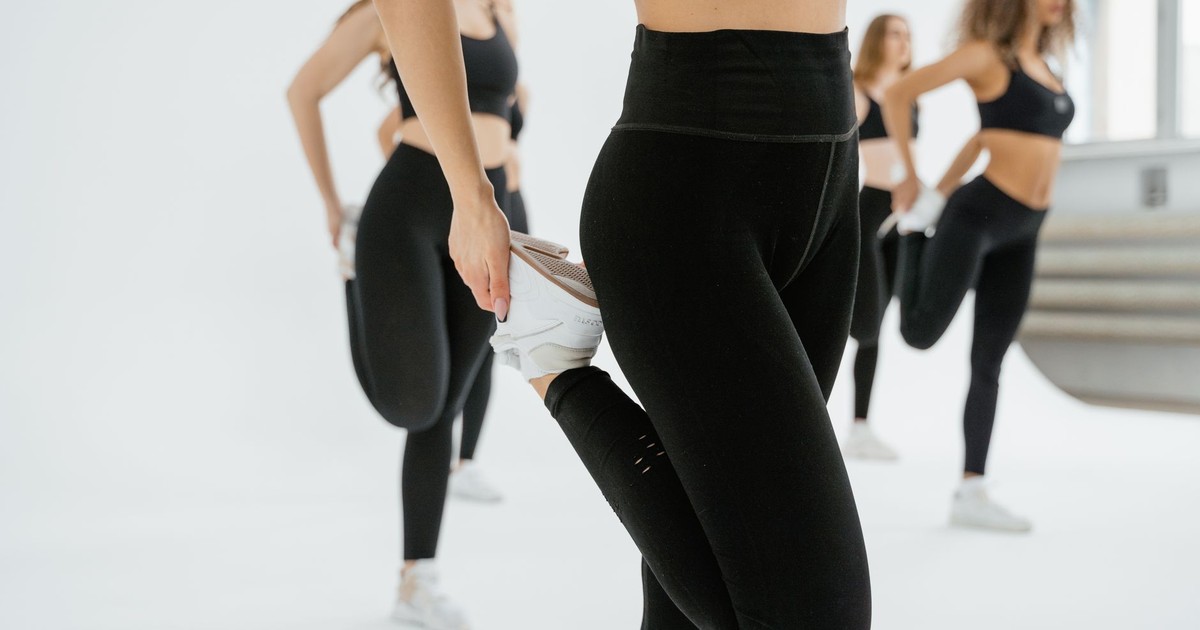

Jane Johnson had been watching Aubry Alldredge for years, waiting for what she knew was coming. During UpBeat Barre sessions at VASA Fitness in Kaysville, Utah, Aubry would sometimes simply turn around mid-class and start teaching the people behind her — she already knew every count, every cue, and every lyric by heart.
What followed was a certification. Aubry Alldredge, 22, is now the first person with Down syndrome to earn an UpBeat Barre instructor credential. She recently led her debut class in front of more than 60 participants, headset microphone on, moving through the room giving high-fives and calling out every cue herself.
Aubry’s path to the front of the room didn’t start with certification paperwork. It started years earlier, as a regular participant in the full range of group fitness classes offered at VASA Fitness. For the past several years, Alldredge had been attending classes ranging from Zumba, dance, HIGH Fitness, UpBeat Pilates, and SilverSneakers, with UpBeat Barre becoming her favorite. UpBeat Barre blends cardio, strength training, Pilates, and yoga into a single high-energy workout format designed to accommodate various fitness levels. That combination of disciplines kept her coming back, and the more she came back, the more she absorbed.
How a Down Syndrome Fitness Instructor Found Her Stage
UpBeat Barre instructor and co-owner Jane Johnson had been working with Alldredge over the years and noticed early on her drive to be on stage and teach others. “Aubry has come to our classes for years, and even sometimes she’ll turn around and teach the class because she knows the choreography really well,” Johnson said. Johnson described Aubry as having “an incredible brain,” noting she can learn choreography fast, retain it, and knows all the lyrics to the songs she works out to. She called it “a purely great skill set as an instructor,” adding that Aubry’s stage presence is “incredible” and that “she makes everyone feel seen.”
Aubry completed the UpBeat Barre certification process and recently stepped up for her first official class, teaching it to over 60 people. She told KSL: “I want to help everyone feel good, and I love to wear a mic, and I love showing options.”
For Aubry, offering exercise modifications isn’t just a technical consideration — it’s her philosophy. She wants participants of every ability level to find an entry point into the room, and she says making sure everyone feels included is one of her favorite parts of being at the front. Johnson confirmed that gym leadership is working to officially onboard Alldredge as a regular instructor at the Kaysville facility. “Finding ways to be inclusive has been one of our missions,” Johnson told KSL. “We were just delighted when Aubry wanted to be an instructor because she holds those values.”
What the Research Says About Exercise and Down Syndrome
Aubry’s years of consistent class participation reflect a pattern that researchers have been documenting with increasing clarity. A 2024 systematic review found that 92% of the studies examined reported at least one significant improvement in physical fitness outcomes following structured exercise interventions in people with Down syndrome. A study published in Disability and Rehabilitation expanded that picture: included studies reported improvements in motor skills, balance, coordination, and psychosocial outcomes among individuals with Down syndrome who participated in regular physical activity programs.
Barre-style classes sit squarely within the type of programming that produces those results. VASA Fitness describes UpBeat Barre as a “muscular-endurance HIIT fusion of cardio, strength, pilates, and yoga” that “uses popular music to create an accessible, sweaty, and balanced workout with varying levels of intensity,” making it naturally adaptable to different fitness levels. Cleveland Clinic describes barre as a workout that “combines different elements of yoga, Pilates and ballet into one physical fitness routine,” which supports its use across a diverse class.
Community participation in fitness settings does more than improve physical metrics. A 2025 study in Disability and Rehabilitation found that community participation is important for social inclusion and is a focus of government policies aimed at enhancing quality of life. That double benefit — physical and social — makes inclusive fitness environments particularly valuable. The American College of Sports Medicine (ACSM) has partnered with the National Center on Health, Physical Activity and Disability (NCHPAD) to offer an Inclusive Fitness Specialist Certificate Course, an online program designed to equip fitness professionals with the skills and knowledge needed to create inclusive, safe, and effective fitness environments for people with disabilities. Aubry is, in practical terms, already doing that work.
Down Syndrome Fitness Instructor: Turning Skill Into Employment
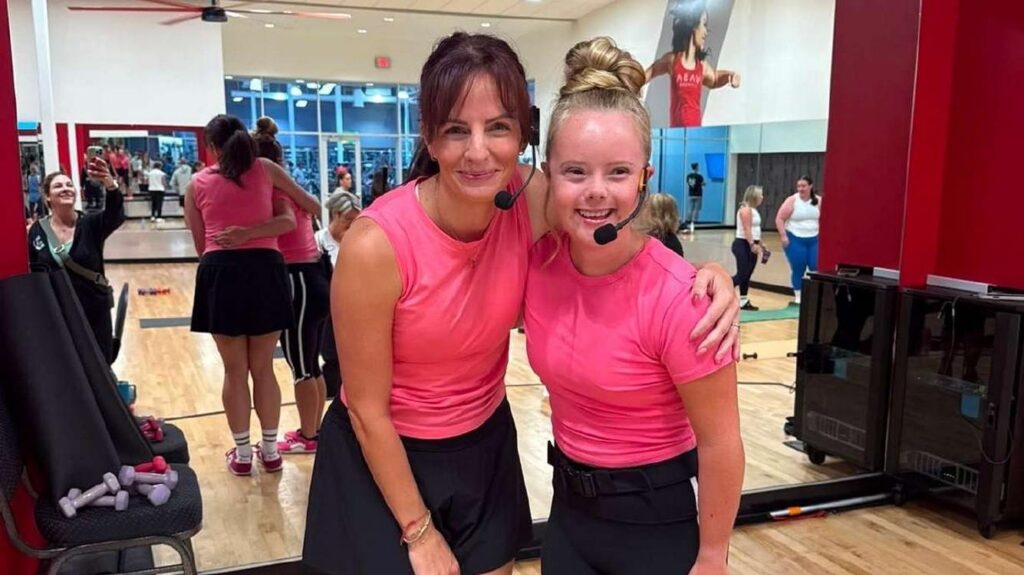
The story of Aubry Alldredge as a Down syndrome fitness instructor matters partly because employment for adults with Down syndrome remains a genuine challenge at the population level. Recent data suggest employment rates for adults with Down syndrome vary widely by region and support structure, with many adults still outside the paid workforce despite growing awareness of inclusive employment practices.
The National Down Syndrome Society (NDSS) maintains an Employment Program that lists resources for adults with Down syndrome pursuing paid work. Their employment resources make clear that adults with Down syndrome can pursue a range of career paths, from competitive employment in standard community settings to supported roles where ongoing coaching assists with job tasks and communication. NDSS highlights how thoughtful job placements, personalized training, and supportive work environments contribute to meaningful career success for individuals with Down syndrome across various industries.
Aubry’s path is a practical example of how employment works when the conditions are right. She found something she was already good at, spent years building familiarity and skill, had an instructor who recognized her talent and gave her increasing responsibility, and then completed the formal certification process. Now Johnson is working to make her an official instructor at the Kaysville gym. The accommodations along the way were less about lowering the bar than about creating the right conditions for an existing skill to become a credential.
Read More: Champion Gymnast With Down Syndrome Becomes A Model, Paving The Way For Others Like Her
A Six-Pack, Six Dogs, and a Bigger Picture
Fitness isn’t the only space where Aubry has channeled her energy. Alongside her mother, Cindy Alldredge, she wrote a children’s book titled I Have a Six Pack, with the title being a play on words referencing the family’s six rescued dogs, aiming to promote positivity for the Down syndrome community while also encouraging dog adoption. Cindy Alldredge explained to KSL that if readers see a girl with Down syndrome doing all the things she does with six dogs, maybe they’ll consider adopting one themselves. The book is simultaneously a story about rescue animals and a quiet argument for broader representation.
Both the book and her work in the gym push against a narrow picture of what people with Down syndrome do and are capable of. Both are things she chose herself, built on skills she already had, and executed alongside people who supported her without diminishing her.
What This Means for You
Aubry’s motivation is direct and consistent. She loves being on stage, giving options, and making everyone feel included. Those aren’t aspirational talking points — they describe what she actually does every time she takes the floor: roams the room, demonstrates modifications, calls the cues, hands out high-fives, and pulls strangers into the experience. That capacity to make a full room feel seen is a professional skill, and it’s the reason Johnson spotted her years before any official certification was on the table.
For readers who participate in group fitness: ask your studio whether their programming is genuinely accessible to participants of different abilities. For readers interested in the broader employment picture, the NDSS Employment Program offers practical resources for both job seekers with Down syndrome and employers working to build inclusive workplaces. The evidence is increasingly clear that when the right support structures exist, the range of roles adults with Down syndrome can fill is far wider than employment statistics currently reflect. Aubry Alldredge, headset on and room packed, is one data point in that direction.
Disclaimer: This information is not intended to be a substitute for professional medical advice, diagnosis, or treatment and is for information only. Always seek the advice of your physician or another qualified health provider with any questions about your medical condition and/or current medication. Do not disregard professional medical advice or delay seeking advice or treatment because of something you have read here.
AI Disclaimer: This article was created with the assistance of AI tools and reviewed by a human editor.
Read More: People with Down Syndrome Are Living Better, Longer Lives Than Ever