

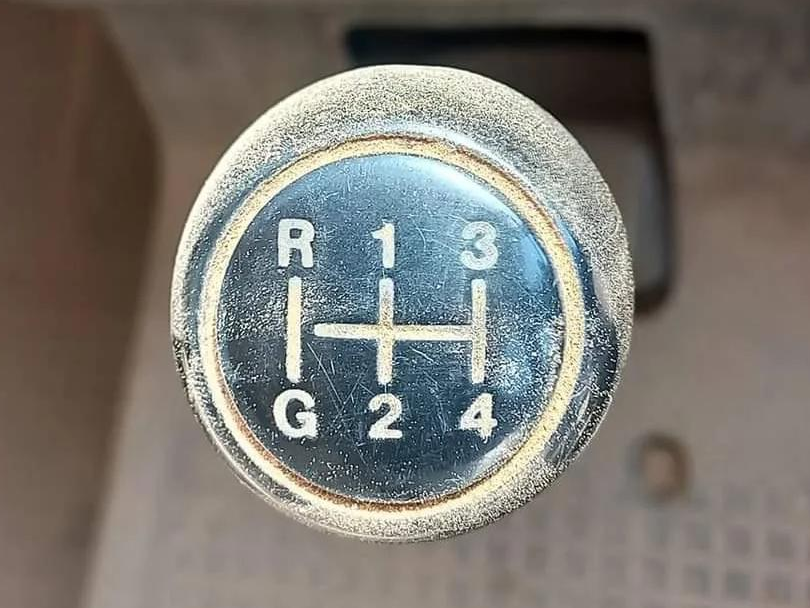
Most motorists from Generation X to the older segment of Generation Z know the standard 1-to-6 manual gear sequence and reverse, along with the “sports mode” in contemporary models. However, some vehicles display a more obscure marking. While modern automobiles designed for city driving usually follow conventional gear patterns, older models and those built for rugged or off-road conditions often include an unusual gear position marked with the letter “G.” Some off-road vehicle users might be familiar with that gear position, but many are unaware of how it works.
Tracing the origins of this gear involves looking into a hundred years of truck manufacturing, high-end German engineering, and the development of one of the world’s most sophisticated performance vehicles. Many motorists initially dismiss the marking as an error or an archaic design carryover, but it actually serves a useful function. It does, however, make sense that many drivers today are unfamiliar with the “G” shift and some may never encounter this gear in their lifetimes.
What the G Actually Stands For
The “G” stands for Gelände, a German word that translates directly to “terrain.” The word originates from the German automotive giant, Mercedes-Benz, with the full word being Geländewagen, which translates to “all-terrain vehicle.” The Mercedes-Benz G-Class was originally developed in the late 1970s as a military off-road vehicle, built at the request of the Shah of Iran before civilian production versions followed. The word Gelände attached itself to that vehicle’s identity and, over time, to any ultra-low gear that shared the same or similar purpose as the gear position on the G-Wagon.
Maximum Torque, Minimum Speed
The G gear engages an ultra-low gear ratio which is well below what the first gear is capable of reaching. The lower ratio increases torque at the wheels, allowing vehicles to climb steep inclines, tow heavy loads from a standstill, navigate deep mud, cross loose sand, or crawl over rocky surfaces at a fully controlled pace. Operating at a crawl, this gear offers little benefit for routine driving on paved roads, such as pulling away from intersections or merging onto highways. Instead, engineers design it for environments that demand extreme traction and pulling capability, especially on uneven ground or during critical moments when losing momentum could lead to a dangerous stall.
The Nickname That Stuck
The informal but fitting term “Granny Gear,” sometimes referred to as “Ground,” serves as a staple in agricultural and vintage trucking circles. MotorTrend famously compares the pace it provides to the steady, cautious shuffle of a kindly grandmother. Although the name is colloquial, it accurately describes the gear’s primary characteristic: it moves the vehicle at a crawl so slow that it seems to shuffle rather than drive. This deliberate lack of speed is a vital engineering response to the demands of heavy loads and unforgiving terrain.
Where the Gear Ratio Sits
Early commercial vehicles used these “granny” positions to deal with heavier loads or precarious terrain that typical vehicle gears cannot handle. The G gear featured ultra-low ratios ranging from 6.0:1 to 7.02:1, while a typical modern manual first gear operates between 3.0:1 and 4.0:1. This mechanical advantage allows relatively modest engines to move massive loads up steep inclines without stalling. Historically, operators of loaded commercial trucks ran the risk of rolling backward uncontrollably on unpaved ground, which is almost impossible to recover from and can cause catastrophic and fatal accidents without this extreme ratio.
A Century of Granny Gear History
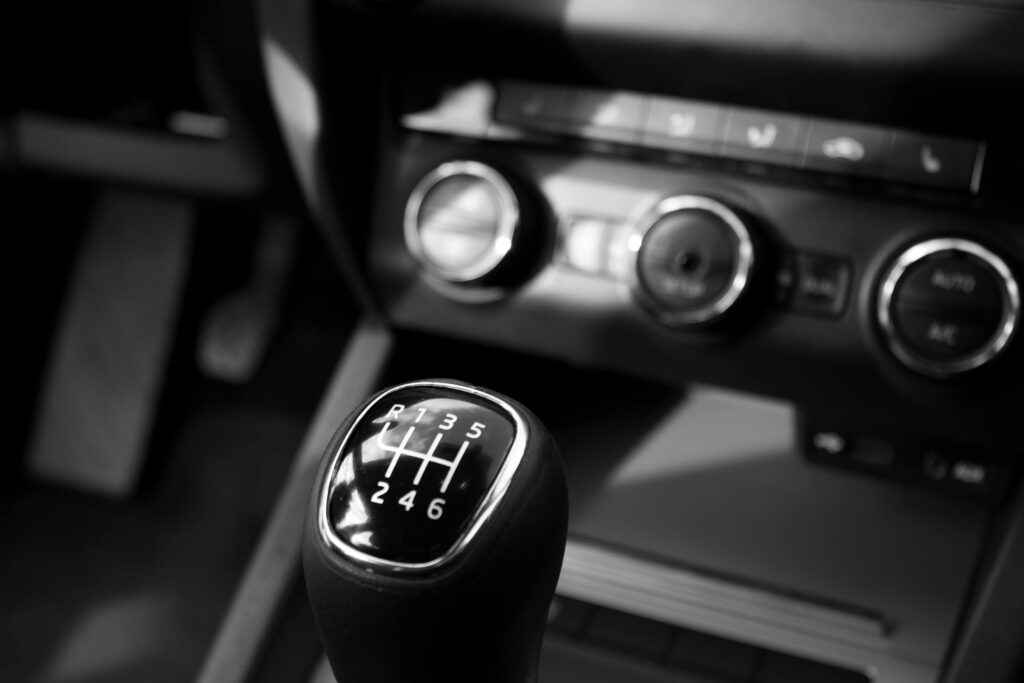
French engineers Louis-Rene Panhard and Emile Levassor pioneered the history of manual transmission in 1894 with their inaugural three-speed design. By 1898, Louis Renault advanced the technology by incorporating a differential axle, which facilitated more fluid power distribution. Although functional, these primitive transmissions faced constraints from the capabilities of early engines. A significant milestone occurred in 1928 when Cadillac launched the synchronized manual transmission, which lessened gear grinding and provided a smoother shifting experience. Shortly after, the evolution of transmission types accelerated as General Motors introduced the clutchless Hydra-Matic in 1938 and Buick debuted the fully automatic Dynaflow by 1948. Within just 60 years of automotive development, the technology diverged into several distinct paths.
The Commercial Truck Problem
Throughout the early and mid-20th century, commercial truck operators faced a relentless logistical challenge. These vehicles carried gross weights of 10,000 to 30,000 pounds over rugged hills, through thick mud, and along primitive, unpaved road networks. Because engines of that era provided only limited torque and horsepower by today’s standards, a standard first gear often lacked the mechanical leverage needed to safely launch such heavy loads from a stop, especially on a slope. In these situations, losing forward momentum on a steep grade posed a serious risk; it frequently led to a complete loss of brake control over thousands of pounds of freight, leaving drivers powerless against the force of gravity.
The Industry’s Solution
To provide commercial truck drivers with the mechanical advantage that early engines lacked, engineers integrated an ultra-low gear ratio at the base of the transmission range. Using this “granny gear,” operators could initiate movement under heavy loads before double-clutching through the remaining gears once momentum was established. This approach remained a standard requirement for professional drivers throughout the mid-20th century. Manufacturers like Ford, GM, and Ram continued to produce everyday workhorse trucks equipped with 5 or 6-speed manual transmissions featuring low first gear ratios between 5.0:1 and 6.0:1 well into the late 1980s and early 1990s.
The NP435 and Its Legacy
Ford’s NP435 serves as a legendary example of a “granny gear” transmission in American trucking history. During the 1986 model year, Ford equipped its trucks with this 4-speed manual gearbox, which featured a massive 6.68:1 first gear ratio designed for torque multiplication rather than standard street driving. In 1987, Ford made a significant industry shift by replacing the NP435 with the Mazda-produced M5OD, a close-ratio 5-speed. This transition marked a new era in truck engineering: as manufacturers produced more powerful engines and made dual-range transfer cases standard, the once-essential in-transmission crawler gear became largely unnecessary for the average driver.
Why It Faded From Consumer Vehicles
The decline of the granny gear in passenger vehicles was the result of 2 intertwined developments: the surge in engine power and the evolution of transmission systems. By the late 1980s, even a standard half-ton SUV possessed more torque and horsepower than a long-haul semi-truck from the 1950s. This abundance of power made ultra-low gearing redundant for typical daily use, while the standardization of 2-speed transfer cases with low-range options further minimized the necessity for a dedicated crawler gear within the primary transmission. This shift coincides with the overall waning popularity of manual gearboxes; by 2021, manual transmissions accounted for only 1% of new car sales in the U.S., with a minor uptick to 1.7% in 2023 supported by a dedicated enthusiast base.
The Porsche 959 and Its Unexpected G Gear
The 1986 Porsche 959 boasts a 450-horsepower engine and serves as a German supercar that features an unexpected gear for difficult terrain. It utilizes a 6-speed manual transmission, but the shift pattern labels only gears 1 through 5, while the sixth position, located above first gear, is marked by the letter “G”. Porsche designed this “G” gear as a technical workaround for stringent noise requirements, not as a marketing tactic or design oddity. This modification allowed Porsche to secure legal approval for the 959’s sale in major international markets.
The Noise Regulation Problem
European pass-by noise regulations required vehicles to stay below specific decibel thresholds during standardized tests that measured sound at a controlled speed within a set zone. The sequential twin-turbocharged flat-six engine in the Porsche 959 produced remarkable noise; at standard RPMs in a typical first gear, it likely would have failed these requirements. To solve this, Porsche engineers reconfigured the transmission by placing the “G” gear at the base of the shift range. This meant that when the car navigated the test zone in what appeared to be “second gear” on the shift gate, it was actually utilizing its third internal ratio. By keeping the engine RPM significantly lower during the measurement, the 959 successfully met all regulatory standards without sacrificing any of its renowned road performance.
What the 959 Actually Was
To understand why noise compliance mattered this much to Porsche, it helps to understand what the 959 represented at the time. The car was the fastest street-legal production car in the world when it was introduced. Its 2.85-liter sequential twin-turbocharged flat-six produced 450 PS at 6,500 rpm and 500 Nm of torque at 5,000 rpm. Road & Track measured a top speed of 198 mph and a 0-to-60 time of 3.6 seconds. Car and Driver called that figure 9 tenths of a second quicker than any other car they tested in the entire decade of the 1980s. The car carried Porsche’s PSK all-wheel-drive system, which dynamically shifted torque between the front and rear axles in real time depending on road surface and conditions. Porsche built only 337 examples in total, including prototypes, at a base price of DM431,550, which was still less than half what it cost Porsche to build each one.
The G Gear’s Unplanned Everyday Value
What began as a noise regulation workaround turned out to be genuinely useful in normal driving conditions. Car and Driver noted that the short G gear “works great for stop-and-go California traffic.” The gear’s extremely low ratio made crawling through congested city streets easy and controllable in a car that was not designed for urban commuting at all. The 959 had also competed directly in the Paris-Dakar Rally, finishing first overall in 1986, where a low terrain gear served an entirely practical purpose on the rally’s unpaved desert stages. That dual identity, a regulatory compliant road car that also finished first in one of the world’s toughest endurance events, made the G gear a fitting feature on an unusual car. The gear solved a legal problem first, then turned out to serve the driver well in conditions its engineers had not specifically planned for when drawing up the original transmission layout.
What This Means for the Modern Driver
Most contemporary motorists now view the “G” gear as an automotive relic. Manual transmission popularity in the United States plummeted from 35% of new car sales in the early 1980s to 15% by the mid-1990s. This decline persisted into the 21st century, hitting 6% in 2010 and dwindling to approximately 1% by 2021. Consequently, only about 18% of American drivers today know how to operate a manual gearbox, a figure that continues to shrink as automatic systems provide better affordability, speed, and fuel economy. Furthermore, modern vehicles no longer require a “granny gear.” Advances in engine design provide sufficient low-end torque, which makes the extreme 6.0:1 mechanical advantage obsolete for standard road gradients or city driving. Because of these technological shifts, manufacturers have moved away from incorporating ultra-low ratios in modern manual transmissions, leaving the “G” gear as a specialized feature of the past.
Read More: What Is The ‘Shark Fin’ On Cars?
The 2021 Ford Bronco Brought It Back
The 2021 Ford Bronco marked a rare and deliberate return of the granny gear to a production SUV, the first since 1991. The Bronco’s seven-speed manual is effectively a six-speed with a seventh crawler gear built in. MotorTrend confirmed it as “the first true in-transmission crawler gear in an SUV” since the early 1990s. Ford reintroduced it because the Bronco targets serious off-road capability, and a dedicated in-transmission crawler gear provides a level of low-speed torque control that a two-speed transfer case alone cannot replicate in every terrain scenario. The reintroduction drew widespread attention, partly because most buyers under 30 had never heard the term granny gear before and had no frame of reference for what the seventh position on the shift gate was doing there.
Why It Still Matters to Know About
Understanding what the G position does changes how a driver reads the mechanical logic of any vehicle that carries it. The G gear is not a mistake on the shift gate. It is not a placeholder or a legacy label left over from an older design. It is a precisely engineered gear ratio with a defined purpose rooted in over a century of commercial vehicle development. Whether you encounter it on an old Mercedes G-Wagen, a vintage farm truck, a 1986 Porsche 959, or a 2021 Ford Bronco, the function is the same. Maximum torque, minimum speed, and maximum mechanical control over the vehicle’s movement.
The Letter That Said Everything Without Saying Anything
The G on a stick shift is one of those automotive details that rewards the drivers who bother to look it up. It sits quietly on the shift gate of a G-Wagen or a 959, marked with a single letter that carries a full engineering history behind it. Most people drove right past it for decades without once questioning what it meant or where it came from. The ones who asked got an answer that connected a German military vehicle program from the 1970s to a supercar built to win rallies and pass noise tests at the same time. That single letter is a compressed version of how automotive engineering actually works: solving real problems, in sequence, with whatever the physics and the regulations allow. The G gear is not a relic. It is a reminder that every marking on a vehicle exists for a reason, even when that reason has long since faded from common knowledge.
A.I. Disclaimer: This article was created with AI assistance and edited by a human for accuracy and clarity.
Read More: Is the Move to Ban Gas Cars a Risk to Personal Liberty?