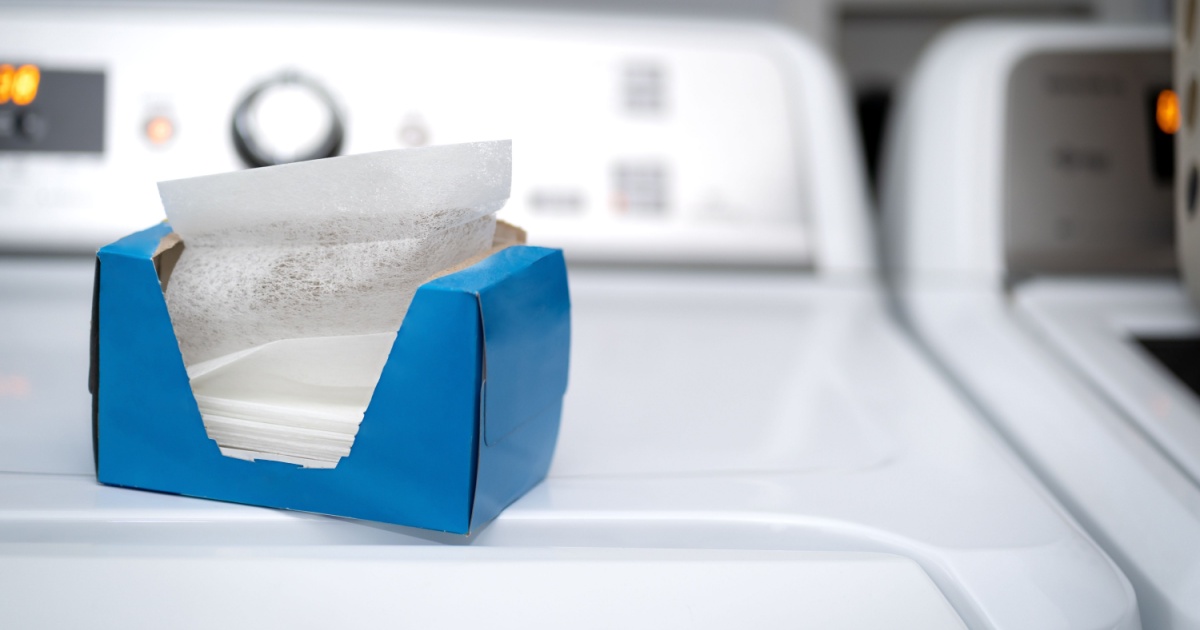

Scented laundry products are responsible for dryer sheet health risks that go far beyond skin irritation. The thing most people don’t realize is that the toxic exposure doesn’t stop when the dryer does. The chemicals don’t get washed away with rinse water. They stay on the fabric – on the shirt you wear all day, the bedsheets you sleep in for eight hours, the towel you press against your face every morning.
The concern with dryer sheets and liquid fabric softeners isn’t one dramatic exposure event. It’s low-level, continuous chemical contact accumulated over years, built into the most intimate parts of daily life.
“Patients ask me whether one specific product caused their cancer or dramatically increased their risk,” says Dr. Krushangi Patel, MD, a medical oncologist at City of Hope. “The reality is that cancer usually develops from a combination of factors over many years, including genetics, lifestyle and environmental exposures.” The dryer sheet conversation, she says, belongs inside that broader framework. According to HCG Oncology, cancer develops when cells accumulate mutations from inherited predispositions, lifestyle habits, and environmental exposures over time. A 2026 study published in Nature Medicine found that four in ten cancers worldwide are attributable to modifiable risk factors – a category that includes chemical exposures from everyday consumer products.
What’s Actually in a Dryer Sheet
A 2011 study in Air Quality, Atmosphere & Health found that dryer vents emitted more than 25 volatile organic compounds (VOCs) – gases released from product use that can be harmful on their own or react with other airborne compounds to create dangerous pollutants. According to that research, VOCs emitted from dryer vents after using popular brands of scented laundry detergent and dryer sheets included acetaldehyde and benzene, both classified as carcinogens. The EPA designated seven of those VOCs as hazardous air pollutants.
To put the acetaldehyde figures in perspective: emissions from a single laundry load would represent approximately 3% of total acetaldehyde emissions from all automobiles in the study area, according to researchers at the University of Washington who conducted the analysis. Those emissions exit through the dryer vent – but in homes with dryers vented indoors or near open windows, that air comes straight back in.
A 2022 study found that VOC emissions from softener-treated fabrics rose by 10 to 163% compared to fabric washed with plain water. The heat of the dryer cycle accelerates that chemical release – which means every load with a scented sheet is generating a fresh wave of airborne compounds inside the home.
The “Fragrance” Loophole
Dr. Patel warns that “the concern is that some of those fragrances may contain or release chemicals that are not fully disclosed on product labels.” That undisclosure isn’t an accident – it’s built into US labeling law.
Some fragrance chemicals are natural plant derivatives, while others are man-made compounds. The manufacturer of the product is not required to disclose exactly which chemicals are present in the fragrance, because the FDA considers this information a trade secret. Under current rules, a company can list hundreds of individual chemical compounds under the single word “fragrance” on the label. Dr. Adeel Khan, MD, an academic hematologist-oncologist and epidemiologist in Dallas, explains: “The concern is that some may contain fragrance ingredients, impurities or manufacturing byproducts that are known or suspected carcinogens.”
The Environmental Working Group has found that the average fragrance product contains approximately 14 hidden chemicals not listed on its label. There are nearly 4,000 fragrance ingredients used in common household products, and your fabric softener may contain phthalates, which disperse scent, as well as synthetic musks such as galaxolide, which accumulate in the body over time.
Phthalates (pronounced tha-lates) are endocrine disruptors that interfere with the hormone system and are linked to fertility changes and early puberty, according to the EWG’s 2024 analysis of phthalate risks. A 2020 review published in a toxicology journal via the NIH found that prenatal phthalate exposure is associated with preterm birth, preeclampsia, and growth restriction in developing fetuses.
The fragrance industry’s pattern of obscuring chemical disclosure extends well beyond laundry products. For a closer look at how this plays out across household items, this overview of indoor air chemicals covers the broader VOC picture in the home environment.
The Chemistry That Softens Your Clothes
Beyond fragrance, the other major chemical concern in fabric softeners is a class of compounds called quaternary ammonium compounds – “quats” for short. Quats make clothes feel soft and wearable right out of the wash, but some are known to trigger asthma and may be toxic to the reproductive system, according to the Environmental Working Group’s analysis of fabric softener ingredients. Research also suggests that long-term exposure may be linked to the development of asthma, with animal studies pointing to reproductive effects as well.
This matters partly because of how softeners work chemically. Unlike soaps and detergents that are designed to be rinsed away, softeners are designed to stay embedded in fabrics. As Dr. Mohamad Khair F. Khasawneh, MD, a medical oncologist at Loyola Medicine, notes, this creates two ongoing pathways of exposure: “inhalation of the vapors as we breathe in our homes, and skin absorption as our clothes and bedsheets rub against our bodies all day and night.”
Even in otherwise healthy individuals, constant exposure to VOCs from fabric softeners and dryer sheets may lead to respiratory sensitivities over time. For people with existing asthma or fragrance sensitivity, the exposure pathway is more direct. A 2018 study published in Air Quality, Atmosphere & Health found that exposure to fragranced laundry emissions was associated with asthma attacks and migraine headaches in a population sample.
How Significant Is the Cancer Risk?
Oncologists are careful not to overstate the evidence. Dr. Patel is clear: “Typical dryer sheet use doesn’t necessarily cause cancer. Risk depends on factors such as dose, frequency and duration of exposure. But because fragrance-related emissions aren’t always obvious from the label, many experts recommend minimizing unnecessary fragrance exposure when practical.”
Dr. Tracy Proverbs-Singh, MD, a gastrointestinal medical oncologist at the John Theurer Cancer Center at Hackensack University Medical Center, frames it differently: “They release a complex, undisclosed mixture of chemicals, not a single, measurable substance. Everyone’s tolerance and overall exposure load is different, so the concept of a universal safe level doesn’t apply.”
Dryer sheets don’t arrive in a vacuum – they’re one of dozens of chemical exposures that accumulate across a day. Cleaning sprays, air fresheners, personal care products, and scented candles all release similar compounds. The cumulative chemical load from multiple sources, day after day, year after year, is where oncologists focus their concern – not any single product used on any single occasion.
Switching from fragranced to fragrance-free laundry products reduced VOC concentrations by up to 99.7%, according to the 2018 Air Quality, Atmosphere & Health study. One product swap delivers a near-complete elimination of this particular chemical pathway.
Read More: How Safe Are Dryer Sheets?
What to Use Instead
The oncologists who have spoken publicly on this topic are consistent on alternatives. None require sacrifice on the outcome – clothes can still be soft, static-free, and fresh-smelling without the chemical load.
Dr. Proverbs-Singh calls wool dryer balls her top all-around pick: “They physically soften clothes, reduce static and shorten drying time, and you can even add essential oils for a natural scent.” Wool dryer balls work by separating fabrics as they tumble in the dryer, reducing friction and improving airflow throughout the cycle – the same mechanical softening effect as a dryer sheet, without any chemical residue.
For people who prefer liquid fabric softener in the wash, Dr. Khasawneh suggests adding a half-cup of distilled white vinegar to the washing machine’s rinse cycle. “It breaks down leftover detergent residues that make clothes stiff, leaving your laundry naturally soft.” White vinegar is acidic enough to neutralize alkaline detergent buildup – which is what actually causes fabric stiffness – without coating fibers in any chemical film. Standard rinse-cycle dilution makes the mild vinegar smell disappear completely by the time clothes are dry.
For those who don’t want to go the DIY route, Dr. Khasawneh suggests switching to a fragrance-free or plant-based alternative and looking for “brands explicitly verified as non-toxic or organic by independent watchdog groups like the EWG.”
What This Means for You
Most people who have used scented dryer sheets or liquid fabric softeners for years don’t need to panic. The evidence on dryer sheet health risks points to concern about cumulative, long-term chemical exposure – not a single acute event. The reassurance from oncologists is consistent: past use is not cause for alarm. What’s within your control is what you do going forward.
The most practical takeaway is a simple swap. Wool dryer balls cost less than $20 for a set of three to six, last for over 1,000 loads, and generate zero chemical emissions. If you want fragrance, a few drops of lavender or eucalyptus essential oil on each ball before loading the dryer will diffuse naturally through the cycle. Half a cup of distilled white vinegar in your rinse cycle handles softness and detergent buildup without adding anything your body needs to process. If buying commercial products, check the EWG’s Healthy Cleaning database before purchasing – it scores individual products on chemical safety and flags specific ingredients of concern.
The broader principle applies beyond laundry: the word “fragrance” on any household product label is a signal to investigate, not a guarantee of safety. As Dr. Proverbs-Singh puts it, “The reason it’s still so important to understand these risks isn’t to create more fear, but to do the exact opposite: to turn that fear into a sense of control. Ultimately, this knowledge is about empowerment. It’s not about living in a state of constant anxiety, but about making informed, proactive decisions for your long-term health.”
Disclaimer: The author is not a licensed medical professional. The information provided is for general informational and educational purposes only and is based on research from publicly available, reputable sources. It is not intended to constitute, and should not be relied upon as, medical advice, diagnosis, or treatment. Always consult a licensed physician or other qualified healthcare provider regarding any medical condition, symptoms, or medications. Do not disregard, avoid, or delay seeking professional medical advice or treatment because of information contained herein.
AI Disclaimer: This article was created with the assistance of AI tools and reviewed by a human editor.