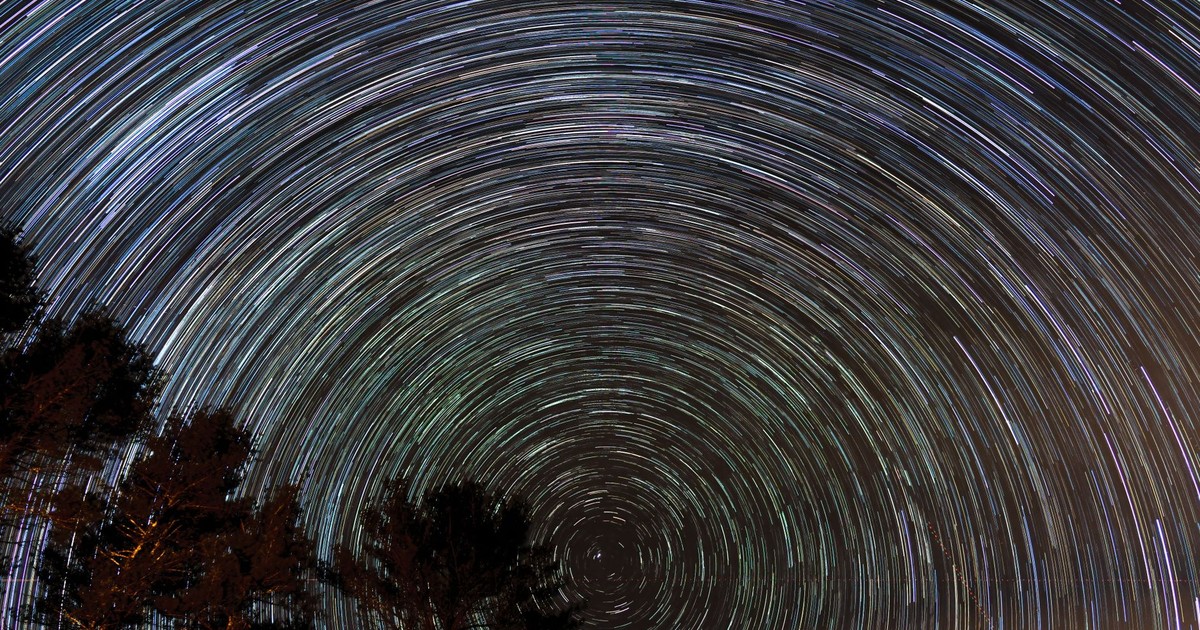

On July 4, 2024, Earth completed its daily rotation 1.66 milliseconds faster than the standard 24-hour mark – the fastest spin ever recorded in the atomic-clock era. That detail sits in jarring contrast to what geophysicists have been tracking on a much longer timescale: the planet is simultaneously slowing down, and the force now accelerating that slowdown is one that ancient astronomers never could have anticipated.
The headline version of this story – that days will one day last 25 hours – is technically accurate. The timeline attached to it is not what most people assume. The shift playing out right now is measured in fractions of a millisecond per century, a rate so gradual it is essentially imperceptible to any living thing. And yet the mechanism behind the current acceleration of earth rotation slowing has changed in a way that has no precedent in at least 3.6 million years of geological history.
Two forces are doing the work. One is ancient, driven by the Moon’s gravitational relationship with Earth’s oceans. The other is decades old and entirely human in origin. Together, they’re rewriting the physics of how long a day actually lasts – with consequences that reach from fossil records of dinosaur shells to the servers that run GPS satellites.
How the Moon Has Been Slowing Earth for Billions of Years
For billions of years, Earth’s rotation has been gradually slowing because of the gravitational pull of the Moon. This interaction creates tides in the oceans, and the friction generated by those tides acts like a gentle brake on the planet’s spin. The Moon’s pull creates tidal bulges in the oceans, and as Earth spins beneath those bulges, friction with the seafloor acts like a persistent brake pad.
The energy that Earth loses doesn’t disappear – it transfers. According to Live Science, the pull of the tides accelerates the Moon, so the Moon moves farther away each year. Measurements from NASA’s Jet Propulsion Laboratory using lunar laser ranging experiments confirm the Moon is retreating from Earth at approximately 3.8 centimeters per year – roughly the rate human fingernails grow.
Scientists estimate that this natural tidal process slows Earth by roughly 2.4 milliseconds per century. Over deep time, the consequences accumulate dramatically. About 1.4 billion years ago, a day on Earth lasted just 18 hours because the Moon was closer. By 70 million years ago, when non-avian dinosaurs still roamed, days lasted just 23.5 hours and a year contained 372 of them. A 2026 study published in the Journal of Geophysical Research: Solid Earth found that climate-driven processes are currently lengthening days at 1.33 milliseconds per century, a rate without precedent in the 3.6-million-year geological record examined.
Ice Melt Is Now Driving Earth Rotation Slowing

As polar ice sheets and glaciers melt as a consequence of climate change, water that was once locked up at high latitudes flows into the oceans and spreads toward the equator. This shifts mass away from Earth’s poles and, like a figure skater extending their arms mid-spin, slows the rotation. The physics are the same ones governing a spinning top – redistribute the mass outward, and the spin rate drops.
The finding, published in March 2026 in the Journal of Geophysical Research: Solid Earth by researchers Mostafa Kiani Shahvandi and Benedikt Soja from the University of Vienna and ETH Zurich, quantifies precisely what glaciologists and geodesists had been building toward: Earth’s days are currently lengthening at 1.33 milliseconds per century due to climate-driven ice melt and sea-level rise.
Before 2000, the contribution from ice loss to changes in day length remained below 1 millisecond per century. If global temperatures continue rising at current rates, scientists estimate that climate-driven changes could reach 2.62 milliseconds per century by the end of this century. According to Scientific American, climate change is expected to have more influence over day length than the Moon by the end of this century. That’s a striking inversion of a 4.5-billion-year-old dynamic.
Groundwater Pumping Has Literally Tilted Earth’s Axis
Ice melt gets most of the attention, but there’s a second human fingerprint on Earth’s rotation that receives far less coverage. As Ki-Weon Seo, a geophysicist at Seoul National University, put it: “Earth’s rotational pole actually changes a lot. Our study shows that among climate-related causes, the redistribution of groundwater actually has the largest impact on the drift of the rotational pole.”
A 2023 study by Ki-Weon Seo and colleagues at Seoul National University found that agricultural groundwater extraction shifted Earth’s rotational pole roughly 80 centimeters eastward between 1993 and 2010 alone, making groundwater pumping the single largest climate-related driver of polar drift. The mechanism: when water is pumped from underground aquifers (often in mid-latitude regions like western North America and northwestern India) and ultimately reaches the ocean, it moves mass away from its original location, nudging the axis. The AGU research found the model was off by 78.5 centimeters when accounting for 2,150 gigatons of groundwater redistribution between 1993 and 2010.
NASA-funded researchers used more than 120 years of data to decipher how melting ice, dwindling groundwater, and rising seas are nudging the planet’s spin axis and lengthening days. Days on Earth are growing slightly longer, and that change is accelerating. The reason is connected to the same mechanisms that have caused the planet’s axis to meander by about 30 feet (10 meters) in the past 120 years.
What Ancient Fossils Reveal About Day Length

Growth rings in the shells of ancient sea creatures are among the most reliable records of how Earth once rotated. Coral, mollusks, and single-celled marine organisms called benthic foraminifera lay down daily and seasonal growth lines the way trees lay down annual rings – and those lines encode the length of the day at the time the animal was alive.
Live Science notes that researchers examining a Cretaceous mollusk species found 372 distinct growth lines per year in shells dating to roughly 70 million years ago – confirming that Earth was completing more rotations annually, because each individual rotation was shorter. Separately, tidal sediment records dating back 600 million years, studied by researchers in Australia, show the day was then approximately 22 hours long.
The pattern from the deep past is consistent: as the Moon has moved farther away, Earth has spun progressively more slowly. Around 100 million years ago, a day on Earth was only 23 hours long. That gradual slowdown tracks directly with the Moon’s retreat and the steady transfer of rotational energy across billions of years. Human-driven ice melt is the only force in 3.6 million years that has added a new variable to that story.
Read More: The Moon is Drifting Away from Earth and It’s Actually Having an Impact on Time
Timekeeping Is Already Feeling the Strain
The millisecond-scale shifts in Earth’s rotation are small enough to be invisible to humans but large enough to cause real problems for atomic clocks and the global systems that depend on them. A study published in the journal Nature suggests that climate change is playing a significant enough role in Earth’s rotation to delay the possibility of a “negative leap second” – if polar ice had not melted, clocks worldwide might have required the subtraction of a single second as soon as 2026 to keep universal time in sync with Earth’s rotation.
Data tracked by the International Earth Rotation and Reference Systems Service (IERS) for 2026 indicates that days are lengthening once again, even after a recent period in which Earth recorded some of the shortest days of the atomic-clock era since 2020. The back-and-forth nature of short-term rotation speed doesn’t change the long-term trend; shorter days in any given year result from different factors, including fluid dynamics in Earth’s core, while the multi-century trend toward longer days continues regardless.
The international timekeeping community decided in 2022 to abolish leap seconds by 2035, in part to head off the unprecedented scenario of a negative leap second – which could cause computer systems and GPS networks that rely on perfectly synchronized time to behave unpredictably. As Earth’s rotation continues to fluctuate, the coordination between atomic time and solar time is becoming genuinely difficult to maintain.
The 25-Hour Day Is Real – Just Millions of Years Away
Despite dramatic headlines, there is no specific future date when calendars will suddenly switch to 25-hour days. Britannica places the estimate at approximately 156 million years; other projections run closer to 200 million. The range depends on assumptions about how current climate-driven acceleration will evolve over geological time.
The number that matters more to anyone alive today is 1.33 milliseconds per century – the current rate of change driven primarily by melting ice and sea-level rise. Earth’s rotation is altering at a rate unmatched in 3.6 million years, with melting polar ice lengthening days at a pace that now strains GPS navigation accuracy and spacecraft systems. GPS satellites are calibrated against atomic time standards that assume a specific day length; as that length shifts, navigation calculations can drift off.
Researchers from the University of Vienna and ETH Zurich looked back through geological time to ask whether anything like today’s rate of change has happened before. The geological record going back 3.6 million years contains no comparable episode. That’s not a statement about how fast the 25-hour day is approaching – it’s a statement about how unusual the current moment is in planetary history.
What This Means for You
The 25-hour workday isn’t coming anytime soon. What is already here is a subtler reality: human activity has measurably altered the rotation of the planet, at a rate unprecedented in millions of years of geological record. The clearest illustration of that is the fact that ice loss in Greenland and Antarctica – driven by a warming climate – is now doing to Earth’s spin what only the Moon has done for billions of years.
The practical consequences showing up now are primarily in precision technology. GPS systems, satellite navigation, and global internet infrastructure all depend on time synchronization accurate to fractions of a millisecond. When ice sheets and glaciers melt more than they grow from snowfall, and when aquifers lose more groundwater than precipitation replenishes, those shifts in mass cause the planet to wobble as it spins – a phenomenon called polar motion – in ways that require constant correction. The adjustments being made right now by international timekeeping organizations are a direct consequence of ice loss in Greenland and Antarctica. The next time a GPS route recalculates, somewhere in that correction is the fingerprint of a warming planet.
AI Disclaimer: This article was created with the assistance of AI tools and reviewed by a human editor.
Read More: The US Just Approved a Giant Space Mirror That Will Light Up Earth at Night