

Most people who love a man struggling with emotional intimacy won’t get a confession. They won’t hear him say, “I don’t know how to let you in.” They’ll just notice a quiet distance that they can’t explain, a pattern of deflection they can’t quite name, and a closeness that never quite arrives. And the man himself? He often has no idea any of this is happening. He’s not hiding. He’s not cold on purpose. He simply learned, somewhere along the way, that keeping people at a comfortable arm’s length was the safest thing he could do.
Understanding emotional intimacy men struggle with requires looking past the surface. The signs aren’t always dramatic. They rarely involve shouting matches or dramatic exits. More often, they show up in small, repeated moments: the conversation that stays shallow, the hug that ends too quickly, the feelings that get solved instead of shared. These are the things therapists are trained to notice. And once you know what to look for, you start seeing them everywhere.
This isn’t about assigning blame. Men who pull back from emotional closeness aren’t broken, and they’re not choosing to keep partners at a distance out of cruelty. The roots go much deeper, shaped by culture, early attachment, and years of conditioning that told them being vulnerable was the same as being weak. What follows are seven specific behaviors therapists consistently identify in men who struggle with emotional intimacy, often without any awareness that they’re doing it.
1. He Turns Feelings Into Problems to Fix

When his partner shares something painful, a hard day, a fear, a frustration, a man who struggles with emotional intimacy almost reflexively shifts into solution mode. He offers advice. He outlines a plan. He tells her what she should do. On the surface, this looks caring. But it sidesteps the one thing she was actually looking for: to feel heard.
Avoidantly attached individuals tend to experience fear of intimacy and show discomfort within close relationships, making them less likely to share and express emotions with their romantic partners, according to research published in PMC. Sitting with someone else’s discomfort, without doing anything about it, requires a level of emotional presence that men with intimacy difficulties often haven’t been taught to access.
The deeper issue is that fixing feels safe. It’s active, it’s purposeful, and it doesn’t require him to say “I understand how that feels” or ask what she needs. For men who were raised to equate usefulness with value, offering solutions is the only emotional language they learned. The practical takeaway for a partner: name what you need before you share. Say, “I don’t need you to fix this, I just need you to listen.” It gives him a role he can play without defaulting to the toolkit.
2. He Shuts Down During Conflict

Arguments that get emotionally intense don’t escalate for men who struggle with emotional intimacy. They stop. He goes quiet. He leaves the room. He says “I need a minute” and then that minute stretches into an evening. What looks like calm restraint is often something therapists call stonewalling, and it’s one of the most reliable signals of difficulty with emotional closeness.
Many men struggle with emotional connection not because they’re incapable of it, but because so many were never allowed to develop it. When big emotions arrive in a conflict, especially emotions tied to vulnerability like fear of rejection or shame, the nervous system of an avoidantly attached man can treat them the same way it treats a physical threat. The response is withdrawal. Research has found that the avoidance dimension of attachment is more strongly associated with a withdrawal strategy during conflict than with a demanding or aggressive approach, and that avoidance attachment is negatively associated with both the individual’s own relationship satisfaction and their partner’s.
Research from 2022 adds another layer. Men with attachment avoidance display higher revenge motivations than women following partner transgressions, according to a 2022 study. So the shutdown isn’t always passivity. Sometimes it’s the lid on something more reactive. Either way, the result is the same: the conflict doesn’t get resolved, the emotional distance grows, and his partner is left wondering what just happened.
3. He Can’t Identify What He’s Feeling
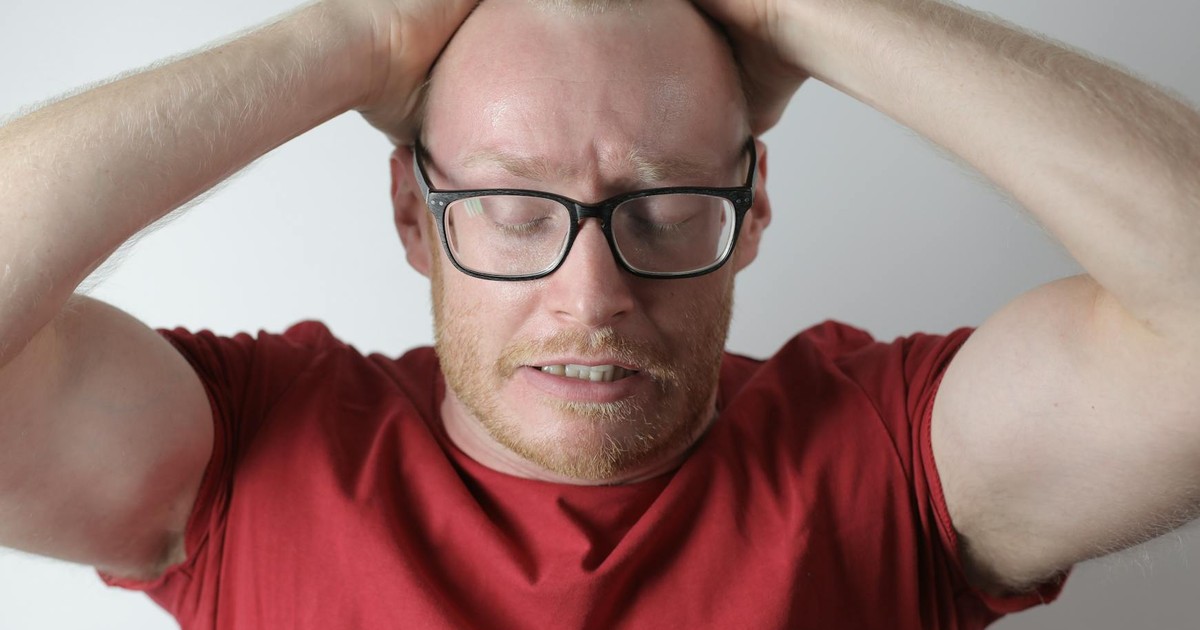
Ask a man with emotional intimacy struggles what he’s feeling in a tense moment and he’ll frequently say one of three things: “fine,” “nothing,” or “I don’t know.” This isn’t evasion in most cases. For many men, it’s the literal truth. They genuinely cannot name what’s happening inside them.
There’s a clinical term for this: alexithymia (pronounced a-lex-ih-THIGH-mee-ah), which means difficulty identifying and putting emotions into words. Psychologists term this difficulty “emotional illiteracy,” and it affects men who were never taught the language of their inner lives. This isn’t unique to a small group. It’s common enough that researchers have given it a name tied specifically to male socialization, sometimes called Normative Male Alexithymia, referring to the pattern where men are genuinely unable to say “I feel sad” or “I feel upset.” Research has found that attachment avoidance is negatively associated with how much emotion is shared with a romantic partner, and that this link between avoidance and reduced emotional expression within relationships is actually stronger for men than for women.
The cascade effect is significant. Men with alexithymic traits often struggle to communicate emotional needs, leading to relational misunderstandings and a decline in relationship satisfaction. If you’re in a relationship with a man who goes blank when emotions run high, approaching those moments with curiosity rather than frustration helps. Asking “Are you more frustrated or more worried right now?” gives him two concrete options to work with, rather than leaving him staring into a fog.
4. He Keeps Physical Affection at a Distance

Physical closeness and emotional closeness are more linked than most people realize. A man who struggles with emotional intimacy often keeps a subtle physical distance, too. He doesn’t initiate touch. He tolerates hugs rather than leaning into them. Physical affection might be fine in private but almost non-existent in public. And he may redirect toward sex as a way to create closeness without the emotional exposure that comes with genuine tenderness.
Attachment avoidance is marked by discomfort with closeness, intimacy, and dependency, based on expectations of rejection. Individuals with high avoidance exhibit heightened self-sufficiency, reluctance to seek support, distrust in others, and a tendency to deactivate their own and others’ emotional needs. Touch, when it’s tender and non-sexual, requires a particular kind of emotional openness. For avoidantly attached men, that kind of closeness can trigger discomfort even when they genuinely love the person they’re with.
This is also one of the behaviors most likely to go unnoticed by the man himself. He isn’t consciously deciding not to reach for his partner’s hand. His nervous system is running a background program it learned years ago, one that flags emotional closeness as something to be managed carefully. According to Healthline, Many therapists working with men on avoidant patterns start precisely here, with the body, because it’s often easier to shift physical habits than to access abstract emotional language right away.
5. He Redirects Vulnerability With Humor or Logic

He gets uncomfortable when a conversation turns personal, so he makes a joke. He gets flooded when emotions run hot, so he starts citing facts. He pivots to information when what’s needed is presence. These aren’t signs of indifference. They’re signs of someone who was taught, explicitly or not, that emotional vulnerability was a liability.
For generations, messages like “Be strong,” “Don’t cry,” and “Man up” have been deeply ingrained in many men, creating an internal script that equates vulnerability with weakness and emotional expression with a lack of masculinity. This shapes the reflexes men develop when they feel emotionally exposed. Humor is armor. Logic is distance. Neither leaves room for the kind of authentic self-expression that genuine connection requires.
Attachment avoidance is positively associated with a general tendency to suppress emotions, and these suppression-based strategies correspond to deactivating approaches that down-regulate emotional reactions. In other words, the more a man suppresses what he’s actually feeling in the moment, the more the emotional connection in his relationship deteriorates over time, even if nothing dramatic ever happens. The distance is built in the small deflections, the jokes that end conversations, the data points that fill the space where honesty should be.
6. He Struggles to Ask for Help or Admit He’s Struggling

Men who struggle with emotional intimacy often function as though they’re entirely self-sufficient. They don’t ask for support. They don’t admit when something is weighing on them. They carry stress alone and present a composed exterior to everyone around them, including the people closest to them.
The research on this is sobering. Suppressing emotions is mentally exhausting, and men who bottle up feelings often experience stress, anxiety, and even depression. A 2025 study in ScienceDirect found that restrictive emotionality was associated with reduced health-seeking behaviors in men. And the long-term effects show up in public health data in stark terms: males make up roughly 50% of the population but nearly 80% of suicides, according to current data from the CDC.
The refusal to ask for help isn’t just a communication style. For men with deep intimacy avoidance, admitting struggle feels genuinely dangerous. It exposes need. And need, for many of these men, was something that was either ignored or punished early in life. A partner who creates space for imperfection, without pressing or shaming, gives him a low-risk entry point to begin practicing vulnerability in the relationship.
7. He Pulls Back When the Relationship Gets Closer

This one is perhaps the most confusing for partners. Things are going well. The connection deepens. And then, almost without explanation, he creates distance. He gets busier. He becomes a little cooler. He finds fault with small things. Just as the relationship feels like it’s becoming something real, he pumps the brakes.
For avoidantly attached people, intimacy registers as a gradual intrusion. The closer someone gets, the more their nervous system registers something like threat, not consciously, but physiologically. They may genuinely want connection while simultaneously finding that closeness activates withdrawal. For a man who learned early on that vulnerability leads to pain, that depth is something the nervous system resists.
Research from 2023 found that higher levels of attachment anxiety and avoidance were associated with lower emotional intimacy with partners. And a 2025 study in Cogent Psychology confirmed that emotional intimacy is a significant predictor of marital satisfaction for both men and women. The pullback isn’t just painful for his partner. It’s quietly costing him the satisfaction and security he actually wants from the relationship.
What to Do With This Information

Recognizing these behaviors in yourself or someone you love isn’t an invitation to assign a diagnosis. It’s an opening. Most men who struggle with emotional intimacy aren’t aware of these patterns, and that’s the honest truth. While it may seem like some men simply don’t need close relationships, the reality is that humans are hardwired for connection, and deep down, even someone with an avoidant attachment style wants a close, meaningful relationship, if only they could work through their deep-seated fears of intimacy.
If you’re a man reading this and you see yourself in several of these patterns, that self-recognition matters. Emotional regulation is a skill, and skills can be built. It is possible to change your attachment style. If you recognize avoidant or insecure patterns in yourself or your partner, those patterns don’t have to be permanent. More secure beliefs and behaviors can be developed as an adult, according to HelpGuide’s attachment resources. Therapy, particularly approaches grounded in attachment theory or Emotionally Focused Therapy, is the most effective route. But even beginning to notice the moments when you deflect, shut down, or pull away is a real starting point.
The goal isn’t for a man to become someone who cries at every difficult conversation. It’s for him to build enough safety within himself to stay present when closeness feels uncomfortable, to choose connection over retreat, one small moment at a time. That shift, quiet and incremental as it is, changes everything.
Disclaimer: The information provided here is for educational and informational purposes only and is not a substitute for professional psychological, psychiatric, or mental health advice, diagnosis, or treatment. Always seek the guidance of a licensed mental health professional, therapist, psychologist, or psychiatrist with any questions or concerns about your emotional well-being or mental health conditions. Never ignore professional advice or delay seeking support because of something you have read here.
AI Disclaimer: This article was created with the assistance of AI tools and reviewed by a human editor.
Read More: 22 Unforgettable Lessons People Learned from Their Therapists