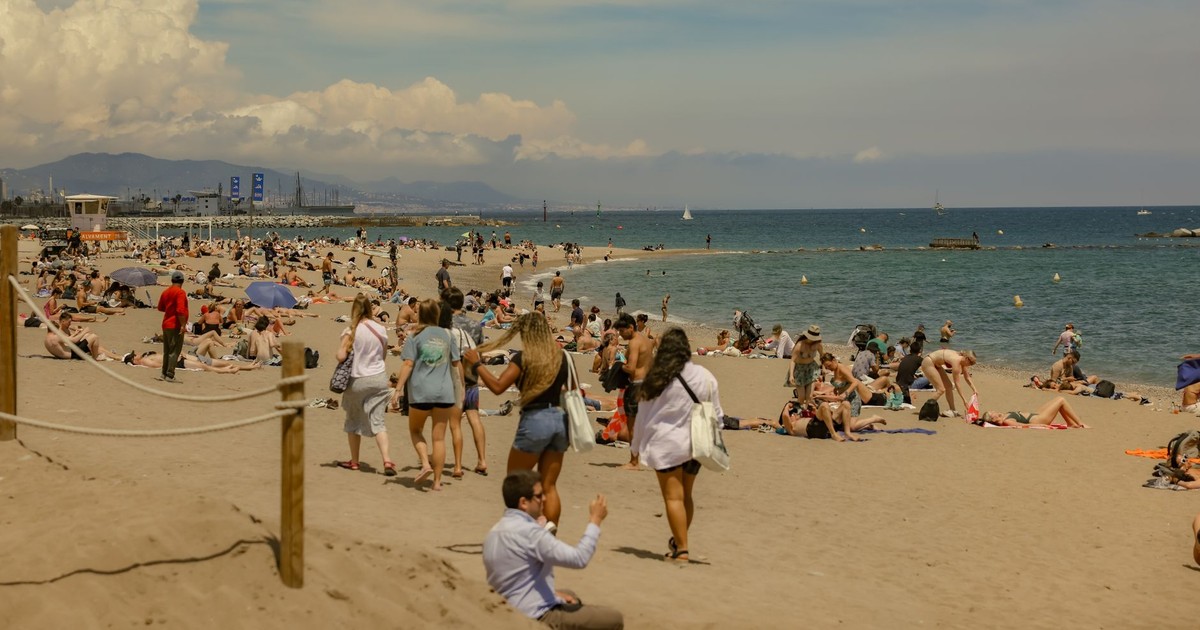

A pair of sandals left just steps from a Barcelona beach bar. A shoulder bag tossed over a bikini top. That’s the universal tourist uniform of Mediterranean summers – and in a growing number of European cities, it’s also the makings of a €300 fine before you’ve ordered your first coffee.
The rule catching the most visitors off guard is Barcelona’s coexistence bylaw, which has been on the books since 2011. The law prohibits people from walking through or remaining in public spaces in swimwear, except in designated areas such as beaches and swimming pools, with the exception also covering seafront promenades and streets immediately adjoining the beach or coastline. You can walk the boardwalk in your bikini. The moment you turn toward the Gothic Quarter to grab a snack, you’re technically in violation.
The bylaw separately prohibits going without a shirt or another garment covering the torso, unless the person is exercising or playing sport, with fines running between $140 and $340 for breaking the rule. Officers are instructed to first issue a verbal warning before filing a formal report, but repeat or flagrant offenders can be fined on the spot. In the summer of 2026, a wave of European beach destinations are enforcing dress codes that many visitors only discover after they’ve already broken them.
The Country-by-Country Breakdown of European Beach Swimsuit Fines
Spain has the most decentralized enforcement of any country on this list. Individual municipalities set their own civic rules, which means the fine for the same offense can vary dramatically depending on which town you’re in. In several high-tourism areas, Spanish councils have brought in fines for going shirtless and wearing swimwear in town, with bylaws banning people from wandering around in bikinis, swimming shorts or bare-chested away from beaches and pools. The pushback is driven by residents in places like Barcelona, Mallorca and parts of the Costa del Sol against behavior that blurs the line between beach resort and functioning city.
Fine levels by location break down as follows: Mallorca carries fines of €500, Barcelona fines of €120 to €300 for being shirtless in public, and Málaga and Marbella can issue fines between €300 and €750. In Malaga specifically, the city has taken the unusual step of posting the rules in tourists’ own language, with signs in English reminding visitors that local rules around behavior, including states of undress, also apply to them.
The Balearic Islands, including Mallorca, Menorca, and Ibiza, operate under their own regional framework. In Portugal’s resort town of Albufeira, anyone caught wearing only swimwear outside of designated beach areas, hotel zones, or pools faces fines ranging from €300 to €1,500, while in some parts of Spain such as Barcelona and Majorca, rules state that you cannot go topless or wear swimwear in local shops and restaurants, with a fine of up to €300 for violations.
How Portugal’s Algarve Out-Restricts the Rest of Europe
Albufeira made international headlines in mid-2025 when its municipal government pushed through what became one of the strictest dress codes in European tourism. According to Portugal Resident, the new code of conduct came into force with the aim of preventing abusive conduct and imposing fines for nudity and wearing a bikini or swimsuit in public areas. The timing was deliberate. The rules aim to curb “excessive behaviour” in public spaces, and the measure was approved by the Albufeira Municipal Assembly on June 6 and published in the official state gazette (Diário da República) on June 23, 2025, coming into force the following day, June 24, 2025.
The breakdown of what is banned and how much offenders can expect to pay includes: wearing bikinis or swimwear outside beach or pool zones, with fines from €300 to €1,500; drinking alcohol in the street, urinating, or defecating in public, also €300 to €1,500; and nude or sexual acts in public, with fines between €500 and €1,800. The code also extends to a detail that catches many tourists by surprise: private spaces that are visible from the street. Standing on your hotel balcony in a bikini, if that balcony overlooks a public road, falls under the same rules.
The UK’s Foreign, Commonwealth and Development Office (FCDO) updated its Portugal travel advice specifically to cover Albufeira’s new Code of Conduct, as confirmed by the FCDO’s official Portugal travel page, and the rules are stricter than anywhere else in Portugal, with fines issuable on the spot.
France: A Quiet Expansion of Shirtless Bans
France’s approach to beach swimsuit enforcement has been less dramatic than Spain’s or Portugal’s, but it has been consistent and growing. Coastal municipalities such as Les Sables-d’Olonne, Arcachon, Cannes, and La Grande-Motte have introduced fines ranging from €35 to €150 for tourists walking shirtless or wearing swimwear outside designated beach areas.
Nice operates under some of the clearest rules in the country. Being in the city without upper clothing can result in an immediate fine of €35, while sunbathing topless in prohibited areas carries a fine of €38. Those numbers might seem small, but enforcement is immediate and routine in peak season. The broader trend in France is acceleration: at least 20 French beach towns now enforce anti-shirtless rules, roughly double the number from a decade ago, with towns including Les Sables-d’Olonne, Arcachon, Cannes, and La Grande-Motte all active in enforcement.
France has also separately tightened rules around beach behavior beyond clothing. Across French beaches bordering designated bathing waters during the season, smoking is banned, with a standard fine of €135. That ban on smoking at French public beaches took full effect from July 1, 2025, making France one of the stricter countries in Europe for beach conduct overall.
Italy: From Sorrento to Sardinia
Italy’s coastal towns each enforce rules independently, but the pattern is consistent. In Sorrento, in southern Italy, wandering around town in a bikini or swimming trunks can land you a fine of up to €500. Portofino, the luxury harbor village on the Ligurian coast, extended its rules to bare feet as well as swimwear, with fines of up to €300 for swimwear violations in the town center.
Even Varenna on Lake Como has introduced similar rules, with tourists in swimsuits or with a bare torso facing fines of up to €200. A small lakeside village with no ocean beach, Varenna adopted a formal swimwear policy in step with coastal resorts far larger than itself.
For full nudity, Italy falls back on national law. Sorrento and portions of Venice forbid being shirtless or in a bikini in public squares and historic centres, with penalties of up to a few hundred euros. In Sardinia, even towel placement is regulated. At La Pelosa beach, visitors must place a mat beneath beach towels to reduce the amount of sand carried away from the beach. Failing to use a mat costs €100, an environmental rule that has been enforced more strictly in 2026 than in previous seasons.
Croatia’s Historic Cities Draw the Hardest Lines
Croatia’s Adriatic coast is home to some of the most enforced swimwear rules in Europe, driven partly by the density of tourists in its UNESCO-listed old towns and partly by longstanding community pressure. In the coastal towns of Split, Dubrovnik and Hvar, laws against “disturbances to public order” cover anyone walking around bare-chested or in swimwear, with fines of up to €150.
Hvar has gone further than the others. Dubrovnik, Split, and Hvar fine tourists up to €600 for walking through historic old towns in swimsuits, and Hvar has some of the strictest regulations in the country, with penalties reaching €500 for swimwear violations specifically. The rules in all three cities apply to the old town areas and public streets, not to beaches or waterfront promenades.
Beyond Swimwear: Beach Crackdowns Across the Continent
Read More: 20+ Dangerous Airport Habits Security Experts Wish Every Traveler Would Drop
In 2026, a growing number of European cities and regions have introduced regulations designed to address not only alcohol consumption but also broader public behavior by tourists, with these measures implemented at local or regional levels rather than through national legislation. The swimwear rules are the most visible element of this shift, but they sit alongside bans on loud music, reserved beach spots, and public drinking that together represent a fundamental change in how European beach destinations manage tourist behavior.
Portugal’s beach music rules are among the most financially severe. Portable speakers blasting out tunes at high volumes were banned by Portugal’s National Maritime Authority beginning in 2023, with fines for individuals ranging from €200 to €4,000 and between €2,000 and €36,000 for groups, with the offending speaker potentially confiscated as well.
Greece has taken a different but equally significant approach, focused on environmental protection rather than public decency. According to Fox News reporting on a statement from Greece’s Ministry of the Environment and Energy, the total number of designated “Untrodden Beaches” stands at 250, with some outlets citing 251, up from 238 in 2025 and 198 the year before. At these locations, the installation of sunbeds, umbrellas, or any constructed shelters is banned entirely to protect fragile coastal ecosystems. On the island of Sardinia, particularly at Punta Molentis beach, authorities have separately introduced an environmental restriction banning beach umbrellas, parasols and tents for most visitors.
What to Do Before You Pack Your Bags
The most practical thing a traveler can do before arriving at any of these destinations is treat a cover-up the way they treat a passport: non-negotiable. A lightweight shirt or sarong kept in a beach bag eliminates the vast majority of risk in Spain, France, Italy, Portugal, and Croatia in a single move.
The fine ranges vary enormously by location, from €35 in Nice to €1,500 in Albufeira, and enforcement intensity varies too. Breaking the rules can lead to confiscated belongings or sizeable fines, even when the same behavior would be accepted at another resort a few kilometres away. In Barcelona, the city’s coexistence bylaw formally instructs officers to warn before fining. In Albufeira, fines can be issued on the spot. Assuming the lighter enforcement applies everywhere is the mistake most visitors make.
The broader pattern across 2026 is consistent: European cities and regions are introducing regulations designed to address public behavior by tourists, and swimwear restrictions are at the center of that shift. The simplest rule for any summer trip to the Mediterranean: swimwear belongs on the beach, not in the town. Getting that distinction right before you leave the sand costs nothing. Getting it wrong, increasingly, costs several hundred euros.
AI Disclaimer: This article was created with the assistance of AI tools and reviewed by a human editor.