These Types of Vehicles Are Sometimes Banned from Ferries — Here’s Why
A cargo ship carrying roughly 4,000 vehicles went up in flames in the middle of the Atlantic Ocean in 2022, burning for days before finally sinking. Firefighters could not put it out. The vessel, the Felicity Ace, drifted ablaze for nearly two weeks off the Azores, Portugal, while salvage crews watched helplessly from a distance. What made it so impossible to fight was not the ship itself but what was inside it: hundreds of electric vehicles whose batteries were generating their own oxygen as they burned.
That incident marked a turning point for the maritime industry. Within a year, ferry operators across Norway, Canada, the United States, and Europe had started drawing up new rules for EVs – and in several cases, banning them outright. The reasons are rooted in basic chemistry, and the risks, as more than one operator has concluded, are simply incompatible with life at sea.
EVs banned from ferries is no longer a fringe policy. It is now the official position of operators in at least four countries, enforced at boarding ramps, backed by independent risk assessments, and in one case enshrined in national law. Here is what those restrictions actually look like – and where some operators have started to loosen them.
1. The Chrysler Pacifica Plug-In Hybrid (Canada)
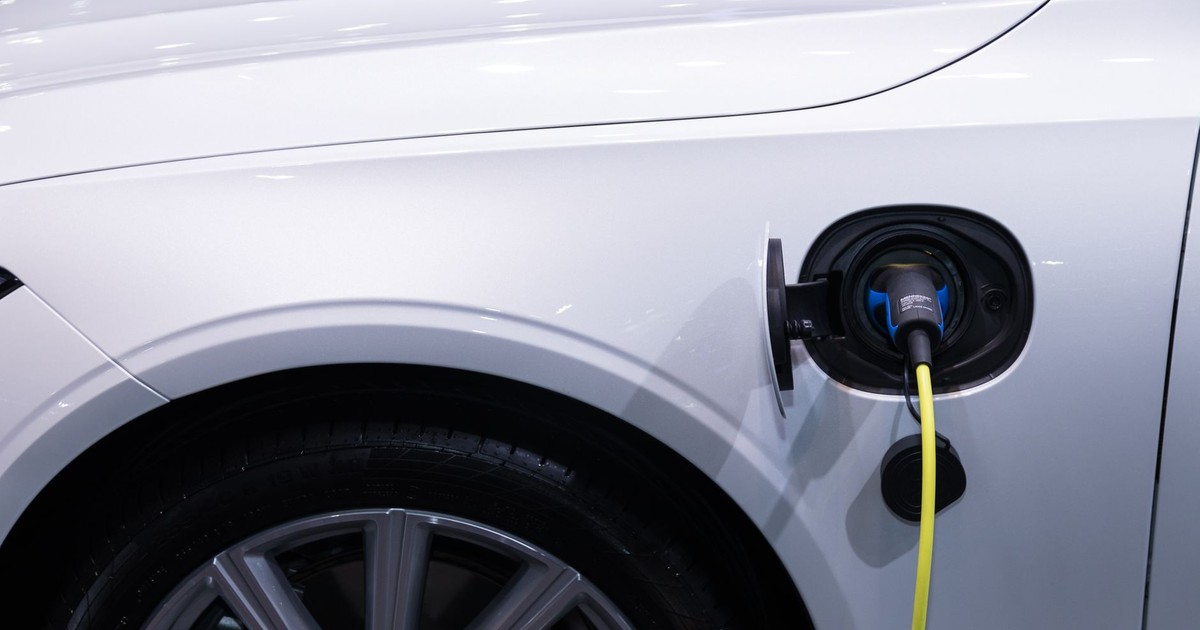
The Chrysler Pacifica’s battery charging system represents the lithium-ion fire risk that prompted Canadian ferry bans on plug-in hybrids. Image Credit: Rathaphon Nanthapreecha / Pexels
In 2010, DFDS, a popular ferry operator around Europe, banned the use of electric vehicle chargers on board ferries following a fire on the MS Pearl of Scandinavia. But it was a more targeted ban in Canada that brought the EV ferry question into sharp public focus in North America.
The Owen Sound Transportation Company (OSTC), which operates ferry routes in Ontario, announced a ban on 2017 to 2021 Chrysler Pacifica plug-in hybrid models from its vessels, citing a Stellantis recall due to fire risks associated with the battery systems in those specific minivans. Stellantis linked the problem to a rare abnormality in individual battery cells, and noted that fire risk was reduced when the battery charge was depleted – an echo of the charge-level concerns that would later shape Greek ferry policy. The OSTC operates the Pelee Island ferry in southwestern Ontario, the MS Chi-Cheemaun on Lake Huron, and the MV Niska 1 to Moose Factory Island, making this ban a real logistical barrier for residents who rely on those crossings.
While EVs are statistically less likely to catch fire than combustion-engine vehicles, lithium-ion battery fires are notoriously difficult to extinguish – and when one breaks out at sea, the danger is significantly compounded by limited firefighting capabilities on board a ship. The OSTC’s decision underscored what fire safety experts had been saying for years: ferry fire suppression systems were designed for gasoline vehicles, not for batteries that can sustain their own combustion.
2. Havila Kystruten’s total EV ban (Norway)
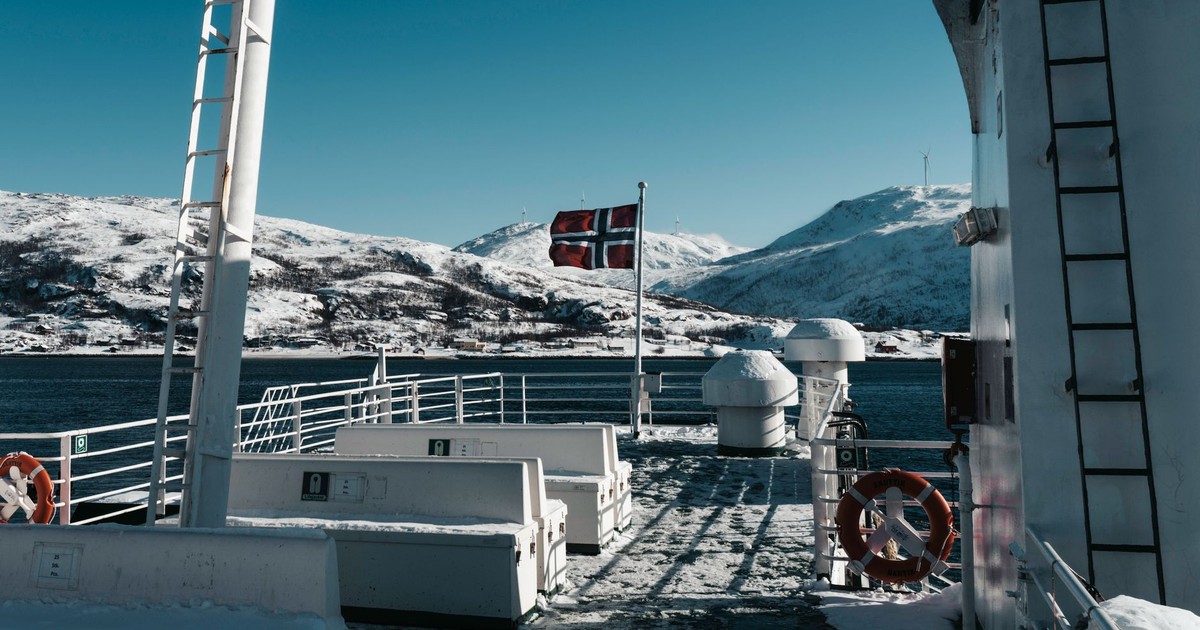
Norwegian Havila Kystruten’s complete EV prohibition demonstrates how aggressively some operators are responding to catastrophic battery fire threats at sea. Image Credit: Raul Ling / Pexels
Norway has the highest rate of EV ownership per capita of any country in the world, which makes it all the more striking that one of its own ferry operators imposed one of the most sweeping EV bans in maritime history. Havila Kystruten banned all electrified vehicles from its fleet, citing fire risks that its own commissioned analysis found unmanageable at sea.
The company retained Norwegian management consulting firm Proactima AS to carry out an independent risk assessment of transporting cars and motor vehicles on board its coastal cruise ships. The findings were unambiguous. According to Havila’s communications director Lasse A. Vangstein, an electric car fire gets very hot and may risk explosion with toxic gas release, meaning crews may have to evacuate the ship, and in the worst case, a total breakdown of the ship.
Havila CEO Bent Martini described the decision as a “pure safety assessment.” The Proactima analysis concluded that a fire in fossil-fuel vehicles could be managed by the ship’s systems and crew – but a fire in electric, hybrid, or hydrogen cars would require external rescue efforts and could put both people and ships at serious risk. The ban covers electric, hybrid, and hydrogen vehicles, making it one of the broadest restrictions anywhere in the world. Havila has stated it will continue searching for technical solutions that might allow EV transport to resume in the future.
3. Greece’s 40% charge limit
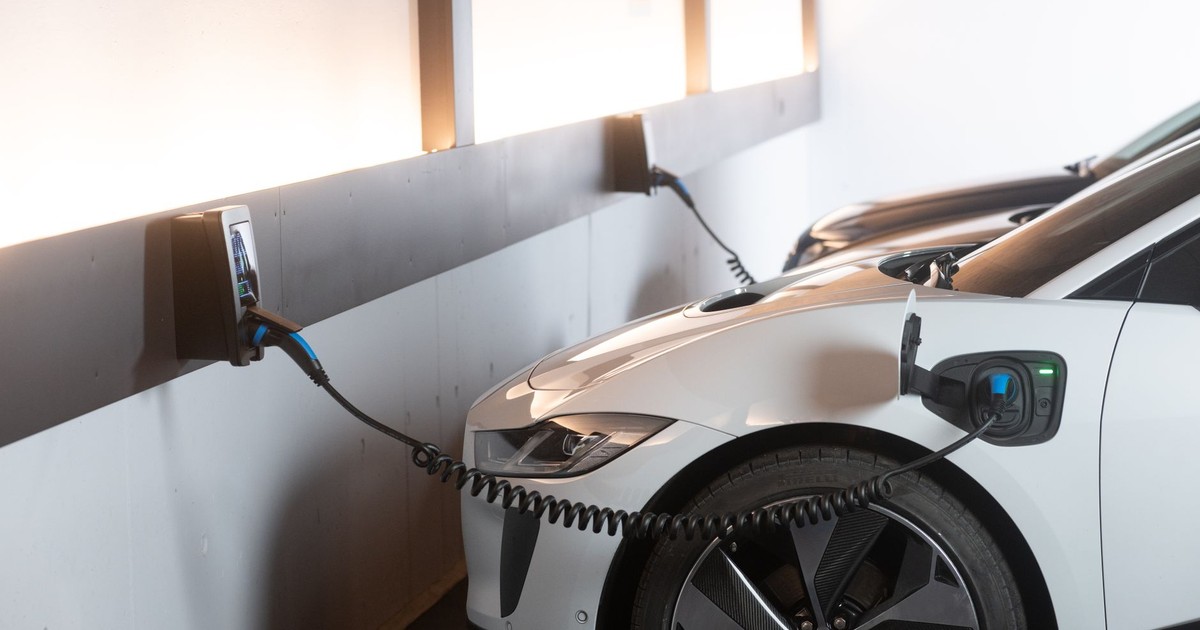
Greece’s 40% charge limit strategy attempts to reduce battery thermal runaway risk by restricting the energy capacity vehicles can carry aboard ferries. Image Credit: smart-me AG / Pexels
Greece took a different approach than an outright ban – one that reflects both the science and the political reality of a country with thousands of islands connected almost entirely by ferry. Since April 16, 2024, a regulation from the Greek Ministry of Shipping and Island Policy states that the traction batteries of electric and hybrid vehicles must not exceed a charge level of 40 percent when boarding a ferry.
The European Maritime Safety Agency (EMSA) recommends a battery charge level of less than 30 percent to lower the risk of thermal runaway – the runaway chemical chain reaction inside a lithium battery that makes these fires so hard to stop. Greece’s 40% cap was set slightly higher to allow passengers enough charge to reach the next port, balancing safety with the practical reality of sparse charging infrastructure across the Greek islands.
Greek shipping companies Anek Lines, Minoan Lines, and Superfast Ferries have incorporated the regulation into their conditions of carriage, and their employees are required to check the charge level of EVs at embarkation and actively do so, according to Electrive. For EV drivers island-hopping around Greece, the challenge is considerable. The charging infrastructure on many Greek islands is thin or often nonexistent, making it risky to arrive at a port with less than 30 percent charge after following the boarding requirement.
4. EVs banned from ferries via charging restrictions (Europe)
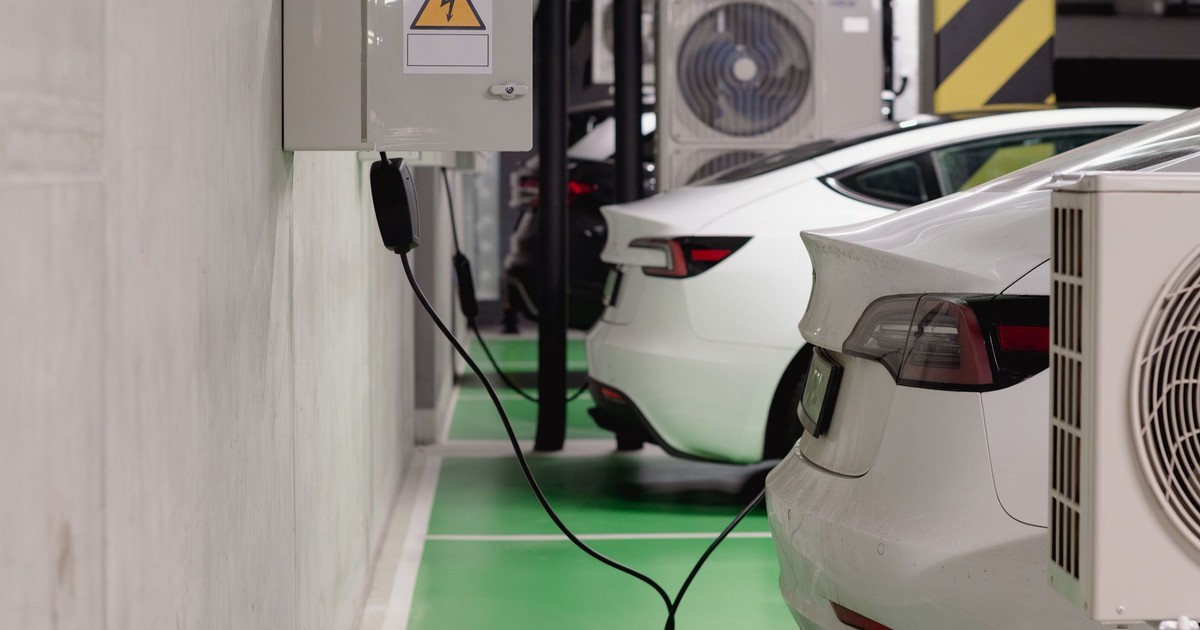
European ferries are effectively banning EVs through charging restrictions, forcing electric vehicle owners to choose alternative transportation methods for water crossings. Image Credit: Quang Nguyen Vinh / Pexels
Full vehicle bans are dramatic, but a quieter form of restriction has spread across European ferry operators in the form of EV charging prohibitions on board. Drivers are banned from charging electric vehicles onboard Caledonian MacBrayne (CalMac) ferries, which operate dozens of routes connecting Scottish mainland ports to the islands of the Hebrides – routes that are essential public transport links for island communities.
The DFDS charging ban dates back further than many people realize. In 2010, the popular European ferry operator banned the use of electric vehicle chargers on board following a fire on the MS Pearl of Scandinavia. While that fire was traced to a short circuit in an extension cable rather than a vehicle battery, the incident prompted the company to remove onboard charging as a precaution. Stena Line, another major ferry service, only maintains onboard EV charging facilities on the Kiel to Gothenburg route – a sign of how cautiously the industry has approached this technology.
The science behind these charging bans is consistent with the broader risk picture. A lithium-ion battery charging actively draws current through its cells, raising internal temperatures and increasing the probability of a thermal event. Banning charging while at sea is the lower-intervention version of the same logic that led Havila to ban EVs entirely – reduce the energy moving through the battery, reduce the likelihood of thermal runaway.
5. Alaska Marine Lines (United States)
Alaska Marine Lines enforces similar EV restrictions on its vessels, protecting its fleet from the same lithium-ion battery fires that threaten other maritime operators. Image Credit: JP / Pexels
North America’s most expansive EV shipping ban came from Alaska Marine Lines (AML), a company that moves freight and vehicles to some of the most remote communities in the United States. AML announced an immediate ban on EVs and plug-in hybrids (PHEVs) aboard its ships serving Central Alaska, Western Alaska, and Hawaii, with the ban extending to Southeast Alaska from September 1.
The company cited increased fire risk associated with shipping large lithium-ion batteries on vessels at sea. The ban does not affect conventional hybrid vehicles that do not plug in or gasoline and diesel vehicles, but shipments of replacement lithium-ion batteries for electric cars are also affected, complicating repair logistics for EV owners in remote areas.
The stakes of an EV fire at sea sharpened considerably in 2025. In June of that year, the Morning Midas – a 600-foot vehicle carrier transporting roughly 3,000 vehicles, including 70 fully electric and 681 hybrid cars – caught fire approximately 300 miles south of Adak, Alaska on June 3. The crew of 22 could not control the blaze and abandoned ship. The Morning Midas burned for weeks before sinking on June 23 in international waters off Alaska’s Aleutian Islands, at a depth of around 16,400 feet. For AML, which serves communities where ferry routes are the only viable transport link, that outcome required no further argument.
6. Why these fires are so hard to fight
Lithium-ion battery fires like this one burn at temperatures exceeding 1,000 degrees Celsius, making them virtually impossible to extinguish and potentially catastrophic in enclosed ferry spaces. Image Credit: Alexas Fotos / Pexels
The policy decisions by ferry operators across multiple countries all trace back to the same physical problem: EV fires are unlike anything traditional firefighting equipment was built to handle. A peer-reviewed study published in Environmental Science & Technology found that fires in battery electric vehicles, where the traction battery is involved, are more difficult to extinguish than fires in internal combustion engine vehicles.
The primary reason is thermal runaway. Thermal runaway is an uncontrollable exothermic chain reaction: the battery generates more heat than it can release, triggering further reactions that generate even more heat, according to research published in the Journal of Power Sources. Li-ion batteries contain highly flammable electrolytes, and chemical reactions during thermal runaway generate oxygen internally, which means the fire does not need external air to keep burning. Water cannot choke it off. All it can do is cool the fire below the temperature of combustion – and that requires an extraordinary amount of water.
Extinguishing an electric vehicle fire can require more than 25,000 liters of water, according to a 2025 analysis by CarExpert, compared to roughly 2,000 to 4,000 liters for a conventional gasoline car fire. EV fires can also reignite hours or even days after initial suppression due to residual heat and unburned cells, which means a fire that appears to be out at sea can restart long after the crew believes the danger has passed. On a vessel hundreds of miles from port, that is not a theoretical risk – it is a catastrophic one.
BC Ferries: A policy that changed
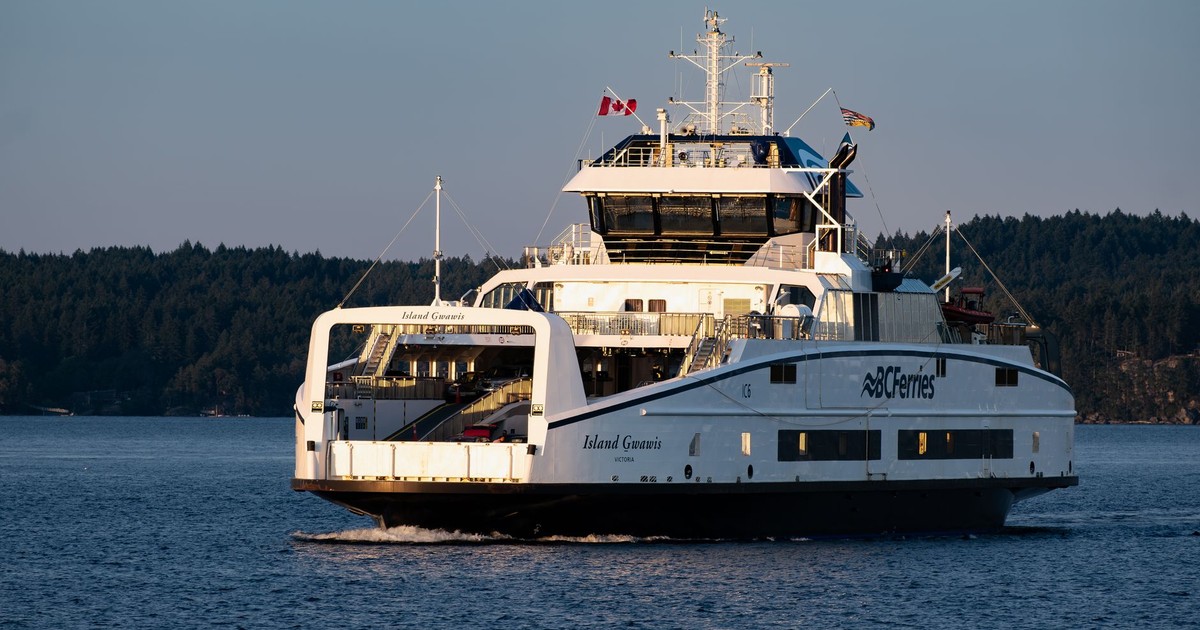
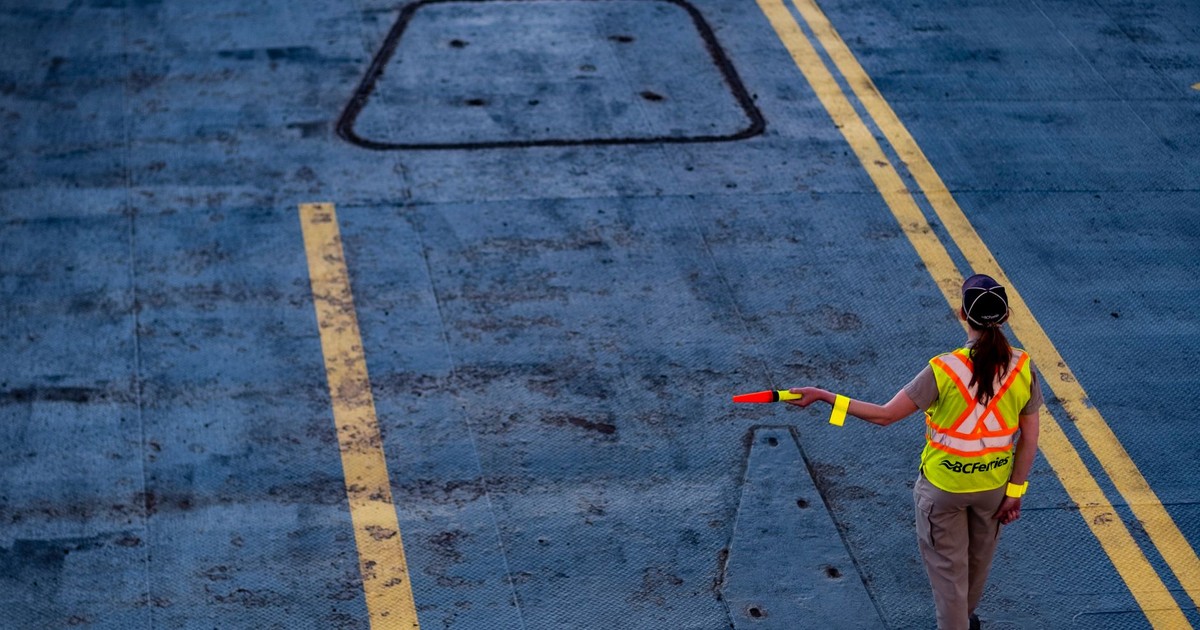
BC Ferries personnel manage vehicle loading under policies designed to prevent the battery-related disasters that could incapacitate ferries in open ocean environments. Image Credit: Postcard Pictures / Pexels
Not every story in this space is one of tightening restrictions. British Columbia’s ferry system offers a more measured example of how operators are trying to adapt policy as the EV fleet grows. Several ship fires involving electric vehicles prompted BC Ferries to previously ban all non-operational EVs from its vessels due to concerns about fire risk from compromised batteries.
Starting May 19, 2026, BC Ferries revised that policy to allow immobile EVs with no damage, or with only minor cosmetic damage that does not compromise the integrity of the car’s frame or battery, to be carried or towed on board. Crucially, if a damaged EV still contains its battery, the ship’s captain retains the right to refuse transport if any safety concern remains. The policy change was welcomed by EV owners and mechanics in coastal communities who had struggled to move vehicles in need of repair – but the restrictions on damaged or compromised battery vehicles remain firmly in place.
What to do before your next ferry crossing
Electric vehicle owners must verify ferry policies before boarding, as many operators now require specific charging restrictions or outright bans to protect vessel safety. Image Credit: Jakub Zerdzicki / Pexels
If you’re planning a ferry crossing in Greece, bring your battery below 40% before arriving at the port. Ferry staff from Anek Lines, Minoan Lines, and Superfast Ferries are actively checking charge levels at embarkation. If your crossing is on CalMac or DFDS routes, onboard charging is not available. If you’re in Alaska and your EV needs to be shipped for repair, contact Alaska Marine Lines in advance, because replacement lithium-ion battery packs are also subject to the ban.
Maritime policy on EVs is still evolving. EMSA recommends keeping battery charge below 30% for ferry transport, but only Greece has formally written that guidance into national regulation. Operators in Norway, Canada, and the US have acted independently, each running their own risk assessments. As the BC Ferries revision shows, these policies are not static – operators update them as technology, incident data, and risk frameworks change. Confirming current rules with your specific operator before you reach the boarding ramp is not a precaution reserved for nervous travelers; at this point, it is simple due diligence.
AI Disclaimer: This article was created with the assistance of AI tools and reviewed by a human editor.