

John Pittas was 47 years old, expecting his second child, and had never signed a single piece of paper agreeing to pay for his mother’s care. He didn’t even know the law existed. Then a Pennsylvania nursing home sued him for $93,000 under a 2012 Pennsylvania court ruling, and the court ruled that he owed every cent.
His mother had stayed at the facility for six months after a car accident, then left the country and filed a Medicaid application. The facility needed to recover its costs, and the law gave it a direct path to her son. Pittas had never agreed to pay her bills in writing. He hadn’t even co-signed anything. The nursing home sued him after the fact, solely on the basis of Pennsylvania’s filial support statute.
This wasn’t a technicality someone exploited. It was the intended function of a set of laws that predate the United States itself. They’re called filial responsibility laws, and depending on which state your parents live in, they could make you legally liable for nursing home bills, medical expenses, or basic living costs you had no part in incurring. Most Americans have never heard of them – and that’s exactly the problem.
1. The Laws Are Older Than You’d Expect, and More States Have Them Than You’d Think

As of 2026, roughly 26 to 29 states have filial responsibility laws on the books, depending on the source and how recently repeals have been codified. That’s a significant portion of the country, and yet these statutes rarely come up in conversations about financial planning or elder care. State filial responsibility laws date back to colonial times and are sometimes, although rarely, invoked today.
The colonial roots run even deeper than most people realize. These laws trace directly to the Elizabethan Poor Law of 1601, which required family members to support relatives who could not support themselves, and which established one of the first frameworks in the English-speaking world for codifying that obligation in law. For centuries, the expectation that family members would absorb the cost of caring for impoverished relatives was simply written into law, and America carried that tradition forward. At their peak in the mid-20th century, these laws were nearly universal: over 40 states had them at one point in U.S. history.
The landscape thinned out considerably after a major federal shift. When Medicaid was introduced in the 1960s, states began repealing these laws, reasoning that the government program made it unnecessary for families to bear the burden directly. States like Iowa (2015), Idaho (2011), Montana (2021), and Utah (2024) have all since repealed their filial responsibility statutes. But the majority of states that kept them have laws still fully enforceable today.
2. The States Where These Laws Actually Get Used

Most states with filial responsibility laws have them quietly sitting on the books, never tested in court. Few states have a reason to enforce them, because most seniors who can’t pay for health care receive assistance through Medicaid, and federal law limits when Medicaid can recover medical costs. That buffer is the main reason most families never encounter these laws in practice.
Pennsylvania stands out for enforcing filial laws: the 2012 case Health Care & Retirement Corporation of America v. Pittas made a son pay $93,000 for his mother’s nursing home bill, a landmark ruling that put filial laws firmly in the spotlight. Aside from Pennsylvania, only a handful of states, like North Dakota and South Dakota, have recent examples of courts holding children liable for parents’ care costs.
Pennsylvania’s law is unusually specific. The state’s filial support statute – 23 Pa.C.S. § 4603 – requires adult children with sufficient financial ability to step in when a parent can’t cover basic needs. The practical consequence is that nursing homes in Pennsylvania have a statutory basis to pursue family members directly when bills go unpaid, even when no family member asked to be responsible or ever agreed to anything in writing.
3. You Don’t Have to Sign Anything to Be on the Hook

Standard consumer logic says that if you didn’t sign a contract, you can’t be held to it. Filial responsibility laws don’t work that way. The legal duty flows from the family relationship itself, not from any document you’ve signed or any agreement you entered into.
The Pittas case made this explicit. The case, formally known as Health Care & Retirement Corporation of America v. Pittas, became the most widely cited example of filial responsibility enforcement in the United States. The nursing home hadn’t asked Pittas to guarantee payment. It sued him after the fact under the state statute alone.
Filial responsibility is not triggered automatically when a parent becomes ill or enters a care facility. Most cases arise when a parent cannot pay for care, has not qualified for public benefits, and a hospital or nursing home seeks reimbursement. The gap between a parent entering a facility and Medicaid being approved is often when legal exposure is greatest.
4. The Financial Consequences Can Be Severe
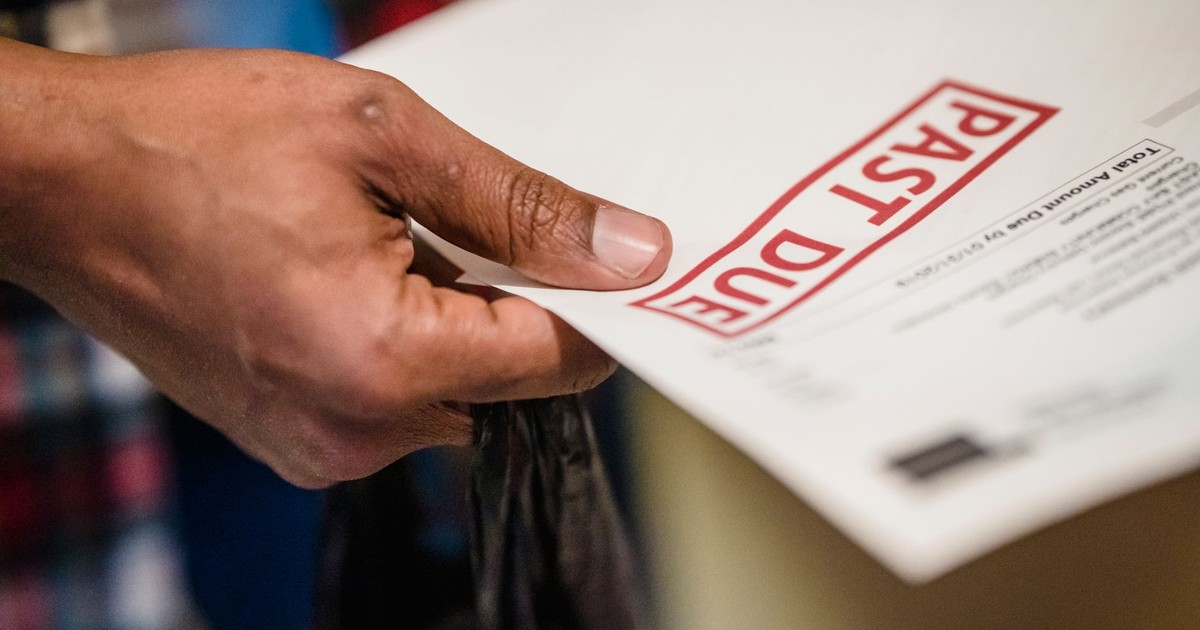
If a court rules in a nursing home’s favor, the financial fallout can reach deep into an adult child’s personal finances. According to LegalClarity, consequences include wage garnishment, bank account levies, or liens on property – mechanisms that can follow a person for years.
Nursing home costs approach or exceed $100,000 per year in many states. The American Council on Aging reports that the average annual cost of a nursing home stay in 2026 ranges from approximately $119,340 for a shared room to $136,948 for a private room, according to this 2026 cost analysis. A parent who spends six months in a facility before Medicaid is approved – not an unusual scenario – could accumulate $50,000 to $60,000 in charges that fall outside any public coverage.
Roughly eight states attach criminal penalties on top of civil liability, according to the same LegalClarity data, ranging from modest fines to potential jail time. Refusing to provide support under Pennsylvania’s statute, for example, can result in a fine of up to $500 and up to 12 months in jail. Most enforcement actions are civil, but the existence of criminal exposure means this isn’t a category of law anyone should treat as theoretical.
5. Courts Look at Your Income Before Ordering You to Pay

Filial responsibility laws aren’t designed to bankrupt adult children who can’t afford to help. Most take an adult child’s ability – or inability – to pay into account. A court doesn’t simply hand down a judgment equal to the full unpaid bill. It considers whether the person being sued actually has the means to pay.
In some cases, parents may have transferred assets to their children before applying for Medicaid, which can sometimes make the children liable for the resulting nursing home bills. Courts typically reference the federal poverty guidelines as a starting point for evaluating whether a parent qualifies as indigent. For 2026, that threshold sits at $15,960 annually for a single individual in the 48 contiguous states, according to LegalClarity’s state-by-state breakdown. Courts also evaluate the adult child’s ability to pay, including income, assets, existing debts, and obligations to a spouse or other dependents.
That means a middle-income adult child with a mortgage, their own children in college, and significant existing debt is in a different legal position than someone with substantial liquid assets. The law doesn’t issue a blanket order to pay regardless of circumstances, but it does create legal exposure that could be triggered under the right conditions – and it puts the burden on the adult child to demonstrate inability to pay rather than requiring the facility to prove ability.
6. Medicaid Is the Shield – But It Has Gaps

The reason most Americans with parents in nursing homes never face a filial responsibility claim is simple: Medicaid pays. Many parents who are owed a duty under these laws qualify for Medicaid, which covers most medical expenses. But if a parent can’t pay for care received before qualifying, filial responsibility laws in applicable states could require the child or children to cover that gap.
The timing is where things get complicated. A parent who enters a facility in poor financial shape may not be approved for Medicaid immediately. Applications take time to process, and during that window costs accumulate. These claims most often arise when a nursing home tries to collect on unpaid bills that built up before Medicaid coverage was approved.
The broader concern is that any reduction in Medicaid coverage would widen this gap substantially. More seniors falling outside Medicaid eligibility means more unpaid bills – and in the states with filial responsibility laws, more legal exposure for adult children.
7. Several Large States Have No Such Laws at All

Many large states never had, or long ago scrapped, these laws. New York, Illinois, Texas, Florida, and Michigan impose no legal duty on adult children to support parents. If your parent lives in one of these states, a nursing home has no statutory basis to come after you personally for an unpaid bill under filial responsibility law. That doesn’t mean you’re entirely in the clear – Medicaid estate recovery, joint accounts, and other mechanisms can still affect what you inherit – but the direct personal liability that filial responsibility laws create simply doesn’t exist there.
The contrast between states creates an unusual situation for families spread across state lines. If you live in New York but your parent moves to Pennsylvania for assisted living, Pennsylvania’s law governs – and Pennsylvania is the state with the most active enforcement history in the country. The location of the care, not where the adult child lives, is typically what determines which state’s filial responsibility statute applies. An adult child in a no-law state who has a parent receiving care in Pennsylvania remains legally exposed under Pennsylvania law.
Read More: 10 Mistakes to Avoid After Your Partner Passes Away (for Those Over 60)
What You Should Do Now

For a filial responsibility claim to succeed against an adult child, several conditions generally have to line up at once: the parent received care in a state with a filial responsibility law; the parent did not qualify for Medicaid when receiving that care; the parent lacks the money to pay the bill; and the adult child has sufficient income or assets to be worth pursuing. That’s a specific set of conditions, which explains why most families never see enforcement. But it is not an impossible set, particularly for middle-income families whose parents are caught in a Medicaid eligibility gap.
The most concrete step an adult child can take right now is to find out whether your parent’s state has a filial responsibility law, using the verified state-by-state list at Farr Law Firm. If it does, start a parent’s Medicaid application before a care crisis arrives rather than after. Consult an elder law attorney if a parent is already in a facility and hasn’t yet been approved for coverage. These laws won’t catch most families – but the ones they do catch are rarely prepared. John Pittas received a $93,000 bill simply because he didn’t know a centuries-old law still applied to him. That surprise is avoidable.
Disclaimer: This information is not intended to be a substitute for professional financial advice, investment advice, tax advice, or legal advice, and is provided for informational purposes only. Always seek the guidance of a qualified financial advisor, accountant, or other licensed professional regarding your personal financial situation or investment decisions. Do not make financial, investment, or tax decisions based solely on information presented here. Past performance is not indicative of future results, and all investments carry risk, including the potential loss of principal.
AI Disclaimer: This article was created with the assistance of AI tools and reviewed by a human editor.