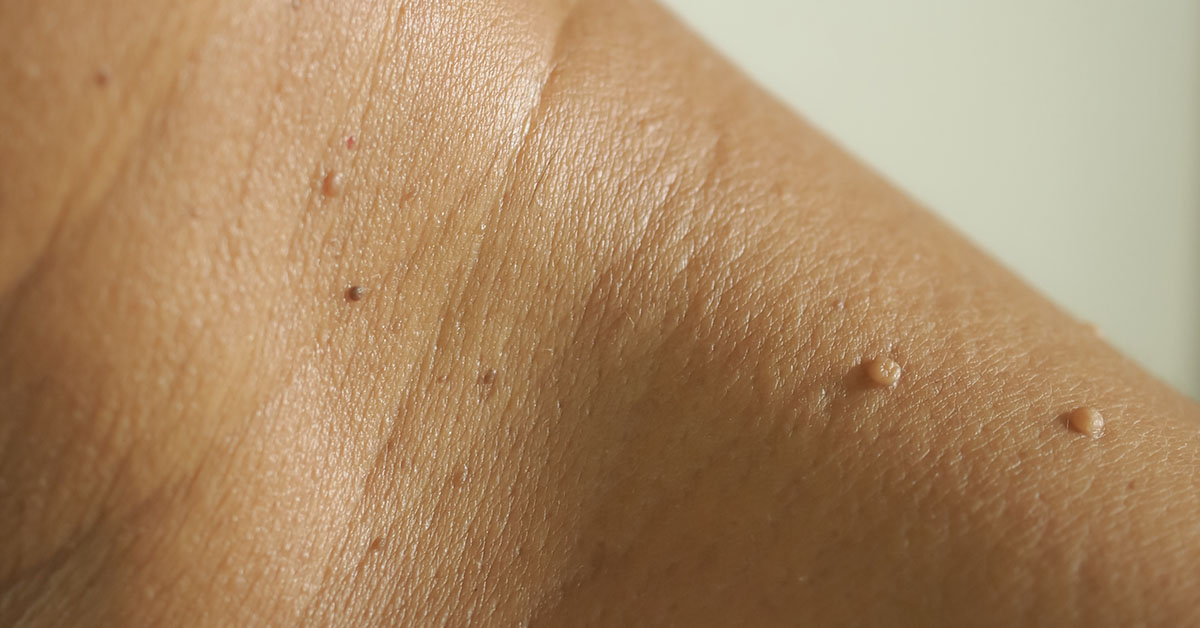

You may have noticed small growths of skin appearing in areas of your body that have folds. These moles are known as skin tags or achrochordons and usually appear on the neck, eyelids, armpits, groin, and under the breasts. They are quite common, with research showing that half of all adults will have at least one on their skin in their lifetime. While they may be unsightly for some people, they luckily don’t have any effect on your health. Let’s find out more about why these moles appear and how to deal with them.
How Are Skin Tag Moles Diagnosed?

Healthcare providers can typically diagnose a skin tag after a very quick evaluation. They will also ask you questions about your health history to see what could potentially cause them. They will examine it in order to rule out other potential growths, such as warts, skin cancer, or seborrheic keratosis. No tests are usually needed to confirm that they are skin tags. However, they may take a biopsy sample if they suspect it may be something else.
Friction May Cause Them

Skin tags are benign and are made from blood vessels and collagen enclosed in a layer of skin. Among the main causes of these moles are chafing and friction. This is why they appear in places where there is constant frictions, such as the armpits and neck. This can result either from natural body movement or from clothing rubbing against the skin. Constant friction can potentially trigger a skin reaction, which will cause these bumps to form. Additionally, genetics also plays a role, and you are more likely to develop them if your parents have them.
Hormonal Issues Also Play A Part

Hormonal changes can also raise the chances of developing these moles. This is especially true for overweight individuals with insulin resistance or when pregnant. Cell growth in the skin can be stimulated by these hormonal changes, leading to skin tag formation. While they can appear at any age, they typically arise as we grow older. Our skin loses elasticity after the age of 40, making it more susceptible to skin tags.
Obesity and Type 2 Diabetes

People with metabolic syndrome or who are overweight are also at greater risk of developing skin tag moles. This is because there are typically more skin folds on individuals who are overweight, providing more opportunity for friction. Researchers have also found a link between type 2 diabetes and skin tags. They believe that high insulin levels promote skin tag growth. Other people who may be at high risk are those with Birt-Hogg-Dubé syndrome.
Can You Get Them Removed?

Yes, you can get them removed, even though they don’t pose any real health risk. However, they don’t usually require medical attention unless they are causing you significant discomfort. However, there are several ways to get rid of them if you decide to do so. Most of them require a professional, though, and it’s discouraged to try to do it on your own. One method involves using a controlled electric current to burn the moles off, known as cauterization. It typically doesn’t leave any scars and is quick and effective.
Surgical Excisions and Cryotherapy

For larger moles, a dermatologist may choose to use a scalpel to excise them. These operations are performed under local anesthesia and don’t typically return as they are removed at the root. Another option is cryotherapy, which involves using liquid nitrogen to freeze the moles off. In this method, the tissue of the mole freezes, causing it to eventually fall off. Cryotherapy is generally painless and quick, but it may cause skin discoloration temporarily.
Bands and Laser Treatments
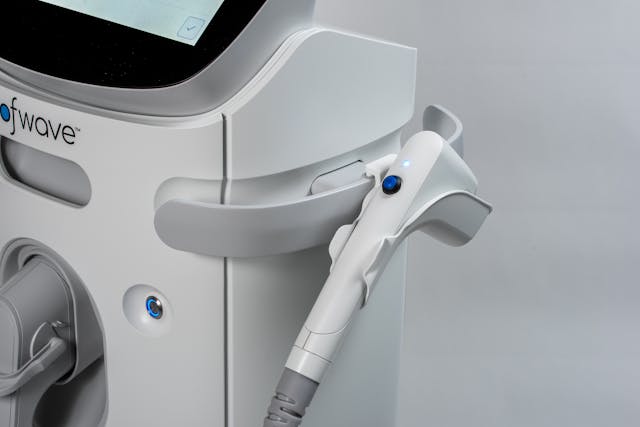
Some dermatologists may also use a technique called ligation. This involves cutting off the blood supply of the mole by tying a surgical cord around it. The mole subsequently dries out and falls off on its own after a couple of days. There are also laser treatments that use a beam of light to remove the mole. This is a very precise method and is therefore perfect for sensitive areas such as the eyelids. Lasers are also best for minimal damage to the surrounding skin.
Always Best to Check If You Aren’t Sure

While skin tags may be benign, if you aren’t sure what it is, go see a doctor. However, if it is a skin tag, don’t stress too much. They are quite common and typically cause no harm to your health. However, if you do decide to have them removed, try not to do it yourself. This could potentially lead to an infection or other complication. Luckily, there are plenty of ways that a dermatologist will be able to help you get rid of these little moles without much fuss or time.
Read More: Natural Skin Care: What Can You Try To Remove Age Spots, Moles, Skin Tags, Warts, And Blackheads?