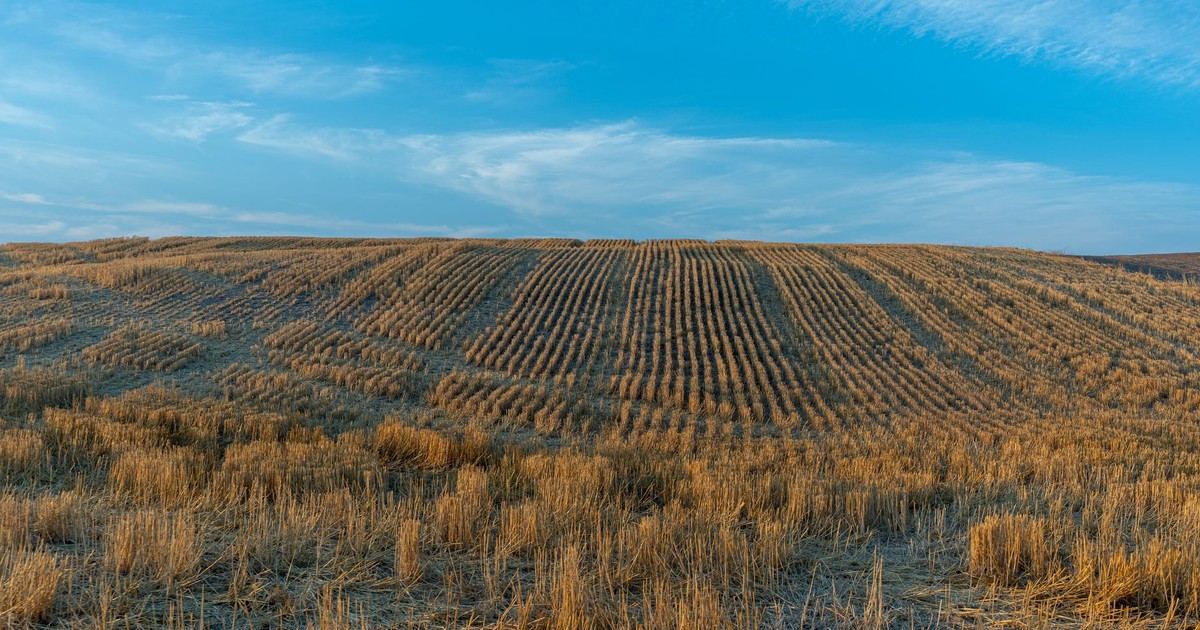

According to the USDA, only 30% of the U.S. winter wheat crop was rated in good or excellent condition in early June 2026, down from 49% at the same point a year earlier, as the harvest got underway. That’s a collapse in one of the country’s most essential crops, unfolding at the same moment that fertilizer prices have surged to their highest level in years and a single shipping corridor has thrown global food supply into crisis.
Most food shortage warnings get absorbed into background noise. Prices go up, headlines flash, and grocery shoppers adapt by switching brands or cutting back. What makes the situation in 2026 different is that multiple independent pressures – drought, geopolitical disruption, fertilizer scarcity, and a mounting weather threat from El Niño – have converged in the same growing season. Each one alone would be manageable. Together, they’re reshaping what gets planted, what gets harvested, and ultimately what ends up on shelves.
The mechanism linking all of it is fertilizer. Modern agriculture is almost entirely dependent on synthetic nitrogen, phosphate, and potassium inputs to maintain the crop yields the global food system runs on. When those inputs become scarce or unaffordable, farmers don’t simply pay more – they plant less, switch crops, or accept sharply lower yields. Those decisions, made on farms from Kansas to Kenya to Brazil, take six to twelve months to travel from the field to the supermarket aisle.
The Strait of Hormuz and the Fertilizer Chokepoint
The conflict in the Middle East has turned the Strait of Hormuz into a critical failure point for global food security. The strait’s closure has reduced tanker traffic by more than 95 percent, disrupting millions of tons of fertilizer shipments each month. The downstream effects are already measurable. The food shortage warnings now spreading across the grocery sector trace directly back to this single chokepoint.
According to the Food and Agriculture Organization of the United Nations, the closure of the Strait of Hormuz is not a temporary shipping disruption but the beginning of a systemic agrifood shock that could trigger a severe global food price crisis within six to 12 months. FAO Chief Economist Máximo Torero has been explicit about the timeline: the war in Iran is choking the global supply of fertilizer, and a food crisis could follow within a year.
The fertilizer picture is stark. The closure of the Strait of Hormuz has led to a shortage of fertilizer that may keep grocery prices elevated through 2027. Specifically, according to data from Anadolu Agency, the disruption has affected 38 percent of global nitrate-based fertilizer supply and 20 percent of phosphate-based fertilizers. Urea – the most widely used nitrogen fertilizer – has felt the sharpest squeeze. According to Food Facts, urea reached $701 per tonne by early April 2026, up nearly 81 percent year-on-year. The World Bank projects the global fertilizer price index will rise by more than 30 percent across 2026 as a whole.
Farmers now face difficult decisions that will shape global food production through 2027. They need to reduce fertilizer use and accept lower yields, shift to alternative crops, or absorb much higher costs and risk financial collapse. In the United States, that calculation has already produced a visible response. An April 2026 American Farm Bureau Federation survey of more than 5,700 farmers found that approximately 70 percent said they couldn’t afford all the fertilizer they need for the 2026 growing season.
The FAO said the shock will unfold in stages – first with energy, then fertilizer, seeds, lower yields, commodity prices, and finally food inflation reaching shoppers. Francisco Martin-Rayo, co-founder and CEO of Helios AI, a food system risk analytics firm, framed the timing problem directly: “You can’t put fertilizer in the ground in June that you missed putting in in March or April and expect the same result.” His firm is projecting global food prices could rise 12 to 18 percent by the end of 2026 if disruptions continue.
Food Shortage Warnings from the American Heartland
The fertilizer crisis landed on top of an agricultural season already under severe stress from drought. The United States experienced its worst spring drought on record, with more than 60 percent of land in the lower 48 states experiencing moderate drought or worse. The National Oceanic and Atmospheric Administration found that January through March was the driest on record for the continental U.S., with precipitation overall less than 70 percent of average.
The wheat belt has been hit hardest. More than 81 percent of the Southern Plains is experiencing drought heading into the harvesting season for the winter wheat crop, with only 30 percent of U.S. winter wheat in good or excellent condition. In Oklahoma, the numbers are more dramatic still: the state, which produced 101.1 million bushels of red winter wheat in 2025, is projected to produce less than half that in 2026, with estimates from the Oklahoma Grain and Feed Association placing production at around 48.9 million bushels.
Nationally, the USDA’s latest WASDE report flagged the hard red winter wheat crop in Texas and Oklahoma as the smallest since 1957. Overall, according to Brownfield Ag News, U.S. winter wheat production dropped 29 percent from 2025, falling to 990 million bushels. From southern Colorado to Montana, farmers and ranchers are battling a crisis that extends far beyond dry fields – water supplies are dwindling, wheat crops are failing, hay production is shrinking, and cattle producers are being forced into difficult herd liquidation decisions.
Those cattle decisions matter for what happens at the meat counter. Beef prices are soaring partly because drought and higher operating costs have driven cattle herd counts to a 75-year low, according to a January 2026 USDA Cattle Inventory report that put the national herd at just 86.2 million head – the lowest since 1951. At the retail level, real-time data from April 2026 shows beef and veal prices jumped 3.1 percent in a single month from March to April, while tomato prices were up 39.7 percent compared to the same month a year earlier.
For a broader sense of where grocery prices are heading, the USDA’s Economic Research Service is projecting that fresh vegetable prices will rise 7.7 percent in 2026, while overall food-at-home prices are expected to climb 2.5 percent – a figure that may prove optimistic given the fertilizer and drought pressures still working through the supply chain.
If you’re already feeling the squeeze in the produce aisle, you’re not imagining it. The Hearty Soul’s look at 2026 grocery prices breaks down how the Iran conflict and fertilizer shortage are already reflected in what shoppers are paying today – and why the worst increases are still months away from landing on shelves.
A Global Crisis Already in Motion
The domestic situation is serious. But for hundreds of millions of people outside wealthy nations, the food shortage warnings have already become reality. According to the 2026 Global Report on Food Crises, 266 million people across 47 countries faced high levels of acute food insecurity in 2025, representing 22.9 percent of the analyzed population. According to the World Food Programme, for the first time in the 10-year history of the report, two simultaneous famines were confirmed – in parts of the Gaza Strip and Sudan – in 2025.
Countries most dependent on Gulf fertilizers are finding there is no realistic alternative supply. Farmers in those countries are making decisions to plant with fewer inputs, plant less overall, or shift to commodities like soybeans – and that means global yields will be affected into 2027.
The climate threat layered on top is El Niño. Data from the World Bank’s food security update shows a 61 to 87 percent probability of El Niño emerging by mid-2026 and persisting into 2027. If it does, rice output could fall by 20 to 50 percent in affected regions. The FAO has also confirmed that El Niño can weaken the summer monsoon across much of India, putting rainfed crops like rice and maize under severe stress – a particular concern given that India is home to a significant share of the world’s food-insecure population.
Read More: Who’s Warning You About Higher Prices in 2026
What to Do Now
The crisis builds in sequence: energy-price spikes and logistics disruptions come first, followed by fertilizer shortages, then lower yields, with delayed transmission effects eventually leading to higher food prices and market volatility months later. The decisions countries and households make now will determine how severe it becomes.
For individuals, the practical window is now. Protein staples like legumes, lentils, and canned fish are both affordable and insulated from wheat and vegetable price swings – stocking a reasonable supply before further price increases arrive is a rational hedge, not panic buying. Buying seasonal, locally grown produce bypasses at least part of the fertilizer-dependent industrial supply chain, and it tends to be cheaper when purchased direct from farmers’ markets during peak season. Home gardens – even small ones – offer meaningful insulation against fresh vegetable prices that the USDA is already projecting will rise nearly 8 percent this year.
The Bigger Picture
The food shortage warnings farmers and economists have been issuing since early 2026 are not projections about a distant risk. The wheat crop is already in the ground and already failing. The fertilizer that wasn’t applied in March and April cannot be retroactively replaced. The USDA’s own cattle inventory data points to the tightest beef supply in three generations, with no quick rebuild possible given the biology of livestock production.
For shoppers in wealthy nations, the coming crisis will arrive quietly – not as a single dramatic announcement, but as a grocery bill that keeps climbing month after month. The USDA projects food-at-home prices rising 2.5 percent for the year as a whole, but that estimate was built before the full weight of the fertilizer disruption worked through commodity markets. The trajectory is almost certainly higher. The time to act on that information is before the next price update, not after.
Disclaimer: This information is not intended to be a substitute for professional financial advice, investment advice, tax advice, or legal advice, and is provided for informational purposes only. Always seek the guidance of a qualified financial advisor, accountant, or other licensed professional regarding your personal financial situation or investment decisions. Do not make financial, investment, or tax decisions based solely on information presented here. Past performance is not indicative of future results, and all investments carry risk, including the potential loss of principal.
AI Disclaimer: This article was created with the assistance of AI tools and reviewed by a human editor.