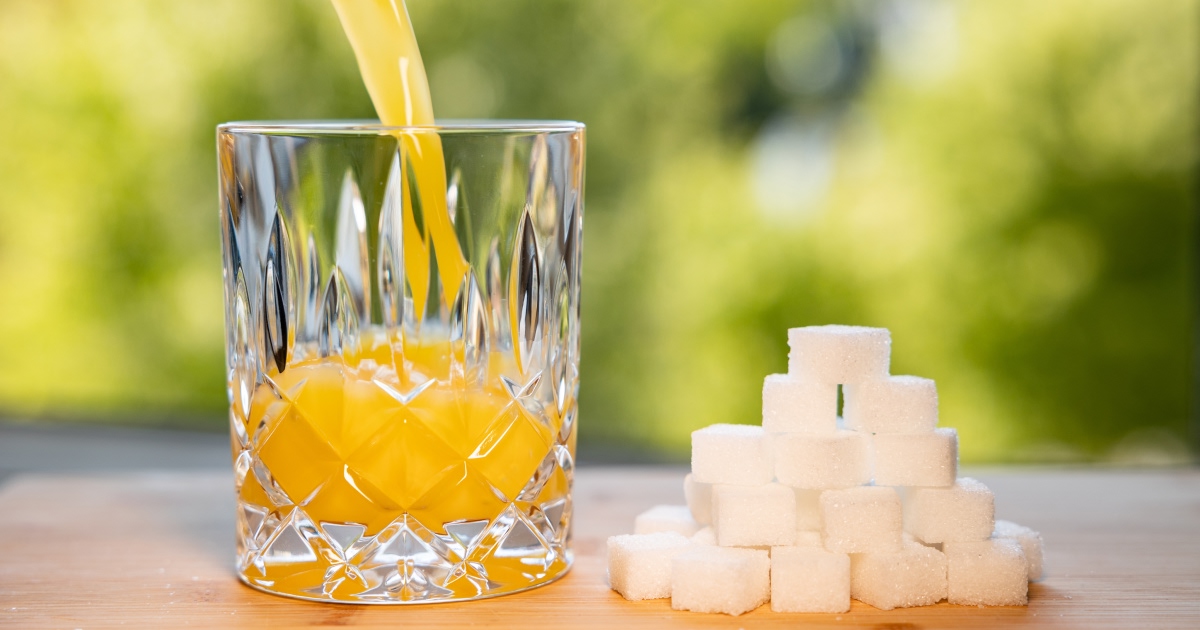

Fructose has long been associated with weight gain and metabolic problems, particularly when consumed in large amounts through sugary drinks and processed foods. But researchers are still working out exactly what makes it different from other sugars.
A 2026 study published in Science Advances may have uncovered an important piece of that puzzle. Researchers at the University of California, Irvine found that fructose appears to do more than simply add calories to the diet. It may also change what happens inside the small intestine in a way that helps the body absorb more fat from the foods eaten alongside it.
The researchers discovered this by studying mice that had been genetically engineered to lack a digestive enzyme involved in processing fructose. When these mice and normal mice were given the same high-fructose corn syrup, the modified mice gained significantly less weight. A closer look revealed something unexpected: they were also absorbing less dietary fat through their intestines.
That finding points to a potentially important connection between fructose and weight gain. Rather than acting only as a source of extra calories, fructose may influence how efficiently the intestine handles fat, helping explain why diets high in fructose have been associated with obesity and metabolic disease.
Fructose is widespread in the modern food supply, particularly as a component of high-fructose corn syrup in sweetened drinks and processed foods. Previous research has shown that the body handles fructose differently from glucose, but the new study offers a closer look at what may be happening inside the gut and how those changes could influence metabolic health.
Why Fructose and Glucose Are Not the Same Sugar
Fructose metabolism differs from glucose metabolism, with unique metabolic pathways and effects on the body. Glucose can be taken up and used by nearly every cell in the body as fuel. Fructose is processed almost entirely in the small intestine and liver, and it doesn’t follow the same regulatory checkpoints that keep glucose metabolism in balance.
Fructose may play a distinct role in driving metabolic disease, acting as a signal that promotes fat production and storage. Its metabolism bypasses normal energy regulation, leading to increased fat synthesis and lower cellular energy – processes linked to obesity, insulin resistance, and cardiovascular risk. Richard Johnson, MD, a professor at the University of Colorado Anschutz and lead author of a 2026 review in Nature Metabolism, put it plainly: “Fructose is not just another calorie.”
When the small intestine processes fructose normally, it clears much of it before it can reach the liver. But when intestinal fructose processing is compromised – as in genetic deficiency or overwhelming intake – fructose spills over into the liver, where excessive breakdown becomes pathological. That distinction between intestinal and hepatic fructose processing is exactly what the UC Irvine study exploited.
A 2025 perspective in Nature Metabolism noted that there is now a substantial body of data suggesting that dietary fructose may have a significant role in obesity development, partly by stimulating food intake and reducing resting energy metabolism through effects on brain and liver regulatory mechanisms, and by inducing insulin resistance.
The Hormone Disruption Nobody Talks About
Before the 2026 study revealed fructose’s effects on fat absorption, researchers had already established that the sugar messes with appetite signaling. Fructose ingestion reduces circulating insulin and leptin while attenuating the normal suppression of ghrelin – an appetite-stimulating hormone – after eating. Leptin is the hormone that tells your brain you’ve had enough; ghrelin is the one that tells you to keep eating.
Research from the University of Florida found that a high-fructose diet can induce leptin resistance over time, meaning the body stops responding to the hormone’s “I’m full” message even when leptin levels are technically normal. The result is a system that keeps sending hunger signals regardless of how many calories have been consumed – a biological setup for overeating that has nothing to do with willpower.
Add in the fact that fructose is predominantly delivered through sugar-sweetened beverages and processed foods, which are often consumed alongside high-fat meals, and the conditions for rapid weight gain become particularly favorable. Sugar-sweetened beverages with fructose in liquid form are especially concerning, as they are absorbed faster, reach the liver directly, and overwhelm intestinal metabolism.
What Happens Inside the Small Intestine
The 2026 Science Advances study focused on a specific enzyme called KHK-C (ketohexokinase-C), the primary driver of fructose breakdown in the small intestine. Researchers from UC Irvine engineered mice to lack this enzyme specifically in the small intestine, then fed both the modified mice and a control group high doses of HFCS for 12 weeks.
Blocking fructose catabolism in the small intestine unexpectedly reduced fructose-induced obesity and insulin resistance. Those effects were attributed to decreased dietary fat absorption caused by the shortening of ileal lacteals.
Lacteals are tiny lymphatic vessels – part of the lymph system, not the bloodstream – that run through the finger-like projections (villi) lining the small intestine. Lacteals become filled with chyle, a milky-white fluid, after eating, and each villus typically contains one central lacteal involved in absorbing dietary fats. When those lacteals are longer and more developed, they have more surface area to absorb fat. When they’re shorter, less fat gets picked up from the digestive tract.
The mice without fructose-processing ability had shorter lacteals in a specific part of the small intestine – the ileum, its final and longest section. Blocking intestinal fructose catabolism reduced dietary fat absorption in association with a decrease in the surface area of ileal lacteals and alterations in the gut microbiome. The poop of the modified mice contained more fat, confirming that less was being absorbed into the body.
This is the core of what makes the finding so consequential: digesting fructose in the small intestine doesn’t just process the sugar itself. It actively remodels the gut’s fat-absorption infrastructure, making the intestine more efficient at pulling dietary fat into circulation.
The Gut Microbiome Connection
The lacteal shortening didn’t happen in isolation. Fecal transplantation experiments revealed that the microbiome altered by reduced intestinal fructose catabolism decreases the ileal macrophages essential for lacteal growth – suggesting that altered intestinal lacteal architecture contributes to the combined effects of high fat and sugar on metabolic disorders.
Macrophages are immune cells that, among other functions, support the maintenance and growth of lacteals in the gut wall. When fructose processing was blocked, the microbiome changed, macrophage numbers in the ileum dropped, and lacteals shortened as a result. When fecal material from the modified mice was transplanted into normal mice, the same reduced fat-absorption pattern followed – confirming the microbiome shift was driving the effect, not just accompanying it.
High-fructose diets promote an increase in inflammatory bacterial groups while reducing beneficial Bacteroidetes in the microbiome. A 2022 study published in npj Science of Food found that HFCS significantly increased body fat content and altered intestinal microbiome structure in mice given HFCS-containing water over an extended period. The microbiome changes and the weight changes moved in lockstep.
This opens a genuinely practical possibility. If specific bacterial strains can be identified as the key players shifting macrophage behavior and lacteal architecture, it may become possible to develop targeted probiotics that moderate fat absorption in the gut – an approach to obesity that bypasses the complexity of willpower and caloric counting entirely. That research is still preclinical, and no such probiotic currently exists for humans, but the mechanistic pathway is now clearly mapped.
Fructose Weight Gain at a Population Level
The 2025 perspective in Nature Metabolism mentioned earlier noted that prior analyses of obesity pathogenesis had “overlooked the important role of fructose metabolism in obesity development.” That oversight matters given the scale of what’s at stake. The World Obesity Atlas 2025 projects that the total number of adults living with obesity will increase by more than 115% between 2010 and 2030. Obesity is already linked to almost 4 million deaths per year globally, serving as a major driver of cardiovascular disease, stroke, type 2 diabetes, and other noncommunicable diseases.
HFCS is particularly central to this story. HFCS consumption is a recognized risk factor for obesity and metabolic syndrome. A 2026 analysis found that countries using HFCS in their food supply had a 20% higher prevalence of diabetes than countries that did not. That’s a population-level signal that mirrors what the cellular research is now explaining at the molecular level.
Evidence suggests fructose metabolism plays into the energy balance model by stimulating food intake and reducing resting energy metabolism, and that it may also induce hyperinsulinemia and insulin resistance. Chronic excessive fructose consumption is also associated with hyperlipidemia (elevated blood fats), non-alcoholic fatty liver disease, obesity, and diabetes, according to a review in Nature Metabolism.
The dietary fiber angle adds another practical dimension. A 2025 study in Nature Metabolism found that the fiber inulin promotes fructose breakdown by the small intestinal microbiome, reducing fructose-driven fat buildup in the liver. That finding suggests fiber-rich diets may partially counteract fructose’s metabolic effects – not because fiber cancels out sugar, but because it shapes the microbiome in a way that handles fructose more efficiently. Eating fructose from whole fruit, which comes packaged with fiber, behaves very differently in the body than fructose consumed in a soft drink.
For readers concerned about their own exposure, the practical starting point is the ingredient label. HFCS appears in sodas, bread, condiments, cereals, flavored yogurts, canned soups, and salad dressings. Many of these products aren’t perceived as “sweet” foods, which is precisely why total fructose intake is easy to underestimate.
Read More: How Fructose May Be Wrecking Your Brain, Liver, and Waistline
What This Means for You
The 2026 Science Advances study is preclinical – conducted in mice, not humans – and needs replication in human trials before it changes clinical guidelines. But the biological plausibility is strong, the mechanistic chain is detailed, and it aligns with everything else known about fructose’s metabolic footprint. The picture that emerges is of a sugar that doesn’t just add calories to the diet but actively prepares the gut to extract more fat from every meal.
The most direct, evidence-based action available right now is reducing HFCS intake. That means eating fewer ultra-processed foods and sugar-sweetened beverages, and replacing them with whole foods that deliver fructose alongside fiber. Whole fruit is not the enemy – a piece of fruit delivers roughly 5 – 8 grams of fructose along with water, fiber, and micronutrients that slow its absorption and buffer its metabolic effects. A can of regular soda delivers around 25 grams of fructose in liquid form, with nothing to slow it down. That difference in delivery matters enormously to what happens next inside the small intestine.
If you eat regularly from packaged foods, check labels for HFCS, high-fructose corn syrup, corn syrup, and fructose syrup. Current US dietary guidelines recommend limiting added sugars to less than 10% of daily calories – for a 2,000-calorie diet, that’s about 50 grams of total added sugar per day. Given what the new research reveals about fructose specifically, keeping well below that ceiling when HFCS is the source is a reasonable precaution supported by both the cellular evidence and the population-level data.
Disclaimer: This information is not intended to be a substitute for professional medical advice, diagnosis, or treatment and is for information only. Always seek the advice of your physician or another qualified health provider with any questions about your medical condition and/or current medication. Do not disregard professional medical advice or delay seeking advice or treatment because of something you have read here.
AI Disclaimer: This article was created with the assistance of AI tools and reviewed by a human editor.