
Most scientific breakthroughs don’t begin in a laboratory. They begin with someone pausing and noticing something that everyone else walked right past. This one began with a kid lifting a fallen log in his Pennsylvania backyard.
Eight-year-old Hugo Deans wasn’t thinking about science when he spotted a cluster of tiny, BB-sized spheres sitting near an ant nest. He was just curious. The little balls looked like seeds. And the ants, he noticed, seemed to think so too. They were carrying them away, one by one, with clear purpose.
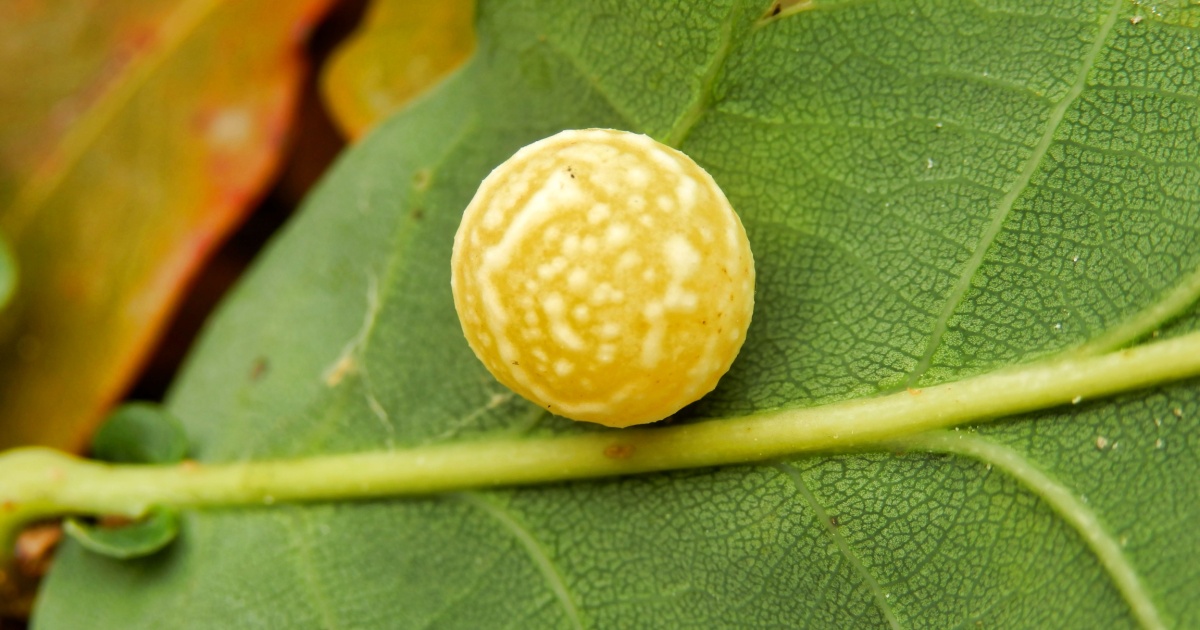
He called his dad over. His dad happened to be Andrew Deans, a professor of entomology at Penn State. The professor recognized the objects immediately, and what he saw stopped him in his tracks. Those weren’t seeds. They were galls – small, rounded growths produced on oak leaves by certain wasp species. The question that followed was the kind that reshapes entire fields of biology: why would ants carry galls?
What Are Galls, and Why Do Ants Care?
To understand why that question mattered, it helps to know a bit about how ants and plants have been interacting for over a century of scientific study. Biologists have long understood a process called myrmecochory, where plants use fatty attachments called elaiosomes to get ants to disperse their seeds. It’s a remarkably elegant system. Foraging ants carry seeds back to their colony, remove the elaiosome, and then usually discard the seed in an underground chamber or eject it from the nest. The plant gets its seeds relocated to a protected, nutrient-rich spot. The ants get a nutritious snack. Both sides win.
As Andrew Deans of Penn State’s Department of Entomology explains it: “In myrmecochory, ants get a little bit of nutrition when they eat the elaiosomes, and the plants get their seeds dispersed to an enemy-free space. The phenomenon was first documented over 100 years ago and is commonly taught to biology students as an example of a plant-insect interaction.”
Seed dispersal by ants has evolved independently more than 100 times and is present in more than 11,000 plant species, making it one of the most dramatic examples of convergent evolution in biology. But what Hugo and his father stumbled upon suggested that plants were not the only organisms running this scheme.
Galls are abnormal plant growths induced by certain wasp species, often serving as protective shelters for their larvae. When a female gall wasp lays her eggs on an oak leaf, she triggers the plant to form a protective structure around the developing larvae. Researchers at Penn State’s College of Agricultural Sciences and SUNY Buffalo State University documented a three-way interaction among ants, oak trees, and gall-forming wasps that challenges a century-old biological rule. Their study, published in The American Naturalist, reveals that wasps manipulate oak tissue to mimic seed chemistry, tricking ants into transporting larvae to safety.
A Cap With a Chemical Secret
Two gall wasp species, Kokkocynips rileyi and Kokkocynips decidua, induce oak trees to produce galls topped by a fleshy cap. The researchers named that cap the kapéllo, from the Greek for “cap.”
The galls grow on the midveins of red oak leaves and are topped by a pale, detachable cap the team named the “kapéllo,” from the Greek for hat. That cap is what the ants go for.
To understand what was driving the ants’ behavior, the researchers turned to chemistry. Gas chromatography showed that kapéllos carry the same free fatty acids found in elaiosomes, including lauric, palmitic, oleic, and stearic acids. In other words, the chemical profile of the kapéllo closely mirrors that of the elaiosome, the very same fatty attachment that plants use to recruit ants. To an ant relying on scent rather than sight, the two structures are nearly indistinguishable.
Co-author John Tooker offered a blunt explanation: “The fatty acids that are abundant in gall caps and elaiosomes seem to be mimicking dead insects. Ants are scavengers that are out trying to find and grab anything that’s suitable to bring back to their colony, so it’s not an accident that the gall caps and the elaiosomes both have fatty acids typical of dead insects.”
This matters because ants have extraordinary chemical detection. The elaiosome harbors volatile cues that facilitate dispersal by attracting ants. This makes strategic sense, as ants’ compound eyes do not provide good resolution and many ants prefer to forage in the dark. Chemistry is their primary navigation tool, which is exactly why the kapéllo works so well. The wasp, in effect, learned to speak the ant’s language.
Testing the Theory in the Field and Lab
The research team didn’t stop at chemistry. They designed a series of field and laboratory experiments to test whether ants genuinely treated the galls the same way they treat seeds. Field tests in a New York forest placed bloodroot seeds and K. rileyi galls in small dishes side by side. Aphaenogaster picea, the ant species responsible for most seed dispersal in that ecosystem, cleared both dishes at nearly identical rates over roughly 90 minutes.
The lab work was even more revealing. Researchers gave ants four options at once: intact galls, galls with the kapéllo removed, isolated kapéllos, and control galls from a species that grows no kapéllo at all. The ants ignored the stripped galls and the controls. They went straight for the kapéllo, whether it was still attached or sitting loose in the dish. The larva inside the intact gall stayed untouched throughout.
When ants interacted with the galls, they focused on the kapéllo 64% of the time. And once they took the galls back to the nest? In the wild, researchers watched ants carry the oak galls to their nests. Inside those nests, the galls stayed intact, but the fleshy caps were gone. The ants consumed the kapéllo and left the gall body alone, just as they would eat the elaiosome and leave a seed untouched.
What the experiment ruled out matters as much as what it confirmed. Ants were not responding to the gall’s shape, size, or color. The kapéllo’s fatty acid chemistry was doing all the work.
If you want to understand more about how insects shape the world around them in ways we rarely see, the under-a-microscope grass story at The Hearty Soul is another reminder of how much biology hides in plain sight.
Read More: How a Canadian Teen’s $500 Portable Dialysis Machine Made Global Waves
Why Being Carried Underground Is a Survival Win
At first glance, being picked up by an ant and dragged underground doesn’t sound like an advantage. But for a tiny wasp larva, it may be one of the best possible outcomes. The researchers point to protection as the more likely payoff. Ant nests are chemically hostile environments, saturated with antimicrobial compounds the colony produces to suppress pathogens. A larva deposited inside one is shielded from the birds, rodents, and parasitic wasps that comb the forest floor, and from the mold that spreads freely through the leaf litter outside.
Myrmecochorous plants escape or avoid seed predation when ants remove and sequester them. This benefit is particularly pronounced where heavy predation is common. In some forest habitats, seed predators remove around 60% of all dispersed seeds within a few days, and eventually remove all seeds not taken by ants. The same brutal math likely applies to galls sitting unprotected on the forest floor. Getting underground, fast, can mean the difference between survival and being eaten.
There is also an interesting question about which came first. It is easy to assume ant-mediated seed dispersal came first because it has been described since 1906 and taught for generations. But Robert J. Warren II of SUNY Buffalo State University’s Biology Department argued that the better-known system may not be the older one. “Given that myrmecochory was described more than a century ago and has been well-researched and taught in schools, one might assume that the elaiosome interaction came first, but that assumption may be wrong for several reasons,” Warren said.
One of those reasons is sheer abundance. Myrmecochorous plants make up only about 4.5% of plant species. Oak galls, by contrast, can be extremely common. Warren pointed to historical accounts describing K. decidua galls as so plentiful they were called “black oak wheat” and used to fatten livestock.
Warren proposed that if galls were so abundant and evolved this tactic thousands of years ago, “that could have been a strong driver of natural selection in ants.” In other words, the ants may have developed their taste for fatty-capped objects partly because galls were everywhere before anyone thought to study seeds.
Convergent Evolution: Nature’s Repeated Answer
What makes this discovery particularly compelling to biologists is what it says about the deeper patterns of evolution. The researchers describe this as convergent evolution, where the same solution appears independently across unrelated organisms. Plants evolved elaiosomes. Stick insects developed fatty egg capsules that trigger identical ant behavior. Cynipid wasps appear to have arrived at the same result through a different path, by borrowing the oak’s biology rather than developing their own. Each case involves a small fatty structure that cues the same ant response.
Convergent evolution is the independent evolution of similar features in species of different lineages, creating analogous structures that have similar form or function but were not present in the last common ancestor of those groups. The kapéllo is a striking example: not a copy of the elaiosome, but an independent arrival at the same chemical solution to the same problem.
Oak trees, which host these interactions, face threats from habitat loss, climate change, and disease. “The loss of oak trees could disrupt the intricate relationships between ants, wasps, and galls,” said Andrew Deans. “It’s a stark reminder of how interconnected ecosystems are and the importance of preserving biodiversity.”
The research also raises profound questions about the evolution of these interactions. Did gall-inducing wasps initially manipulate oaks, only later exploiting ants? Or did ant behavior drive the evolution of kapéllos? Fossil evidence suggests gall wasps have been inducing galls for millions of years, long before their interactions with ants were recognized.
Read More: Under a Microscope, Grass Appears to Be Smiling When It Rains
What This Means
The finding from Hugo’s backyard carries a message that stretches well beyond entomology. It tells us that the natural world contains entire networks of interaction that we haven’t mapped yet, and that some of the most significant discoveries don’t require expensive equipment or specialized training. They require paying attention.
This volume of hidden activity suggests a current of ant-mediated dispersal that includes more than seeds. If ants answer specific chemical cues, then any organism that can put the right molecules on the surface can enter the transport network. We’ve only begun to understand how many organisms have figured that out. The kapéllo shows that biology doesn’t just repeat itself in form – it repeats itself in chemistry, in strategy, and in the surprising places where survival gets worked out.
Hugo, now 13, summed it up simply. As the student who first observed the behavior, he said: “I was surprised that ants would collect galls.” He followed that surprise. The research that came out of it will shape how biologists think about ant-plant-insect interactions for years to come. The lesson for the rest of us is worth holding onto: curiosity, even the kind that starts with a kid and a fallen log, is still one of the most powerful tools in science.
AI Disclaimer: This article was created with the assistance of AI tools and reviewed by a human editor.
Read More: People Have Just Learned What Koalas Sound Like, And It’s Not How You’re Imagining It