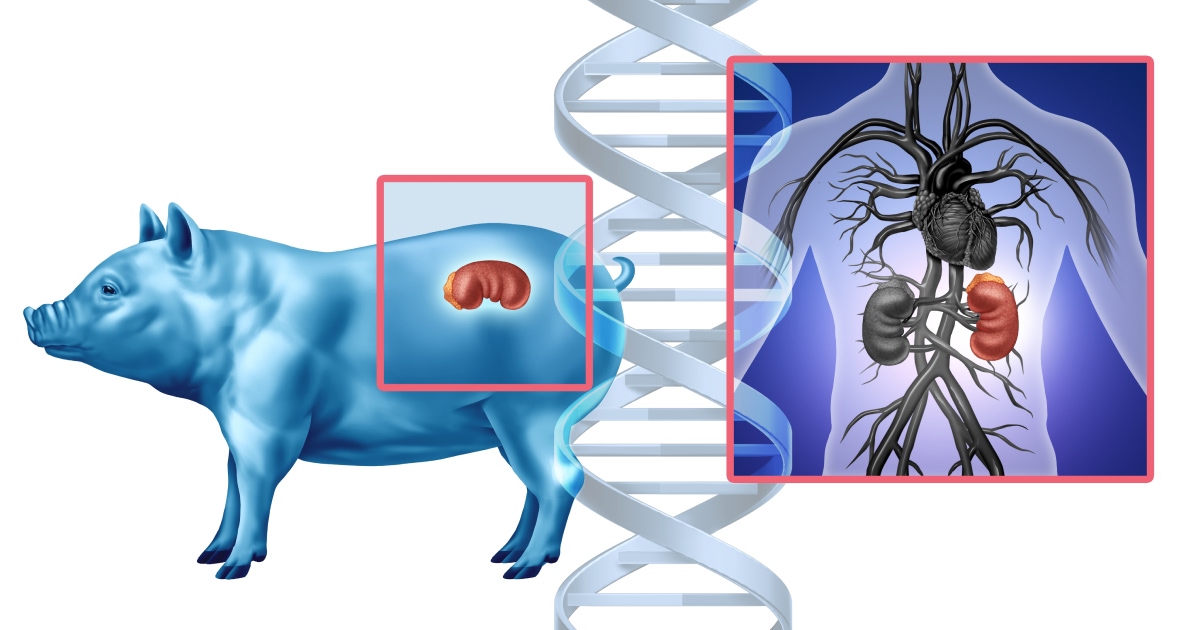

Tim Andrews spent more than two years on dialysis for six hours, three days a week. On days off, he slept. He had a 9% chance of receiving a human kidney within five years. Then, in January 2025, surgeons placed a genetically modified pig kidney into his body, and within days, it was working.
The results were published September 3, 2026 in The Lancet by Harvard Medical School physician-scientists at Massachusetts General Hospital. The case documents the longest known period a genetically modified pig kidney has sustained a living human patient, and the first time such an organ has served as a successful bridge to a human transplant.
Andrews, from Concord, New Hampshire, was 66 when he received the transplant. He had end-stage kidney disease as a result of type 2 diabetes, and his blood type made a human match particularly difficult to find. Before the procedure, without genetic modification, a porcine kidney would be immediately rejected by a human recipient. The kidney he received carried 69 genomic edits designed to make it compatible with a human immune system.
A Pig Kidney With 69 Genomic Edits
The kidney came from a Yucatan miniature pig named Wilma, engineered by Cambridge, Massachusetts-based startup eGenesis, cofounded by Harvard geneticist George Church, which uses CRISPR-Cas9 technology to engineer pigs with organs more compatible with humans by eliminating porcine genes that can trigger organ rejection and inserting human ones.
The pig carried a total of 69 genomic edits, which included the deletion of three major glycan antigens – molecules on the pig cell surface that the human immune system would otherwise attack – and the insertion of seven human transgenes. Scientists also inactivated porcine endogenous retroviruses in the donor pig to prevent cross-species viral transmission, a longstanding concern in xenotransplantation research. Andrews successfully lived with the genetically edited kidney for 271 days, during which he did not need dialysis, before receiving a human kidney from a donor.
The 2.5-hour procedure was performed on January 25, 2025, by surgeons at the Mass General Transplant Center, led by Dr. Leonardo V. Riella, Medical Director for Kidney Transplantation, and Dr. Tatsuo Kawai, Director of the Legorreta Center for Clinical Transplant Tolerance. The kidney functioned immediately after surgery. Within days of the transplant, Andrews was off dialysis. He went home, cooked, and took long walks with his dog.
A Record That Rewrote the Field
No previous studies had documented xenograft survival beyond two months before Andrews’ case. The first living patient to receive a genetically modified pig kidney, in March 2024, was Richard Slayman, a 62-year-old from Massachusetts. Andrews was the fourth living patient in the US to receive a kidney transplant from a genetically modified pig. Slayman’s pig kidney lasted 52 days before he died from unrelated heart problems. An Alabama woman’s pig kidney lasted 130 days. Andrews surpassed both.
His case represents the longest dialysis-free survival following porcine kidney xenotransplantation in a living human and the first transition to human kidney transplantation. The duration record shows that a pig kidney can sustain human physiology for a clinically meaningful period. The bridge outcome shows that surviving on a pig kidney does not compromise the body’s ability to later accept a human organ.
An early episode of T-cell-mediated rejection – when the body’s immune cells begin attacking the foreign organ – resolved with treatment. Reduced immunosuppression during a subsequent infection preceded microvascular injury and eventual graft failure. Human graft function after the transition was immediate, with no sensitization or detected pig pathogen transmission. The absence of sensitization was critical to the success of Andrews’ human transplant.
The immunosuppression regimen Andrews received included tegoprubart, an investigational monoclonal antibody designed to target the co-stimulatory CD40L pathway. This pathway plays a key role in how the immune system mounts rejection responses against foreign tissue, and blocking it has shown promise in prior xenotransplant research.
When the Pig Kidney Failed
Andrews, then 67, had the organ removed on October 23 because of declining function, according to Mass General Brigham. After approximately six months of normal function, damage began developing in the kidney’s blood vessels, progressing to what physicians described as thrombotic microangiopathy – tiny blood clots forming within the transplanted organ’s vessels, gradually shutting it down. The team believes the vascular injury was linked to a period when immunosuppression was reduced to manage an infection, though investigators acknowledge this is a single-patient case and that causation is difficult to establish definitively.
Andrews needed dialysis for 82 days until he received a donor human kidney in January 2026. That kidney has been working well since transplantation, with no new antibodies against human tissue detected – a sign that the pig kidney had not sensitized his immune system against future human organs.
His transplant team publicly called him “a selfless medical pioneer and an inspiration” to patients with kidney failure. Andrews described the pig kidney as a miracle. “I was alive, and I hadn’t been in a long time,” he told CNN.
Why This Matters for 100,000 People
More than 100,000 people are currently waiting on the national transplant list for a lifesaving organ, with over 92,000 waiting specifically for a kidney, according to the American Kidney Fund. For patients like Andrews, whose blood type or medical profile narrows the pool of compatible donors further, the wait is often longer and the odds of dying on the list are substantially higher. The demand for kidneys continues to outpace supply by a wide margin.
The Mass General team has framed xenotransplantation not as a permanent replacement for human organ donation, but as a bridge – a way to keep patients alive and off dialysis while they wait for a compatible human organ. Dr. Riella described the organ shortage as “the greatest crisis we have right now in transplantation,” and said xenotransplantation could initially help patients bypass dialysis while waiting, with the potential to become a long-term therapy as safety data accumulates.
In June 2026, the Mass General team transplanted a pig kidney into another New Hampshire man who continues to fare well, and the pilot study is set to conclude with a third pig kidney transplant later in the year. Both eGenesis and United Therapeutics are also preparing larger clinical trials. The FDA has cleared eGenesis’s Investigational New Drug application to initiate a clinical trial evaluating its engineered pig kidney, called EGEN-2784, in patients with end-stage kidney disease aged 50 or older who are dialysis-dependent and on the kidney transplant waitlist.
The research team noted the limitations of this case. This was a single patient with no comparison group, monitored under intensive specialist care at a world-leading transplant center. The outcome reflects careful patient selection and resources that are not universally available. Broader conclusions will require larger trials with more diverse patient populations.
What This Means for You
If you or someone you know is facing a long wait on the kidney transplant list, this case does not change today’s clinical options, but it does expand what the near-term future of transplantation may look like. Andrews’ 271 days showed that a pig kidney can sustain human physiology long enough to serve as a meaningful medical bridge, and that it can do so without making a subsequent human kidney transplant harder to succeed.
For anyone currently on dialysis or managing end-stage kidney disease, the most actionable step remains the same: talk to your transplant team about expanded access programs and clinical trial eligibility. eGenesis’s FDA-cleared trial of EGEN-2784 specifically targets dialysis-dependent patients aged 50 and older who are already on the kidney transplant waitlist. You can register as an organ donor at RegisterMe.org. With thousands of Americans dying every year while waiting for a compatible organ, that decision carries real weight.
Disclaimer: This information is not intended to be a substitute for professional medical advice, diagnosis, or treatment and is for information only. Always seek the advice of your physician or another qualified health provider with any questions about your medical condition and/or current medication. Do not disregard professional medical advice or delay seeking advice or treatment because of something you have read here.
AI Disclaimer: This article was created with the assistance of AI tools and reviewed by a human editor.
Read More: Researchers Reveal a Roadmap for Creating Lab-Grown Kidney Cells with Preclinical Potential