

A person can walk the same hallway in their own home every single day for years and still stop, unsure which direction leads to the kitchen. They recognize the hallway. They know they’re at home. But the mental sense of where they are, and how to get where they want to go, simply isn’t there.
For people with Developmental Topographical Disorientation, or DTD, getting lost can happen in places that should be completely familiar. The condition has been documented in scientific literature for less than two decades. Yet researchers studying it have found something striking: the people who have it aren’t confused in any general sense. Their memory works. Their intelligence is intact. They can recognize their own furniture, their own street, and their own neighbors. The problem is much more specific, and much more puzzling.
DTD offers a rare glimpse into how the brain creates the internal sense of direction most of us take completely for granted. And because the condition is still relatively unfamiliar, even some of its basic features can be surprising. From why people with DTD can recognize a landmark but still not know where to go, to what brain scans reveal about their internal “map,” here are eight fascinating facts about a condition that can make even the most familiar places feel impossible to navigate.
1. DTD Is a Lifelong Condition, Not a Symptom of Something Else
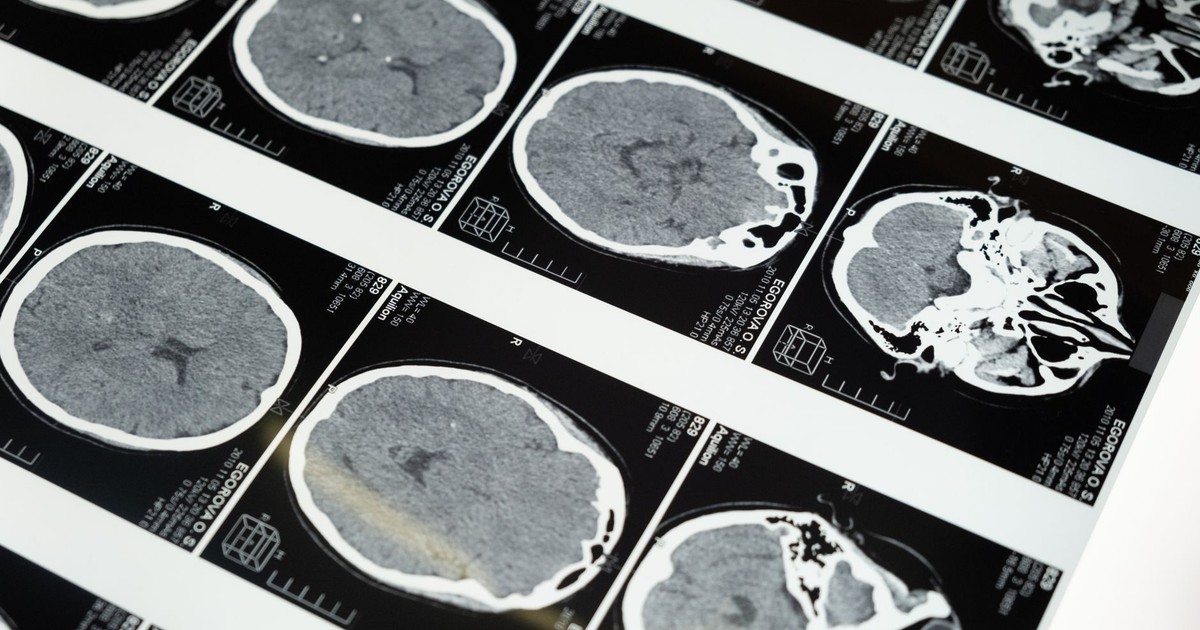
Developmental Topographical Disorientation is defined as the lifelong inability to orient in extremely familiar surroundings despite the absence of any acquired brain damage or neurological disorder. That last part is what separates it from navigation problems caused by stroke, dementia, or traumatic brain injury. People with DTD were born with this difficulty. It hasn’t gotten worse over time due to disease progression, and it isn’t a warning sign of cognitive decline.
Individuals with DTD report a lifelong selective inability to orient despite otherwise well-preserved general cognitive functions, and the absence of any acquired brain injury or neurological condition, with general intelligence reported to be within the normal range. Someone with DTD can hold a conversation, read, solve problems, and remember events clearly. The deficit is specific: their spatial navigation system doesn’t assemble the information needed to orient in space, even space they’ve occupied for years.
DTD is not caused by a brain injury, a neurological disease, or a psychiatric condition. As far as researchers can tell, this is simply how their internal navigation system has always worked. That distinction matters practically. It means DTD is not something that emerges from a checkup or a CT scan. It requires behavioral assessment, and it can go unrecognized for an entire lifetime if the person has developed enough coping strategies to mask the severity of their difficulty.
2. The Condition Was Only Named in 2009, by a Researcher at the University of British Columbia

The first case described using the term DTD was reported in 2009 by neuroscientist Giuseppe Iaria, then at the University of British Columbia in Canada, along with colleagues including Jason Barton. The woman they studied had struggled with navigation throughout her life despite otherwise intact sensory and intellectual abilities. Tests in real and virtual environments pointed to a remarkably specific problem: she had difficulty constructing a mental representation of her surroundings, what researchers call a cognitive map.
The naming of a condition doesn’t mean it didn’t exist before. People with DTD have undoubtedly lived with it throughout human history, likely dismissed as hopelessly bad with directions or anxious about travel. What Iaria’s team did in 2009 was establish that the difficulty was consistent, selective, and distinct enough from normal variation in navigation ability to deserve its own clinical description. Since its first description in 2009, a substantial number of empirical studies on DTD have appeared, but a clear clinical definition that can be used to develop a behavioral assessment tool is not yet available.
Early research on DTD focused on the extreme cases – people whose disorientation was disruptive enough that they sought professional help. But researchers now know there’s substantial variation between cases of DTD. Milder forms may pass unnoticed across a person’s entire lifetime, quietly written off as merely being “bad with directions.” This spectrum of severity is one of the reasons DTD remains poorly understood by the general public and, in many cases, by clinicians.
3. It Affects Roughly 1 in 30 People

A 2022 study published in PLOS One, which assessed 1,698 young Italian adults, found DTD in approximately 3 percent of the sample – consistent with a prevalence of roughly one in 30 people. That would place DTD in the same rough frequency range as color blindness in women. Given how little awareness exists around DTD, those numbers suggest a significant number of people are navigating daily life with an unrecognized condition.
The challenge with prevalence data is that DTD exists on a continuum. Milder cases may never be identified because the person develops workarounds – memorizing specific routes, always driving the same path, relying on GPS – without ever understanding why they need them so badly. The cases that do get formally studied tend to be severe enough that the person sought help, which likely skews documented estimates toward the more extreme end of the spectrum.
DTD often leads to severe consequences in daily life, affecting education and professional choices and limiting everyday mobility. Choosing not to take a job because the commute involves an unfamiliar transit system, or avoiding social events in new parts of town, are the kinds of life-shaping decisions that rarely get attributed to a navigation condition – but may, in many cases, stem from one.
4. The Core Problem Is Building a Mental Map, Not Recognizing Landmarks

The central difficulty in DTD is constructing a mental representation of surroundings – what researchers call a cognitive map. A cognitive map isn’t a visual image like a street map. It’s the brain’s internal record of how different places relate to each other in space – which direction the supermarket is from home, how far the park is from the train station, how to take a shortcut through a neighborhood you’ve walked dozens of times.
A road closure, a different entrance, or a wrong turn may disrupt the sequence of cues a person relies on, making it much harder to find an alternative route. This is the practical consequence of a failed cognitive map. Without it, a person depends entirely on memorized step-by-step sequences. The moment the expected sequence breaks down – a detour, a new entrance to a building, a change in routine – there’s no internal map to fall back on.
What distinguishes people with DTD from people who are just poor navigators is that the deficit extends into places they know intimately – not just unfamiliar cities, but their own homes in severe cases. According to a 2020 study in Scientific Reports that tracked more than 1,200 DTD cases over ten years, individuals affected by DTD get lost on a daily basis, even in the most familiar of surroundings such as their neighborhood, the building where they have worked for many years, and, in extreme cases, even in their own homes.
5. Landmark Recognition Stays Intact – Which Makes the Condition Even More Confusing

One of the most disorienting aspects of DTD, for the people who have it and for the clinicians trying to understand it, is that recognizing familiar places is not the problem. The difficulty lies in placing those familiar places in relation to each other. Someone with DTD can walk into a coffee shop they’ve visited weekly for five years and recognize it immediately. What they can’t do reliably is know which direction to turn when they leave it.
Behavioral assessment shows different deficits in spatial and navigational tasks, which seem connected to a poor ability to form a cognitive map of the environment. Landmark recognition, by contrast, is generally preserved. That pattern – intact recognition, impaired spatial mapping – is what makes DTD neurologically distinct and what makes it so hard to explain to others. The person with DTD looks at a familiar neighborhood and sees familiar things. They just can’t arrange those things into a coherent internal geography.
In severe cases, this becomes visible even in a simple drawing exercise. When people with DTD are asked to sketch maps of their own homes, they can remember the sequence of rooms – kitchen follows hallway, bedroom is past the bathroom – but struggle to represent the shapes, sizes, and positions of those rooms accurately. The sequence is there; the spatial geometry is not.
6. The Brain Looks Normal on Scans – But Functions Differently
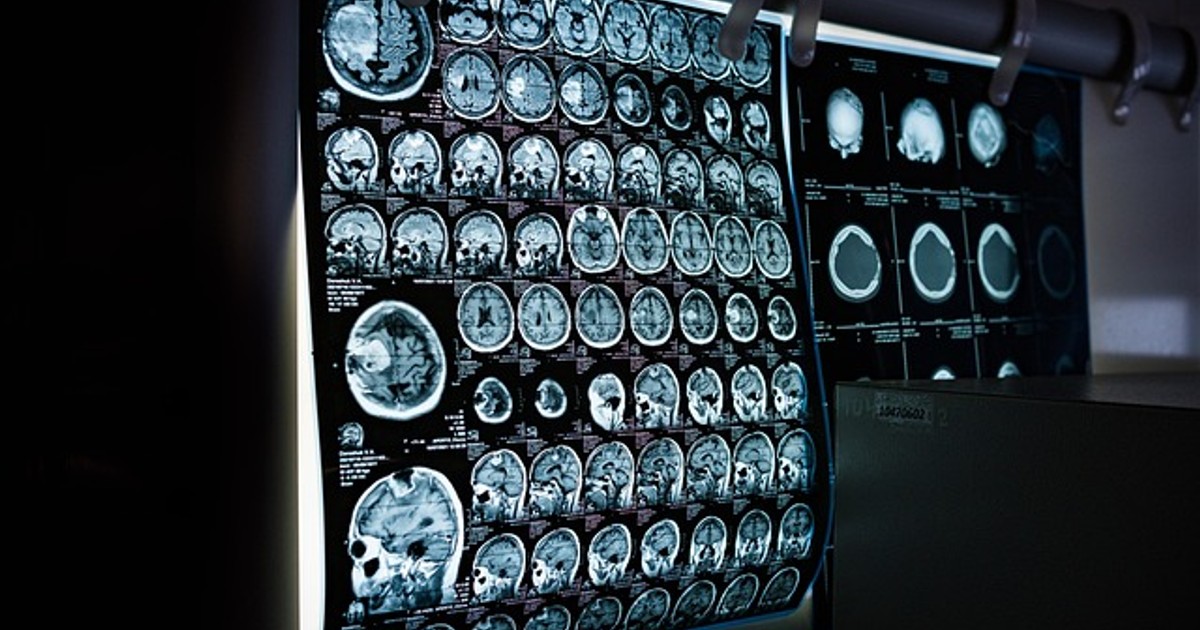
Brain imaging has been one of the most clarifying tools for understanding DTD, precisely because of what it doesn’t show. A 2014 study published in Hippocampus, led by Giuseppe Iaria and colleagues, used resting-state functional MRI to compare people with DTD against healthy controls. The results revealed decreased functional connectivity between the right hippocampus and the prefrontal cortex in individuals with DTD. No structural differences were detected between groups. The brain regions involved in navigation are present, they’re the right size, and they show no damage. The problem is in how well they communicate with each other.
The hippocampus is the brain’s primary hub for spatial memory – it’s where cognitive maps are built and stored. The prefrontal cortex handles planning, working memory, and the real-time decisions involved in navigating. The 2014 study specifically tested the hypothesis that DTD may be related to ineffective functional connectivity between the hippocampus, known to be critical for cognitive maps, and other brain regions critical for spatial orientation. When those two regions aren’t communicating efficiently, the result appears to be exactly the profile seen in DTD: a person who can perceive their environment clearly but cannot assemble that perception into a usable spatial representation.
No structural brain differences were found between DTD and control groups, highlighting a functional rather than structural impairment. This matters for how DTD should be understood clinically. There’s no lesion to point to, no atrophy to measure. The condition lives in the quality of communication between brain regions – which also means it’s harder to detect and harder to explain to someone who expects a visible abnormality.
7. DTD Has a Genetic Component

DTD refers to a condition of highly impaired navigation ability in healthy individuals. And it doesn’t appear to arise at random. Research into DTD has found that the condition clusters in families, pointing to a heritable component. A 2025 systematic review published in Neuropsychology Review noted that “there appears to be a genetic component,” with increased prevalence among biological relatives of affected individuals.
This finding has practical implications. Someone whose parent or sibling has severe navigation difficulties – well beyond what most people experience – may be dealing with DTD themselves without ever having had a name for it. The genetic dimension also opens a research pathway toward understanding which specific neural development processes are involved and whether early identification could lead to earlier intervention.
The condition is not currently diagnosed through a genetic test, and no standardized clinical assessment yet exists. The 2025 Neuropsychology Review systematic review, which analyzed 15 empirical studies on DTD, concluded that “current findings provide relevant input to the development of a clinical characterization of DTD” – a careful way of saying researchers are closer to a diagnostic framework but aren’t there yet. For individuals who suspect they have DTD, the path to formal identification remains limited to specialized neuropsychological assessment.
8. Daily Life With DTD Often Involves GPS as a Necessity, Not a Convenience

For most people, GPS navigation is a convenience – useful for unfamiliar cities, faster than pulling out a map, helpful when traffic reroutes you. For people with DTD, it’s closer to a mobility aid. People with DTD report getting lost frequently – at least a few times a week – since childhood. Without consistent access to navigation technology, independent movement through the world becomes genuinely difficult.
The reliance on GPS, however, creates an unintended consequence: it conceals the severity of the condition from the people who have it and from those around them. Milder forms may pass unnoticed across a person’s entire lifetime, quietly written off as merely being “bad with directions.” Someone who always opens a navigation app before leaving the house may not realize how significant their difficulty actually is – or that it has a name, a neurological basis, and a community of researchers working to understand it.
Researchers studying DTD have proposed that cognitive map training – deliberately practiced exercises to help build spatial representations – could offer some benefit. A 2020 study published in Frontiers in Human Neuroscience suggested that such training could directly target the missing spatial skill in people with DTD, as distinct from simply memorizing routes. The distinction matters: route memorization is a workaround; cognitive map training would address the underlying gap.
Read More: Scientists Name New Type of Memory Loss Often Mistaken For Alzheimer’s
What This Means for You

DTD is defined as a lifelong inability to orient in extremely familiar surroundings despite the absence of acquired brain damage. If you or someone you know has experienced severe navigation difficulties since childhood – getting lost in familiar neighborhoods multiple times a week, struggling to orient even at home – that pattern deserves more attention than it typically receives. DTD is not a character flaw, a sign of low intelligence, or early dementia. It’s a functional difference in how specific brain regions coordinate during spatial tasks.
The Neuropsychology Review systematic review from 2025 represents the most current scientific effort to build toward a standardized clinical definition of DTD. Until that definition is formalized and a behavioral assessment tool exists, diagnosis relies on neuropsychological evaluation by a specialist familiar with the condition. If navigation difficulties are affecting your education, career choices, or daily independence, raising the question with a neuropsychologist – specifically referencing DTD – is the most direct route toward getting answers. GPS will continue to help in the meantime. But knowing what you’re dealing with changes everything about how you approach it.
Disclaimer: This information is not intended to be a substitute for professional medical advice, diagnosis, or treatment and is for information only. Always seek the advice of your physician or another qualified health provider with any questions about your medical condition and/or current medication. Do not disregard professional medical advice or delay seeking advice or treatment because of something you have read here.
AI Disclaimer: This article was created with the assistance of AI tools and reviewed by a human editor.
Read More: Mother Stunned After Doctor Removes Strange Cause of Son’s Bad Breath