
For fifty years, Gina Maria’s Pizza was woven into the rhythms of suburban Minneapolis life. Friday nights, birthday dinners, after-game slices – for countless families across the western Twin Cities, the chain was a standing appointment. Then, one day in October 2025, it was just gone. No warning. No announcement to staff. Locked doors and automated phone messages. Customers who called to place an order were told the locations were permanently closed.
For months, no one knew what had really happened. The chain’s website eventually posted a brief, emotional farewell, but offered no financial explanation. It wasn’t until March 2026 that the full picture finally emerged – and it told the story of a business that had been carrying far more weight than anyone on the outside could see.
What court filings revealed was stark: a company drowning in nearly $2.9 million in debt, with just $64,000 in assets to its name. The filing was not a rescue plan. It was an ending. And Gina Maria’s Pizza is far from alone in that ending – it has become, in the bluntest sense, a symbol of where the American pizza industry now stands.
A Half-Century in the Making
Gina Maria’s Pizza traces its roots to 1975, when it opened as a 450-square-foot dine-in restaurant in the Minnetonka area of Minnesota. Over five decades, it expanded to four suburban locations. Those four western Twin Cities locations – Chanhassen, Eden Prairie, Edina, and Plymouth – served the Minneapolis-Saint Paul metropolitan area for a generation of families who came to regard the chain not as a franchise, but as a neighborhood fixture.
The concentrated footprint reflected a regional business model focused on consistent neighborhood service rather than expansion into multiple states or large-scale franchising. That approach worked for decades. The chain built loyalty organically, the old-fashioned way – through reliable food, familiar faces, and the kind of suburban comfort that big national brands struggle to replicate.
Eden Prairie Local News reported that the chain’s Facebook page had promoted specials earlier that same week the stores closed, which made the shutdown all the more disorienting for regulars. There was no wind-down, no clearance, no farewell. Customers were not watching a slow collapse unfold over time. They were seeing an abrupt and unexpected stop across the entire chain.
—
The Closure: No Warning, No Explanation
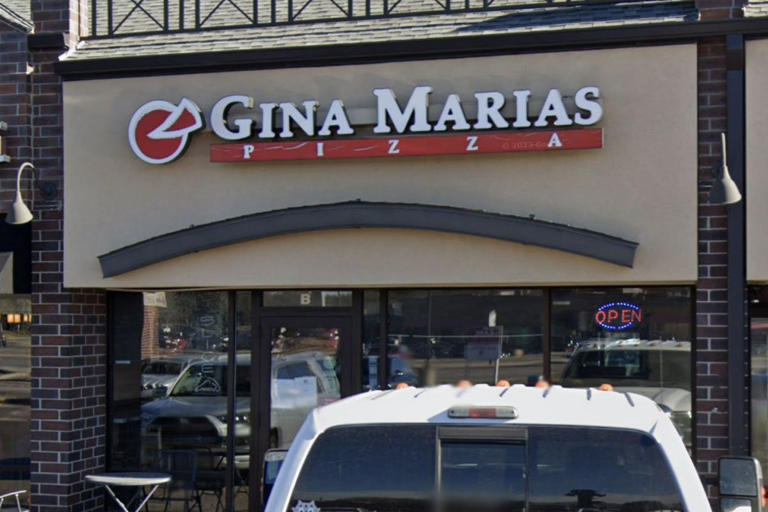
Gina Maria’s Pizza abruptly closed all four of its Twin Cities suburban locations, with the company posting a notice on its website stating that it had “officially closed its doors,” according to Bring Me the News. Customers and employees were given no warning, and calls to the restaurants gave out an automated message confirming that the locations were permanently closed, according to the Minneapolis Business Journal.
The chain’s parting message, posted before its website went dark, acknowledged the weight of the decision. “The decision did not come easily,” the notice read. “We’re proud of what we built together and will always cherish the relationships formed over hot pizzas, warm smiles, and great conversation.”
Social media threads filled quickly with reactions from longtime customers. One person wrote on Facebook: “I’m so bummed, I live a block away from the E.P. store, went there for 25 years, just love the pepperoni and green olive, best pizza by far.” On Reddit, the response was similar. One user described the chain as “consistently reliable,” adding that the lunch slice deal would be missed.
For months, the silence from ownership left customers and former employees with no real answers. No one knew whether financial trouble, ownership disputes, or something else had triggered the sudden shutdown. That changed in late March 2026.
The Bankruptcy Filing: What the Court Documents Show
Northern Brands Inc., the corporate entity operating under the Gina Maria’s Pizza name, filed for Chapter 7 bankruptcy in the U.S. Bankruptcy Court for the District of Minnesota on March 26. The filing was assigned Case No. 26-41005.
Chapter 7 bankruptcy – as distinct from Chapter 11 reorganization, which allows a company to restructure and potentially reopen – means liquidation. Unlike a Chapter 11 reorganization, a Chapter 7 filing signals an intent to liquidate rather than restructure, meaning Gina Maria’s has no plans to reopen in any form. Under Chapter 7, a trustee is appointed to sell off remaining assets and use the proceeds to repay creditors.
Court filings show Northern Brands Inc. reported approximately $2.9 million in liabilities and about $64,000 in assets, making a restructuring effort unlikely, according to the Minneapolis Business Journal. That ratio – liabilities outpacing assets by more than 45 to one – left creditors with little prospect of significant recovery. Court records show the company listed between 50 and 99 creditors, including suppliers, landlords, and former employees.
Phil Godinez is listed as chief executive officer, and Porfioro Godinez is named as the company’s authorized representative, according to the Minneapolis/St. Paul Business Journal. The filing was a voluntary one, initiated by the company itself.
The Business Journal also reported that a California restaurant using the Gina Maria’s name – “Gina Maria’s Pizzeria” – is not related to the Minnesota-based company that filed for bankruptcy and is not part of the liquidation process. The similarity in names caused some initial confusion online, but court documents make the distinction clear.
The Economics Behind the Collapse
The balance sheet was the immediate cause of death, but the underlying conditions had been building for years. High commercial rents in suburban shopping centers, supply chain volatility, and difficulty passing on cost increases to price-sensitive families all contributed to the mounting debts.
Those pressures were not unique to Gina Maria’s. According to the U.S. Consumer Price Index, restaurant food costs rose about 6 percent from January 2024 to September 2025, driven by rising labor, rent, and ingredient costs. Meanwhile, grocery prices rose only around 3 percent over the same period, according to a 2026 McKinsey analysis. That widening gap has fundamentally shifted how American consumers think about the value of eating out, and the change has been felt across every price point.
For smaller regional chains, without the scale to absorb cost shocks or the corporate backing to fund a turnaround, those margins become existential. Industry observers point to broader challenges facing independent and small-chain restaurants: rising food and labor costs, inflation squeezing margins, increased competition from delivery platforms, and shifting consumer habits post-pandemic. Even as larger players such as Pizza Hut and Papa John’s announce hundreds of closures in 2026 for underperforming units, regional favorites like Gina Maria’s often lack the scale or capital to weather prolonged downturns.
Consumer behavior itself has also shifted in ways that directly disadvantage traditional dine-in and carryout operators. Delivery has declined from 61% of consumers in 2022 to 55% in 2025, according to the 2025 Technomic Pizza Consumer Trend Report. The most telling shift: 25% of consumers report eating more frozen pizza instead of restaurant options due to price increases.
A Struggling Pizza Sector: Not an Isolated Case
Gina Maria’s closure did not happen in a vacuum. The American pizza industry, as a whole, entered a significant contraction period beginning in 2024 – one that has continued to accelerate into 2026.
In 2024, the pizza segment struggled significantly, with Technomic’s Top 500 Restaurants data showing 61% of pizza chains experienced declining sales. Only one pizza brand – Fort Worth-based pizza buffet chain Mr. Gatti’s Pizza – managed to achieve double-digit growth. That downturn contrasted sharply with the coffee segment, where 88% of chains saw positive sales growth, according to Nation’s Restaurant News.
At the national level, even the largest brands have not been immune. Pizza Hut said it will close 250 underperforming U.S. locations as part of its Hut Forward plan in the first half of 2026, after reporting a 1% same-store sales decline globally for the full year of 2025, according to Nation’s Restaurant News.
Papa John’s is similarly pulling back. Papa John’s announced in its fourth-quarter earnings call that it will close 300 underperforming restaurants, including 200 by the end of 2026. The company also said it would cut 7% of its workforce.
Black Box Intelligence reported that 9% of full-service restaurants and 4% of limited-service restaurants were at risk of closure in 2026, according to Restaurant Dive. That projection spans the full industry – not just pizza – and reflects just how broadly the post-pandemic cost environment has strained restaurant economics.
For a deeper look at how this wave of closures is playing out across American retail and food service, this 2026 tracker covers the major names across multiple sectors.
More than 20 restaurant chains or large-scale franchisees sought court-ordered debt protection in 2025 alone, though that figure is likely a significant undercount, given the large number of mostly-small filings that often escape notice, according to Restaurant Business. Gina Maria’s, as a small regional operator with no parent company and no franchise network to fall back on, had none of the cushion that larger chains use to absorb a losing year or two.
What Consumers Said – and What They Did
For employees, the abrupt October shutdown meant sudden job losses with limited warning. Some found positions at a revived Eden Prairie spot or other local eateries, but many faced uncertainty during the holiday season.
Customer reaction was swift and vocal. Gina Maria’s Pizza updated its Facebook page to say “permanently closed,” prompting loyal customers to express that they were saddened by the news. The depth of that reaction spoke to how embedded the chain had become in the daily lives of Twin Cities suburbs – not as a destination, but as a routine.
From the Ashes: Pizzas Gina Opens
One part of the story took an unexpected turn. Within weeks of the closures, a familiar face stepped in to keep the flavors alive at one of the shuttered locations.
On November 3, 2025, a new restaurant called Pizzas Gina opened in the Eden Prairie space. Eden Prairie Local News reported that Ulises Godinez, a former manager, launched the business with the same recipes after the old chain closed. The report also said the previous owners had left supplies in the kitchen for him to use in the new venture.
The new Eden Prairie location continues serving deep dish, thin, and authentic New York style pizzas, while also offering daily and weekly slices. Takeout and delivery are both available.
Customers hoping for a return to familiar flavors now look to Pizzas Gina as the closest continuation of the tradition. Its success could inspire other former staff or fans, though replicating the full multi-location model appears unlikely given the bankruptcy outcome.
Read More: More Than 2,000 Stores Are Set to Close Across the US in 2026
What This Means for You – and for the Restaurant Next Door
The fall of Gina Maria’s Pizza is not just a local story. It is a precise case study in what happens when a regional restaurant operator – with no corporate safety net, no franchise network, and no reserve capital – meets a sustained period of rising costs, softening consumer spending, and an industry-wide rethink of what people are willing to pay for a meal.
While major chains are pruning underperforming units, Gina Maria’s was cut down entirely. It was a casualty of the same pressures, but without the corporate structure to restructure, pivot, or wait out the cycle. That asymmetry is the core lesson here. Northern Brands reported a severe imbalance between debts and assets, a common trigger for Chapter 7 proceedings in which a trustee liquidates remaining holdings to pay creditors. The process will likely take months to complete, with the formal dissolution of Northern Brands Inc. marking the legal end of a brand that served Twin Cities families for half a century.
For anyone tracking the restaurant industry, the data points in one consistent direction: the middle of the market – not a fast-food behemoth, not a fine-dining destination, but a reliable neighborhood chain with four suburban locations – is the most exposed position in American dining right now. Gina Maria’s had goodwill. It had loyal customers. It had decades of community history. None of that was enough to offset $2.9 million in debt with $64,000 in hand. That math is the story, and it is playing out across the country in kitchens just like theirs. If a beloved chain that served generations of families can vanish overnight with no warning and no exit plan, the question worth asking is: which neighborhood fixture in your town is one bad quarter away from the same end?
AI Disclaimer: This article was created with the assistance of AI tools and reviewed by a human editor
Read More: IRS COVID-Era Refunds: Do You Qualify? July 2026 Deadline