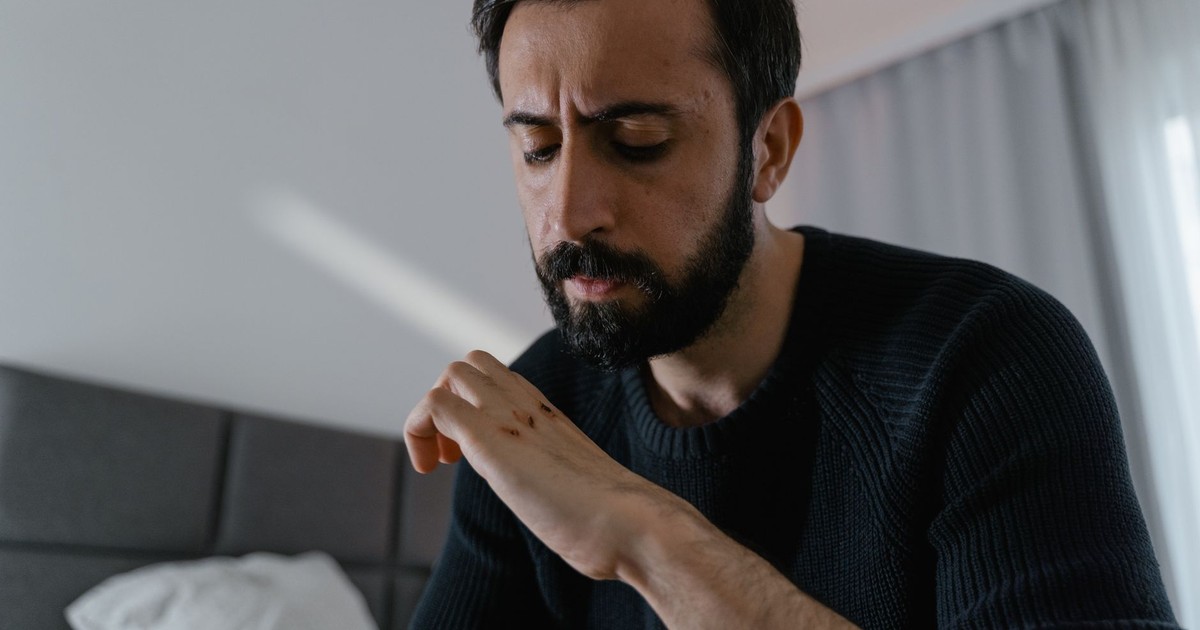

Erectile dysfunction and gout don’t seem like obvious partners. One affects the joints, often announcing itself with a suddenly swollen and intensely painful big toe. The other depends heavily on healthy blood flow and the ability of smooth muscle in the penis to relax. On the surface, there isn’t much reason to connect the two, but researchers are starting to connect the dots.
Men with gout appear to experience erectile dysfunction more often than men without the condition, an association that has persisted even after researchers account for factors such as age, obesity, diabetes, and high blood pressure. A study of 201 men published in The Journal of Rheumatology found erectile dysfunction in 76% of those with gout compared with 51% of those without it.
That finding helped prompt rheumatologist Dr. Naomi Schlesinger and her colleagues to argue that physicians should consider asking men with gout about their sexual health. Larger studies have since strengthened the association. A UK population study involving 9,653 men with newly diagnosed gout found a 31% higher relative risk of erectile dysfunction after diagnosis compared with matched controls.
Until recently, there was an obvious explanation: gout and erectile dysfunction share many of the same risk factors, including obesity, diabetes, high blood pressure, and cardiovascular disease. But newer research raises a more intriguing possibility. Could elevated uric acid itself interfere with the biological machinery required for an erection?
A 2025 study published in Communications Biology suggests it might, although much of the mechanistic evidence so far comes from animals. If the findings eventually translate to humans, they could help explain why a disease best known for attacking the joints may have consequences in a seemingly unrelated part of the body.
What gout actually does to the body
Gout is not simply a painful joint flare. Elevated uric acid may act as an independent risk factor for erectile dysfunction, in addition to already established contributors. The condition develops when the body accumulates too much uric acid – a waste product from the breakdown of purines found in certain foods and drinks. When uric acid reaches high enough concentrations, it forms needle-like monosodium urate crystals that lodge in joints, tendons, and surrounding tissues. These crystals trigger acute inflammatory episodes: sudden, intensely painful attacks that can sideline a person for days.
Men have a significantly higher gout prevalence than women, with the condition roughly three times more common in males. In the United States specifically, the prevalence of gout among men surged by more than 90 percent between 1990 and 2019. In 2020, approximately 55.8 million people globally had gout. High body mass index has emerged as a leading risk factor, and rising obesity rates across younger populations are a major driver of the surge.
The gout – erectile dysfunction connection
The association has now appeared across several types of research. As noted above, Schlesinger’s study found ED in 76% of men with gout compared with 51% of those without it, prompting her to conclude that the findings “strongly support the proposal to screen all men with gout for the presence of ED.”
The larger UK population study strengthened that signal. Among 9,653 men with newly diagnosed gout, researchers found a 31% higher relative risk of erectile dysfunction compared with matched controls. And the finding isn’t limited to those two studies: a 2019 systematic review and meta-analysis involving more than 350,000 participants found that people with gout had about a 20% higher relative risk of erectile dysfunction than those without gout.
Taken together, those findings have led some health professionals to argue that sexual health should be part of the conversation when treating men with gout. Dr. Schlesinger, now Professor and Chief of the Division of Rheumatology at the Spencer Fox Eccles School of Medicine, University of Utah, has framed the relationship as a potential chain connecting endothelial dysfunction, erectile dysfunction, and cardiovascular risk. She noted that, “because gout is commonly associated with cardiovascular disease (CVD) risk factors and coronary artery disease (CAD) and patients who present with ED also have an increased rate of CVD risk factors and concomitant silent CAD, all these patients should also be evaluated for possible silent CAD.”
The cardiovascular connection is an important one because a 2024 study involving more than 860,000 people found that gout was associated with increased risk across a broad range of cardiovascular diseases. Gout, ED, and cardiovascular disease also share several underlying risk factors, particularly those involving metabolic and vascular health.
But shared risk factors still leave an important question unanswered: is gout simply traveling alongside the conditions that cause erectile dysfunction, or could elevated uric acid itself play a more direct role?
Uric acid’s direct role in erectile tissue
Until recently, researchers assumed the gout – ED link was mostly indirect: gout coexists with conditions like obesity, hypertension, and diabetes, all of which independently reduce erectile function. The 2025 study published in Communications Biology added a more specific piece to the picture.
The study analyzed clinical data from men aged 24 to 49 and found that the odds of erectile dysfunction were more than 2.5 times greater for every 100 μmol/L increase in serum uric acid. That dose-response relationship holds not just in older men but in men in their twenties and thirties.
When the research team induced elevated uric acid in rats, erectile function was impaired even when the rodents had no other metabolic issues. Mechanistically, uric acid appears to enter the erectile tissue of the penis shaft – specifically the corpus cavernosum smooth muscle cells – and lead to contraction. An enzyme called myosin light-chain kinase (MLCK) normally helps regulate muscle relaxation; when uric acid interferes with its normal activity, those smooth muscle cells remain contracted and cannot allow the blood filling required for erection.
The researchers also tested whether reversing uric acid elevation could restore function in the rat models. Urate-lowering medications including febuxostat and benzbromarone – drugs already used to treat gout – restored erectile function in hyperuricemic rats. Whether this translates to humans remains to be tested in clinical trials.
Gout is rising in younger men — and so is the risk
For decades, gout was considered a disease of aging. The age distribution of gout has shifted, with an increasing incidence among younger individuals. The rise of gout in young men runs parallel to increases in obesity, diabetes, cardiovascular disorders, and metabolic syndrome across the same age groups.
ED in a 30-year-old man is unexpected, often deeply distressing, and may occur without any obvious explanation. A gout diagnosis in a younger man – particularly one with elevated uric acid and no other apparent cause of ED – now warrants attention as a potential contributing factor, based on the available evidence.
Gout prevalence is rising fastest in wealthier countries, a pattern consistent with dietary shifts, sedentary behavior, and metabolic health trends rather than infectious disease or genetic changes.
Read More: Gout in young men is surging — here’s what scientists have found
The treatment gap that’s leaving men behind
Despite the growing body of evidence linking gout to erectile dysfunction and cardiovascular disease, treatment in primary care remains inadequate. In the US and the UK, clinical guidelines indicate that only about one-third of people with gout in primary care are offered urate-lowering therapy at all. A national audit by UK rheumatologists found that by one year after a new outpatient appointment, only 25 to 45 percent of patients had achieved the target serum urate threshold needed to dissolve crystals and prevent flares.
Those numbers reflect two separate failures: physicians not consistently offering treatment, and patients not consistently taking it. Urate-lowering drugs like allopurinol or febuxostat require months to take effect, and doses need adjustment over time through repeated blood testing. Some patients abandon the process before it works. Others are never started on it.
The result is that a large share of people with gout – a manageable, potentially reversible condition – are walking around with chronically elevated uric acid that may be silently damaging their blood vessels and, if the 2025 Communications Biology findings hold in humans, their erectile tissue.
What this means for you
Gout and erectile dysfunction may seem unrelated, but the evidence increasingly suggests they deserve to be considered together. Men with gout have a higher rate of ED, and emerging laboratory research offers a plausible explanation for how elevated uric acid could potentially interfere with erectile function directly.
What researchers haven’t shown yet is equally important. The finding that urate-lowering drugs restored erectile function in rats does not mean gout medication can treat ED in humans. Clinical trials would be needed to determine whether lowering uric acid improves erectile function independently of its established role in treating gout.
If you have gout and are experiencing erectile dysfunction, however, it’s worth discussing both with your health care practitioner. ED can sometimes be an early clue to underlying vascular problems, and gout itself is associated with increased cardiovascular risk. A large 2024 study found that people with gout had higher rates across a broad range of cardiovascular diseases, reinforcing the importance of looking beyond the joints when managing the condition.
Managing gout also means more than treating the pain of an occasional flare. For people who need urate-lowering therapy, guidelines generally use a serum urate target below 6 mg/dL (360 μmol/L), with treatment adjusted over time to reach and maintain that level.
For now, lowering uric acid should be viewed as a treatment for gout, not erectile dysfunction. But the emerging research adds another reason to take both gout and ED seriously, particularly when they occur together. What starts as a painful joint problem may be telling us something about health well beyond the joint.
Disclaimer: This information is not intended to be a substitute for professional medical advice, diagnosis, or treatment and is for information only. Always seek the advice of your physician or another qualified health provider with any questions about your medical condition and/or current medication. Do not disregard professional medical advice or delay seeking advice or treatment because of something you have read here.
AI Disclaimer: This article was created with the assistance of AI tools and reviewed by a human editor.
Read More: How To Help Naturally Reverse Gout And Relieve Joint Pain