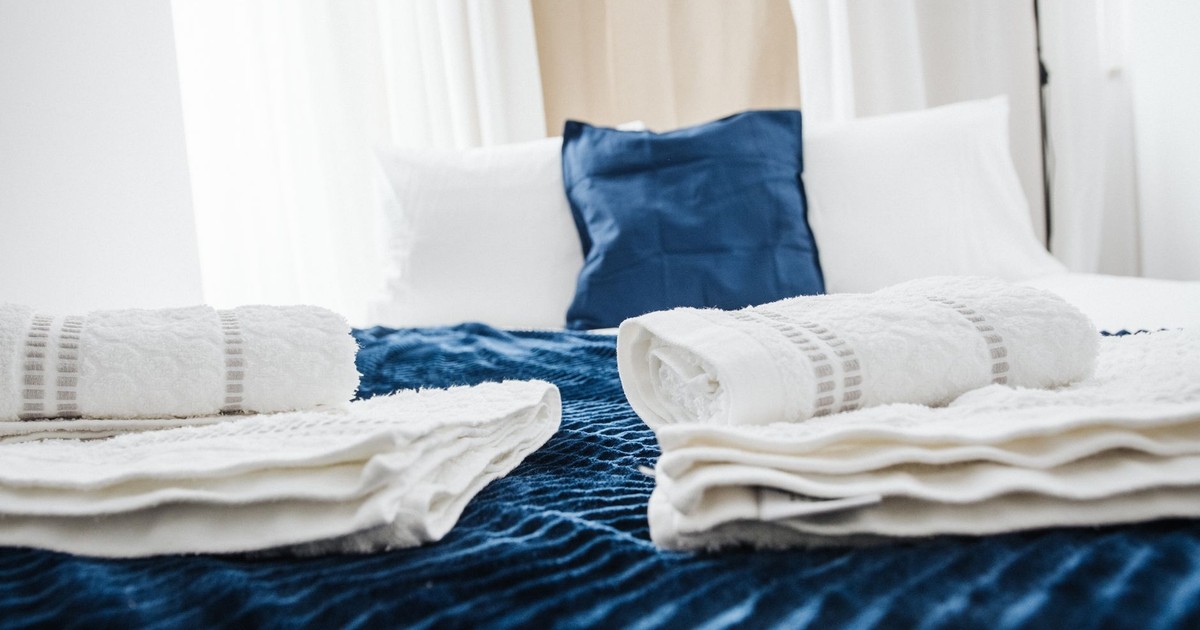

Most people strip the bed the morning after a guest leaves. But one increasingly popular approach flips that logic entirely – make the bed immediately after guests go, then wash the guest room sheets right before the next visitor arrives. At first, that sounds like bad hygiene dressed up as a household tip. The science of what actually lives in bedding, and how fast it accumulates, tells a more interesting story.
The key detail is timing. A guest room isn’t a bed you sleep in every night. It sits empty for weeks, sometimes months, between visits. That changes the math considerably – and it changes what “clean enough” actually means in practice.
There’s also a consistency argument worth taking seriously. Anyone who has ever forgotten to wash the guest room sheets before company arrived – assuming the post-guest wash covered it – knows the panic of changing a bed at midnight while visitors are in the driveway. Washing right before arrival, not right after departure, guarantees guests always get genuinely fresh bedding. The bed gets made immediately after the last guests leave so the room looks tidy, and the laundry happens as part of the pre-visit preparation rather than as an afterthought following one.
What Sheets Actually Collect Overnight
The case for frequent washing is grounded in some genuinely striking microbiology. Dead skin cells, sweat, saliva, and other biological material accumulate in bedding quickly, and lab tests found that pillowcases unwashed for just one week harbored 17,000 times more colonies of bacteria than samples taken from a toilet seat. That figure comes from an Amerisleep study that swabbed volunteers’ sheets at weekly intervals over four consecutive weeks.
The raw numbers are striking. Researchers swabbed three volunteers’ unwashed sheets and pillowcases at the start of each week for four consecutive weeks, beginning from freshly laundered bedding. After just one week, pillowcases sampled had at least three million colony-forming units (CFUs) per square inch, and sheets collected around five million CFUs – more than 24,000 times the bacteria found on a bathroom doorknob.
Why does buildup happen so fast? Each night, as we sleep, we shed hundreds of thousands of skin cells and sweat up to half a pint of fluid, according to microbiologists writing for The Conversation. Moisture builds in sheets after each night of sleep, and peeling back covers in the morning to allow bedding to air out makes it a less attractive nesting spot for bacteria and mites. That moisture, combined with warmth and a continuous supply of shed skin, creates conditions that microorganisms find ideal.
It isn’t just bacteria. Dust mite fecal droppings are potent allergens that can aggravate eczema, asthma, and allergic rhinitis, according to a microbiologist’s analysis published on Science Alert. Fungi are also a concern – species like Aspergillus fumigatus have been detected in used bed pillows and can cause serious lung infections in people with compromised immune systems.
The Guest Room Is a Different Case
Here’s where the biology shifts in favor of the “wash before, not after” approach. For infrequently used beds, such as those in a guest room, sheets can reasonably be washed every two weeks instead of weekly, according to guidance from CD One Price Cleaners. The weekly standard recommended by medical professionals applies to beds that get eight hours of nightly use – someone shedding, sweating, and breathing into the fabric every single night. An empty guest bed accumulates a fraction of that biological load.
What guest bedding does introduce, specifically, is someone else’s skin microbiome and hygiene routine into the mix, as noted by home-cleaning analysts at The Thrifty Apartment. That’s a legitimate reason to wash before the next guest, not a reason to wash immediately after the last one leaves if the room is simply going to sit empty for weeks. Sheets left unwashed in an empty room aren’t accumulating much – the biological processes that drive bacterial growth require heat, moisture, and a continuous supply of organic material. An unoccupied bed, aired out and left undisturbed, is a far slower incubator than an active one.
Bacteria like Staphylococcus aureus can survive on cotton for up to a week and on terry cloth for two weeks, according to microbiologists at The Conversation. That matters when you’re evaluating sheets that have been sitting empty for six weeks between visitors. By the time the next guest arrives, any bacteria left behind by the previous one has long since died off on cotton bedding – and a wash right before arrival removes everything regardless.
The guest room also often has other occupants. Dogs, cats, or simply dust settling into an empty room over weeks mean the sheets will need freshening before the next person sleeps in them anyway, whatever was done immediately post-guest. Washing them as part of the pre-visit routine accounts for all of that in one step.
What “Standard Practice” Actually Looks Like
Most reputable hotels change and wash sheets between each guest stay, which is standard practice in the hospitality industry. Hotels operate on a continuous cycle of arrivals and departures – one guest checks out in the morning, another checks in that afternoon. There’s no multi-week gap between occupants, and no airing-out period. Their situation is the opposite of the occasional-use guest room: maximum biological load, minimum time between users. The hotel model, which gets cited often in these discussions, simply doesn’t apply to a room that sits empty for two months between Thanksgiving and Easter.
A 2022 YouGov poll found that just 28% of Brits wash their sheets once a week, which suggests the weekly standard recommended by health authorities is already aspirational for most households – including the beds that get used every night. The Cleveland Clinic recommends washing sheets every one to two weeks, with pillows and comforters cleaned every six months. For a guest room that sees two or three visitors a year, the math of “wash before arrival” satisfies those guidelines with room to spare.
For households where someone in the family has asthma, eczema, or a documented dust mite allergy, the calculus does shift. Weekly washing disrupts the dust mite lifecycle before populations can rebound to symptom-triggering levels, according to cleaning science researchers. If an allergic family member uses the guest room even occasionally, the standard weekly or biweekly wash schedule applies regardless of whether the room had overnight visitors.
Temperature Matters As Much as Timing
Washing at the right temperature matters more than most people realize. At temperatures below the thermal death point of dust mites, fewer than 7% of mites are killed – water at 130°F (54°C) or higher is needed to be effective. A warm or cool wash cycle leaves most dust mites alive in the fabric. The practical instruction: check the care label on your guest room sheets, and use the hottest water the fabric can handle.
Studies show that a dryer’s heat can kill some germs that survive the wash cycle, so running sheets through a full dry cycle after washing adds an additional layer of sanitation even if the wash temperature was moderate. For percale or linen guest room sheets that can’t tolerate high heat in the washer, this is a useful secondary step.
You can also read about what happens when you don’t wash your sheets to understand the full picture of buildup over time.
The Sleep Quality Payoff
There’s a non-trivial payoff to fresh sheets beyond just cleanliness. A study by the National Sleep Foundation found that more than 73% of people slept better on fresh sheets. That figure alone makes the case for washing right before a guest arrives rather than weeks prior: the sensory experience of genuinely fresh bedding – the scent, the texture – is at its peak in the first night or two after laundering. Washing the sheets the day before your guests arrive puts that experience exactly when it matters most.
Read More: 15 Poor Hygiene Habits That Can Harm Your Health
What to Do Now
The “wash before, not after” system works because it’s a reliable trigger. Guests are coming – wash the sheets. That’s an action item that’s impossible to forget, unlike a post-guest wash that gets deprioritized after a busy weekend of hosting and then sits on a mental to-do list for a month.
For the average guest room, the practical protocol is straightforward: strip the bed and make it immediately after guests leave, keeping the room guest-ready. Then, one to two days before the next visitors arrive, pull the sheets and wash them in the hottest water the fabric label allows, dry on high heat if possible, and remake the bed. If pets or heavy dust accumulation are factors in your home, a quick shake-out or light vacuum of the mattress before remaking is a reasonable extra step.
If a family member with allergies or asthma regularly uses the guest room, move to a biweekly wash schedule regardless of occupancy. And if someone sleeps in the room while ill, wash the sheets immediately after, full stop – if someone has been ill, tossing sheets into the wash right away helps eliminate lingering germs. Some pathogens survive on fabric for hours; that situation is the one clear exception to the “wash before” rule.
For everyone else, the system is sound, hygienic, and considerably less stressful than trying to remember whether you washed the guest sheets after the last visit, whenever that was.
Disclaimer: This information is not intended to be a substitute for professional medical advice, diagnosis, or treatment and is for information only. Always seek the advice of your physician or another qualified health provider with any questions about your medical condition and/or current medication. Do not disregard professional medical advice or delay seeking advice or treatment because of something you have read here.
AI Disclaimer: This article was created with the assistance of AI tools and reviewed by a human editor.
Read More: 10 Things You Should Declutter the Moment You Turn 70