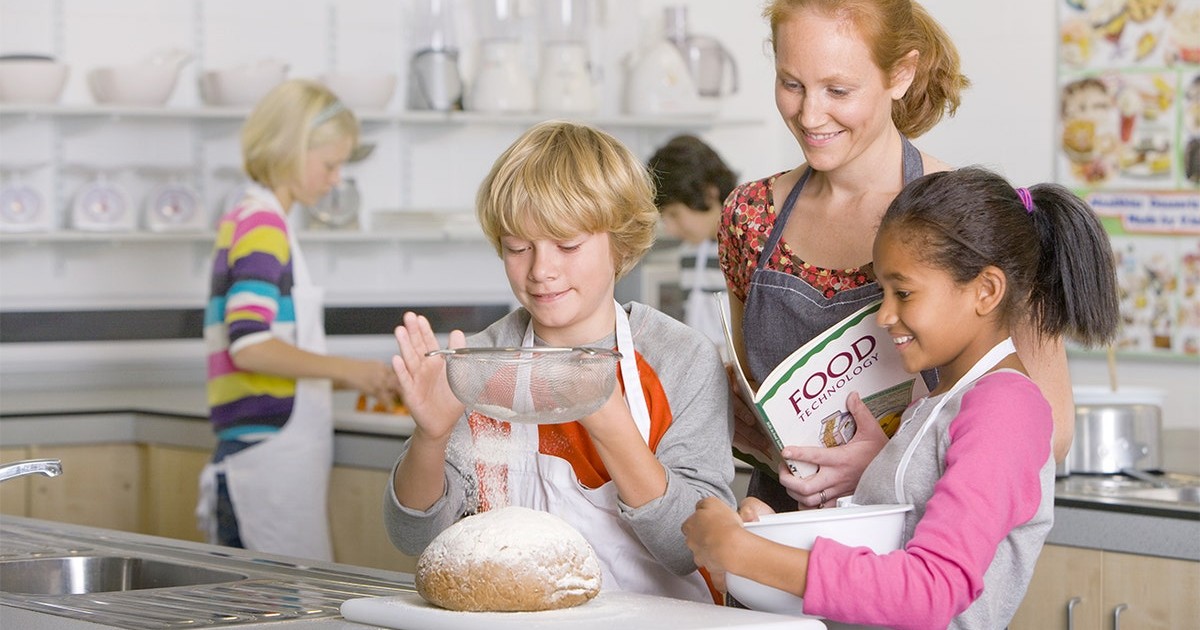

Only 25% of U.S. high schools offer dedicated home economics classes, according to one education analysis.
Home Economics was part of American schools by the 1960s. It was designed to teach girls how to run a household. The gender focus was always flawed, but the skills themselves were genuinely useful. Priorities also shifted. Enrollment dropped 38% between 2003 and 2013, according to Fox Business. That left just 3.4 million students enrolled by the end of that period. Many schools simply never replaced what they lost.
What those students missed goes well beyond cooking. Modern home economics covers budgeting, shopping skills, and home upkeep. It also covers time management, sewing, and how to buy or rent a home. These are tools adults use every day. High school graduates who have never used these skills start adult life behind. STEM courses alone cannot fix that gap.
Why Home Economics Classes in Schools Still Matter
Marti Harvey teaches at the University of Texas at Arlington. Writing in the Dallas Morning News, Harvey described college students who had no idea they would owe property taxes every year for as long as they owned a home. That gap wasn’t laziness. They simply had never been told. So Harvey created a “math lab” week. It covered taxes, car payments, credit card interest, and how to read a paycheck. These are topics any adult needs to understand. That includes, as she pointed out, liberal arts majors who may never use calculus again.
Her argument is direct: “Call it ‘Skills for Life’ and make it mandatory in high schools. Teach basic economics along with budgeting, comparison shopping, basic cooking skills, and time management.” Harvey wrote that in 2018. The underlying gap she described has not closed.
Food is part of that gap too. Harvey wrote that better cooking education could help cut obesity over time. Cooking programs can help teens feel more confident in the kitchen. Other research has linked lower cooking skills in teens with eating more ultra-processed foods. These foods are heavily made in factories. They contain many added ingredients. Teaching a 16-year-old to cook a simple meal is not a soft skill. It is a health intervention.
Student interest is there. A 2026 mixed-methods study in the Journal of Nutrition Education and Behavior looked at 11th and 12th graders at an economically disadvantaged charter school. It found that 93.9% of the 82 students said they were somewhat or extremely interested in learning to cook. When nearly every student in a sample wants to learn something, access is the problem, not the subject.
The Real Reasons Parents Can’t Fill the Gap
One common response to calls for home economics is that parents should teach these skills at home. In practice, that is harder than it sounds.
Some parents don’t have the time. It is quicker to sew a button yourself than to walk a teenager through it step by step. Some parents were never taught these skills either. Adults who grew up ordering takeout or hiring repair services may not know how to pass them along. Some grew up letting an accountant handle their taxes. They may genuinely not know how to teach that to a child.
Some parents are also uncomfortable talking about money in front of their children. Doing so means showing their own money situation. That can cause harm in some family settings.
Access is also unequal. Not all families can provide these lessons equally. A skill passed down only in some homes is not a baseline all students can count on.
High school is also the right window. Teens are starting to think about being on their own. They are thinking about money and their future. A class that teaches them to budget, cook, manage time, and understand a lease meets them where their heads already are.
Financial Literacy Is Already Coming Back
As of 2024, 26 states require high school students to complete a financial education course before they can graduate, according to the IRS Taxpayer Advocate Service. That is a meaningful shift. A generation ago, almost no state had that requirement. Financial education is increasingly a graduation essential.
The open question is whether schools will go further. Will they add cooking, home care, and time management along with the financial content? Some already are.
Schools Are Already Bringing It Back
The comeback is happening at the local level, one district at a time.
Panther Valley School District in Pennsylvania brought Family and Consumer Sciences back after a seven-year gap. The program had ended in 2017 due to a retirement. Those courses include child development and interior design, among others. The Times News covered the revival in November 2025. It described what bringing back this kind of program looks like in a real school.
In Wisconsin, Solon Springs School tells a similar story. Family and consumer science classes came back. The district had gone more than ten years without them. The first semester covers child development, interior design, and cooking. It also covers personal finance and a middle school overview course. The personal finance part carries extra weight. It counts toward Wisconsin’s state graduation requirement. The Superior Telegram reported that equipment unused for more than a decade is now back in use. A new group of students is learning with it.
Both districts show that bringing back a family and consumer sciences program can be done. It is possible even after many years without one.
The “Easy Class” Stigma Still Gets in the Way
One common barrier is the view that home economics is not a serious subject. In a system built around grades and standardized tests, a class on how to roast a chicken or sew a seam can look like a distraction. That view misses what the class actually demands.
Budgeting requires math. Filing a tax return requires careful reading and number skills. Compound interest means interest grows on top of interest over time. Working this out for a credit card is an applied math problem. These skills apply what schools already teach to problems every adult faces.
What to Do Now
Curriculum decisions happen locally. Most are made at the school board level. Sharing student interest data can help make the case. Pointing to what Panther Valley and Solon Springs have done gives the conversation a concrete starting point. Those examples show that recovery is possible, even years after a program ends.
For families who can’t wait for the curriculum to change, the gap can be partly closed at home. Cook together. Walk your teenager through a monthly budget. Explain a utility bill. Sit with them while you do your own taxes. All of that builds practical knowledge before they need it on their own.
If your teenager is close to graduation, ask your school what it offers. Look for family and consumer sciences, financial literacy, or life skills classes. Your district may already be adding financial education. 26 states now require it for graduation. If the answer is no, that is the opening for a conversation worth having.
Editor’s note: Only 25% of U.S. high schools currently offer dedicated home economics classes. The article covers educator and community arguments for restoring practical life-skills courses, not a formal poll of public opinion.
Disclaimer: The author is not a licensed medical professional. The information provided is for general informational and educational purposes only and is based on research from publicly available, reputable sources. It is not intended to constitute, and should not be relied upon as, medical advice, diagnosis, or treatment. Always consult a licensed physician or other qualified healthcare provider regarding any medical condition, symptoms, or medications. Do not disregard, avoid, or delay seeking professional medical advice or treatment because of information contained herein.
AI Disclaimer: This article was created with the assistance of AI tools and reviewed by a human editor.