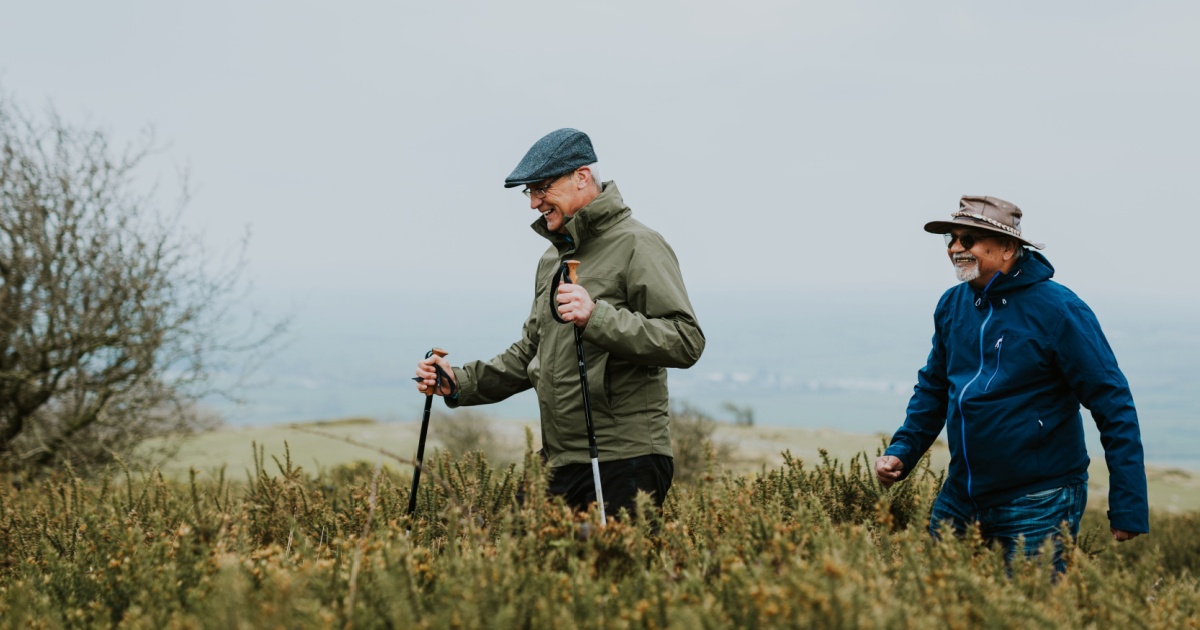

Certified trainer Chris Freytag has spent more than 35 years in the fitness industry, coaching women through the physical changes that come with midlife. She started as a journalist by degree before becoming a certified health coach, personal trainer, and group fitness instructor, and has spent 35 years helping hundreds of thousands of women move more, eat healthier, and feel comfortable with aging. Her message in 2025 and into 2026 is a simple one: walking 30 minutes a day, done consistently, can meaningfully change how your body feels, functions, and ages after 50. According to Freytag’s platform Get Healthy U, this single daily habit touches nearly every major system in the body – from the heart and brain to bones, blood sugar, and sleep.
Walking – meaning a moderate-pace, rhythmic foot-based movement – is exactly what it sounds like. No gym required, no special equipment, no experience needed. Meeting current physical activity guidelines by walking briskly for 30 minutes per day, five days a week, can reduce the risk of several age-associated diseases. The fact that the science is this compelling is worth understanding in detail – because the specific mechanisms behind what a daily walk does to the human body after 50 are more targeted and measurable than most people realize.
This article breaks down the key health benefits of walking 30 minutes a day, grounded in current research, with practical guidance from certified trainer Chris Freytag and evidence from peer-reviewed sources.
What Happens to Your Body When You Walk 30 Minutes Every Day
When you walk at a brisk pace – a pace where you can still hold a conversation but you’re working slightly – your heart rate rises, your muscles engage, blood flow increases throughout your body, and a cascade of helpful biological changes kicks in. These effects don’t require an hour at the gym or a high-impact workout. They happen with walking.
Walking’s favorable effects on cardiovascular risk factors are attributed to its impact on circulatory, cardiopulmonary, and immune function. In plain terms: your heart, lungs, blood vessels, and immune defenses all get a boost. This is especially relevant after 50, when the body naturally begins to lose some of its physiological resilience if it isn’t kept active. Walking is easy on the joints, making it particularly good for those over 50. Unlike running or high-impact training, it generates just enough load to strengthen the cardiovascular and musculoskeletal systems without the injury risk that tends to deter older adults from sticking with exercise.
As Dr. Hicham Skali, MD, a cardiologist at Brigham and Women’s Hospital, has noted, “Walking has been essential to human health and survival, from the hunter-gatherer tradition to working on farms. But we’ve been living a sedentary lifestyle the past 100 years, and it’s led to higher rates of heart disease, stroke, heart attacks, high blood pressure or hypertension, and high cholesterol.” In that context, a 30-minute daily walk isn’t a modest health upgrade. It’s a corrective measure that brings the body closer to how it was designed to function.
—
Heart Health: One of the Strongest Benefits of Walking After 50
The connection between regular walking and heart health is one of the most well-supported findings in exercise science. Walking for an average of 30 minutes or more a day can lower your risk of heart disease, stroke, and type 2 diabetes, and it also helps promote good circulation and lower LDL cholesterol – the “bad” kind that clogs arteries.
The numbers behind this are specific. Research shows that walking just 2.5 hours per week – about 21 minutes daily – can cut heart disease risk by 30%. Thirty minutes a day exceeds that threshold. In a significant study tracking nearly 82,000 people, researchers found that compared to slow walkers, those who maintained average walking paces of 3-4 mph and brisk paces above 4 mph reduced their risk of abnormal heart rhythms by 35% and 43%, respectively, over a 13-year period.
The mechanism here isn’t complicated once you understand it. Walking helps maintain arterial health by increasing blood flow, which subsequently enhances the production of nitric oxide, a compound that relaxes blood vessels. Relaxed blood vessels mean lower blood pressure and less strain on the heart. A study of more than 6,000 Japanese men aged 35-60 found that compared to a walk of 10 minutes or less, a walk of 21 minutes or more was associated with a 29% lower risk of hypertension. For adults who already have some degree of heart damage, the news is still encouraging. According to Dr. Skali, walking “can make heart muscle stronger, ease symptoms over time, and decrease the risk of death from cardiovascular events. It’s better than any pill out there.”
Brain Health and Dementia Risk: Why Your Daily Walk Protects Your Memory
One of the most compelling reasons to build a walking routine for older adults is what it does to the brain. A study following more than 78,000 adults aged 40-79 found that walking approximately 9,800 steps daily reduced dementia risk by 50% over seven years. Even walking just 3,800 steps daily – about two miles – still reduced dementia risk by 25%. Dementia risk reduction doesn’t require intensity, just consistency.
Pace matters, too. Those who walked at a brisk pace of 112 steps per minute for about 30 minutes daily experienced a 62% reduced dementia risk – what researchers called a “power walking” effect that demonstrates how intensity can maximize cognitive protection. The biological reason for this is increasingly well understood. Regular walking increases blood flow to the brain, supporting nerve cell growth in the hippocampus – the region of the brain that regulates mood and memory – and these new connections help preserve cognitive function.
For anyone over 50 who has noticed mild forgetfulness or wants to keep their thinking sharp, this is significant. The hippocampus is also one of the first brain areas to shrink with age and is the primary region affected by Alzheimer’s disease. Keeping it nourished with increased blood flow through regular physical movement is one of the simplest, most evidence-backed strategies available. Walking daily can provide more energy, stamina, focus, and higher overall cognitive performance, and can lower the risk of cognitive impairment as you age, helping improve memory and reduce the risk of developing Alzheimer’s disease and other types of dementia.
Mood, Mental Health, and the Antidepressant Effect of Walking
The health benefits of walking after 50 aren’t only physical. A significant body of research published in recent years shows that walking is one of the most effective and accessible tools for managing mood and reducing anxiety and depression – without a prescription.
A 2024 systematic review and meta-analysis published in JMIR Public Health and Surveillance found that various forms of walking can be effective in reducing symptoms of depression and anxiety, and concluded that walking can be adopted as an evidence-based intervention for these conditions. That’s the language researchers use when the evidence is strong enough to stand on its own. Researchers analyzing 33 studies examining the movements of nearly 100,000 adults using smartphones, pedometers, and fitness trackers found that those who clocked more daily steps were less likely to report depressive symptoms or be diagnosed with depression than those who walked less.
The good news extends to anxiety, too. A 2025 study published in BMC Psychiatry observed that sedentary people who walked for at least 10 minutes a day, more than five days a week, experienced improved anxiety symptoms. Walking 5,000 or more steps a day was linked to fewer symptoms of depression compared to walking less, and people who walked at least 7,500 steps a day saw even greater benefits, with a 42% decrease in depression. Five thousand steps translates to roughly 40 minutes of walking – achievable in two separate sessions. You don’t need to do it all at once.
Freytag, who works specifically with midlife women navigating the emotional terrain of perimenopause and post-menopause, has consistently highlighted walking as a mood-regulating tool. This isn’t an anecdote. The release of endorphins (the body’s natural mood-lifting chemicals), increased serotonin activity, and reduced cortisol (the stress hormone) during and after a walk all work together to shift how you feel. For adults managing mood changes in their 50s and 60s, this daily walking habit can be a genuinely powerful intervention.
Is Walking 30 Minutes a Day Enough Exercise After 50?
This is one of the most common questions adults over 50 ask about their fitness routines – and it deserves a direct, evidence-based answer. According to the U.S. Centers for Disease Control and Prevention, adults need at least 150 minutes of moderate-intensity physical activity per week, such as 30 minutes a day, 5 days a week, plus 2 days of muscle-strengthening activity each week. Walking 30 minutes daily hits that aerobic target exactly. It qualifies as “enough” from a public health standpoint.
That said, the honest answer is: it depends on your goals. If your aim is to improve heart health, manage blood pressure, support your brain, sleep better, and maintain a healthy weight, a daily 30-minute walk gets you there. As Freytag has noted, “most of us are sitting way too much, and one of the simplest ways to start feeling better in our bodies is to just get up and walk.” The caveat is that walking alone may not build significant muscle mass or provide the bone-strengthening benefits of weight-bearing resistance exercise. Researchers have found that a combination of walking and resistance training is the best way to improve physical function and avoid disability.
Think of 30 minutes of daily walking as a strong foundation – one that covers most of the bases most people care about. If you want to take things further, adding two sessions of light strength training per week (bodyweight squats, push-ups, resistance bands) will meaningfully complement your walking routine. Freytag herself has been clear that if she had to pick just two habits that could completely transform your body and health after 50, it would be consistent walking and strength training.
For those who can’t yet manage 30 consecutive minutes, the Mayo Clinic’s walking guidance is reassuring: if you can’t set aside that much time at once, try several short sessions throughout the day – any amount of activity is better than none, and accumulated activity throughout the day adds up to provide health benefit.
Blood Sugar, Weight, and Metabolic Health After 50
As the body ages past 50, metabolism slows, and cells can become less responsive to insulin, insulin being the hormone that moves sugar from the blood into cells for energy. This reduced responsiveness is called insulin resistance, and it’s a major driver of type 2 diabetes and weight gain in midlife. Walking directly addresses this.
Harvard researchers have found that regular walking significantly improves insulin sensitivity – how effectively your body responds to insulin – which is crucial for blood glucose control. The effects show up quickly. A study targeting women over 50 found that even a slower 15-minute walk after a meal can effectively suppress the rise in blood glucose levels after eating. Stretching this to 30 minutes amplifies those benefits substantially.
For weight management, the evidence is similarly solid. A London School of Economics study investigating more than 50,000 adults over 13 years found that walkers tend to be thinner than those who exercise only at the gym or practice high-intensity workouts, and that brisk walking for at least 30 minutes daily was correlated with a lower body mass index and a smaller waistline – with results particularly pronounced in women, people over 50, and those with low incomes. This doesn’t mean walking is magic for weight loss – diet still plays the dominant role. But walking 30 minutes a day builds the metabolic baseline that makes healthy weight maintenance more achievable.
There’s also the sarcopenia factor – sarcopenia is the age-related loss of muscle mass that accelerates after 50 and is a major contributor to falls, reduced mobility, and metabolic decline. Walking helps fight sarcopenia, the age-related loss of muscle mass and strength more common in people over 50, because “walking is one of those great activities where you can help combat sarcopenia,” according to Dr. Neal B. Goldenberg, director of sports medicine at Dartmouth Health’s Cheshire Medical Center.
For those looking to complement their walking with smarter daily habits, exploring how daily movement supports healthy aging is a useful next step.
Bone Health, Joint Pain, and Why Low-Impact Matters
One of the reasons walking is so specifically valuable for adults over 50 – and not just older adults in general – is what happens to bones and joints after the fifth decade. Bone density peaks in the late 20s and declines from that point forward, with the rate of loss accelerating for women after menopause. Joints accumulate years of wear. High-impact exercise becomes harder to sustain.
Walking sits in the ideal spot for this life stage. Walking helps maintain bone density, which can reduce the risk of osteoporosis and fractures, and studies show that going out for at least 30 minutes a day can slow the rate of bone loss, particularly in postmenopausal women. According to the Arthritis Foundation, research shows that postmenopausal women who walk 30 minutes a day may reduce their risk of hip fractures by 40 percent. That’s a meaningful reduction for one of the most serious injury risks facing older adults.
For joint pain specifically, the counterintuitive truth is that gentle movement helps more than rest. Walking can reduce pain and stiffness for adults with arthritis. As Dr. Goldenberg explains, “A breakdown of cartilage is exactly what arthritis is – it’s the joint breaking down. But your cartilage responds to force, absorbs pressure and can be strengthened by walking.” A pooled analysis of results from randomized controlled trials involving adults with chronic musculoskeletal pain showed that walking was associated with significant improvements in pain and function. The limitation of this research is that long-term effectiveness was less certain, so consistency is key – a short burst isn’t enough.
Sleep Quality and Daily Energy: The Overlooked Benefits
Poor sleep is extraordinarily common after 50. Hormonal changes, increased stress, and the natural shift in circadian rhythms (the body’s internal clock) all conspire to make falling and staying asleep harder. Walking addresses this from several angles at once.
Regular physical activity can improve sleep quality and help you fall asleep faster. Walking increases the production of melatonin, the hormone that regulates sleep, and postmenopausal women and others who walk daily often report better sleep quality and duration compared to those who are more sedentary. There’s also the circadian rhythm benefit: getting outside and walking during daylight hours exposes you to natural light, which reinforces your body’s sleep-wake cycle and makes nighttime sleep more reliable.
Energy levels are closely tied to this. A significant body of research has found that people who exercise regularly experience less anxiety, have better sleep, a better self-image, and improved mood and concentration. People consistently report feeling more energetic on days they walk – not because walking is stimulating in the short term, but because it improves sleep quality, reduces cortisol, and keeps the cardiovascular system functioning efficiently. Better blood flow means more oxygen reaching your cells, which translates directly to better stamina throughout the day.
Certified Trainer Tips for Walking After 50: How to Build the Habit
Knowing the benefits is one thing. Actually getting out the door every day is another. Here’s what the research and Freytag’s experience tell us about building a walking routine that actually sticks.
Start Small and Add Gradually
If you’re just starting out, try beginning with five minutes a day the first week, then increase your time by five minutes each week until you reach at least 30 minutes. This approach prevents the overambitious start that leads to injury and discouragement. As integrative health specialist Cindy Reuter, ND, of Dartmouth Health puts it: “It’s OK to set the bar low when starting out. Take it slow to build up your momentum.”
Break It Up If You Need To
If it’s too difficult to walk for 30 minutes at one time, do regular small bouts of 10 minutes three times per day and gradually build up to longer sessions. Three 10-minute walks produce essentially the same cardiovascular and metabolic benefits as a single 30-minute walk – a finding backed by solid evidence. This makes the goal far more achievable for busy adults or those managing mobility challenges.
Focus on Pace, Not Just Duration
Pace amplifies the benefits significantly. Monitoring your heart rate can serve as a useful guide: staying around 50-70% of your maximum heart rate during regular walks promotes heart health safely, and brief periods at 70-80% can further enhance endurance. A practical rule of thumb: “brisk” means you can talk, but you couldn’t easily sing. That’s the zone where most of the cardiovascular and cognitive benefits concentrate.
Walk After Meals for Blood Sugar Benefits
People who walk after meals have lower blood sugar spikes and are less likely to gain weight over time, according to Mayo Clinic data from 2025. Even a 10-15 minute post-meal stroll helps blunt the blood glucose rise that follows eating. If you can only fit one walk into your day, immediately after dinner is a strong choice.
Track Your Steps for Motivation
Freytag recommends aiming for 10,000 steps a day, but she’s clear: if that feels impossible right now, just start small. Add 1,000 extra steps per week until you build your way there. A simple fitness tracker, smartphone, or pedometer makes this easy to monitor. Research consistently shows that people who track steps are more likely to reach their movement goals – the feedback loop is genuinely useful.
What to Do Now
If there’s one takeaway from all of this research, it’s that a 30-minute daily walk is among the most evidence-backed, low-barrier health interventions available to adults over 50. The daily walking benefits are not modest – they touch heart health, brain function, mood, blood sugar, weight management, bone density, joint pain, sleep, and longevity, all from a single consistent habit. As Freytag herself has noted, having spent decades in the fitness world as a woman in her 60s, she has seen firsthand how walking can transform lives.
You don’t need to be an athlete. You don’t need to own gym equipment or sign up for a class. Walking is free. It doesn’t require special skills or equipment. It’s one of the safest ways to be active, and it comes with many additional mental and physical benefits. The research on how daily walking improves health after 50 is clear enough that the question is no longer whether you should do it – it’s simply when you’ll start. Lace up your shoes, head outside, and give your body the 30 minutes it’s been asking for. Future-you will feel the difference.
Medical disclaimer: This article is intended for informational purposes only and does not constitute medical advice. Always consult your physician or a qualified healthcare provider before starting a new exercise program, especially if you have existing health conditions.
A.I. Disclaimer: This article was created with AI assistance and edited by a human for accuracy and clarity.
Read More: Why ‘Japanese Walking’ Might Outshine the 10,000 Steps Rule\