
Japan completed the world’s first real-time ocean floor earthquake detection system in June 2025, giving 20 seconds more earthquake warning and 20 minutes more tsunami warning. The network spans 116,000 square miles of Pacific Ocean floor, connecting 150 sensors through 3,540 miles of special cables placed where earthquakes start.
Scientists Can Now “Listen” to Ocean Floor Faults
Seismologists worldwide praise the achievement. “By wiring up the offshore fault zone, we’re constantly able to listen to it,” Harold Tobin, a seismologist and director of the Pacific Northwest Seismic Network, told Scientific American. “That means we can detect all sorts of subtle signals that tell us how faults work, such as the storage of stress and how it starts to be released at the beginning of an earthquake.“
System Proves Worth with 20-Second Head Start
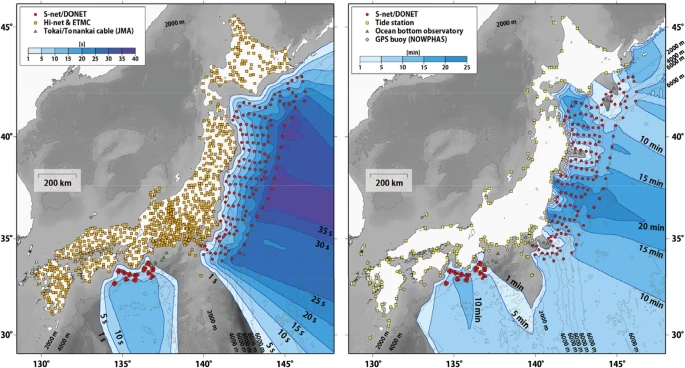
The system proved its worth during a 2018 earthquake. Alerts reached cities 20 seconds before the nearest land sensor detected the tremor. Those extra seconds give time to stop bullet trains, close ports, and secure nuclear plants. Previous earthquake detection systems gave some coastal communities less than 10 minutes to evacuate during major events.
The sensors work by detecting P-waves, which are the first earthquake waves that travel the fastest through rock on the ocean floor. This eliminates the delay that occurs when earthquakes travel 45 miles from offshore fault lines to land-based sensors. The system combines three networks that work together. S-net covers the Japan Trench from Hokkaido to Chiba Prefecture with 150 observation units. DONET monitors the Nankai Trough area with 51 stations equipped with expandable, replaceable instruments. N-net, completed in June 2025, extends coverage to the remaining areas of the Nankai Trough from Kochi Prefecture to Hyuga-nada.
Megaquake Advisories and Early Warning Protocols
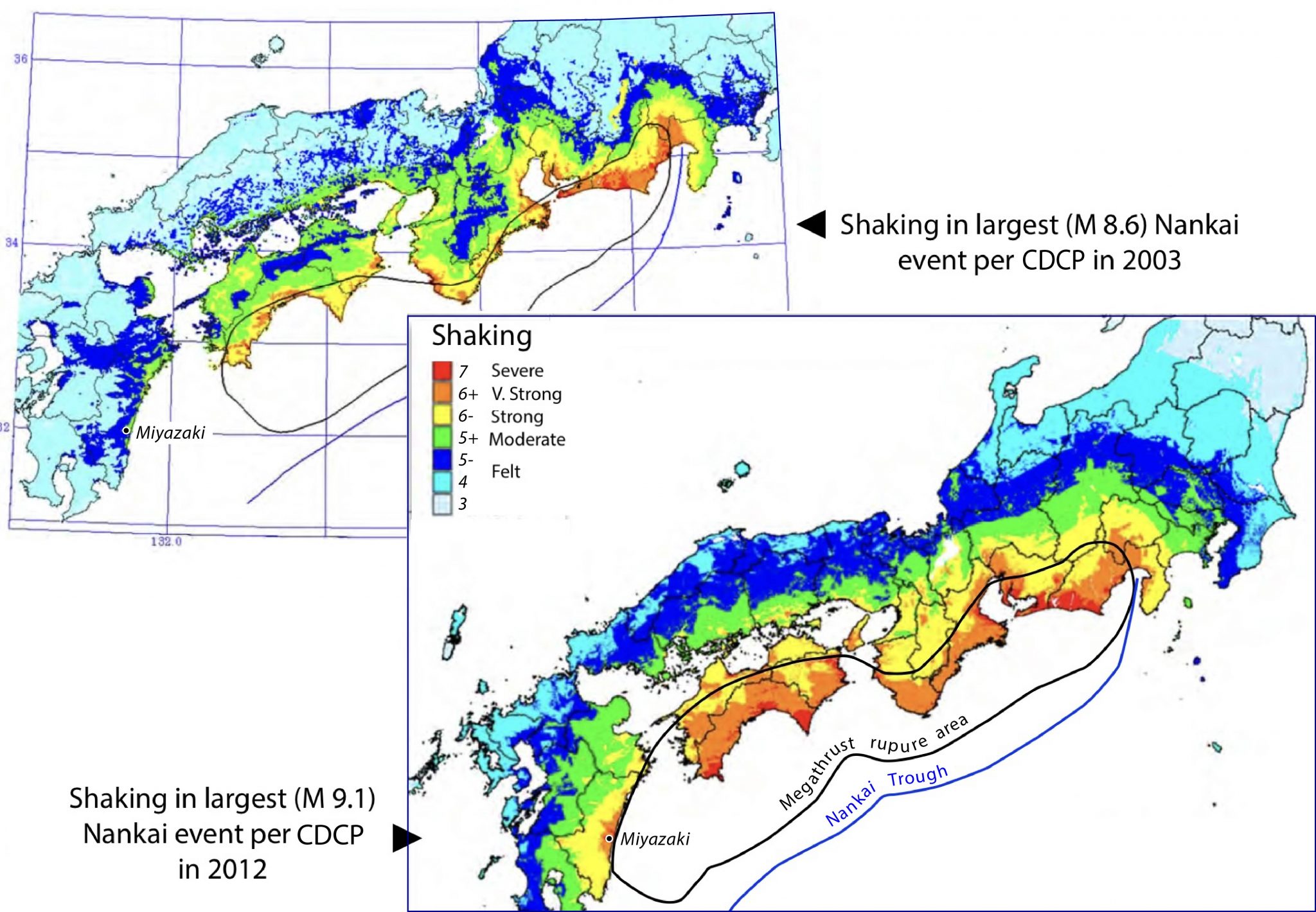
Japan now issues “Megaquake Advisory” warnings when earthquakes of size 7.0 or larger strike in areas that could produce massive earthquakes. In August 2024, a size 7.1 earthquake off Kyushu triggered a week-long advisory warning residents to prepare for a possible larger quake. The new seafloor system gives faster and more accurate data for these warnings. The 2011 Tohoku earthquake that devastated Japan was preceded by a size 7.3 earthquake two days earlier.
Construction began months after the 2011 disaster and required eight years to complete. Engineers used underwater robots to install armored cables on the ocean floor. This was an enormous technical challenge at depths reaching thousands of feet. Each of the 150 observatories contains multiple types of sensors. Including devices that measure ground shaking, acceleration, and pressure from waves passing overhead. The network connects to Japan’s existing 6,000 land-based sensors.
Life-Saving Emergency Actions
The extra warning time allows specific life-saving actions. Train operators can halt high-speed bullet trains traveling at 200 miles per hour. Airport controllers can divert incoming flights. Port authorities can close sea gates before tsunamis arrive. Emergency responders can begin evacuations in coastal areas. Nuclear plant operators gain precious time to secure reactors and prevent meltdowns like those at Fukushima.
Scientists expect the system to provide new insights into how earthquakes work. The sensors can detect “slow-slip events”. Where fault lines gradually release pressure without producing earthquakes. “If you wind the clock back 20 years, we basically thought faults were either locked and not moving at all or were having an earthquake and moving very, very fast,” Tobin explains. But slow-slip events show a third way that fault lines move faster than normal plate movement but much slower than an earthquake.
Read More: State of Emergency Declared in Bangkok After 7.7 Earthquake Topples High-Rise
Lessons from the 2011 Tohoku Disaster
These slow movements often occur days before major earthquakes and might serve as early warning signs. “That might end up being something we can use as an earthquake-precursor-detection system,” he said, though he notes that not all slow-slip events lead to earthquakes.
The 2011 earthquake killed nearly 20,000 people in the worst natural disaster in Japan’s recorded history. Land-based sensors could not immediately provide clear readings of the earthquake’s size or the massive tsunami it created. Delayed alerts gave some communities less than 10 minutes to evacuate before a 130-foot tsunami traveling at 435 miles per hour destroyed coastal cities.
The Fukushima Nuclear Crisis
The disaster also caused reactor meltdowns at the Fukushima Daiichi nuclear power plant. Which spread radiation across the surrounding area and released radioactive water into the ocean. Economic losses exceeded $200 billion, and disaster planners estimate future events could cause over $1 trillion in damage if warning systems fail again.

America Falls Far Behind Japan’s System
Other countries have far less protection from offshore earthquakes. The Cascadia fault along the Pacific Northwest coast of the United States has only three ocean floor sensors for earthquake detection compared to Japan’s 150. “We have just the paltriest beginnings of what they have in Japan,” Tobin said.
This fault could produce an earthquake similar to Japan’s 2011 disaster. Millions of people from Seattle to northern California would be at risk. “We understand really well now that it’s storing up stress toward a very big earthquake, potentially as big as 2011, with the same tsunami hazard,” he added. “It’s pretty inevitable.”
A Blueprint Other Nations Could Follow
Japan’s network serves as a model for other earthquake-prone regions. The technology proves that countries can build early warning systems that provide enough time for meaningful protective actions. As climate change and population growth increase disaster risks worldwide, Japan’s investment in earthquake preparedness offers hope for saving lives in future disasters.
A World-Leading Achievement in Safety
The completion of this system represents years of determination to ensure that delayed warnings never again cost thousands of lives. By placing sensors at the source of earthquakes rather than waiting for tremors to reach land, Japan has created the most advanced earthquake detection system on Earth. The 20 seconds of extra warning time may seem brief. But in a disaster, those seconds can mean the difference between life and death.
Read More: Microalgae System Turns Pollution Into Oxygen Equivalent To More Than 300 Trees