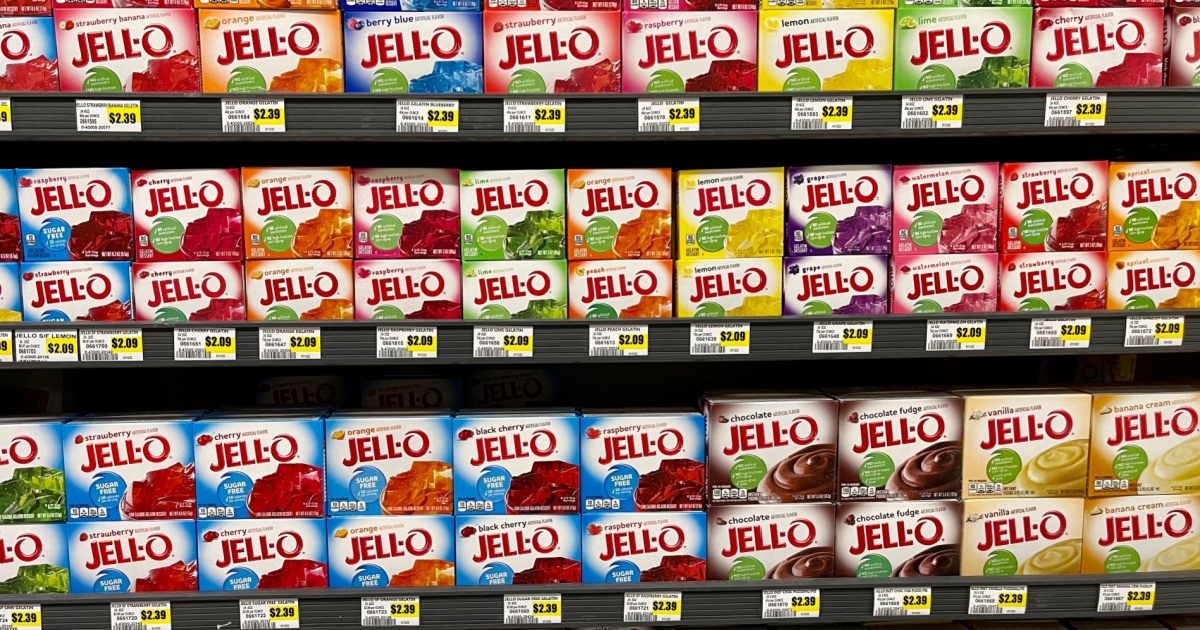

Something quietly shifted the last time you stood in the grocery aisle reading the back of a food package. Maybe it was a string of unpronounceable ingredients. Maybe it was a color so electric it didn’t look like anything that had ever grown from soil. Whatever the moment was, it planted a question that a lot of parents across the country are now asking out loud: what, exactly, is making my kid’s food look like that?
For decades, that question didn’t really have a satisfying answer at the grocery store level. Brightly colored treats came in bright colors because manufacturers added synthetic dyes, chemicals derived from petroleum, to make their products pop on shelves and appeal to young eyes. That was the deal, and most people accepted it because there didn’t seem to be an alternative. Now, for one of America’s most recognizable dessert brands, there finally is one.
Jell-O, the wiggly, brightly colored staple that has appeared on American tables for well over a century, just launched a new product line that ditches synthetic dyes entirely. The announcement, made in May 2026, signals something bigger than a packaging refresh. It’s part of an industry-wide reckoning with what’s actually in the food families eat every day.
What Jell-O Simply Actually Is
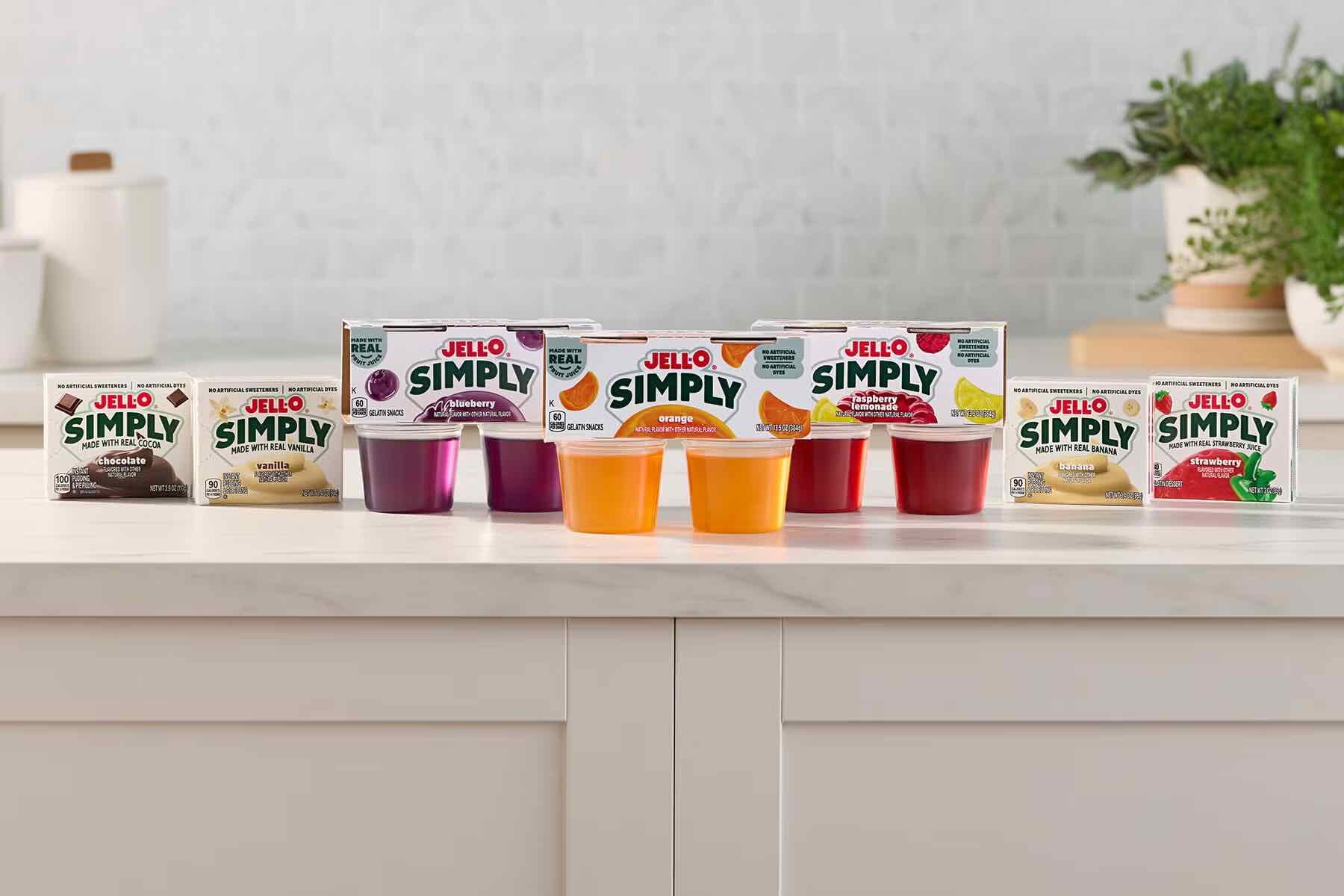
Kraft Heinz unveiled the new line, called Jell-O Simply, which is made with no FD&C colors or artificial sweeteners, and uses real fruit juice while containing 25% less sugar than the original ready-to-eat gelatin range.
The ready-to-eat cups come in three flavors – orange, raspberry lemonade, and blueberry – and get their color from vegetable juice, fruit juice, and an extract derived from turmeric roots, according to Kathryn O’Brien, Kraft Heinz’s head of marketing for desserts.
A wider expansion is planned for August 2026, when gelatin and instant pudding mixes will arrive in stores at $2.24 per box, in vanilla (made with real vanilla), chocolate (made with real cocoa), banana (made with real banana), and strawberry (made with real strawberry juice).
The upgrade comes with a small price premium. A four-pack of Jell-O Simply ready-to-eat cups is priced at $3.99, about 46 cents more than the standard Jell-O version. Whether that difference matters to your household budget depends on how often you buy it, but the ingredient trade-off is real.
Kraft Heinz has described the line as a permanent addition to the portfolio, designed to attract a new generation of younger parents who are actively seeking treats made with real ingredients and less sugar. O’Brien was clear that Jell-O Simply isn’t a limited run. She said the brand will remain even after artificial colors are removed from the rest of the Jell-O lineup next year.
Why This Brand Needed to Change
Sales data tells part of the story. According to market research compiled in a recent AP report citing NielsenIQ, industrywide sales of pre-made gelatin have fallen 21% over the last four years, while unit sales of gelatin mix have dropped 4%. Those are steep declines for a category that was once a household staple.
Consumer sentiment explains much of the slide. A March 2026 nationally representative survey from Consumer Reports found that about 72% of U.S. adults say they are at least somewhat concerned about the use of synthetic dyes in food, and 66% say food companies should be required to phase them out. When nearly three-quarters of your potential customer base has reservations about an ingredient you use, the business case for change becomes clear.
Jell-O isn’t alone in feeling that pressure. The primary ingredient in both regular Jell-O and Jell-O Simply is gelatin, a colorless, flavorless substance derived from animal collagen, which is sourced from the skin, bones, and connective tissues of animals like cows, pigs, or fish, according to the Michigan State University Center for Research on Ingredient Safety. That part hasn’t changed. What has changed is the coat of artificial chemistry layered on top of it.
If you want to understand why parents are paying closer attention to those ingredient lists, a look at what’s been happening in the science and policy space is useful. For a deeper background on which specific foods still carry these dyes, this Red Dye guide is a useful starting point.
The Science Behind the Concern
The debate over synthetic food dyes and children’s health has been building for years. Emerging research points to potential neurobehavioral impacts of synthetic food dyes on children, with recent findings associating them with adverse behavioral outcomes such as hyperactivity, particularly in children with or without identified behavioral disorders.
A systematic review of 27 clinical trials, conducted by the California Office of Environmental Health Hazard Assessment (OEHHA), reported an association of 64% between synthetic dye exposure and behavioral changes, with 52% being statistically significant. That’s not a fringe finding. It represents a large body of accumulated evidence pointing in the same direction.
Over the past two decades, the percentage of American children and adolescents diagnosed with ADHD has risen from an estimated 6.1% to 10.2%, which is part of what prompted the California Legislature to request the OEHHA investigation in the first place.
Researchers found that all of the FDA’s acceptable daily intake levels for synthetic food dyes are based on studies that are 35 to 70 years old and were not designed to detect the kinds of behavioral effects that have since been observed in children, with comparisons to newer research suggesting those limits may not adequately protect children.
A 2024 review published via PMC found that synthetic color additives are directly linked to a series of health problems, with a greater impact on children, including a predisposition to conditions such as carcinogenic, allergenic, and mutagenic outcomes, as well as gastrointestinal effects. The research stops short of drawing firm causal lines, but the pattern across multiple studies is consistent enough to warrant caution.
The FDA’s official position is worth keeping in mind: the agency says the totality of scientific evidence shows most children have no adverse effects when consuming foods containing color additives. That means parents don’t need to panic, but they’re not irrational for wanting to reduce their children’s exposure where easy alternatives exist.
The Regulatory Push That Changed Everything
The reformulation of Jell-O didn’t happen in isolation. A wave of regulatory pressure has been building since early 2025, and food companies have been watching it closely.
In January 2025, during the final days of the Biden administration, the Food and Drug Administration banned Red Dye No. 3 from the U.S. food supply. That ban, based on animal studies linking the dye to cancer, was a long time coming. The FDA had already prohibited Red No. 3 in cosmetics back in 1990.
Then, in April 2025, things escalated. The U.S. Department of Health and Human Services and the FDA announced a series of new measures to phase out all petroleum-based synthetic dyes from the nation’s food supply, describing it as a significant milestone in the administration’s broader Make America Healthy Again initiative. The FDA followed that with additional steps, including announcing in February 2026 its intention to expand the use of natural color alternatives, approving beetroot red as a new color option and expanding authorization for spirulina extract.
The dyes targeted for elimination include some of the most widely used in the American food supply. The FDA said it would work with industry to eliminate FD&C Green No. 3, Red No. 40, Yellow No. 5, Yellow No. 6, Blue No. 1, and Blue No. 2 from the food supply by the end of next year. The United Kingdom and European Union already restrict their use in foods, though the FDA had long maintained they were safe for most children.
The pressure isn’t coming only from Washington. California enacted the first state-level ban on artificial dyes in school foods in September 2024, and other states have since followed suit. Texas passed a law requiring food manufacturers to place warning labels on food containing any one of 44 dyes and additives banned in other countries, starting in 2027.
Big Food’s Response and Where Jell-O Fits
Food companies are moving faster than the regulations require, partly because they can see which way consumer sentiment is heading.
Kraft Heinz announced it will eliminate synthetic food dyes from its entire product line by the end of 2027, following federal pressure to clean up chemical additives in processed foods. The company said it would phase out synthetic FD&C dyes across all its brands, including Jell-O, Kool-Aid, and Velveeta, noting that about 10% of its portfolio still contains synthetic colors.
Kraft Heinz has done this before. It removed artificial colors from its macaroni and cheese back in 2016, though they remained in brands like Jell-O, Kool-Aid, and Crystal Light. Jell-O Simply is effectively the beginning of finishing that job.
Kraft Heinz isn’t alone in the pivot. Tyson Foods removed synthetic color additives from its products in 2025, and PepsiCo released new versions of Doritos and Cheetos made without artificial flavors or dyes, though the original dyed options continue to be sold. Campbell’s has said it will no longer produce any food or beverages with FD&C colors by the second half of the 2026 fiscal year, while Mars says it will offer product options without certified colors starting in 2026.
Retailers are also taking action. Target announced it would require every cereal it sells to be made without certified synthetic colors by the end of May 2026. The shift put Target among the first national retailers to remove the additives across an entire grocery category, compelling major cereal makers to reformulate if they want shelf space. In October 2025, Walmart also said it would no longer use 11 synthetic dyes and 30 other ingredients, including certain preservatives, artificial sweeteners, and fat substitutes, in its private brand food products.
Read More: Are Gelatin and Collagen Safe? What to Consider Before Supplementing
What Goes In Instead
One of the understandable worries consumers have is whether natural dyes can actually do the same job. They can, though it sometimes takes more creativity.
Jell-O Simply uses a combination of vegetable juice, fruit juice, and turmeric extract to achieve its color. FDA Commissioner Marty Makary has suggested that carrot juice, beet juice, and watermelon juice are practical substitutes for synthetic dyes in many applications. The FDA is also fast-tracking the review of other natural alternatives, including calcium phosphate, Galdieria extract blue (a blue pigment derived from algae), gardenia blue, and butterfly pea flower extract.
In May 2025, the FDA announced it was granting three new color additive petitions that expand the palette of available colors from natural sources for manufacturers to use safely in food. The supply of natural alternatives is growing, which makes the transition more practical across a wider range of food products.
The trade-off is cost. Natural colorants tend to be more expensive and can sometimes be less stable under light, heat, or time. That’s a production and supply-chain challenge for manufacturers, not a consumer health concern. But it does explain the small premium on products like Jell-O Simply.
What This Means for You
If you’re a parent who has been checking labels and feeling frustrated that the cheerful, kid-targeted snacks always seem to be the ones loaded with the most synthetic additives, this moment is worth acknowledging. Real change is happening, and it’s happening faster than most observers predicted even two years ago.
For shopping purposes, Jell-O Simply is available in stores nationwide now, priced at $3.99 for a four-pack of ready-to-eat cups in orange, raspberry lemonade, and blueberry. The gelatin and pudding mixes expand the range further when they arrive in August. If you’re buying Jell-O for kids and the dye question has been a concern, the Simply line is a direct answer to that.
Beyond Jell-O, the broader lesson here is that consumer pressure genuinely works. The shift happening across the food industry right now, from Kraft Heinz to Target’s cereal aisle, is driven largely by the fact that enough families started reading labels and choosing differently. Labels on packaged food still matter, and checking them is still worth the 30 extra seconds. Natural coloring doesn’t automatically make a product healthy overall. Sugar content, additives, and overall nutritional value are still worth a look regardless of how the color got there. And if a product you’ve bought for years suddenly changes its formula, that’s almost certainly your feedback, at scale, doing exactly what it’s supposed to do.
AI Disclaimer: This article was created with the assistance of AI tools and reviewed by a human editor.
Read More: Jell-O Isn’t Just a Dessert, It Can Be Good For You Too