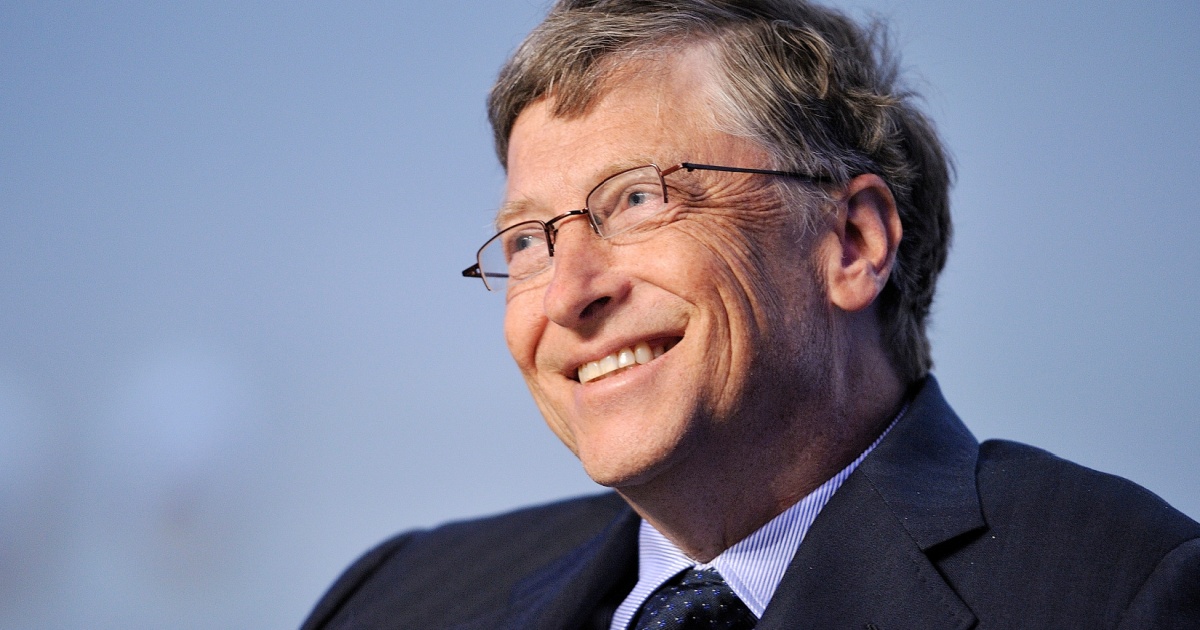

No job survives an algorithm just because a human enjoys doing it. Bill Gates knows this better than most – and when he named the four professions he believes will outlast AI automation, one of his choices surprised even the people who cover him for a living.
During an appearance on The Tonight Show Starring Jimmy Fallon, Gates made his case for the fourth profession on his list with a single blunt line: “We won’t want to watch computers play baseball.” If one of the architects of the modern computing era is drawing lines around human-only territory, where exactly is he drawing them – and does the research agree?
AI is already driving real job losses. A Morgan Stanley study found that UK firms recorded an 8% net job loss linked to AI – the highest among countries surveyed. Against that backdrop, four specific professions made Gates’ shortlist, and the reasoning behind each one tells you something useful about what machines still can’t do.
1. Software Developers

Even though AI can now write snippets of code and assist with programming tasks, Gates argued that skilled developers are still needed to oversee complex projects, fix errors, and improve the very systems driving AI forward. AI-generated code doesn’t audit itself. When a system produces a bug – or behaves in unexpected ways at scale – a human has to understand not just what went wrong but why the underlying architecture allowed it.
AI has progressed significantly at generating code, but it still falls short of the precision and judgment required to create complex software. Gates’ view is that human programmers won’t be watching from the sidelines – they’ll be guiding the process as AI takes on more of the mechanical work underneath them.
There’s a legitimate counterpoint. NVIDIA CEO Jensen Huang has argued that we should stop telling kids to learn to code because the rise of AI means programming languages can be replaced with plain human language prompts. “It is our job to create computing technologies that nobody has to program and that the programming language is human,” Huang told the World Governments Summit in Dubai. The tension between those two positions reflects something real: what survives isn’t coding as a mechanical act, but the judgment, systems-thinking, and error-diagnosis that no language model currently handles reliably.
2. Biologists

Medical research is an area Gates expects to remain firmly rooted in human expertise. AI can accelerate biological research by identifying patterns and analyzing large volumes of data, but major breakthroughs require human creativity and bold questioning – qualities Gates believes continue to set human researchers apart.
AI is exceptionally good at finding patterns within known data – spotting a protein interaction that a human might miss, or flagging an anomaly in a genomic sequence. What it doesn’t do is ask why a particular anomaly should change the direction of an entire research program. That requires a scientist willing to challenge the assumption that sent everyone down the current path in the first place.
For biologists in particular, the combination of domain expertise, creative hypothesis formation, and ethical judgment about what to pursue and what to stop is where Gates sees human researchers holding their ground.
3. Energy Industry Workers
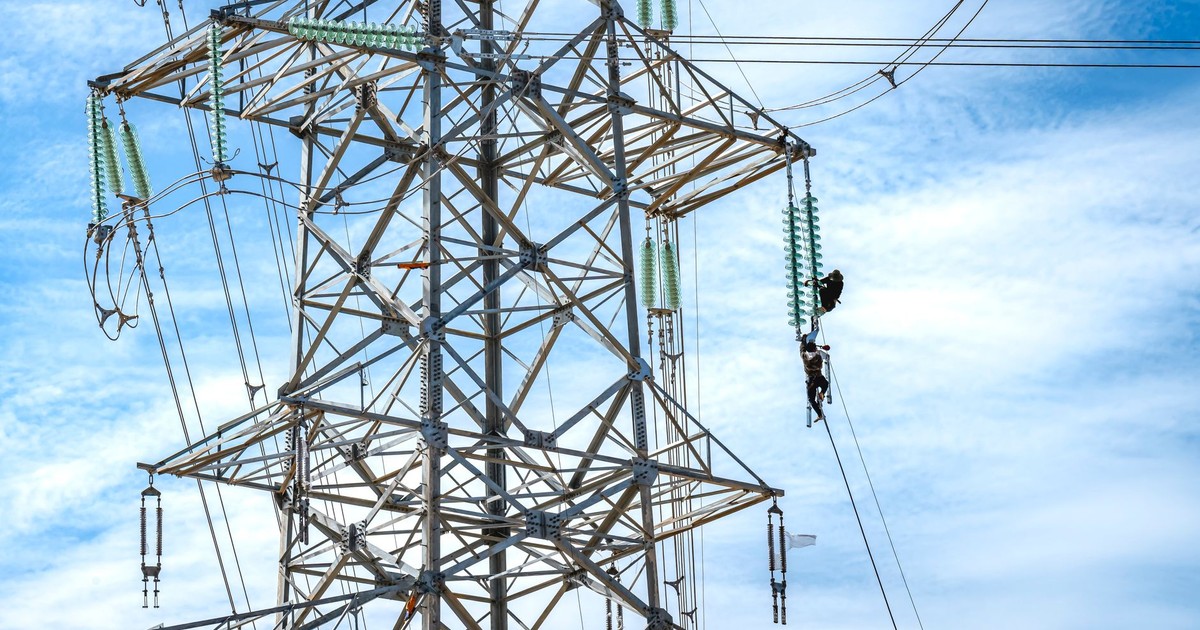
From balancing electricity grids to planning long-term infrastructure and responding to unpredictable global events, the energy field presents challenges that can’t be solved by processing data alone. Gates said AI will become an increasingly valuable assistant, but experienced professionals will still be needed to weigh competing priorities and make difficult decisions.
The energy sector is particularly resistant to full automation for a structural reason: the consequences of getting it wrong are immediate and severe. A miscalibrated grid doesn’t produce a bad output file – it triggers a blackout affecting hospitals, transportation systems, and millions of households simultaneously. Gates believes AI can help with analysis and efficiency, but human expertise is essential for decision-making, especially in crisis management.
Predictive analytics can flag potential grid instability; it takes an experienced engineer to interpret that flag in the context of current geopolitical conditions, seasonal demand, and aging infrastructure.
4. Professional Athletes

Gates identified athletes as the fourth profession likely to be safe from AI replacement – and it’s perhaps the most philosophically interesting entry on the list. During his Tonight Show appearance, he suggested that while AI might take over many human tasks, no one would want to watch computers playing baseball.
The argument isn’t really about athletic ability. A robot could theoretically hit a baseball with perfect precision every time. Gates has said: “We’re not going to have robots play cricket. That’s boring. We’ll reserve that just for the humans, even if the robots could be way, way better.” Sports survive as a human endeavor not because machines can’t compete, but because fans’ emotional investment is in human stories – the comeback, the failure, the years of training, the person under pressure.
The audience doesn’t just want to see a ball travel 400 feet – they want to know who hit it, what it cost them to get there, and what it means to them.
Other Jobs That Are Likely to Survive AI
Gates’ list of four is deliberately narrow, but a broader range of careers share the same underlying characteristics that protect them from automation. The most AI-resistant jobs are those requiring physical dexterity in variable environments, genuine emotional intelligence, licensed professional accountability, or creative strategic judgment.
Healthcare is a clear example. The industry combines physical presence, emotional intelligence, unpredictable environments, and regulatory constraints in ways that create natural barriers to automation. Nurse practitioners, physician assistants, physical therapists, and mental health counselors all appear among the occupations with the lowest automation risk – roles that require not only clinical knowledge but also the ability to read patients, adapt to unexpected developments, and provide the human presence that care inherently demands. The U.S. Bureau of Labor Statistics projects healthcare and social assistance to be the fastest-growing industry sector through 2034, adding roughly 2 million jobs.
Legal professionals occupy a similar position. Lawyers specializing in criminal defense, constitutional law, complex litigation, AI ethics, and regulatory compliance are in a strong position. AI performs legal research and contract review faster than any associate, but it cannot advocate for a client with genuine conviction, make ethical judgment calls in ambiguous situations, or navigate the human relationships that determine case outcomes. AI compliance law and AI ethics consulting are new growth specializations created by AI itself – making law one of the few fields where AI directly generates new demand for human expertise.
Skilled tradespeople are another category that research consistently ranks as AI-resistant. Electricians are hard to replace because their work is physical, unpredictable, and happens in the real world. Every building has different wiring, layouts, and hidden issues that don’t follow a fixed pattern. AI can help with planning or diagnostics, but it can’t climb into tight spaces, deal with old wiring, or fix sudden faults during a power outage.
Therapists and mental health professionals score among the highest on any measure of AI resistance. Therapy requires emotional intelligence, ethical judgment, and the ability to respond to unpredictable human emotions – a combination that makes the role highly resistant to AI replacement. Mental health professionals help people work through emotional problems and trauma in ways that depend on empathy, trust-building, and engagement with complex human experiences.
Creative professionals – particularly those working in strategy, brand direction, and storytelling – also hold a strong position, but with a caveat. AI can produce content at volume; it can’t reliably determine which content will move a particular audience or why a specific cultural moment matters. The creatives with the strongest position are those who apply human judgment to strategy and emotional resonance while using AI as a production tool.
You can explore how these dynamics are playing out across different industries in this analysis of AI and physical labor on the roles most likely to be restructured – not just eliminated – in the coming years.
The World Economic Forum’s Future of Jobs Report 2025 projects 170 million new roles will be created globally by 2030, while 92 million are displaced, resulting in a net increase of 78 million jobs. The people who lose work and the people who gain it are not always the same workers. McKinsey estimates that 14% of the global workforce – around 375 million workers – may need to change occupational categories entirely by 2030.
Read More: Analysis Finds AI Could Impact Over Half of U.S. Jobs
What This Means for You

Less than 5% of occupations can be fully automated with current technology, while 60% have partial automation exposure in specific tasks only. For most workers, the realistic threat isn’t full replacement – it’s having the parts of their job that involve repetitive data processing or routine communication taken over, while the judgment-intensive, relationship-dependent, and physically adaptive parts remain theirs. Workers who build toward those durable elements rather than trying to protect the automatable ones are better positioned for what’s ahead.
The World Economic Forum found that job disruption by 2030 will equate to 22% of all jobs – a large number, but one that still leaves the majority of work in human hands, at least for now. Gates’ four-job list isn’t a definitive map of the safe zone. Biology, energy, software development, and athletics all share something: the value they create is tied to human judgment, human creativity, or the irreplaceable fact of human presence. Wherever your career sits, that’s the question worth asking about your own work.
AI Disclaimer: This article was created with the assistance of AI tools and reviewed by a human editor.
Read More: Bill Gates Says a Man-Made Virus Could Be Our Next Big Crisis