

On October 28, Kim Kardashian appeared on Good Morning America to promote her new show All’s Fair. Robin Roberts asked about the brain aneurysm Kim had disclosed on The Kardashians. Kim confirmed getting a Prenuvo scan followed by extensive brain scans at Cedars-Sinai Medical Center. She told viewers to tune in to the next episode for details, but added that “everything works out.”
The disclosure happened during The Kardashians’ Season 7 premiere. Cameras captured Kim telling Kourtney after receiving scan results. When doctors told her she had a “little” aneurysm, Kourtney gasped. “Whoa,” she said. Kim blamed stress from her divorce from Kanye West. She described the relationship in harsh terms and said she felt threatened by his behavior.
Millions of Americans live with undiagnosed aneurysms, so Kim’s disclosure reaches beyond celebrity news. When Roberts noted that people should check their health carefully, Kim agreed. She had discovered a health condition that needed attention while managing multiple businesses, studying law, and raising four children. By discussing it publicly, she connected her experience to a medical reality many people face but don’t understand.
So What Exactly is a Brain Aneurysm?
According to the National Institute of Neurological Disorders and Stroke, a brain aneurysm is a weak spot on an artery that balloons and fills with blood. The bulging artery can press on brain tissue and nerves. All aneurysms can potentially rupture, though many never do.
When an aneurysm does burst, it releases blood into the brain or surrounding area. This hemorrhage can cause stroke, brain damage, coma, and even death. Detection is difficult because most people with unruptured aneurysms have no symptoms at all. Kim had no warning signs. She only learned about her condition through a Prenuvo scan done for general health screening.
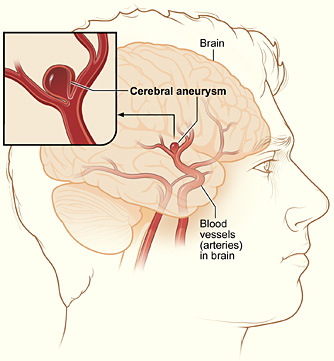
Size becomes relevant here. Doctors classify aneurysms by diameter because size affects rupture risk. Small aneurysms measure less than half an inch, about the size of a large pencil eraser. Large aneurysms span half an inch to one inch, roughly the width of a dime. Giant aneurysms exceed one inch, more than the width of a quarter.
The largest aneurysms are most likely to rupture, but growing aneurysms of any size pose a serious risk. Kim’s doctors described hers as “little,” so it likely falls into the small category. Small aneurysms that aren’t growing can remain stable for years, which explains why her doctors probably chose monitoring over immediate intervention.
How Common Are They?
Kim Kardashian’s situation raises an obvious question, if she had no symptoms and only found her brain aneurysm by chance, how many other people are walking around with the same condition?
Brain aneurysms are more common than most people realize. According to the American Heart Association, about 3 to 5% of Americans currently have a brain aneurysm. Most don’t cause symptoms or health problems. You can live a long life without ever realizing you have one. The challenge is that aneurysms rarely show symptoms until they become very large or rupture.
Brain aneurysms can occur in anyone at any age, though they’re most common in adults between ages 30 and 60. Kim is 45, right in the middle of this range. Women face a higher risk than men, and research suggests the risk increases after menopause.
Doctors typically discover aneurysms in three ways. Some people experience symptoms when a large aneurysm presses on brain tissue. Others find out when one ruptures. The third group, like Kim, learns about them during scans for something else.
Accidental detection will likely increase as more people undergo preventive imaging. Prenuvo and similar companies market full-body MRI scans to health-conscious consumers who can afford them. Medical professionals question whether these scans find harmless abnormalities that cause unnecessary anxiety. Kim’s experience points to a different outcome. Her aneurysm might have remained hidden until a rupture turned discovery into an emergency.
Read More: 12 Early Warning Signs of an Aneurysm You Shouldn’t Ignore
What Causes Them?
Research backs Kim’s claim about stress. According to WebMD, ongoing stress raises blood pressure, and high blood pressure damages artery walls until they bulge out into aneurysms. So the mechanism exists, but was Kim’s life stressful enough to trigger that damage?
She filed for divorce from Kanye West in 2021, the same year she finally passed California’s baby bar exam on her 4th attempt after 3 failures. This wasn’t a brief, stressful period but a sustained grind that stretched from 2018 to 2025. At her May 2025 graduation ceremony, her legal mentor Jessica Jackson said Kim studied 18 hours a week, 48 weeks a year, logging 5,184 hours of legal work while running SKIMS, a shapewear company now valued at $4 billion, raising four children as a single mother, filming The Kardashians for Hulu, and showing up in courtrooms to advocate for criminal justice reform.
During those same years, she dealt with Kanye’s public behavior. She described feeling “pretty tested” by his actions and worrying about shielding North, Saint, Chicago, and Psalm from the fallout. The stress wasn’t occasional but constant, layered on top of an already demanding schedule.
Biology also adds a risk that lifestyle can’t eliminate. The National Institute of Neurological Disorders and Stroke notes that shifting hormones after menopause weaken blood vessel walls. Kim’s sex creates vulnerability that stress then acts on. What a man or younger woman might handle becomes dangerous for her because her body already has biological strikes against it. Her demanding schedule strains a cardiovascular system that hormones and aging have already weakened.
Types of Brain Aneurysms
Kim Kardashian called her brain aneurysm small and offered no further details. She did say her doctors chose monitoring over surgery, which narrows down the possibilities.
According to Johns Hopkins Medicine, roughly 90% of brain aneurysms are saccular. These balloon out on one side of the blood vessel, creating a pouch attached by a narrow neck. The pouch forms where arteries branch or split because those junctions create weak spots under high blood pressure. Most stay stable without growing, so doctors monitor small ones instead of operating right away.
The other types are far less common:
- Fusiform aneurysms swell outward on all sides, leaving no clear intervention point for surgeons.
- Mycotic aneurysms come from infections attacking the artery wall.
- Pseudoaneurysms form after surgery or trauma tears the vessel.
- Dissecting aneurysms happen when the artery wall splits apart, causing immediate symptoms.
When Treatment Becomes Necessary
Not all cerebral aneurysms need treatment. Doctors recommend monitoring very small unruptured aneurysms as long as nothing increases the rupture risk.
This is because treatment itself can create serious medical problems. So doctors calculate the rupture chance against treatment risks, then add the person’s age, health, and family and medical history into the equation.
When monitoring isn’t enough, doctors turn to surgery. Microvascular clipping is when surgeons open the skull and place a tiny metal clip on the aneurysm’s neck to cut off the blood supply. According to WebMD, completely clipped aneurysms generally don’t return. The permanence comes with risks, though. Stroke and damage to other blood vessels can happen during the procedure.
Endovascular treatments avoid opening the skull entirely. One option is platinum coil embolization, where doctors thread tiny platinum spirals through a catheter into the aneurysm to block blood flow. The coils work well, but aneurysms can refill, which means the procedure sometimes needs repeating.
Flow diversion takes a different approach by placing a small stent that redirects blood away from the aneurysm instead of filling it, and this technique works particularly well for very large aneurysms.
People living with unruptured brain aneurysms need to manage rupture risk beyond surgery, something Kim Kardashian acknowledged on Good Morning America when she said, “you just have to be careful with everything that you do.”
What Helps
Managing or preventing an aneurysm depends on the same lifestyle habits, with blood pressure control at the core. High pressure weakens vessel walls over time, so lowering it through diet, exercise, and medication reduces risk.
The DASH diet helps by limiting sodium and saturated fat while adding potassium from fruits and vegetables. Studies show steady adherence brings clear drops in blood pressure. Less sodium means less fluid strain, and potassium relaxes vessel walls naturally.

Exercise strengthens both the heart and vascular system. The CDC recommends 150 minutes of moderate activity weekly, which breaks down to 30 minutes five days a week. Regular movement trains the heart to pump more efficiently, reducing force on vessel walls.
Smoking increases rupture risk more than any other factor. A study of 4,701 patients published in Neurology found that current smokers have 2.2 times the odds of rupture compared to people who never smoked. Former smokers still have 1.6 times the risk. Quitting stops new damage but doesn’t reverse the harm already done, so the risk remains high based on lifetime exposure.
Alcohol raises pressure when consumed beyond moderate amounts. Men should limit intake to two drinks daily and women to one, because regular pressure spikes from drinking create cumulative damage.
Sleep affects everything else because skipping it raises stress hormones that keep pressure elevated. Poor sleep increases the risk of high blood pressure, heart disease, and stroke.
Ongoing stress and anger can trigger ruptures in existing aneurysms. Exercise, meditation, adequate sleep, time with loved ones, and hobbies all help manage it. Kim’s diagnosis likely forced her to reconsider what stress levels she can sustain long-term.
Two or more relatives with aneurysms make screening worth discussing with a doctor.
Why Her Story Helped
Kim’s brain aneurysm became part of The Kardashians Season 7 storyline alongside her divorce stress and returning psoriasis. When Robin Roberts asked about it on Good Morning America, Kim said “health is wealth” and told viewers to tune in for more details.
Whether she shared it to help people or because health scares make compelling television, the result is the same. Millions of people who’d never heard of brain aneurysms now know they exist. Young women following her for fashion and beauty content learned that one in 50 people has an undiagnosed aneurysm. Someone watching might remember this when they’re deciding whether that preventive scan is worth the cost.
Medical experts noticed too. Dr. Adam Arthur told CBS News he hopes her diagnosis brings awareness to screening. When celebrities discuss health conditions, search interest spikes and doctor visits increase for weeks afterward.
Kim got scans despite having no symptoms. She followed up thoroughly at Cedars-Sinai. She’s managing her condition while running businesses, studying law, and raising four kids. That sequence alone teaches people something about taking health seriously without making it your whole life.
Read More: NASA Reacts After Kim Kardashian Questions the Moon Landing