
Most people have pulled out a credit card without a second thought. Tap, swipe, sign. The idea that a bank might simply refuse to give you one, not because of your income or your credit history, but because of your gender, feels almost too far-fetched to take seriously. And yet, for millions of American women, that was everyday reality. Banks turned them away. Lenders dismissed their earnings as unreliable. Their financial identities were legally tied to the men in their lives, whether they liked it or not.
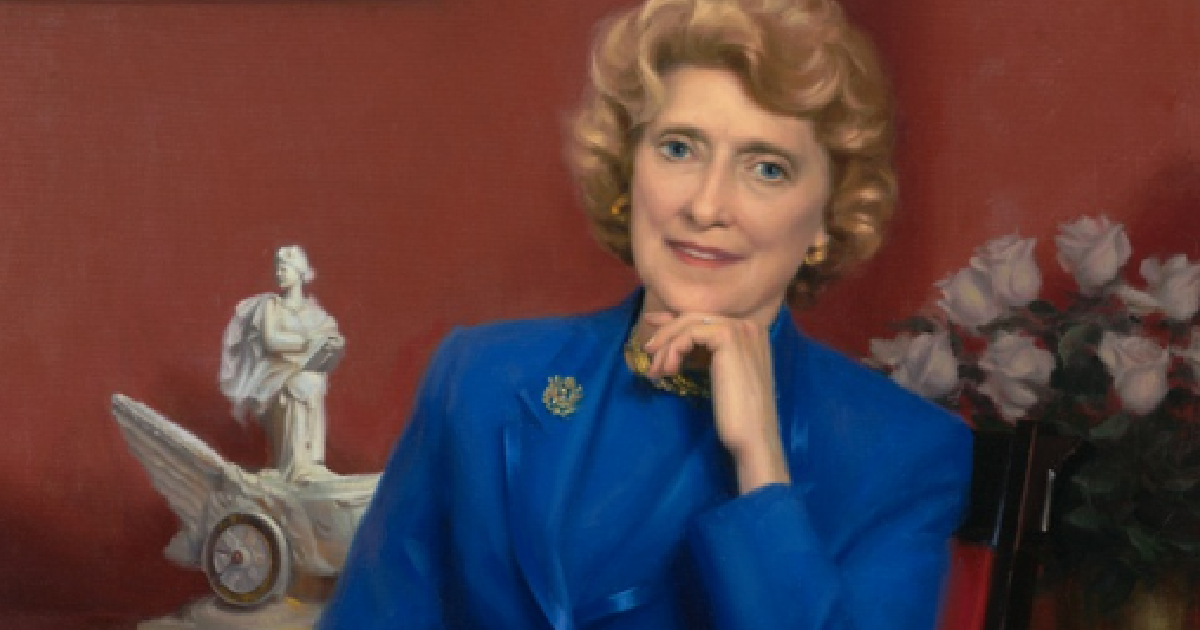
What finally changed wasn’t a landmark court ruling. It wasn’t a mass protest or a congressional debate that made national headlines. It was four words, added quietly to a piece of legislation by a congresswoman from Louisiana who noticed something everyone else had missed. Her name was Lindy Boggs, and most Americans have never heard of her.
Her story starts not with ambition or a lifelong dream of public office, but with tragedy. It’s the kind of story that reveals how much can shift when one person pays close enough attention, at exactly the right moment.
The World Women Lived In Before the Equal Credit Opportunity Act
On October 28, 1974, President Gerald Ford signed the Equal Credit Opportunity Act, which prohibited discrimination on the basis of sex or marital status with respect to any aspect of a credit transaction, signing into law all women’s right to have a credit card in their own name. Until that moment, the financial system treated women as legally dependent on men.
The daily reality of this was more degrading than the law itself suggests. Before 1974, if you were a single woman, you almost always needed your father, brother, or another male relative to cosign loans for you, even if you made more money than they did. If you were married, you could not obtain credit cards in your own name. You could only get a card as Mrs. Your Husband’s Name. No matter how carefully you paid the bills and managed the account, the credit history accrued only to him. As a result, if your husband died or you divorced, it was nearly impossible for you to obtain a loan.
Before 1974, lenders could refuse to issue credit cards to single women. A married woman could get a credit card, but only if her husband co-signed the application. Lenders could also deny women mortgages or hold them to different lending standards and down payment requirements. Women were denied credit for reasons that had nothing to do with income or their financial track record. There was nothing illegal about any of it.
The Groundwork: A Movement Builds in Congress
The push to change this didn’t begin with Lindy Boggs. In the early 1970s, women’s organizations gathered thousands of letters from women around the country describing their experiences with banks, and began ratcheting up public pressure. They secured hearings in front of the new National Commission on Consumer Finance in May 1972.
New York Representative Bella Abzug introduced the Equal Credit Opportunity Act, the first bill designed to prohibit lending institutions from discriminating on the basis of “sex or marital status” when considering applicants for credit. The House never considered Abzug’s bill in the 92nd Congress, but she reintroduced it at the start of the 93rd Congress. Despite attracting widespread support, particularly from women Members such as Margaret Heckler of Massachusetts and Lindy Boggs of Louisiana, Abzug’s bill again struggled to make it to the floor. Getting the right language in front of the right people proved to be the real obstacle.
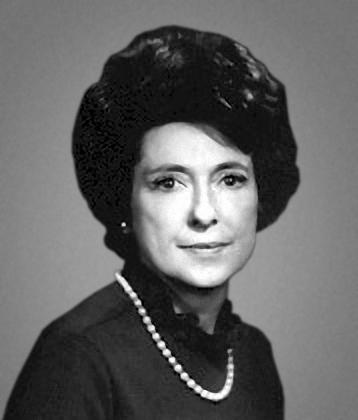
In 1974, sixteen women served in the House of Representatives and none in the Senate. There were three women on the Banking and Currency Committee: Lenore Sullivan of Missouri, Margaret Heckler of Massachusetts, and Corinne Boggs of Louisiana. Sullivan was the senior member, Heckler wrote the draft law, and Boggs, who had not yet served a full term, amended it.
A Tragedy That Opened a Door
Boggs was born on a sugar plantation in Louisiana and moved to Washington in 1941 after her husband Hale Boggs was elected to Congress. When he disappeared in a plane crash in 1972, she won his seat in a special election.
Newly single, she suddenly encountered the difficulties women faced when they sought credit. “I had not been aware of the discrimination against women until I became an easy prey to it myself,” she wrote in her 1994 memoir. Boggs realized that women could only get credit cards in their husbands’ names. If a woman divorced, her credit cards were automatically cancelled.
Boggs was a seasoned politician but a new addition to the committee, having won a special election to succeed her husband. Congresswoman Boggs went on to serve 18 years in the House, becoming an advocate for women’s equality, economic opportunity for minorities, and the preservation of House heritage. When the original draft of the credit bill failed to include protections for women, she acted. What happened next was one of the quietest and most consequential legislative moves in American history.
The Four Words That Changed Everything
When the House Banking Committee was considering an amendment to a bill that would have banned discrimination in lending on the basis of race, age, or veteran status, Boggs noted that sex and marital status weren’t included. At the time, it was legal in the United States, and not uncommon, for banks to refuse to issue credit cards to women on their own economic merit. A husband’s signature was what mattered.
Her experience as a newly widowed woman seeking credit and managing her own finances convinced her that the words “or sex or marital status” should be added to that provision. Without informing the other members of the committee, she inserted those words, walked to the photocopying machine, and made copies for her colleagues.
Then she handed the new copies out. According to the U.S. House of Representatives History, Art & Archives, Boggs told her colleagues: “Knowing the Members composing this committee as well as I do, I’m sure it was just an oversight that we didn’t have ‘sex’ or ‘marital status’ included. I’ve taken care of that, and I trust it meets with the committee’s approval.” It did, passing unanimously 47 to 0.
What made Boggs’s move so effective was its tone. She didn’t challenge her colleagues. She didn’t accuse them of being sexist. She framed the omission as a simple oversight by people she trusted, and offered the fix as a courtesy. Whether that was strategy or genuine grace, or some mixture of both, it worked completely.
How the Bill Became Law
The act was introduced to the U.S. House of Representatives on October 31, 1973. The measure passed on February 5, 1974, in a vote of 282 to 94. The measure was then referred to the U.S. Senate, which passed an amended version on June 13 in a vote of 89 to 0. The amended version went to a conference committee, which returned an amended bill to both chambers. The House approved the amended version in a vote of 355 to 1, the Senate approved the bill in a voice vote, and President Gerald Ford signed the act into law on October 28, 1974.
The law made it unlawful for any creditor to discriminate against any applicant with respect to any aspect of a credit transaction on the basis of race, color, religion, national origin, sex, marital status, or age. The protections Boggs had added were now federal law, binding on banks, credit card companies, retailers, and finance companies across the country.
In its final form, the Equal Credit Opportunity Act of 1974 ensured that women would be able to get loans and credit cards at the same interest rates given to men of similar financial status. That was not a minor clarification. For millions of American women, it was a legal right that hadn’t existed the day before.
The ECOA was amended in 1976 to further prohibit discrimination based on race, religion, and national origin. President Gerald Ford signed the ECOA amendment at the White House Rose Garden on March 23, 1976.
The Legacy of Lindy Boggs
Boggs had told her colleagues she was sure it was “just an oversight” that women hadn’t been included. The committee unanimously endorsed her wording. But the impact of that moment extended far beyond the committee room.
In 1972, only 4.6 percent of small businesses were owned by women. By 1982, women owned 23 percent of small businesses, the vast majority of them established with their personal credit.
In 1976, Boggs became the first woman to preside over a national political convention when she chaired the Democratic National Convention that nominated Jimmy Carter for the presidency. Her career was long and distinguished, but her amendment to the Equal Credit Opportunity Act remains the act she is most remembered for.
After leaving Congress in January 1991, the House named a room off the National Statuary Hall for her, the Lindy Claiborne Boggs Congressional Women’s Reading Room. A reading room set aside for female members of Congress was named the Lindy Claiborne Boggs Congressional Women’s Reading Room. According to a U.S. House historian, it is the only room in the building named for a woman.
In 2020, Time magazine created covers to celebrate 100 Women of the Year starting from 1920 and chose Boggs for 1974. That recognition came more than four decades after the fact. In some ways, that gap is part of the story too. Legislative history rarely rewards the person who catches the detail everyone else missed.
Although the Equal Credit Opportunity Act made sex- and marital-status-based credit discrimination unlawful in 1974 and was expanded in 1976 to cover additional protected bases, early implementation did not immediately erase entrenched practices in the retail credit and mortgage markets. Legal change and cultural change do not arrive at the same speed.
What This Means
The Equal Credit Opportunity Act is now over fifty years old, but its origins are close enough to feel personal. This year marks the 51st anniversary of the Equal Credit Opportunity Act of 1974, which protected women’s right to access to credit. Before the law, women needed their husbands, fathers or brothers to cosign for a loan or credit card. Gaining access to credit was critical for women to take ownership of their lives. Any woman over sixty today may well remember a time when this was simply how things worked.
According to financial counselors, “Before access to credit, women were more at risk for being in a toxic, unhealthy, abusive or just plain unhappy relationship because they did not have the means to escape it.” Access to credit allowed for the ability to create financial independence to choose their own life trajectory.
Understanding where these rights came from matters. It makes it easier to protect them and harder to take them for granted. Lindy Boggs didn’t make a speech. She didn’t organize a march. She walked to a copying machine, added four words to a document, and changed the financial lives of every woman in America. Sometimes that’s exactly what it takes.
Disclaimer: This information is not intended to be a substitute for professional financial advice, investment advice, tax advice, or legal advice, and is provided for informational purposes only. Always seek the guidance of a qualified financial advisor, accountant, or other licensed professional regarding your personal financial situation or investment decisions. Do not make financial, investment, or tax decisions based solely on information presented here. Past performance is not indicative of future results, and all investments carry risk, including the potential loss of principal.
AI Disclaimer: This article was created with the assistance of AI tools and reviewed by a human editor.
Read More: How a 19-Year-Old Girl Made History as the Top-Rated African American Female Chess Player