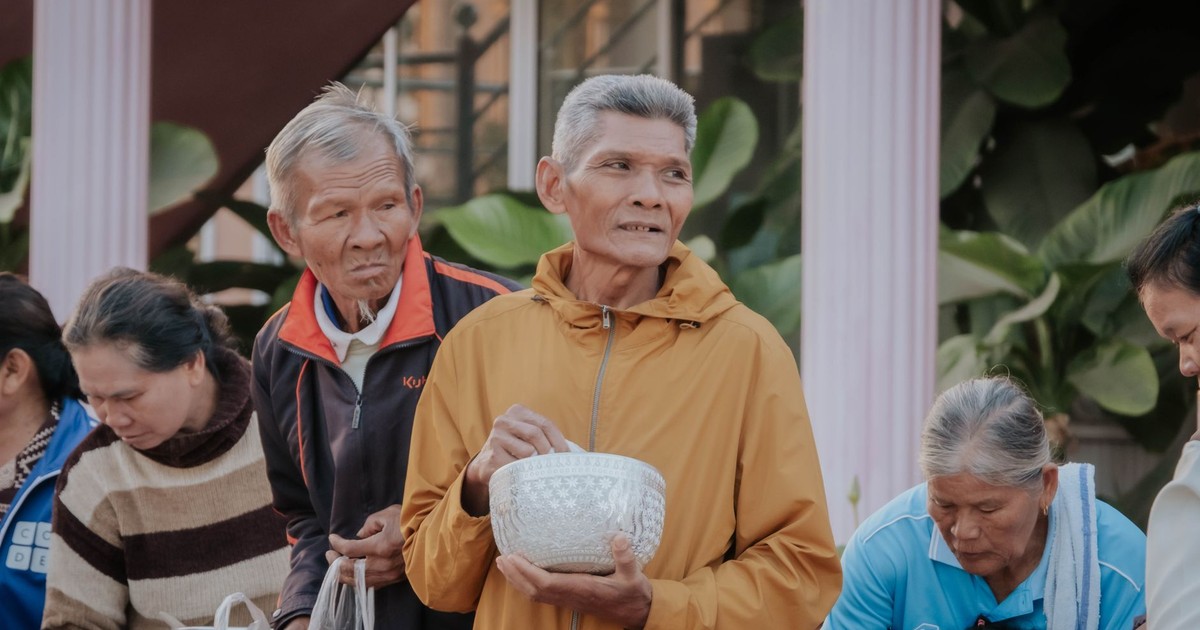

Sardinia’s Ogliastra region, a thin strip of mountainous terrain on Italy’s largest island, has one of the most concentrated clusters of 100-year-olds anywhere on Earth. Centenarians there reach rates up to ten times higher than the European average in some villages. Decades of research have examined what these people eat, how far they walk, and what genetic variants they carry. Diet gets the headlines. The personality findings mostly go unmentioned.
A body of research spanning Japan, Italy, Georgia, and Iowa has quietly produced a consistent finding: the people who make it to 100 tend to share a specific set of psychological traits that show up repeatedly across unrelated cultures and study populations. These traits don’t show up on a blood panel. You can’t buy them at a health food store. And they’re not what most people picture when they think about the longevity secrets centenarians seem to hold.
What the Personality Research Actually Shows
Blue Zones, the concept developed by National Geographic Fellow and researcher Dan Buettner, refers to regions with exceptionally high concentrations of centenarians, often in good health. Four have been formally validated: Okinawa in Japan, Sardinia in Italy, Nicoya in Costa Rica, and Ikaria in Greece, with Martinique recently emerging as the fifth.
The earliest serious attempt to pin down exactly what personality looked like in these populations came from the Georgia Centenarian Study, one of the longest-running investigations of its kind, conducted across three phases from 1988 to 2008 at the University of Georgia. Researchers Peter Martin and Leonard W. Poon found a centenarian profile characterized by low levels of neuroticism, but relatively high levels of extraversion, competence, and trust. Those findings were later replicated on the other side of the world.
The Tokyo Centenarian Study assessed 70 cognitively intact Japanese centenarians aged 100 to 106, alongside 1,812 elderly people aged 60 to 84, using the NEO Five Factor Inventory – a 60-item self-report questionnaire that measures the “Big Five” personality traits – to compare personality profiles. The results showed higher openness in both male and female centenarians, and higher conscientiousness and extraversion in female centenarians. These results suggest that high scores in conscientiousness, extraversion, and openness are associated with longevity.
Research into the Sardinian Blue Zone has added further texture to this picture. Studies published in peer-reviewed gerontology journals have found that the longevous population in this region possesses an advantageous combination of psychological characteristics in the form of increased well-being and reduced mental ill-health. Resilience, optimism, and openness to life experiences all emerged as significant distinguishing factors in multiple independent investigations of these communities. Life satisfaction correlated with resilience and religiosity in Sardinian Blue Zone participants, and those from rural areas reported greater optimism and life satisfaction than peers living in urban settings. Optimism and hedonic well-being appear to favor optimal aging in the Blue Zone.
The Trait That Stands Out: Openness
Of the five major personality dimensions, openness to experience has drawn particular attention in centenarian research. Low levels of neuroticism in female centenarians have been reported consistently, and the Tokyo Centenarian Study found that both male and female centenarians scored higher in openness than younger controls.
According to Psychology Today, openness to experience is a basic personality trait denoting receptivity to new ideas and new experiences. It captures a person’s tendency to engage with novelty, adapt to unfamiliar situations, and remain cognitively flexible as life changes around them. For a 95-year-old, that flexibility can translate into continued social engagement, willingness to adopt new routines, and a capacity to find meaning in circumstances that would overwhelm someone more rigidly attached to the life they had planned.
The Sardinian Blue Zone research found openness to life experiences to be one of the significant predictors of psychological well-being in older adults living in high-longevity areas. Older individuals from the Sardinian Blue Zone who had experienced migration reported higher ego resilience and exhibited greater resources for managing positive emotionality, specifically openness to life experiences. The connection between flexibility of mind and long-term health may work through multiple channels: better stress management, stronger social bonds, and a continued sense of purpose that keeps people engaged with the world around them.
For readers curious about the broader lifestyle factors that support long life in these regions, this 2024 breakdown explores how daily behaviors weave together with psychological traits.
Why Conscientiousness Keeps Showing Up
If openness is the trait that surprises people, conscientiousness is the one that shouldn’t. Conscientiousness is the strongest personality predictor of longevity. The finding replicates across study populations, decades, and methods.
The literature on longevity consistently points to two major factors: low levels of neuroticism and high levels of conscientiousness. Conscientiousness operates through behavior. The health behavior model provides the most theoretically supported explanation for why conscientiousness predicts mortality: a general personality trait such as conscientiousness leads to specific conscientious behaviors, such as taking better care of one’s health, which in turn leads to better health and ultimately greater longevity. A large part of taking care of one’s health involves avoiding health-damaging behaviors, such as smoking.
Conscientiousness has been tied to longevity, and peer-reviewed research consistently finds that people scoring high on this trait tend to exercise regularly and avoid risky health behaviors such as excessive drinking and smoking. This matters because most people who make it to 100 aren’t following a rigid diet or an exercise program they consciously adopted. They’re simply the kind of people who’ve always made slightly better decisions in aggregate, day after day, decade after decade. Conscientiousness is the engine running quietly behind those decisions.
A 2025 study published in Chinese Medical Journal examining data from nearly 500,000 participants confirmed that neuroticism was associated with measurable increases in future disease and mortality risk, reinforcing the mirror-image relationship between conscientiousness and its neurotic counterpart. Individuals who score higher on neuroticism tend to be more emotionally unstable, vulnerable to stress, and lonely. Neuroticism is closely related to psychopathology, including anxiety, depression, and suicidality.
The Low-Neuroticism Pattern
The most consistent personality trait found in almost every centenarian study is low levels of neuroticism. Neuroticism, in psychological terms, is the tendency to experience negative emotions like anxiety, hostility, and depression as a baseline state. High neuroticism isn’t simply about having a bad day; it’s a chronic orientation toward threat and emotional instability.
Five of the six studies in a systematic review of neuroticism and mortality found statistically significant associations between facets of neuroticism and mortality risk. Several underlying facets were reported to be associated with an increased mortality risk, namely vulnerability, cynicism, pessimism, anxiety, and depression.
The physiological mechanism isn’t abstract. People who are chronically neurotic experience more frequent activation of the stress response, which keeps cortisol and inflammatory markers elevated over time. Low neuroticism is theorized to promote positive health behaviors, adaptive social functioning, and positive stress profiles that benefit health and ultimately support longevity. Centenarians, across study populations, tend to be people who encounter hard things, process them, and move on, rather than ruminating or catastrophizing. Dan Buettner, founder of Blue Zones and a National Geographic Fellow, has noted in multiple interviews that the people in these regions “live a long time not because of the things we think – they’re not on diets, they’re not on exercise programs, they don’t take supplements.”
Social Connection as a Personality Outcome
People in Blue Zone communities live closely together. That closeness isn’t accidental. It’s the product of personalities that are agreeable, extraverted, and open to continued engagement with other people, even at advanced ages. A 2010 meta-analysis published in PLOS Medicine found that individuals with strong social ties were over 50% more likely to survive across study periods compared to those with weak or absent social ties. The risk runs in the other direction too: social isolation increases the risk of premature death from all causes, a risk that rivals smoking, obesity, and physical inactivity.
A 2024 study based on the oldest-old population found that frequent participation in social activities was associated with longer overall survival. Open, extraverted people participate more. Conscientious people show up reliably. Low-neurotic people are easier to be around and tend to sustain relationships over time. The personality traits that characterize centenarians aren’t just internal states; they’re the social infrastructure of a long life.
Read More: Secrets of the Blue Zones: Netflix Doc Reveals How We Should All Be Living to 100
Genes Are Not Destiny
Personality is partly heritable, which raises the question of whether the whole finding is circular – people built to live long also happen to have the right personality for it. The genetics of longevity are real but more limited than most people assume.
Genetic factors contribute only 20 to 30% to longevity, with lifestyle factors accounting for the remaining 70 to 80%. That means the majority of what determines whether you reach 100 is shaped by choices, habits, environments, and the psychological patterns you either cultivate or allow to calcify.
Personality is also not static. Longitudinal research has found that personality traits shift meaningfully across adulthood. Neuroticism tends to decline with age in healthy populations. Conscientiousness often increases. Openness can be actively exercised through deliberate exposure to new experiences, relationships, and ideas. The centenarians in Sardinia, Tokyo, and Georgia aren’t outliers who were simply born with lucky personality profiles. Many of them lived through wars, poverty, loss, and displacement. What they maintained, across all of it, was a particular way of orienting toward what came next.
What This Means for You
The longevity secrets centenarians carry aren’t written in their recipes or their exercise routines. The data points to something more durable: a set of psychological dispositions that interact with every choice a person makes over a lifetime.
Starting with neuroticism: the specific facets most consistently tied to mortality risk include chronic anxiety, pessimism, and vulnerability to stress. These are not fixed in place. Cognitive behavioral therapy, mindfulness-based stress reduction, and even regular aerobic exercise have each been shown in peer-reviewed research to reduce trait neuroticism over time. Treating anxiety as a personality quirk to live with, rather than a physiological risk factor to address, may be one of the most costly assumptions a health-conscious person makes.
Conscientiousness translates to specifics: keep medical appointments, take prescribed medications as directed, don’t skip sleep, don’t normalize heavy drinking. Small, careful decisions made almost automatically over decades add up to a fundamentally different health trajectory than one built on occasional dramatic interventions.
Openness to life experiences was identified as a significant predictor of psychological well-being in older adults from high-longevity populations. Practically, that means not letting the radius of your world shrink as you age. Take the unfamiliar route. Learn the new thing. Stay in contact with people who are younger or different from you. A growing body of centenarian research suggests that staying engaged with the world – rather than retreating from it – is one of the more reliable predictors of making it to 100 in good health.
Disclaimer: This information is not intended to be a substitute for professional medical advice, diagnosis, or treatment and is for information only. Always seek the advice of your physician or another qualified health provider with any questions about your medical condition and/or current medication. Do not disregard professional medical advice or delay seeking advice or treatment because of something you have read here.
AI Disclaimer: This article was created with the assistance of AI tools and reviewed by a human editor.
Read More: Dick Van Dyke Turned 100 — Here’s What He Says He Avoided His Whole Life