
Advanced Technology Unveiling Ancient Manuscripts
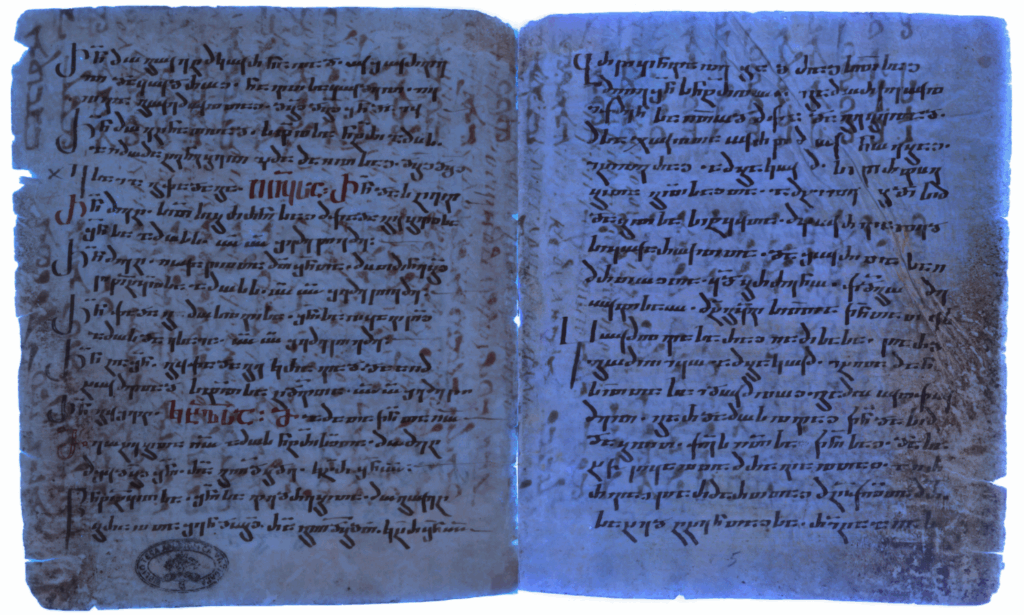
Experts explain that uncovering the ancient text required a blend of advanced technology and careful scholarly analysis. Ultraviolet photography was the breakthrough method that exposed the hidden writing. UV light works because iron in ancient inks absorbs ultraviolet light differently than parchment does, making erased text visible centuries later.
A palimpsest is essentially recycled writing material. In the medieval Middle East, parchment was an expensive luxury item. Studies show scribes often washed away old text for new writings, but traces of original ink remained embedded. Invisible to naked eyes, they become visible under UV light. This document has three distinct layers from different eras, like an archaeological dig on a single page. Evidence suggests scribes created the original Syriac Gospel in the 6th century, then another erased it for the Greek text, and in the 10th century, another scribe covered it with Georgian writing.
The document eventually reached St. Catherine’s Monastery on Mount Sinai before parts landed in the Vatican. When researchers finally analyzed these fragments, they realized they had found parts of a Bible chapter that scholars had only theorized might exist.