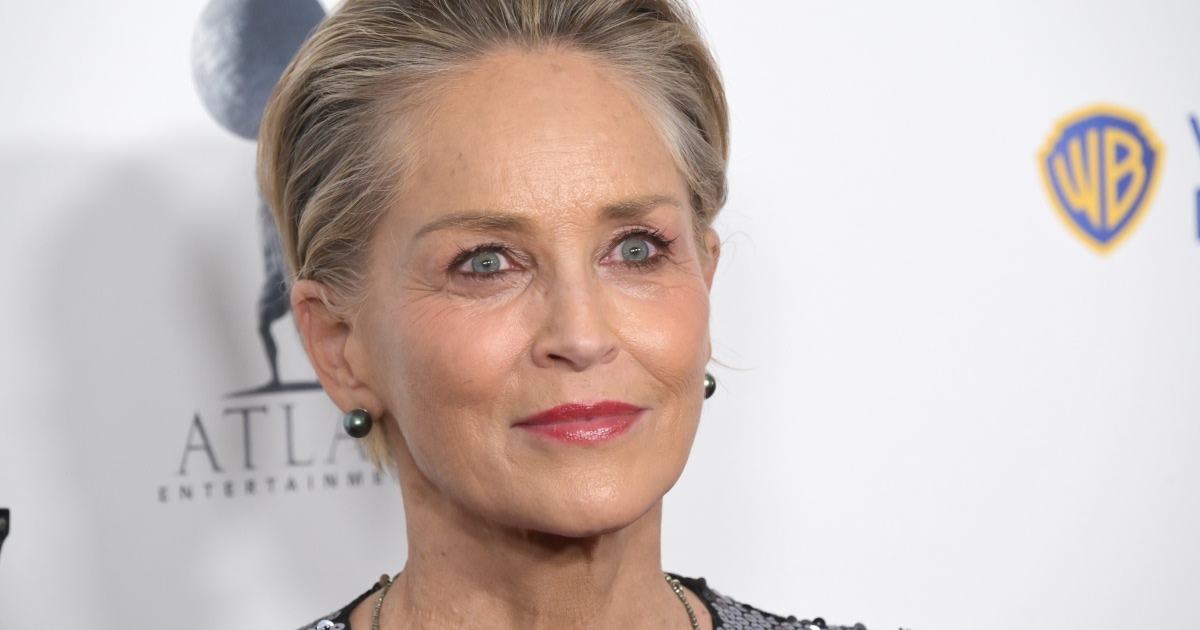

Sharon Stone spent a month sick in bed after quitting marijuana. Not mildly uncomfortable – sick enough that she went to see her neurologist. That detail, from a recent interview Stone gave to Variety, stopped a lot of people cold. The 68-year-old actress, who survived a near-fatal stroke in 2001 and spent decades managing its neurological aftereffects, didn’t describe marijuana as a harmless habit she casually kicked. She described quitting it the way people describe quitting serious drugs.
Her account arrived at a moment when millions of adults are using cannabis products that bear almost no chemical resemblance to what anyone was smoking twenty years ago. The marijuana withdrawal symptoms Stone experienced aren’t an anomaly – they’re increasingly common, and the science explaining why has grown considerably sharper.
Stone’s path to quitting started with her stroke medication. She told Variety she had stopped one of the medications she’d been taking since her 2001 stroke, despite doctors’ repeated warnings that she should never come off it. She described the experience as “like going off of f—ing heroin” and said she was “sick as a frigging dog for four and a half months.” After that ordeal resolved, she made a second decision. After getting through the stroke medication withdrawal, she decided she also wanted to quit smoking marijuana. When she stopped, she got sick again. This time the illness lasted a full month. Her neurologist, she said, told her: “Sharon, I’ve had people dying in the emergency room from marijuana.”
Stone suspected that additives in modern marijuana contributed to her reaction, though she didn’t share a diagnosis or offer medical evidence connecting a particular substance to her symptoms. Her comments described her own experience rather than a universal result. Still, the broader picture she raised – that today’s cannabis is a fundamentally different substance than what existed a generation ago – is well-supported by data.
How Marijuana Changed While No One Was Watching
The cannabis most adults grew up hearing about had a THC (tetrahydrocannabinol, the compound responsible for the drug’s psychoactive effects) content of roughly 1% to 3%. THC content rarely exceeded 2% to 3% in products from the 1980s. Data from the University of Mississippi’s Potency Monitoring Program – a NIDA-funded program that has analyzed THC content in DEA-seized samples since the mid-1990s – showed that all mean THC values in seized samples before 1980 were below 2.4%, and DEA data tracked by NIDA showed a rise from 0.5% in 1974 to 3.5% by 1985 to 1986.
That steady climb never stopped. Today, legal dispensary flower averages 18% to 25% THC, with some strains pushing 30% to 35%. Concentrates reach 60% to 90% THC. The NIH’s StatPearls database, updated in early 2026, notes that over the past two decades, the average THC potency of cannabis products has increased three- to fivefold, amplifying the risk of neuropsychiatric, cardiovascular, and cognitive complications.
The mechanism driving this is partly agricultural and partly market-driven. The shift to seedless marijuana and controlled indoor cultivation dramatically boosted potency, because unpollinated female plants channel all their energy into producing resin-rich trichomes where THC concentrates. Once legalization created competitive retail markets, THC content became the primary marketing metric, with consumers asking what was strongest and the industry delivering it.
What Marijuana Withdrawal Symptoms Actually Look Like
For most of cannabis’s modern history, the idea that quitting it could produce genuine withdrawal was treated skeptically – even by many medical professionals. That changed when cannabis withdrawal syndrome was formally added to the DSM-5 (the Diagnostic and Statistical Manual of Mental Disorders, the standard clinical reference for psychiatric diagnosis) as a recognized condition. Marijuana withdrawal can happen after regular use, with common symptoms including aggression, anxiety, and sleep issues like insomnia. These symptoms aren’t medically dangerous by themselves, but withdrawal is a recognized sign of cannabis use disorder, which does require professional attention.
The full symptom profile is broader than most people expect. A well-established cannabis withdrawal syndrome involves increased anger and aggression, anxiety, depressed mood, irritability, restlessness, sleep difficulty, strange dreams, decreased appetite, and weight loss. Headaches, physical tension, sweating, stomach pain, and general physical discomfort have also been observed, though less commonly.
Most symptoms begin within the first 24 hours of stopping, peak within the first week, and last approximately one to two weeks. Stone’s account of being sick for a full month sits at the longer end of that range. Her specific neurological history – a major stroke and years on medications affecting brain chemistry – likely complicated what might otherwise have been a more typical timeline.
One 2020 study of more than 23,000 participants, cited by Healthline, found that the prevalence of cannabis withdrawal syndrome is about 47% among regular users who stop. That figure – roughly one in two – is far higher than most casual users would anticipate.
The Scale of the Problem in 2024 and 2025
The numbers behind cannabis use disorder have grown substantially in tandem with rising product potency. According to SAMHSA’s 2024 National Survey on Drug Use and Health, among people aged 12 or older, about 64.2 million people – 22.3% of the population – used marijuana in the past year. During that same year, about 20.6 million people, or 7.1%, had a past-year marijuana use disorder.
Rates of substance use disorder involving marijuana were 3.7 times higher in 2024 than in 2015. That acceleration tracks directly with both rising use and rising potency. Studies have shown that higher THC concentrations are associated with a greater likelihood of developing dependence and experiencing withdrawal symptoms. Among regular users specifically, approximately 20% to 30% may meet the clinical criteria for cannabis use disorder, with risk increasing with daily use, early initiation, and high-potency products.
A 2025 study published in the journal Addiction found that high-potency cannabis flower use was associated with heavier consumption patterns and elevated risk of cannabis use disorder among young adults in California. The dynamic Stone described – using cannabis for years to manage a genuine medical condition, then struggling severely to stop – reflects a pattern that researchers are seeing more broadly. A 2024 national poll by AARP found that one-fifth of adults aged 50 and older reported past-year cannabis use, with relaxation, sleep, pain, and mental health cited as the most common reasons. Among monthly users, 44% had not discussed their use with a healthcare provider, and many reported cannabis use disorder symptoms including tolerance and craving.
High Potency and the Psychosis Connection
The risks associated with high-THC products extend beyond dependence and withdrawal. A 2025 systematic review examined 99 studies involving more than 221,000 participants and found that high-concentration THC products were consistently associated with unfavorable outcomes involving psychosis or schizophrenia and cannabis use disorder. The authors noted that most included studies had at least a moderate risk of bias, meaning the findings should be interpreted with some caution – but the directional signal across nearly a hundred studies is hard to dismiss.
Frequent use of high-potency cannabis has been linked to an elevated risk of psychotic disorders, particularly among individuals with a genetic predisposition or prior mental health conditions. This connection has become one of the central concerns among clinicians treating patients who use today’s dispensary products. The dose matters in a way it simply didn’t with older, lower-potency cannabis.
For people who develop cannabis use disorder, treatment options are limited but not absent. While there are currently no FDA-approved medications to treat cannabis use disorder, behavioral therapies – including cognitive behavioral therapy, motivational enhancement therapy, and contingency management – have shown effectiveness in reducing cannabis use, building coping skills, and improving health outcomes.
Read More: Cannabis-Related Psychosis on the Rise, Study Finds, as Researchers Flag a Vulnerable Group
What This Means for You
Sharon Stone’s account carries a specific warning that applies well beyond her particular medical history: the product millions of people are using today is not pharmacologically equivalent to what existed two decades ago. A long-time user who last quit in the early 2000s – or who has never tried to quit – may be working with an outdated mental model of what that process looks like.
The clinical picture of marijuana withdrawal symptoms is clearest in people who use heavily and daily. Stopping abruptly after long-term regular use produces the most intense withdrawal. If you use cannabis regularly and are considering stopping, telling your doctor before you quit – rather than after you get sick – is the most practical step. A supervised taper, behavioral support, and awareness of the one-to-two-week symptom window can significantly reduce how difficult the process becomes.
As of 2025, no pharmacological therapy is FDA-approved for cannabis use disorder, which means behavioral support is currently the backbone of any treatment plan. The SAMHSA national helpline (1-800-662-4357) offers free, confidential, 24/7 support for anyone dealing with substance use concerns – cannabis included.
Disclaimer: The author is not a licensed medical professional. The information provided is for general informational and educational purposes only and is based on research from publicly available, reputable sources. It is not intended to constitute, and should not be relied upon as, medical advice, diagnosis, or treatment. Always consult a licensed physician or other qualified healthcare provider regarding any medical condition, symptoms, or medications. Do not disregard, avoid, or delay seeking professional medical advice or treatment because of information contained herein.
AI Disclaimer: This article was created with the assistance of AI tools and reviewed by a human editor.
Read More: A Cannabis-Tobacco Combination May Triple Your Schizophrenia Risk