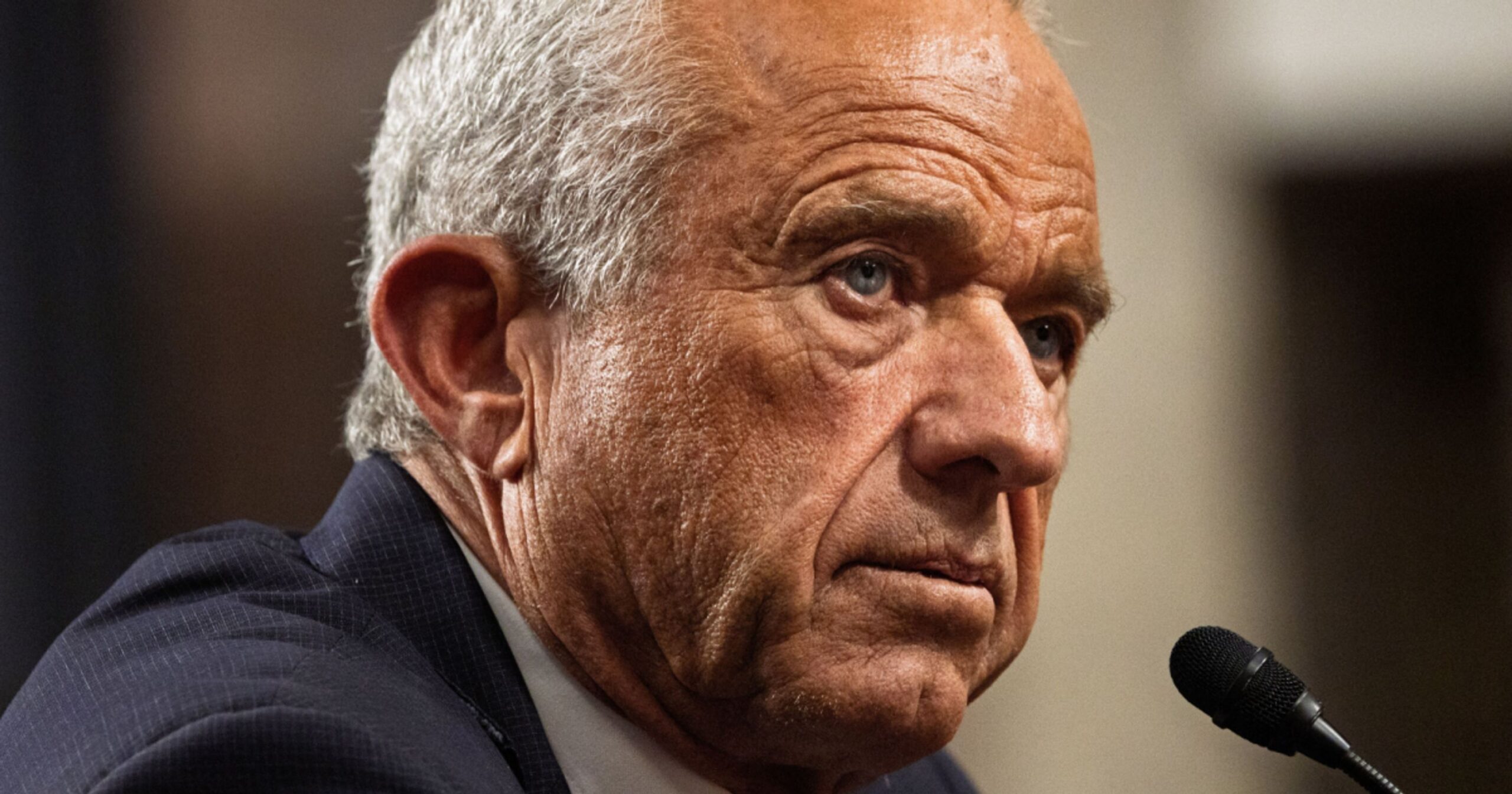

The man now overseeing America’s public health system spent years building one of the country’s most prominent anti-vaccine organizations. On August 2, 2026, sitting across from CNN anchor Dana Bash on State of the Union, that same man told parents on live television to vaccinate their children against measles.
Robert F. Kennedy Jr.’s statement didn’t emerge easily. When pressed by Bash during a contentious appearance, Kennedy eventually said the measles shot is safe, and that parents who had not should vaccinate their children against the viral disease. The shift, however qualified, arrived against a backdrop that made it nearly impossible to avoid: the United States is in the middle of its worst measles outbreak in 35 years, and the man responsible for protecting public health has spent decades casting doubt on the very tools needed to end it.
The numbers behind this story are stark enough to demand attention on their own. The number of U.S. measles cases as of late July 2026 had already surpassed the 2,289 reported for all of 2025, with both figures representing the highest annual case counts in the nation since 1991. Understanding how measles vaccination in children became a national crisis, and why a single CNN interview became a political flashpoint, requires looking at each piece of this puzzle separately.
The Scale of the 2026 Measles Outbreak Is Historic
More cases of measles have been recorded in the past 18 months than in the previous 25 years combined. That single statistic reframes what’s happening: this isn’t a blip or a localized cluster. It’s a sustained reversal of one of modern public health’s signature achievements.
Measles was considered virtually eliminated in the U.S. after the year 2000. For more than two decades, annual case counts stayed in the dozens. Then 2025 shattered records, and 2026 broke them again even faster. Just over halfway through the year, the country had recorded more cases than in any other year since 1991. According to the CDC, by late July, all but 16 of the cases were locally acquired across 45 U.S. jurisdictions, with 37 new measles outbreaks reported and 94% of cases associated with those outbreaks.
The geographic reach is equally striking. Cases have spread far beyond early epicenters, with South Carolina, Utah, Arizona, and Pennsylvania among the hardest-hit states. Dr. Richard Besser, president and CEO of the Robert Wood Johnson Foundation and former acting CDC director, called the situation “a tragic reminder that measles has made an alarming comeback in the United States.” Children bear the brunt of it: 20% of confirmed measles cases involve children under age 5, and 49% involve children aged 5 to 19.
Falling Measles Vaccination Rates in Children Are Driving the Surge
The outbreak didn’t happen in a vacuum. The single clearest driver is a drop in measles vaccination among children that has been building for years.
Underneath those case counts is a vaccination rate in freefall. Kindergarten MMR coverage, the benchmark used to assess herd immunity for school-age children, dropped to 92.5% during the 2024-2025 school year, according to ABC News, down from 95.2% in 2019. That 2.7-percentage-point gap may sound small, but the math of infectious disease is unforgiving.
Herd immunity for measles requires at least 95% of a community to be vaccinated. When more than 95% of people in a community are vaccinated, most people are protected through community immunity. The U.S. is now falling short of that threshold in most states. Only 10 states and Washington D.C. have maintained at least 95% MMR coverage among kindergarteners, according to The Hill. Every other state is operating below the level needed to reliably stop transmission.
The two-dose MMR schedule matters enormously here. According to the CDC, two doses of measles vaccine are 97% effective at preventing measles. One dose brings protection to roughly 93%. Children who skip even the first dose are almost entirely unprotected. Fully 93% of people infected in 2026 were unvaccinated or their vaccination status wasn’t known, according to NBC News.
South Carolina and Utah Show What Happens When Vaccination Gaps Widen
Two states illustrate the outbreak’s trajectory more vividly than any national statistic.
South Carolina went from one confirmed measles case in 2024 to 333 in 2025, then to 670 cases in 2026 as of late July, a number that rivals the annual national average from the pre-vaccine era. A single outbreak in Spartanburg County ran from October through April and became one of the largest in decades. Utah followed a similar pattern: the state reported more than 500 measles cases in 2026, compared with 197 in 2025, according to Axios. Both states had communities with vaccination rates well below the 95% threshold, which allowed the virus to spread person-to-person with little resistance.
Dr. Andrew Racine, then-president of the American Academy of Pediatrics, called the situation “a public health failure, and it’s avoidable.” That phrase carries weight precisely because measles is not a difficult disease to prevent. The vaccine works, it’s widely available, and the dosing schedule for children is straightforward: the first MMR shot at 12 months, and the second between ages 4 and 6. Two appointments stand between a child and near-total protection. The problem is that fewer families are keeping those appointments.
RFK Jr.’s History with Vaccines – and What He Said on August 2
Kennedy’s August 2 statement on CNN didn’t arrive without context. He founded Children’s Health Defense, an anti-vaccine advocacy group, which he led from 2015 to 2023. Over that period, the organization became one of the most influential sources of vaccine skepticism in the country, reaching millions of parents through social media, books, and legal challenges.
Earlier in the outbreak’s history, Kennedy said measles vaccination was a “personal decision,” and then, in a March 2025 Fox News interview, claimed on air that the measles vaccine “kills people every year” and “causes the same symptoms as measles,” statements that contradict decades of safety data and were directly rebutted by infectious disease researchers. A 2026 analysis by FactCheck.org traced Kennedy’s pattern of mixed messaging on the measles vaccine across multiple interviews, finding a consistent pattern of acknowledging vaccine efficacy while amplifying unfounded safety concerns. Researchers at Yale School of Public Health have directly linked declining childhood MMR uptake to the resulting measles resurgence, modeling how even a 1% annual drop in coverage among children aged 0 to 6 would produce a nonlinear surge in cases and hospitalizations.
Then came the August 2 interview. Kennedy, who has frequently expressed skepticism about vaccines, told CNN’s Dana Bash that he has “never questioned the efficacy of the MMR vaccine.” He also said directly that parents should vaccinate their children against measles, as CNN reported. Kennedy endorsed the measles vaccine while also pushing a string of false and debunked assertions about other vaccines, RSV, and the ongoing measles outbreaks, according to The Hill. The endorsement was real; the surrounding context was not simple.
The U.S. Could Officially Lose Its Measles-Free Status This Year
The consequences of the outbreak extend beyond case counts. The United States has held measles elimination status since 2000, a designation that means the disease no longer circulates continuously within the country’s borders. That status is now at risk.
PAHO, the Pan American Health Organization, confirmed in March 2026 that it will formally review U.S. measles elimination status in November 2026, during the Regional Verification Commission’s regular annual meeting. Analysis from the University of Minnesota’s Center for Infectious Disease Research and Policy concluded it “appears highly likely” the U.S. will lose that status in 2026. Losing elimination status is not a bureaucratic formality. It signals to the world that the U.S. can no longer guarantee measles doesn’t spread internally, which affects travel advisories, international public health partnerships, and the basic promise made to American families when their children receive routine vaccinations.
Measles cases dropped from 9,643 in 1991 to around 2,200 in 1992 after increased vaccine uptake and stayed low for more than three decades, only to rebound sharply. The path back to elimination runs entirely through measles vaccination in children. There is no other mechanism. The virus doesn’t respond to policy statements or television interviews. It responds to immunity.
Read More: COVID Vaccines: Scientists May Have Cracked the Mystery Behind Rare Blood Clots
What This Means for Your Family Right Now
Kennedy’s CNN endorsement of the MMR vaccine was, by any measure, a shift from where he stood 18 months ago. Whether it translates into changed behavior among the parents his previous statements may have influenced remains an open question. What isn’t open to question is the science or the urgency.
If your child has received both doses of the MMR vaccine on schedule, they have roughly 97% protection against measles, and you can confirm their vaccination records through your pediatrician or your state’s immunization registry. If they’ve had only one dose, contact your child’s doctor about completing the series. Measles cases have hit a 35-year high, and the communities with the lowest vaccination rates are the ones seeing the largest outbreaks. Measles spreads through the air. According to Johns Hopkins Bloomberg School of Public Health, the measles virus can stay in the air for several hours after an infected person coughs or sneezes, meaning exposure doesn’t require direct contact. The window for prevention is well before exposure, not after.
The broader picture is one that public health officials have been sounding alarms about for two consecutive record-breaking years: declining measles vaccination rates in children are a direct and measurable cause of the outbreak the country is living through right now. One clear, specific step, confirming your child is up to date on both MMR doses, is both the most protective thing a parent can do and the most direct contribution to stopping transmission in the wider community.
Disclaimer: This information is not intended to be a substitute for professional medical advice, diagnosis, or treatment and is for information only. Always seek the advice of your physician or another qualified health provider with any questions about your medical condition and/or current medication. Do not disregard professional medical advice or delay seeking advice or treatment because of something you have read here.
AI Disclaimer: This article was created with the assistance of AI tools and reviewed by a human editor.
Read More: RFK Jr., Thimerosal, and the Global Vaccine Fight