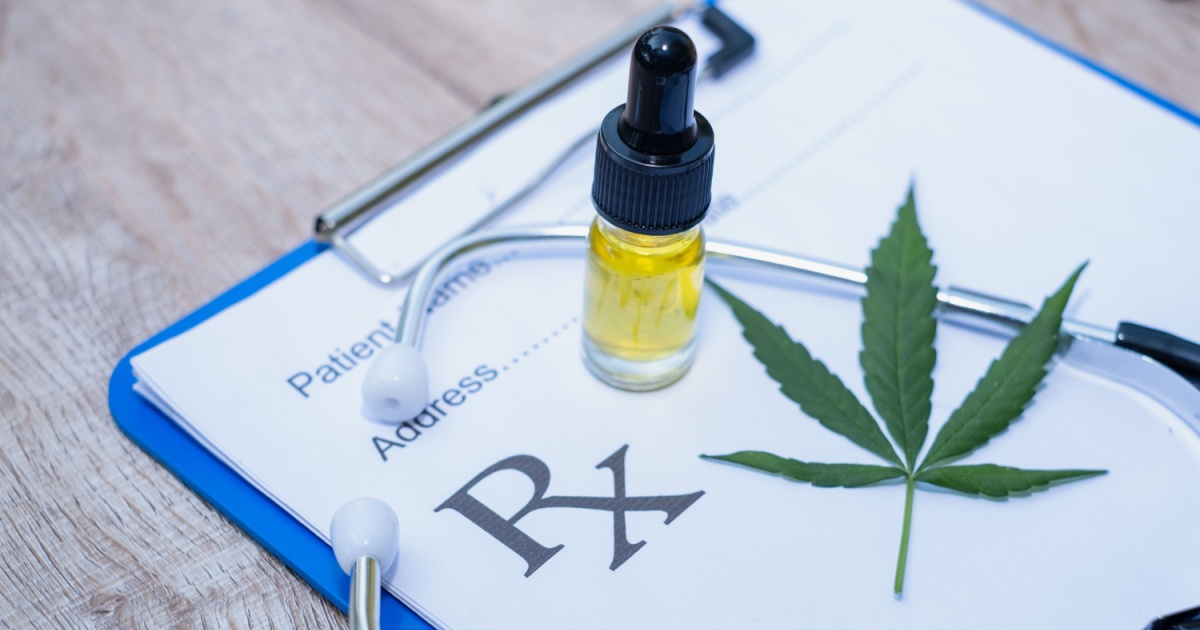

For a moment, picture something that would have seemed completely implausible five years ago: a Medicare patient walking out of their doctor’s office with free CBD products, covered under a federal program. No out-of-pocket cost. No trip to a specialty dispensary. Just a physician, a recommendation, and a product that arrives as part of their regular care.
That scenario is now playing out across parts of the United States, and it signals a shift in American healthcare that most people haven’t fully absorbed yet. Something that has long existed in the grey zone between wellness trend and clinical tool is slowly, carefully being pulled into the mainstream – not with fanfare, but through the deliberate machinery of federal policy.
The story of how this happened involves executive orders, billionaire advocates, a celebrity doctor running one of the country’s biggest federal agencies, and a patient population that was quietly already using CBD at rates that caught policymakers off guard. What’s happening right now is not just news about supplements. It’s a window into how health policy actually gets made.
What the Program Actually Is
As of April 1, 2026, some Medicare patients are able to receive hemp-derived CBD products at no cost through a new federal pilot program – the first time the federal government has offered anything resembling Medicare CBD coverage. The program operates under the name the Substance Access Beneficiary Engagement Incentive, or BEI, and it functions quite differently from standard Medicare drug coverage.
Participating healthcare organizations can furnish hemp-derived CBD products worth up to $500 per year to eligible Medicare beneficiaries at no cost to the patient. But there’s a critical detail that separates this from how most people imagine insurance coverage working. The federal government does not pay for these products with public tax dollars or through monthly premiums paid by seniors. Instead, the participating healthcare organizations use their own internal budgets to provide eligible patients with these wellness benefits.
A qualified physician affiliated with the organization must furnish the products, and patients cannot buy retail CBD and seek reimbursement. This is not a voucher system. The product comes directly from the clinical relationship, during care.
All products require third-party testing for potency, contaminants, and microbial hazards. Based on the published rules, only orally administered products – such as tinctures, capsules, and oils – are eligible. The pilot excludes inhalable products, and all eligible items must contain no more than 3 milligrams of total THC per serving.
Who Qualifies – and Who Doesn’t
The most important thing for Medicare patients to understand right now is that this program is narrow by design. Only a small subset of Medicare recipients – those who participate in a type of healthcare network called an accountable care organization (ACO) – will initially be eligible for the benefit.
To qualify, a patient must be enrolled in Medicare (either Original Medicare or Medicare Advantage), have a doctor who belongs to a participating organization under ACO REACH, the Enhancing Oncology Model, or the LEAD Model, and that organization must have specifically elected the CBD benefit – not all participating organizations have done so.
ACO REACH and Enhancing Oncology Model participants could begin receiving the benefit as early as April 1, 2026, while LEAD Model participants won’t start until January 1, 2027.
So far, just five large groups have been approved to offer CBD, though by January the benefit is set to be offered to patients in all 74 ACO groups. The participating organizations have providers across an array of states, including Oklahoma, Texas, Wisconsin, West Virginia, and Arizona.
Currently, only patients affiliated with programs in New York and Florida have begun receiving CBD products, according to a spokesperson for the Centers for Medicare and Medicaid Services.
If you’re unsure whether your doctor’s practice is part of a qualifying network, the most direct step is to ask them. Start by asking your doctor whether their practice belongs to an ACO REACH organization, the Enhancing Oncology Model, or the LEAD Model – and then ask specifically if they’ve signed up for the Substance Access BEI benefit.
How This Policy Came to Be
The push to integrate CBD into federally funded healthcare began in December 2025 when President Trump signed Executive Order 14370, “Increasing Medical Marijuana and Cannabidiol Research,” which laid the groundwork by directing federal agencies to expand research and explore pathways for improving access to full-spectrum CBD products.
The initiative didn’t start with a clinical breakthrough. Howard Kessler, a Palm Beach billionaire and Trump ally, founded The Commonwealth Project in 2019 and leveraged personal ties to the president to press for cannabis reform. After HHS Secretary Robert F. Kennedy Jr. met with Kessler, CMS moved to authorize CBD coverage – and Kennedy said at the December 2025 signing ceremony that the program wouldn’t exist without Kessler’s advocacy.
CMS Administrator Mehmet Oz spoke about the initiative at the signing ceremony, stating that for the first time within Medicare, doctors would be able to recommend hemp-derived CBD for patients – particularly those with cancer and significant pain. Oz noted that surveys show a majority of seniors who take CBD for pain management find it beneficial, and that the White House wants to make it easier for patients to access this at no charge.
On the same day the BEI launched, FDA Commissioner Marty Makary issued a memo stating the agency “does not intend to enforce” certain provisions of the Federal Food, Drug, and Cosmetic Act against orally administered, hemp-derived CBD products, provided those products meet specific safety and labeling standards. That regulatory two-step – CMS opening the door, FDA choosing not to stand in the way – is what made the April 1 launch possible.
The Science Behind the Benefit
Patients and doctors weighing this program naturally want to know one thing above all: does it actually work?
According to the White House executive order, one in five U.S. adults and nearly 15 percent of seniors reported using CBD in the past year, and chronic pain patients have reported improvements with CBD use in clinical studies. That’s a significant slice of the senior population already self-directing their own care with these products.
A 2024 study published in Clinical Gerontologist found that 14.3% of patients 65 and older had used CBD products in the past year. That usage isn’t random – older adults are reaching for these products for recognizable reasons. CBD products are frequently used to treat pain, anxiety, and sleep disorders – conditions that disproportionately affect older adults.
The clinical picture, though, is more complicated than the political one. A 2026 study reported by NORML found that CBD-dominant extracts were assessed against dronabinol in matched cohorts of 484 elderly patients aged 65 or older with chronic or refractory pain. Both treatments were associated with clinically relevant improvements in pain, sleep, quality of life, and psychological well-being – but patients consuming plant-derived extracts showed greater overall levels of improvement.
At the same time, a review published noted that the literature demonstrates mixed results on the efficacy of CBD in relieving pain in older adults, with inconsistency in labeling of over-the-counter CBD products creating safety issues, and significant gaps in knowledge regarding safety and efficacy in older adults requiring further research.
The honest summary: real-world use by seniors suggests meaningful benefit for some, particularly for pain and sleep. Rigorous randomized controlled trial evidence specifically on older adults remains thin. This is part of why the pilot program exists – the aim is to gather evidence showing whether CBD can improve patients’ quality of life and, by extension, reduce healthcare costs.
The Medical Concerns Doctors Are Raising
Many doctors worry about encouraging the use of unapproved supplements to geriatric patients, who typically have multiple medical conditions and already take many medications, some of which could interact with CBD to a detrimental effect. Still, their concerns would be eased somewhat if patients collaborated with doctors on appropriate dosing, which is another stated goal of the government initiative.
Drug interactions are the central concern. Blood thinners combined with CBD create the most serious interaction concerns. Patients taking warfarin, heparin, or newer anticoagulants may experience dangerous bleeding episodes, excessive bruising, or prolonged bleeding from minor cuts. Many older adults are on exactly these medications. CBD interacts with warfarin by inhibiting the cytochrome P450 enzyme CYP2C9, which is primarily responsible for metabolizing warfarin. This inhibition slows down warfarin’s breakdown, leading to increased levels in the blood and amplifying its anticoagulant effects – raising the risk of bleeding complications.
Heart medications combined with CBD may also cause unpredictable blood pressure fluctuations. Calcium channel blockers and beta-blockers can become overly potent when CBD slows their metabolism, potentially leading to dangerous drops in blood pressure or heart rate.
The structure of the BEI program is designed to address some of these concerns directly. Because products must be physician-directed rather than self-purchased, there’s built-in clinical oversight that doesn’t exist when someone buys CBD off a store shelf. That’s a meaningful safeguard – though not a complete one.
The Regulatory Wrinkle That Could Complicate Everything
A complication looms on the horizon: a provision in federal agriculture law expected to take effect in November 2026 caps THC at 0.4 milligrams per container, while the CMS CBD program allows 3 milligrams per serving. Unless Congress amends the law or creates an exemption, most products eligible under the pilot may become federally noncompliant.
The American Council on Science and Health notes that even as CMS crafts a pathway for Medicare coverage of legal CBD, Congress has advanced a looming federal hemp restriction that could make most CBD products illegal in short order. The core problem is that the proposed restriction would ban hemp products containing even trace amounts of THC or other cannabinoids. Most commercially available CBD products are not chemically pure – they include small amounts of other cannabinoids because they are full-spectrum extracts. Advocates argue that the new definition would make compliant CBD production “next to impossible.”
CMS has acknowledged this possibility and indicated that program requirements will be updated as federal law evolves. For now, the program is running – but the regulatory landscape around it remains genuinely unsettled.
What This Means for You
If you’re a Medicare patient, the first practical step is checking whether your physician’s practice is part of a qualifying ACO. Many doctors are not yet aware of this program – you can mention it by name as the Substance Access BEI program, part of the CMS Innovation Center, and share the link to innovation.cms.gov. A proactive conversation with your care team is the only way to find out if you qualify.
If you are eligible, this benefit is meaningful. Under the program, participating healthcare organizations – not Medicare – furnish CBD products at their own expense, up to $500 per beneficiary per year. For a senior who has been buying CBD out of pocket for pain or sleep issues, that’s real money.
What this program is not, however, is a green light to start using CBD without medical supervision. The drug interaction risks are real, especially for older adults managing multiple conditions. Whether or not your doctor is part of a qualifying ACO, anyone on blood thinners, heart medications, or seizure drugs should have an explicit conversation before starting CBD. The oversight built into this program – physician direction, third-party testing, documented decision-making – is a feature worth taking seriously, not a bureaucratic hurdle. If free CBD eventually comes to your doctor’s office, get it through that channel. Don’t self-dose while waiting for the paperwork.
Read More: Two Cannabis Compounds Show Great Potential for Reversing Fatty Liver, Study
The Bigger Picture
This pilot program is, by any honest measure, an experiment – in both the clinical and policy senses of the word. The federal government is betting that real-world data gathered from Medicare patients will answer questions that years of limited clinical trials have not. If the data shows that physician-directed CBD use improves quality of life and reduces expensive downstream care – fewer emergency visits, lower opioid prescriptions, better sleep and pain management – the program is likely to expand. If it doesn’t, or if safety signals emerge, it will contract or disappear.
That tension is worth sitting with. The same political machinery that moved this program forward in under a year could just as easily move against it. The regulatory conflict with the November 2026 hemp law is real and unresolved. The science, while promising in some areas, remains incomplete. And the doctors raising concerns about drug interactions are not wrong to raise them – they’re describing a real risk that exists for a meaningful share of the senior population.
What separates this moment from the CBD hype of five years ago is the infrastructure around it. Products must be third-party tested. Physicians must be involved. Dosing must be tracked. That’s not a perfect system, but it’s a more rigorous one than what exists at any supplement counter in the country. For Medicare patients who qualify, the conversation with your doctor is worth having – informed, specific, and with your full medication list in hand.
Disclaimer: This information is not intended to be a substitute for professional financial advice, investment advice, tax advice, or legal advice, and is provided for informational purposes only. Always seek the guidance of a qualified financial advisor, accountant, or other licensed professional regarding your personal financial situation or investment decisions. Do not make financial, investment, or tax decisions based solely on information presented here. Past performance is not indicative of future results, and all investments carry risk, including the potential loss of principal.
AI Disclaimer: This article was created with the assistance of AI tools and reviewed by a human editor.
Read More: New Analyses Suggest Cannabis Offers No Proven Relief for Anxiety, Depression