
What comes to mind when you think of the Sahara Desert? Today, the Sahara is a harsh environment where survival can be extremely challenging. However, it was not always this way, and once it was flourishing with life, including ancient human populations, such as the Takarkori. Recently, two 7,000-year-old Takarkori mummies were found to be from a group whose ancestry was previously unknown. In fact, DNA analysis of these mummies did not reveal any of the anticipated Sub-Saharan genes. It was further discovered that these Takarkori mummies were more closely related to North African peoples who had long before diverged from the Sub-Saharan populations. Let’s find out why these mummies have different DNA from what was expected.
The Discovery of Mummies with Different DNA
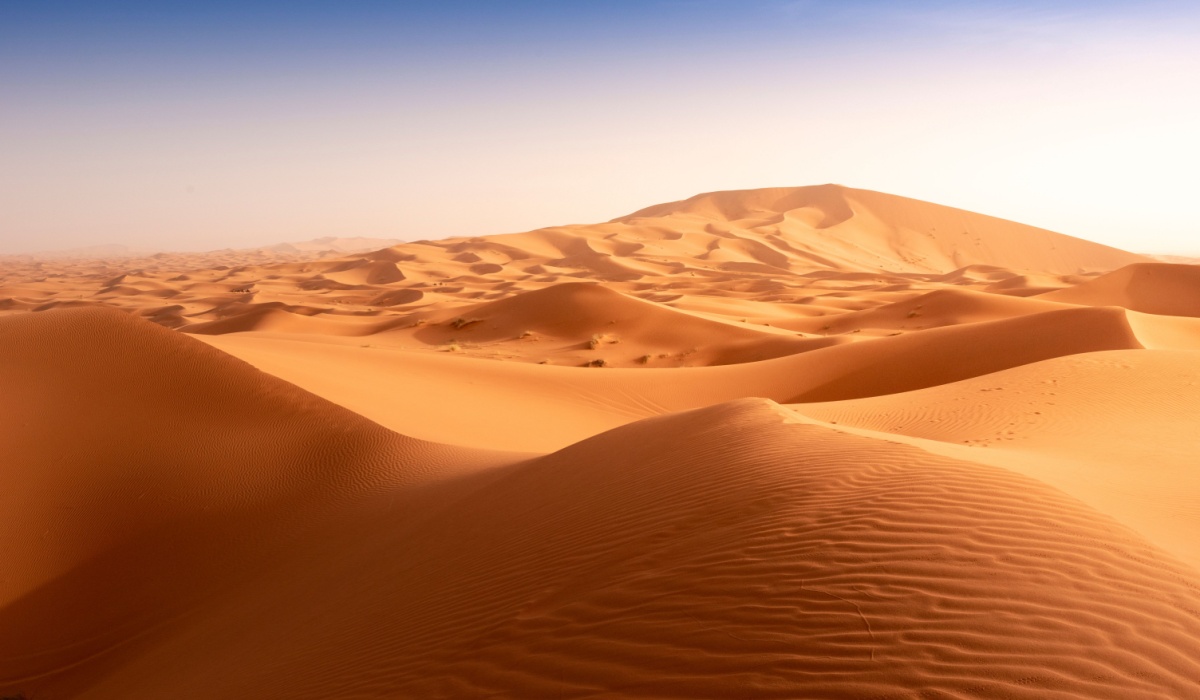
Today, the Sahara Desert is considered one of the driest places on the planet. However, during the African Humid Period (around 14,800 to 5,500 years ago), there was enough water present to sustain life and create a savannah-like environment. Among the human populations who moved there to take advantage of these ideal conditions was a group that lived in an area now called southwestern Libya. While it was expected that these people were genetically Sub-Saharan, it turns out that this was not true. A team of researchers from the Max Planck Institute for Evolutionary Anthropology examined the genes of two mummies that had been naturally preserved.
The mummies were from a group of Neolithic female herders who had been found at the Takarkori rock shelter. Ancient human life in the Sahara has remained a mystery due to the fact that genetic material does not typically preserve well in arid conditions. However, when it came to the two 7,000-year-old mummies, they found that there were enough DNA fragments to provide us with some new insights. As repoted by Popular Mechanics, the researchers noted that “The majority of Takarkori individuals’ ancestry stems from a previously unknown North African genetic lineage that diverged from sub-Saharan African lineages around the same time as present-day humans outside Africa and remained isolated throughout most of its existence.”
The Unexpected Genetic Lineage
They also found that these individuals were closely related to 15,000-year-old individuals discovered at Taforalt Cave in Morocco. Lineages from both of these groups were similarly distanced genetically from the Sub-Saharan groups alive during that time. To the researchers, this seems to suggest that gene flow between Northern and Sub-Saharan Africa was rare. Furthermore, the individuals from Taforalt Cave in Morocco have half the amount of Neanderthal genes as non-Africans. Meanwhile, the Takarkori people were found to have ten times less than non-Africans, yet still more than the other sub-Saharan peoples.
So while the Takarkori seem to have had less contact with Neanderthals than the individuals from the Taforalt Cave, it was still more than the other groups in the region. The researchers also noted that there were some traces of genetic evidence that there was some breeding with individuals from the Levant. However, other than that, they seem to be largely isolated and distinct from other populations in Sub-Saharan Africa. It was previously believed that farming practices spread throughout the region due to migrations. However, according to the research team, “Our findings suggest that pastoralism spread through cultural diffusion into a deeply divergent, isolated North African lineage that had probably been widespread in Northern Africa during the late Pleistocene epoch.”
The team believes that the Takarkori people inherited their genes from a group of hunter-gatherers that existed before the advent of farming or animal domestication. The group made tools of bone and wood and even manufactured baskets and pottery. They also appear to have resided in the same place for long periods. They may have remained isolated due to the environment at the time. The lakes, rivers, mountains, and wetlands may have made it difficult for them to make contact with surrounding peoples and lands.
The Bottom Line
As it turns out, the Sahara wasn’t always empty. In fact, it was once home to a unique and fascinating chapter of humanity we’re only now beginning to understand. This includes a North African lineage that split from sub-Saharan ancestors roughly when people outside Africa diverged. Interestingly, this group has more Neanderthal DNA than other surrounding peoples in the same region, yet less than those in Morocco. Who knows how many other mummies are yet to be discovered, further filling in the missing genetic pieces of the peoples of the past? More ancient DNA from these Saharan sites could reveal how widespread this lineage was and how climate changes helped steer human history across the continent.
Read More: Mummified Girl Appears to Blink After a Century in Her Coffin