

NASA’s astronomers have recently discovered a ‘quasi-moon’ orbiting within Earth’s orbital neighbourhood. This quasi-moon spotted in 2025 is an asteroid and not the first celestial object to be bestowed this title. The name ‘quasi-moon’ is given to these celestial objects due to their behavioral characteristics, mimicking our actual moon. This quasi-moon does not orbit Earth in the traditional sense like our moon. Instead, it orbits the sun in a synchronized path alongside our pale blue dot.
Astronomers in Hawaii initially discovered the celestial body in August 2025. The asteroid was officially identified by astronomers as 2025 PN7. It is speculated that 2025 PN7 has been in our solar neighbourhood for about 60 years and estimate it will remain until approximately 2083. SImilarily to Earth’s orbital trajectory, 2025 PN7 also takes about a year to orbit around our sun.
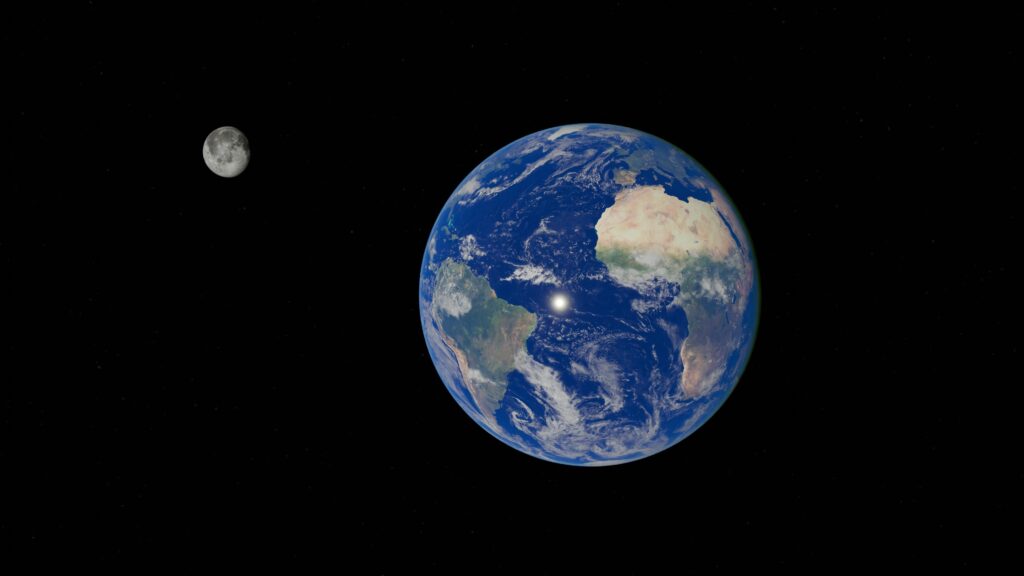
While 2025 PN7 comes fairly close to Earth, it poses no threat to our planet. Astronomers are still trying to determine 2025 PN7’s size although it is incredibly small in size. Its small size is why it managed to evade detection for over 6 decades. According to NASA, 2025 PN7 is 238,855 miles (384,400 kms) away from our planet, where our moon is located about 239,000 miles away. Due to the asteroid’s incredibly small size, 2025 PN7 will not be observable in the night sky with the naked eye or home telescopes.
The Discovery and Observations of 2025 PN7
Researchers working at the Pan-STARRS observatory situated on the Haleakala volcano in Hawaii detected the presence of 2025 PN7 on August 29, 2025. The powerful telescope captured detailed images of the asteroid. According to archival data, 2025 PN7 had been following Earth’s orbital trajectory closely for decades. The asteroid actually appeared in photographs dating back to 2014 already discovered. This meant 2025 PN7 had successfully evaded detection by astronomers for nearly 11 years. Scientists carefully analyzed the asteroid’s complex trajectory and confirmed its quasi-satellite status officially.
De la Fuente Marcos, who recently authored a paper on 2025 PN7, believes that the asteroid originates from the Arjuna asteroid belt. The Arjuna asteroid family is not a distinct ‘belt’ like the asteroid belt located between Mars and Jupiter. Rather, it is a cluster of space debris that has orbital patterns similar to those of Earth. Members of this group orbit the Sun with periods very close to 1 year.
2025 PN7 shifts between 2 distinct orbital patterns around Earth over time. First, it maintains a closer, more circular orbit resembling Earth’s own orbital pattern. Second, it enters a horseshoe orbit similar to other quasi-moons that have orbited the Earth. The asteroid can reach a distance of 185 million miles during its horseshoe orbital phase. Scientists expect this quasi-moon to remain in its current near-Earth orbit for approximately 60 years before the sun’s gravitational pull gradually shifts it into a horseshoe orbit.
Size, Physical Characteristics, and Composition
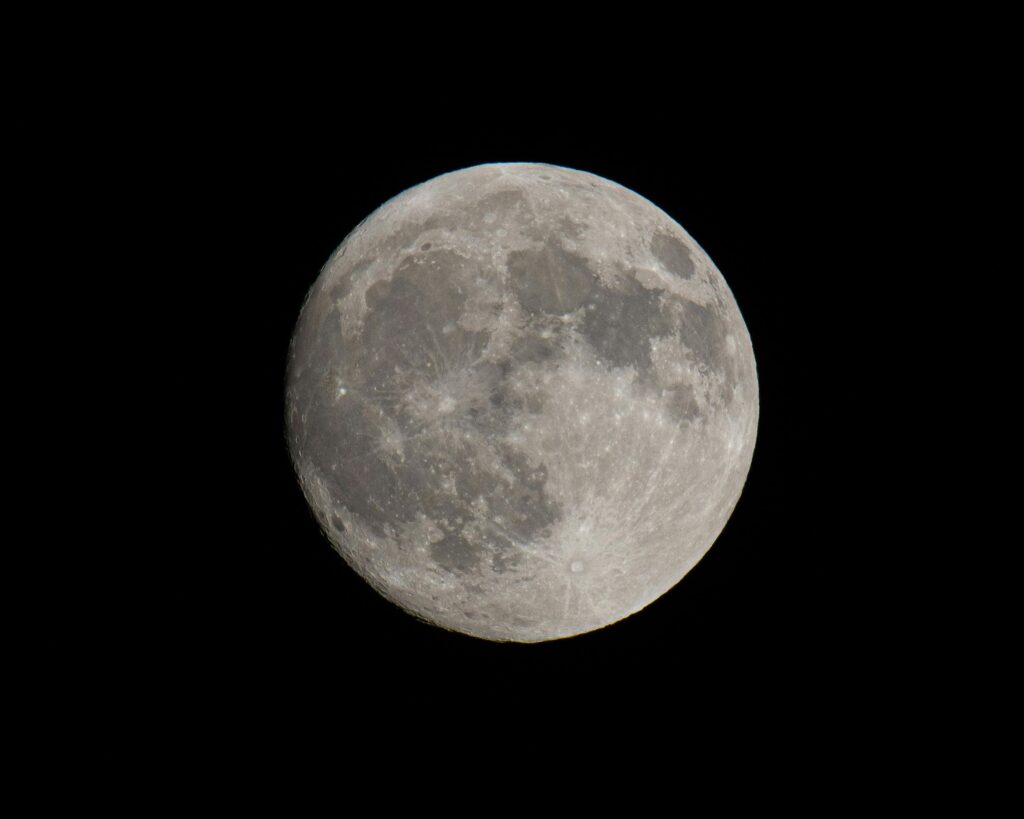
The newly discovered quasi-moon currently stands as the smallest known quasi-moon to visit our orbital neighbourhood. According to Carlos de la Fuente Marcos, a mathematical sciences researcher at Complutense University of Madrid, 98 feet would be a reasonable estimate. According to EarthSky, the asteroid could potentially be 62 feet in diameter. The asteroid pales in comparison to our moon, which has a diameter of 2,159 miles.
The asteroid’s small size makes it extremely faint and difficult to observe. This celestial object cannot be observed by regular optical telescopes. Only highly specialized telescopes would be able to view this object due to its relatively small size and exceptional faintness. This also explains why astronomers completely missed it for decades.
The composition of 2025 PN7 currently remains unknown. Scientists have ruled out artificial debris or discarded spacecraft as possible explanations here. Dr. Teddy Kareta is an assistant professor of astrophysics and planetary science at Villanova University, wrote in an email: “Based on what little we know so far, it’s almost certainly a rock and natural object – sometimes old satellites and rocket junk end up in these very-near-Earth kinds of orbits, but we can often tell ‘natural’ (e.g. asteroidal) from ‘artificial’ (e.g. satellite) based on how their orbits evolve on short timescales.”
Some astronomers speculate it could be a fragment of the moon like Kamoʻoalewa, another quasi-moon from the Arjuna asteroid family. However, more data is needed to confirm this speculation. Most astronomers estimate 2025 PN7 likely consists primarily of rocky, natural materials and minerals. Others suggest it might be a captured fragment from a larger asteroid or comet. Future missions and detailed observations might eventually reveal the asteroid’s true composition. These findings would contribute significantly to solar system knowledge and asteroid science generally. Understanding asteroid composition helps scientists predict behavior and evaluate exploration opportunities precisely.
Orbital Dynamics and Distance Relationships
The distance between Earth and 2025 PN7 varies remarkably and significantly throughout its cycle. At its closest approach to our planet, the asteroid comes within roughly 2.5 million miles from Earth. In direct comparison, Earth’s Moon orbits at an average distance of 238,600 miles.
This means 2025 PN7 remains far beyond the Moon’s established orbital zone. At its farthest point from Earth, the asteroid can drift nearly 11 million miles away. During its distinctive horseshoe-shaped orbital pattern, it occasionally travels even greater distances away.
The asteroid’s distance from Earth fluctuates considerably due to gravitational pulls from various celestial sources. The primary gravitational influence exerted on the asteroid comes from the sun. The sun’s gravitational influence will ultimately tug 2025 PN7 into a horseshoe orbit in roughly 60 years. Earth’s gravity has some influence on the asteroid’s trajectory but other planets’ gravitational influence is minimal to negligible.
Horseshoe orbits are a particular type of co-orbital pattern where the object does not maintain close proximity to Earth constantly. Instead, it oscillates between leading and trailing Earth in its path around the sun. The asteroid traces what astronomers call a retrograde loop when viewed from Earth.
This creates an unusual figure-eight pattern across the cosmic landscape when plotted carefully. Scientists use advanced mathematical models to predict the asteroid’s location many years forward. These predictions help researchers plan future space missions to potential target objects precisely. Orbital mechanics remains one of humanity’s most sophisticated scientific fields studied today.
Comparing Quasi-Moons to Mini-Moons and Other Objects
Quasi-moons differ from mini-moons, as mini-moons temporarily orbit near our planet where quasi-moons are long-term celestial visitors. Mini-moons are briefly trapped and held by Earth’s gravitational pull. They orbit Earth directly for relatively short periods ranging from weeks to several months. Then these objects escape back into independent solar orbits around the Sun afterward. Mini-moons typically measure only a few meters across at most in general. The asteroid 2024 PT5, discovered in 2024, is an example of a mini-moon. It orbited around Earth for 2 months in 2024 before leaving the Earth’s orbital neighbourhood.
A quasi-moon represents a special classification within a larger group of space objects. Unlike mini-moons, quasi-moons orbit the Sun rather than Earth directly around it. They maintain remarkable long-term proximity to our planet through synchronized orbital resonance. Quasi-moons can remain in this trajectory for hundreds or thousands of years. Their greater stability makes them valuable targets for future space exploration missions generally. Scientists can plan missions to quasi-moons with significantly greater confidence than mini-moons. This increased stability contrasts sharply with the unpredictable nature of mini-moons generally.
Other Known Quasi-Satellites of Earth and Their Research Value
2025 PN7 is just one of several known quasi-moons that orbit near Earth. The European Space Agency has documented 7 quasi-satellites operating near Earth currently. Most notably, the discovery of Kamo’oalewa, which is thought to be an ancient lunar fragment. Astronomers first discovered Kamo’alewa back in 2016 using the Pan-STARRS telescope. Scientists derived the name for the asteroid from a Hawaiian creation chant that alludes to offspring leaving on their own. Kamo’alewa may have originated from the famous Giordano Bruno crater on the Moon.
China’s ambitious Tianwen-2 mission is currently traveling to collect detailed samples from Kamo’alewa. The mission ultimately aims to return collected materials safely back to Earth by 2027. Other confirmed quasi-satellites include Cardea, object 277810, 2013 LX28, 2014 OL339, and 2023 FW13. Each identified object follows a slightly different and unique orbital path around the sun.
Some are noticeably larger than 2025 PN7, while others are considerably smaller objects. Together, these quasi-satellites provide astronomers with multiple research opportunities and observation targets for future studies. Scientists can compare the characteristics of different quasi-satellites to understand their origins better.
This comparative analysis helps establish patterns about how these objects form and evolve. Some quasi-satellites may have originated from the asteroid belt between Mars and Jupiter. Others might have been captured from comets or other small bodies in space. The diversity of quasi-satellites suggests various formation processes operate in the solar system.
Understanding these processes helps scientists predict where future quasi-satellites might be located. Each discovery provides valuable clues about solar system formation and dynamics.
Timeline and Future Events for 2025 PN7
NASA estimates the object has already orbited near Earth for approximately 6 decades and is expected to continue its trajectory for another 6 decades. Astronomers project that 2025 PN7 will eventually break free around the year 2083, when the sun’s gravitational pull changes its orbit.
This gives our planet roughly 126 years more with this our celestial companion. After this predicted period ends, gravitational interactions will fundamentally alter its orbital trajectory. The Sun’s immense gravitational pull will increasingly dominate over Earth’s comparatively weaker influence. Other planets in our solar system may also contribute significantly to orbital perturbations.
These combined forces will cause 2025 PN7 to transition gradually from quasi-satellite patterns. Eventually, it will likely enter a horseshoe orbital pattern instead. Experts predict 2025 PN7 will gradually begin drifting away after 2083 approaches completion. The quasi-moon will not suddenly disappear or undergo catastrophic orbital changes instantaneously.
Instead, subtle gravitational forces will slowly modify its orbital characteristics over many years. The Sun’s gravity will gradually increase in influence as Earth’s decreases proportionally. Other planetary bodies may also contribute significantly to this gradual orbital evolution process. Scientists believe 2025 PN7 will transition into either a horseshoe or a Trojan orbit.
These alternative orbital configurations involve different relationships between Earth and the asteroid entirely. In a horseshoe orbit, the asteroid would oscillate between leading and trailing Earth. In a trojan orbit, it would remain consistently ahead or behind Earth’s position. Either way, it would no longer be classified as a quasi-satellite of Earth.
Read More: The Emotional Story Behind the Moon Plaque Honoring 14 Astronauts
Scientific Significance and Research Opportunities Ahead
The discovery of 2025 PN7 carries tremendous significance for ongoing astronomical research programs worldwide. This small object provides scientists with a natural laboratory situated directly in space. Researchers can actively study orbital mechanics and complicated gravitational interactions using this object. The quasi-moon’s measurable behavior tests and validates theoretical models of celestial mechanics.
Its complex trajectory helps validate computer simulations of orbital dynamics and perturbations overall. Scientists gain valuable insights into the near-Earth object population distribution and characteristics generally. Understanding quasi-satellites improves planetary defense strategies and impact prediction methods significantly overall. These small objects might contain valuable information about our solar system’s ancient history.
Some quasi-moons may be fragments originating from the Moon or other planets entirely. Studying their composition carefully reveals details about early solar system formation processes overall. 2025 PN7’s extremely small size substantially expands scientific knowledge about asteroid distribution patterns. The discovery suggests no minimum size requirement exists for quasi-satellite status officially.
Even tiny objects can apparently maintain quasi-satellite status for extended time periods overall. Future space missions might target 2025 PN7 for closer and more detailed study. These objects offer significant advantages compared to traveling to distant asteroids elsewhere entirely. Their accessibility combined with proximity makes exploration considerably more cost-effective overall.
Spacecraft could travel to this specific object using substantially less fuel than alternatives. Once spacecraft reach the object, robotic instruments could analyze asteroid composition very directly. Scientists could collect samples and conduct experiments impossible to perform from Earth safely. These opportunities make quasi-satellites exceptionally prime targets for international space exploration programs. NASA, ESA, and other agencies are developing missions to study similar objects today.
Addressing Common Misconceptions and Final Thoughts
Earth maintains only 1 true and natural satellite: our familiar Moon that we see. A true moon orbits a planet due to gravitational binding forces at work. Earth’s primary Moon has orbited our planet for billions of years consistently throughout history. This permanent relationship will likely continue uninterrupted for many more billions of years. A quasi-moon differs fundamentally from a true moon in essentially every possible way.
Quasi-moons orbit the Sun, not their companion planet in a direct manner. They remain relatively close through orbital resonance but lack true gravitational binding entirely. No threat whatsoever exists that 2025 PN7 will crash into Earth or the Moon. The asteroid maintains a stable and completely predictable orbital path, always moving forward.
Gravitational calculations guarantee that no collision risk exists in the foreseeable future. Scientists can confidently predict this object’s location decades into the future with precision. The discovery of 2025 PN7 reminds humanity of how much we still have to learn. Our solar system remains filled with surprising discoveries waiting to be made today.
Advanced technology allows us to detect objects previously invisible to human observers completely. This quasi-moon will remain Earth’s companion for only a brief cosmic moment overall. Within one hundred years, it will depart on its own orbital journey elsewhere eventually. During its stay, however, it always offers researchers invaluable opportunities for scientific study.
2025 PN7 shows how dynamic and constantly changing our local neighborhood space is. The asteroid’s presence challenges our understanding of orbital mechanics and asteroid behavior patterns. Future missions and observations will undoubtedly reveal additional fascinating details about this object. Our exploration of quasi-moons contributes to broader knowledge of planetary systems worldwide. As we continue searching the skies, more surprises undoubtedly await discovery in space. 2025 PN7 represents one of many cosmic wonders that populate our universe everywhere.
Disclaimer: This article was created with AI assistance and edited by a human for accuracy and clarity.
Read More: ‘Alien Ship’ Headed for Earth? Expert Claims It’s Time to Brace for Imminent Arrival