

Let’s be real, the discovery of the interstellar comet 3I/ATLAS was pretty exciting on its own. But then headlines started appearing that suggested that it could perhaps be more than just a comet. One man in particular, Avi Loeb, suggested that while it may not be a spacecraft, there was a chance that the object was not naturally formed. If it were a spacecraft, however, there was a certain point in its journey that would be the most fuel-efficient if it wanted to change course and head for Earth. That date was the 29th of October, 2025. So, what happened? Well, while that date has passed, we would only see the effect of any hypothetical change in course in the next few months, as detailed in Space.com’s coverage of the comet. Let’s find out what Loeb’s hypothetical scenario entails and how it sizes up to what the authorities in astronomy have to say.
Loeb’s hypothesis about 3I/ATLAS
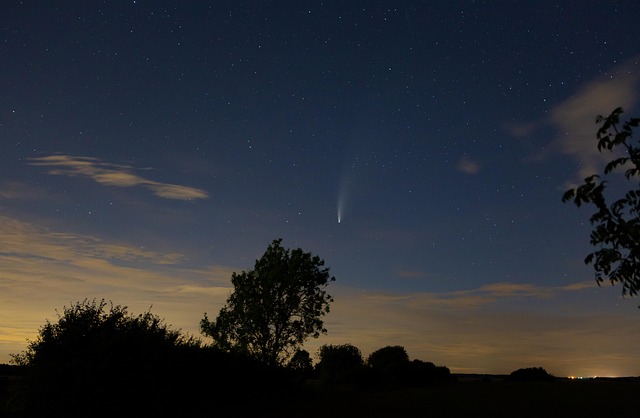
So, why would anyone pay any attention to what Avi Loeb says, the man who floated the bold hypothesis about 3I/ATLAS? Well, for one, Loeb is a Harvard astrophysicist. It’s also important to understand that he is not saying that aliens are going to land, but rather that if the object were hypothetically a spacecraft, then now would be the time to watch carefully for certain signs. This is based on his probabilistic claim that the object might not be naturally formed. Avi Loeb suggests a 30% to 40% scenario where the object was not a ‘naturally formed’ object.” That specific figure appeared alongside his larger argument about testing hypothetical ideas with observations at particular moments in the orbit. Loeb pointed to a set of perceived anomalies that, in his view, deserve attention.
He noted reports of a developing tail and an anti-tail, which can arise naturally yet can also result in much speculation. He also emphasized the value of a specific window when physics gives a spacecraft the biggest “bang” for its fuel. Loeb explained that a burn at the highest speed is most efficient, a principle known as the Oberth effect. “As a result of this so-called Oberth effect, it is most energy-efficient for a spacecraft engine to burn its fuel when its orbital velocity is greatest,” he said.
He then sketched what a non-natural scenario could look like in practice. He stated that, “If 3I/ATLAS is a massive mothership, it will likely continue along its original gravitational path… [and] the Oberth manoeuvre might apply to the mini-probes it releases at perihelion.” So, he is essentially saying that a key indicator to look out for would be a change in direction or a release of “mini-probes” near the closest approach to the Sun. That specific point would be the perfect moment the Oberth effect would make sense for any hypothetical engine or deployment.
The Perihelion
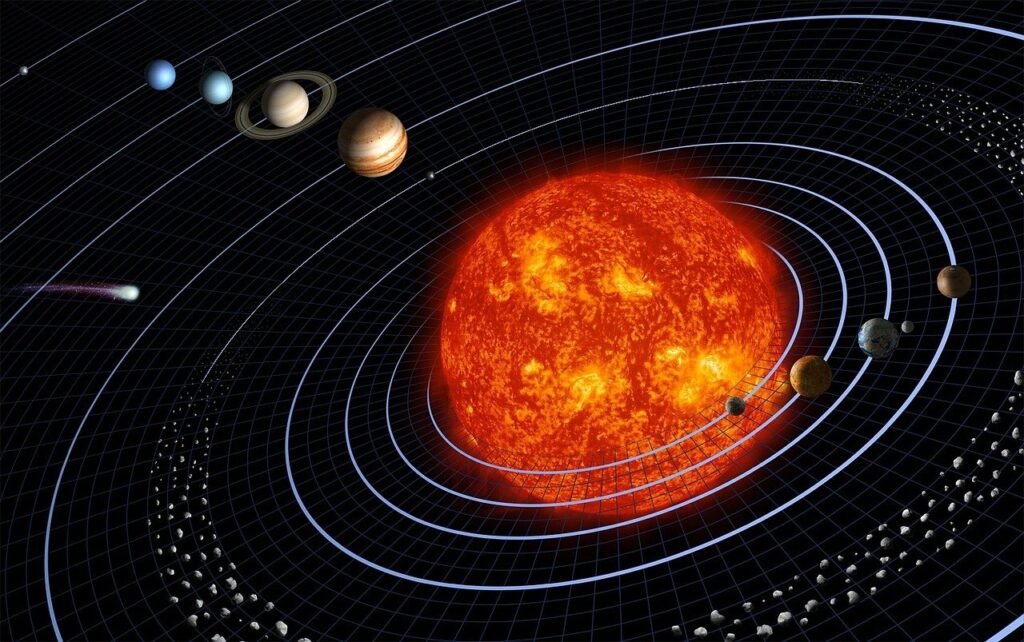
Loeb singled out perihelion as the ideal test window for his hypothesis. He even used a memorable line about timing. “If you want to take a vacation, take it before October 29, because who knows what will happen?” he told Mayim Bialik in an interview. This was in reference to his hypothesis that if 3I/ATLAS were a craft, perihelion would be the most efficient time for a maneuver or probe release. You see, that claim ties directly to standard orbital mechanics. Perihelion for 3I/ATLAS occurred around the 29th to 30th of October, 2025, at roughly 1.35 to 1.4 astronomical units from the Sun. That distance is about 125 to 130 million miles. NASA documentation and careful reporting place the timing and geometry in that range, which set the stage for a clear observational checkpoint.
Therefore, if anything non-gravitational happened, observers expected to see it in the days around that date. There is a good reason why scientists care so much about this moment. Comets often outgas more near perihelion, which can change the coma and tails. That is normal physics and not evidence of control. However, Loeb’s hypothesis suggested that a sharp, directed change might hint at something engineered. The practical steps involved watching the orbit behavior through and after the 29th, then comparing it with natural expectations. If the trajectory remains consistent and the activity looks comet-like, the hypothesis loses force.
No Immediate Confirmation
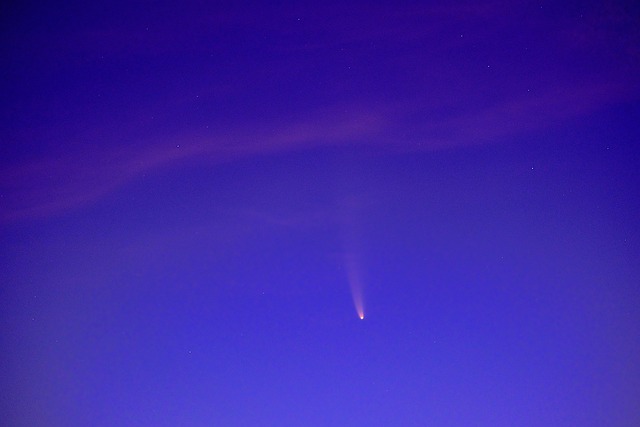
In his hypothetical situation, something significant would occur on the 29th (perihelion). This could be a release of probes or a controlled maneuver that would affect its future trajectory and potential observable actions in the following months, particularly around its closest approach to Earth in December. We would not actually be able to see any changes on the 29th itself, though. This is because right at perihelion, Earth was a poor vantage point. As Space.com put it, the comet was “hidden from view from Earth, flying behind the sun,” during the critical window. That is known as a solar conjunction. It buries targets in solar glare and places them too near the Sun in the sky for most telescopes. Therefore, even dramatic changes would have been hard to confirm in real time from the ground or from Earth-orbiting observatories. However, this does not mean the moment passed unobserved.
Spacecraft elsewhere had eyes on the scene. Mars orbiters watched 3I/ATLAS when it swept past the Red Planet in early October, offering a head start on its behavior. ESA also lined up its Jupiter Icy Moons Explorer, known as Juice, to view the comet just after perihelion from a different angle. That data cannot be downlinked until Juice changes its thermal configuration, which ESA says will be early 2026. Yet teams already knew where to look and what to measure. As it re-emerges from conjunction, the plan is straightforward. Observers compare the orbit before and after perihelion, looking for unexplained acceleration or a step-change in direction. They also track the coma, dust, and ion tails for expected evolution. Early summaries ahead of perihelion forecast a faint object for Earth observers when it returns to the morning sky. That means professional facilities and experienced amateurs will lead the checks. So far, the publicly discussed behavior remains consistent with a normal, interstellar comet passing through.
NASA’s Stance on 3I/ATLAS
NASA’s stance on this whole matter is pretty clear. 3I/ATLAS is an interstellar comet on a hyperbolic, one-pass trajectory that poses no threat to Earth. The object reached perihelion around the 30th of October, 2025, and it is now receding. Space agency explainers emphasize the large distances involved and the absence of a close approach to our planet. Therefore, while the comet is scientifically valuable, it does not pose any threat. Multiple reliable reports place the closest approach to Earth on the 19th of December, 2025, at roughly 1.8 astronomical units. That distance is about 167 to 170 million miles, which is very far in practical terms. Media coverage ahead of perihelion gave the same figure and timing while detailing the coordinated observing campaign across Mars orbiters and other spacecraft.
A consolidated orbit table, which draws on Minor Planet Center and JPL solutions, lists the same date and distance for the Earth miss. Together, those sources paint a consistent overall picture. NASA also stresses that any visibility for casual observers will be limited. Even post-perihelion, the comet is expected to remain faint from Earth’s line of sight. That means most people will not see anything without serious equipment. Scientists, however, will keep watching because interstellar comets carry chemistry from other stellar nurseries. As new data arrive from spacecraft and large telescopes, orbit and activity models will tighten further. If the motion stays on a gravity-only track, the non-natural hypothesis loses support. If analysts spot something unexpected, they will publish the numbers for others to test. That is how extraordinary claims are evaluated in practice.
So, What Is 3I/ATLAS?
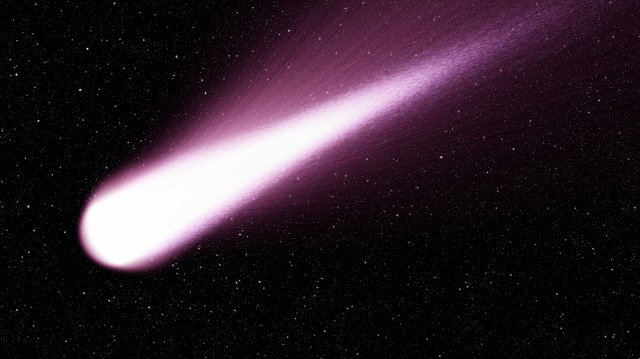
3I/ATLAS is an interstellar comet, not a periodic visitor from our own cloud. The International Astronomical Union’s Minor Planet Center assigned the dual designation 3I/ATLAS and C/2025 N1 once cometary activity was confirmed. That means astronomers saw a diffuse coma and tail, which signals outgassing ices. Its path is hyperbolic, so the Sun will not capture it for a return trip. Therefore, it is a one-pass traveler that will fade as it races away. NASA’s overview notes Hubble imaging and explains why scientists treat it as a comet of outside origin.
Those materials place their discovery in July 2025 by the ATLAS survey in Chile. The “interstellar” tag rests on careful orbit solutions gathered from many telescopes. The trajectory does not fit any bound solar family, and the speed is high for local debris. Public explainers describe its motion at about 60 kilometers per second. They also stress that the geometry never brings it close to Earth. That is why agencies called it scientifically exciting but operationally safe. The picture is consistent across primary sources and cautious reporting. Basically, a small, icy body from another stellar nursery is flaring under our Sun and then leaving. That is exactly what a natural interstellar comet should do.
What Do Scientists Hope to Learn?
Researchers want chemistry, dust physics, and clean comparisons with Borisov and local comets. Spectra can reveal water, carbon monoxide, and other drivers of activity near the Sun. Grain sizes in the dust influence how sunlight pushes the coma and tail. Those details help test models of how comets behave under different stellar histories. ESA’s Mars orbiters have already captured images, offering a close planetary vantage during the October approach. Teams will stack those datasets to boost faint signals and extract gas species. Scientists also want geometry that separates instrument quirks from real features.
ESA lined up further observations with Juice during its cruise. Space.com explained why the data will arrive later because the spacecraft must protect its hardware. NASA’s pages supply working images and observing notes that anchor magnitude trends and tail morphology. With multiple views, analysts can test for normal outgassing or any unexplained acceleration. The result could broaden our catalog of interstellar materials or confirm familiar physics in a new setting. Either outcome matters because it tests theories with fresh evidence.
How Observatories Test Claims
The best test involves observing the orbit. Astrometrists fit thousands of precise positions before and after perihelion. If the path stays consistent with gravity and standard outgassing, that supports a natural origin. If a step change appears without a physical driver, teams dig deeper. The Minor Planet Center collects those measurements and posts updated solutions for public checking. Independent groups can reproduce the fit using the same positions. That transparency is key when certain claims or theories turn towards the extraordinary.
Photometry and imaging also help add further context. Observers track total brightness and tail structure as the comet recedes. Coronagraphs help during solar-glare windows, and they have already caught the object near perihelion. Sky & Telescope documented detections in the CCOR-1 coronagraph on NOAA’s GOES-19. Those feeds show motion through the inner heliosphere when ground telescopes cannot point so near the Sun. After the conjunction, large facilities will look for any non-gravitational drift. Spacecraft and ground data together give a strong check on unusual behavior. If nothing odd appears, the engineered-craft hypothesis loses weight. If something weird persists, numbers will lead the debate.
What Happens Next?
From now through early 2026, the comet will dim as distance increases. Post-perihelion visibility for casual skywatchers will remain poor, which matches earlier expectations. Professional teams and experienced amateurs will carry most of the load. ESA has outlined its rapid response with Mars orbiters and ground stations. NASA continues to publish images and context pages that explain orbital configuration and observing status. Those sources are important because they prioritize measurements over what sensational headlines say.
Expect more orbit refinements as new data arrives, plus deeper reductions from Mars. Juice observations should downlink once the spacecraft changes configuration next year. Newsrooms will cover each milestone, but you can always check the primary postings first. For day-to-day checks, rely on NASA pages, ESA mission posts, and MPC circulars. Those pages give dates, magnitudes, and positions you can verify. Good science thrives on that kind of open ledger, and 3I/ATLAS is already benefiting from it.
Disclaimer: This article was created with AI assistance and edited by a human for accuracy and clarity.
Read More: NASA Detects Interstellar Object Passing Through Our Solar System