
Editor’s note (Nov 14, 9:30 a.m. ET): Air travel is still getting back on track this morning. More than 3,600 flights within, into or out of the U.S. were canceled on Saturday, according to FlightAware figures reported by The Washington Post. Transportation Secretary Sean Duffy said in a Saturday statement that operations are “slowly returning to normal” and that it is “safe to fly.” He also said travelers will keep seeing some delays and cancellations while airlines move planes and crews back into place. Duffy has said the outage started when old switches and routers in the air traffic control network got overloaded, and he said there is no evidence of a cyberattack. If your flight was canceled and you decide not to travel, you are owed a refund. Delta and United are offering travel waivers. Check your airline’s app or website before you leave for the airport. Sources: The Washington Post, Yahoo News, Los Angeles Times.
Editor’s note (Nov 13, 9:05 p.m. ET): The FAA lifted the nationwide ground stop shortly after 8 p.m. ET, and flights are taking off again. The stop lasted more than four hours. The FAA says the cause was a temporary telecommunications outage that hit air traffic control centers. Homeland Security says there is no sign of a cyberattack. Reuters, citing FlightRadar24, reports more than 4,700 flights were canceled and about 10,000 delayed on Friday, and about 700 were already canceled for Saturday. It may take days for airlines to get back on schedule. If your flight was canceled, check your airline’s app or website for rebooking and refund options. Sources: Reuters, AP.
As of 7:20 p.m. Eastern Time on Friday, November 13, 2026, a nationwide ground stop remains in effect at U.S. airports. The Federal Aviation Administration issued the order at 3:54 p.m. Eastern Time. A later FAA advisory, signed at 5:46 p.m. Eastern Time, said the Command Center ground stop remains in effect. It also said that as en route facilities recover, flights will be allowed to depart through coordination with the Air Traffic Control System Command Center.
The Air Traffic Control System Command Center advisory was blunt. It said the stop was “due to extraordinary circumstances and for reasons of safety”. It also said, “All airports are ground stopped”. Planes already in the air were allowed to continue and land. Inbound international flights are being handled case by case.
Nationwide ground stops are extremely rare. The last one was in January 2023, after a failure of the Notice to Air Missions system that briefs pilots before departure. Before that, the one commonly cited is the morning of September 11, 2001. Many reports describe Friday’s order as the third nationwide ground stop in U.S. history. This article was reviewed as of 7:20 p.m. Eastern Time. The situation can still change.
1. What did the FAA actually order?
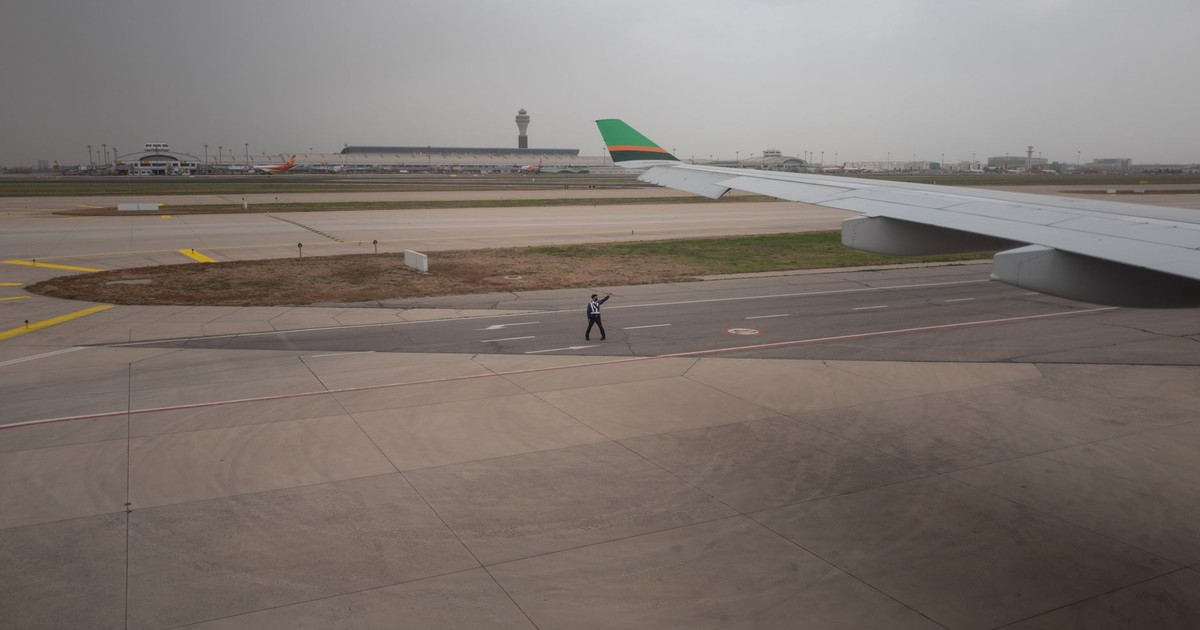
In practical terms, a ground stop holds aircraft at their departure airports. It does not order planes already airborne to land immediately. At the time the order was issued, 20:54 UTC, or 3:54 p.m. Eastern Time, Flightradar24 counted 4,042 flights airborne and destined for U.S. airports. Those aircraft were allowed to continue and land. By 5:55 p.m. Eastern Time, the same service counted about 1,000 airborne flights still bound for U.S. airports. On a typical Friday evening, it said, more than 4,500 would be inbound.
The FAA later said a temporary telecommunications outage was behind the stop. “Out of an abundance of caution all flights have been halted,” the agency said. “Every flight has been accounted for and international flights will be handled on a case by case basis.” Homeland Security Secretary Markwayne Mullin called it “just a telecommunications outage” as of Friday afternoon. He said people on those flights remained safe.
The first order covered departing traffic at airports nationwide. Some exceptions appeared later. Alaska Airlines said flights within Alaska and neighbor-island flights in Hawaii were not impacted. It also said West Coast-to-Hawaii flights could continue, and that international flights from Honolulu had been cleared to depart. Some transatlantic and Pacific departures from cities such as Boston, New York, and San Francisco were later allowed to take off, case by case.
The first nationwide advisory, issued at 3:54 p.m. Eastern Time, told departing traffic to remain stopped “until further notice.” It listed an event window through 11:00 p.m. Eastern Time and an effective time through 11:30 p.m. Eastern Time. At 5:46 p.m. Eastern Time, the FAA issued an updated nationwide ground-stop advisory. It said the ground stop remains in effect. It also said flights will be allowed to depart, through coordination with the Command Center, as en route facilities recover. A companion operations plan said traffic will be released as conditions allow, using a tiered approach. As of 7:20 p.m. Eastern Time, the nationwide ground stop had not been lifted. The latest advisory lists an event window through 11:00 p.m. Eastern Time and says to expect an update then.
Read More: ‘Don’t Fly Into Newark’: Air Traffic Controller Sounds Alarm Over Safety Concerns.
2. Where did it start, and what caused it?
Shortly before the nationwide order, both major Chicago airports, O’Hare and Midway, were already on a ground stop because of an equipment outage, NBC News reported. A United Airlines crew on the tarmac at Los Angeles International Airport later told passengers what controllers had relayed: that a communications outage started at Kansas City Center, which manages airspace over the middle of the country, and then spread. That account has not been independently confirmed as the official starting point.
Transportation Secretary Sean Duffy said on X that the FAA issued the nationwide ground stop “following a communication issue impacting all Air Route Traffic Control Centers”. Those centers guide airplanes at high altitude along their routes. There are 22 of these centers across the United States. Mullin later said two areas of the country could still communicate normally, so the picture at individual centers may not be uniform.
The precise technical cause remained under investigation as of Friday evening. Bloomberg reported that the FBI was looking at whether a software update gone bad caused the problems. That report had not been confirmed by the FAA. Duffy said FAA technicians were investigating. No official root cause had been announced publicly as of 7:20 p.m. Eastern Time.
3. Was this a cyberattack or a nationwide threat?

Officials moved quickly to address security questions. Mullin said there were “no indications of outages being tied to a cyberattack or potential terror threat”. Homeland Security also said there was no indication yet this was a “nefarious” act. Speaking at the White House, Mullin told reporters, “This isn’t another 9/11. I cannot repeat that enough.”
NBC News, citing officials from multiple agencies, said investigators had not seen the kind of activity normally linked to a cyberattack. Those officials also said the early assessment could change as they learn more. Mullin said President Donald Trump had been briefed. He also said authorities were “not ruling out anything at this point” on the cause.
Microsoft confirmed a separate global outage was ongoing at the time. Officials said it did not appear to be a factor in the FAA disruption. Mullin said he did not see a reason to connect the two. Officials also said the public had no reason to fear for family members already in the air.
4. What about the AI tool rolled out three days before?

Three days before the ground stop, the FAA expanded a new artificial intelligence tool across its air traffic management system. The tool is called Strategic Management of Airspace, Routes and Trajectories, or SMART. It is meant to help controllers reduce delays by improving routing and airspace management. The system had been in limited use at Washington, D.C.-area airports since September 21, 2026. The FAA then rolled it out to all 22 en route centers in the days just before Friday’s incident.
SMART is part of an $875 million contract with a company called Air Space Intelligence, or ASI. After the outage, ASI said on social media that “The current ground stop is not based on or a result of the SMART system, any product of ASI” or its integration with the FAA and air traffic control. Some reports said the communications problems did not appear to be linked to the new system. But Mullin, asked about a possible connection, said officials were “looking at that”. He also said they could not rule anything out yet. The cause is not confirmed.
5. How big is the flight disruption?
Delays were issued at major airports across the country, including Boston, Atlanta, Miami, Pittsburgh, New York City, Los Angeles, and Baltimore. By early evening, flight-tracking services were recording thousands of disruptions at hubs nationwide. Flight counts were still moving as of 7:20 p.m. Eastern Time.
As of about 6:16 p.m. Eastern Time, FlightAware listed 10,494 U.S. flights as delayed and 3,396 as canceled, according to The Verge. Those numbers can rise as the stop continues. There were still tens of thousands of departures and arrivals on the rest of Friday’s schedule, so later flights can be affected even after the stop is lifted. Travelers who were not stuck at their first airport still saw connecting flights disrupted, return legs canceled, and long rebooking lines.
United Airlines said flights already airborne would continue. “New domestic flights will not depart while the FAA ground stop remains in place,” the airline said. After the 5:46 p.m. update, some flights may be released as facilities recover, so travelers should check their airline for the latest departure status. By about 6 p.m., NBC News, citing a person familiar with the situation, said Reagan Washington National Airport was at capacity and Chicago O’Hare was nearing capacity, with little room to park arriving planes.
The stop also had a side effect on another investigation. According to Axios, the nationwide ground stop was preventing NTSB investigators from reaching the scene of a collision between a Mississippi River cruise ship and a tanker in New Orleans. Airlines for America, the trade group for major U.S. carriers, said it was in close communication with the Department of Transportation and the FAA. It encouraged travelers to contact their airline directly for rebooking updates.
6. How does this compare with past nationwide ground stops?
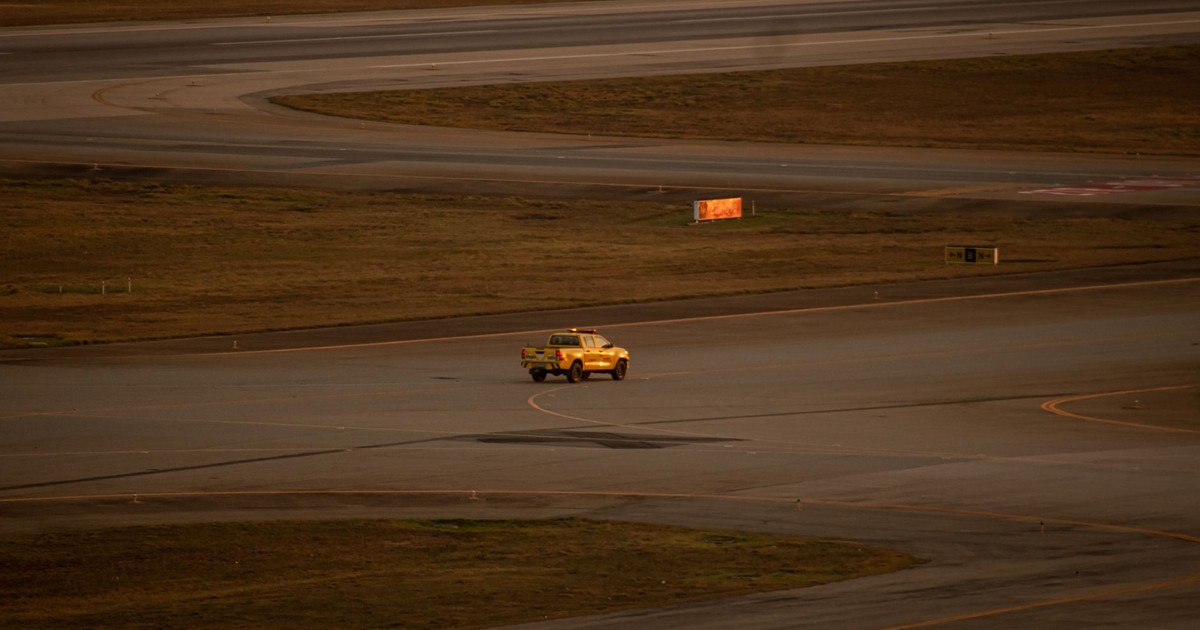
The September 11 ground stop was a security response to a confirmed attack. The 2023 event was a failure of the NOTAM system, the Notice to Air Missions system that delivers pre-departure safety briefings to flight crews. That 2023 stop, the first nationwide one since September 11, lasted about 90 minutes. It affected more than 10,000 flights and led to more than 1,000 cancellations.
Friday’s event is different from both. The 2023 disruption hit one system pilots use for pre-flight paperwork. Friday’s issue hit the communications infrastructure that Air Route Traffic Control Centers use to coordinate aircraft already in the air at altitude. That is a different layer of the system. If an outage in that layer can stop departures nationwide, the next question is what backup systems exist and why they did not keep the problem from spreading.
For context on the broader infrastructure picture, Congress approved $12.5 billion in July 2025 to begin overhauling outdated air traffic control technology. In some facilities, that equipment still includes copper wire and older radio systems. The Trump administration on Friday also renewed its push for an additional $30.1 billion to speed that work, including air traffic control upgrades, tower replacements, and airport projects.
Senator Tammy Duckworth, the ranking member on the Senate aviation subcommittee, called for a full investigation into what caused the stop. She said “the safety of our skies is built on redundancies”.
The FAA’s air traffic control problems are not new. As reporting on the Newark controller crisis earlier this year showed, communication failures at individual facilities have been a concern for months. Outdated equipment and staffing strains have been part of that debate.
What should you do if you’re affected?

If you have a flight today or in the coming days, check directly with your airline before heading to the airport. A ground stop of this scale can leave planes and crews out of place. It may take hours, and possibly days, to rebuild schedules after the stop is lifted. Alaska Airlines has already said that even after the stop ends, it will take time for operations to get back on track.
Mullin said, “Everybody is safe. There is no reason to be concerned about your loved ones if they’re flying”. That does not mean your departure will leave on time. Document your delay or cancellation, and save airline messages. Department of Transportation rules generally require airlines to refund a canceled flight if you choose not to rebook. The investigation into Friday’s nationwide ground stop is just beginning. Check the FAA and your airline for updates, because the status can still change after 7:20 p.m. Eastern Time on November 13, 2026.
Disclaimer: The author is not a licensed medical professional. The information provided is for general informational and educational purposes only and is based on research from publicly available, reputable sources. It is not intended to constitute, and should not be relied upon as, medical advice, diagnosis, or treatment. Always consult a licensed physician or other qualified healthcare provider regarding any medical condition, symptoms, or medications. Do not disregard, avoid, or delay seeking professional medical advice or treatment because of information contained herein.
AI Disclaimer: This article was created with the assistance of AI tools and reviewed by a human editor.