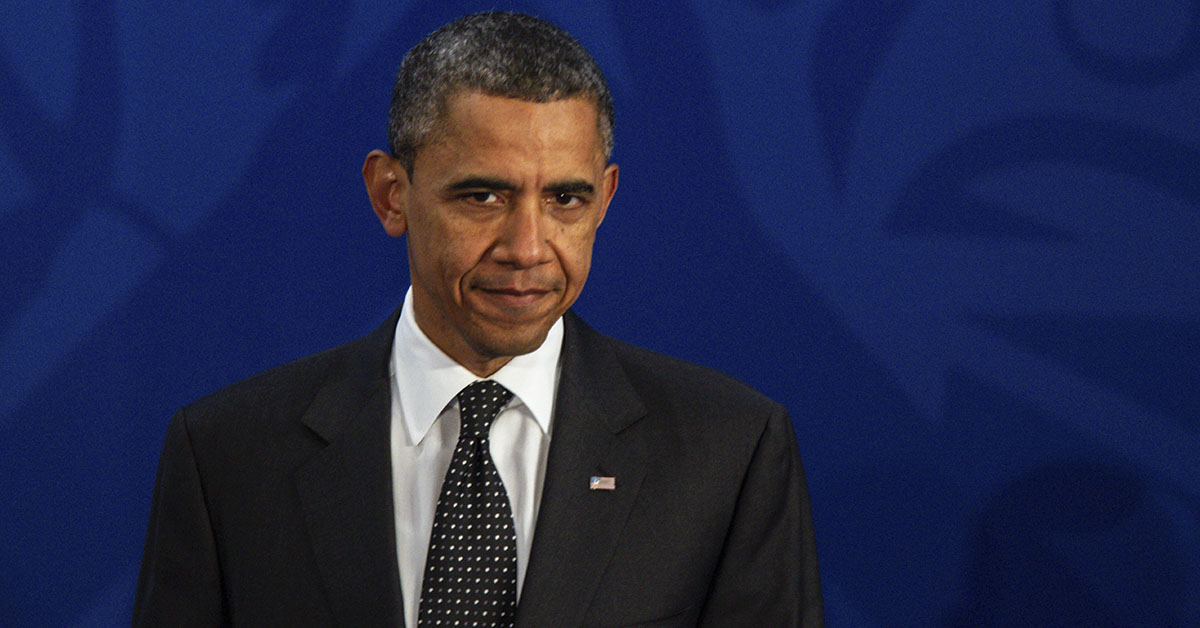

Former President Obama has responded to one of the most controversial political moments of early 2026, a racist video shared on social media by President Donald Trump that briefly depicted him and former First Lady Michelle Obama as apes. The clip spread quickly. Within hours, it dominated headlines, talk shows, and social media feeds. What might have been dismissed as another online stunt instead reopened deeper conversations about race, leadership, and the tone of American politics.
The video appeared on Trump’s Truth Social account in early February. At first glance, it resembled many posts that circulate in partisan spaces. It repeated familiar claims about election fraud and criticized political opponents. But near the end, there was a short animated segment. The faces of Barack and Michelle Obama were placed onto primates. The images flashed by quickly, yet they were unmistakable.
The speed of the backlash reflected how loaded that imagery is. Comparing Black people to apes has a long and painful history. It was once used in pseudo-scientific arguments that portrayed African Americans as less evolved or less human. Those ideas fueled discrimination for generations. Even when used in modern meme culture, the symbolism carries historical baggage. That is why many critics reacted strongly, even though the clip lasted only seconds.
Lawmakers responded almost immediately. Democratic leaders condemned the post. Some Republican figures did as well. Senator Tim Scott publicly criticized the clip and urged its removal. Bipartisan condemnation is rare in today’s political environment, which made that reaction notable. Civil rights organizations also weighed in, calling the imagery dehumanizing and unacceptable in public life.
Trump initially declined to apologize. He said he had not seen the offensive portion before it was shared. White House officials described the video as an online meme and suggested critics were exaggerating. As criticism intensified, the post was deleted. The White House later said a staff member had made an error in sharing it. Still, Trump did not accept personal responsibility.
Public reaction extended beyond politics. Conversations unfolded in workplaces, classrooms, and family homes. Social media debates grew heated, and the timing added another layer of sensitivity, as the controversy emerged during Black History Month.
Weeks later, Obama addressed the issue publicly in an interview. His response was measured and did not focus solely on the insult. Instead, he discussed what the moment revealed about the broader state of American discourse.
Obama Calls Out a “Clown Show” and Warns of Cultural Drift
In the interview, Obama described the situation as deeply troubling and referred to aspects of the political climate as a clown show. He used it not only to criticize one post, but to comment on a wider pattern of behavior in modern politics. He argued that public discourse has grown more theatrical and less grounded in shared norms.
Importantly, he did not center himself as a victim. He broadened the discussion. According to Obama, most Americans still value basic decency. He suggested that extreme voices often appear louder than they are. In his view, social media can distort perceptions by amplifying the most inflammatory content.
Obama also emphasized that leadership carries symbolic responsibility. Presidents do not speak only for themselves. Their words and actions signal standards, and even a reposted meme can take on official weight. That perspective underscores a key tension in digital politics. Social media blurs the line between casual expression and formal communication.
Historians have long documented how racial caricatures shaped public opinion in the United States. During the 19th and early 20th centuries, newspapers frequently portrayed Black Americans as ape-like figures. Those depictions supported racist ideologies and justified discriminatory policies. Although modern audiences may see online memes as trivial, scholars argue that imagery does not lose its historical resonance overnight.
Psychological research adds another dimension. Studies in social cognition show that repeated exposure to dehumanizing imagery can influence implicit attitudes. People may not consciously endorse prejudice, yet subtle associations can form over time. This does not mean one post changes society. However, normalization can occur gradually.
Supporters of Trump framed the backlash differently. They argued that political satire is common across parties. In their view, outrage over the clip reflected partisan sensitivity. Some commentators claimed the controversy distracted from substantive policy issues. Others suggested that social media content should not be interpreted as formal statements of ideology.
Critics responded that context matters. Political satire traditionally challenges power structures. Dehumanizing racial imagery, by contrast, draws on a history of oppression. The difference is not trivial. Even if the intent is disputed, the symbolic impact remains significant.
Obama’s remarks navigated that divide carefully. He did not demand punishment or escalate the rhetoric. Instead, he pointed to a need for higher standards. His tone contrasted sharply with the pace of online reactions.
Beyond the Meme, Technology, and Accountability

The controversy also highlights how digital platforms shape political life. Social media accelerates the spread of information at an extraordinary speed. A post can reach millions within minutes, and algorithms often reward content that triggers emotional reactions. Anger and shock drive engagement, which in reality means provocative posts frequently gain more visibility than measured ones.
In this environment, accountability becomes complex. A president may repost a video created by someone else, yet the public often sees it as an endorsement. When content sparks backlash, deletion does not erase its impact. Screenshots preserve it, and the debate continues long after the original post disappears.
Experts have also raised concerns about manipulated media. Although this clip was not a sophisticated deepfake, it demonstrated how easily imagery can be altered and circulated. Artificial intelligence tools are making such edits more accessible. Media literacy has become essential, and citizens must evaluate not only what they see but also its source and purpose.

International media coverage amplified the incident further. News outlets abroad interpreted the episode as another example of America’s polarized politics. The United States often promotes democratic values globally. Episodes involving racial imagery complicate that narrative. Perception matters in international relations, even when domestic debates dominate headlines at home.
Public opinion surveys in recent years suggest many Americans are concerned about the tone of politics. Voters across parties report fatigue with constant outrage. Yet political incentives sometimes reward spectacle. Controversial posts energize supporters and dominate news cycles. This creates a feedback loop. The more attention a tactic generates, the more likely it is to be repeated.
Obama’s comments attempted to interrupt that cycle. He emphasized that outrage should not define civic life. He argued that most citizens want serious engagement with real issues. Whether that optimism reflects reality remains debated. Nonetheless, his response highlighted an alternative approach to conflict.
A Political Culture at a Crossroads
As the news cycle progressed, analysts began asking broader questions. Has political discourse permanently shifted toward provocation, or can norms recalibrate? The answer may depend on both leaders and voters.
Dehumanizing imagery occupies a distinct place in political history. Scholars note that such representations have been used to rationalize exclusion and violence. Even when presented as humor, they carry echoes of that past. For communities affected by those histories, the symbolism is not abstract.
At the same time, the digital age has changed expectations. Memes and edited videos are common tools in political communication. Lines that once seemed firm now appear blurred. Some citizens view sharp mockery as part of free expression. Others believe leaders must exercise greater restraint. The tension between those perspectives defines much of contemporary debate.
The deletion of the video did not end the discussion. Critics argued that removing it without apology sidestepped accountability, while supporters said deletion demonstrated responsiveness. Meanwhile, Obama’s response continued to draw analysis. Some praised his composure. Others wished he had been more forceful. Yet his core message remained consistent. Leadership involves more than winning arguments. It involves modeling standards.
As attention gradually shifts to other stories, the underlying questions endure. What boundaries should guide public officials? How should digital platforms manage inflammatory content? And how can citizens foster healthier debate?
Read More: What Happens Immediately If Donald Trump Dies While President
Final Thoughts
In the end, Obama’s response to the racist video depicting him as an ape focused less on personal offense and more on public standards. He framed the controversy as part of a broader shift in political culture and urged a return to basic respect. His measured tone contrasted with the rapid-fire outrage of social media, offering a reminder that leadership involves restraint as well as conviction.
While the headlines will eventually move on, the issues raised by the incident remain. Race, symbolism, and digital amplification continue to shape American politics in powerful ways. Whether civic norms strengthen or erode further depends not only on those in office, but also on the expectations citizens choose to uphold.
A.I. Disclaimer: This article was created with AI assistance and edited by a human for accuracy and clarity.
Read More: Obama Criticizes Trump’s Tariff Plan with a Sharp Eight-Word Statement