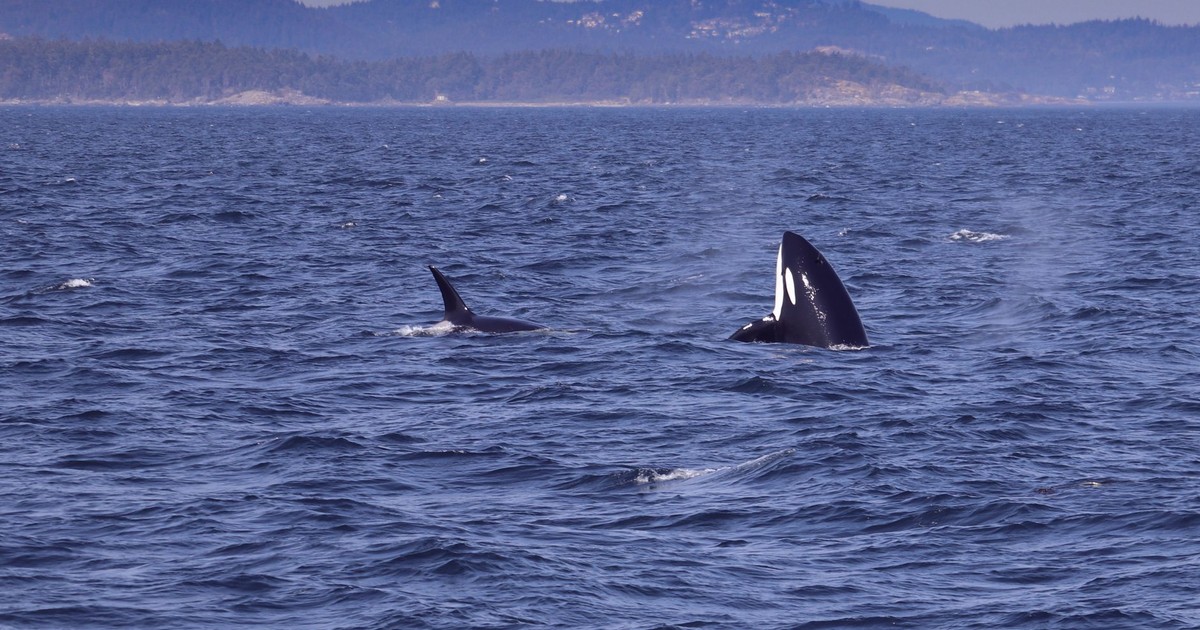

On October 10, 2025, a French family of five was sailing off the coast of Peniche, Portugal when the hull began to shudder. Within minutes, the yacht Ti’fare was sinking. The crew launched a lifeboat and was picked up by a passing fishing boat. They hadn’t hit a reef. Orcas had sunk the vessel 50 nautical miles offshore, forcing the crew to abandon ship.
That incident was not a freak event. It was the seventh time orca attacks had sent a boat to the ocean floor since the behavior began in 2020. Seven yachts have been sunk to date, the most recent in October 2025 off Peniche, Portugal. And just weeks earlier, in September, a tourist yacht near Fonte da Telha Beach outside Lisbon sank after being repeatedly struck. Two boats were targeted on September 13, 2025. Around 12:30 pm local time, a tourist yacht near Lisbon sank after being struck repeatedly, and all five people on board were rescued by nearby boats.
No one has been physically harmed in any of these events. Not a single injury across hundreds of encounters. And that, as it turns out, is one of the most telling clues scientists have about what’s actually going on.
How the Orca Attacks Began
Beginning in 2020, a subpopulation of orcas started ramming boats and attacking their rudders in waters off the Iberian Peninsula. The behavior has generally been directed toward slow-moving, medium-sized sailboats in the Strait of Gibraltar and off the Portuguese, Moroccan, and Galician coasts.
The novel behavior is thought to have spread between different pods, with over 500 reported interactions from 2020 to 2026 attributed to fifteen different individual orcas. Only about 15 animals out of the entire subpopulation are doing this – and scientists have identified each of them by name through photographic records.
The interactions follow a distinctive pattern. In interactions involving physical contact, the pod typically approaches stealthily from the stern. Contact includes ramming, nudging, and biting, usually focusing on the rudder. Orcas have been observed using their heads to push the rudder or using their bodies to make lever movements, causing rotation of the rudder – in some cases, pivoting the boat almost 360 degrees.
The typical interaction lasts about half an hour. Crews describe the experience as terrifying – the boat rocking violently, the rudder becoming unresponsive, water beginning to seep in through the damage. Most vessels survive. Some don’t.
The frequency of incidents peaked in 2023, then began to fall. Orcas continued targeting vessels in 2024, with 136 interactions recorded along the Atlantic coasts of Iberia, down from 207 in 2023. Data from the Portuguese coast alone showed 24 interactions across 2025, according to Euronews. The overall decline may partly reflect sailors changing their routes – but researchers monitoring the situation warn that record numbers of attacks occurred off Galicia in October 2025, suggesting the Iberian orcas are neither getting bored of the game nor scared away.
What Scientists Think Is Really Happening
Revenge was the first theory to catch fire online – the story of a traumatized orca lashing back at boats that had wronged her. Scientists largely dismissed it. The more they studied the behavior, the less it resembled aggression and the more it resembled something else entirely.
A variety of theories have been floated about the orcas’ motivation, but many scientists think it is most likely a learned cultural behavior that is simply fun for the animals. “These are not attacks; it is almost certainly a game,” says Naomi Rose, senior scientist of marine mammal biology at the Animal Welfare Institute.
The evidence for play, rather than predation or retaliation, comes from multiple angles. A Spanish government report concluded that this orca behavior has more in common with play than aggression. The rudder-ramming individuals are mostly juveniles and adolescents. Some adult females are involved, but they seem mostly to be supervising their young. No adult males have ever joined in – and adult male orcas are typically the most likely to engage in genuinely aggressive encounters.
Sinking boats is likely not the orcas’ goal, as most vessels survive the interactions. A researcher noted that orcas could have sunk hundreds of boats if they wished to. They haven’t. They appear to be interested in the rudder itself – pushing it, bending it, sometimes snapping it clean off, then swimming away.
The behavior may also be linked to a shift in how much time these orcas need to spend hunting. Iberian orcas playing with boats could be linked to a rise in the abundance of Atlantic bluefin tuna, their primary food. Bluefin tuna were previously decimated by overfishing, but the recovery of stocks could mean orcas now have more leisure time since they don’t need to eat every fish they find.
A Cultural Habit Being Passed Down
What makes this phenomenon genuinely unusual – and genuinely concerning for the long term – is how it is spreading. Orcas are among the few animals on Earth that transmit culture across generations. Naomi Rose noted that “some of these whales are growing up with the game,” adding that given the behavior has persisted through 2025, she fears it is becoming a cultural element of this population.
Younger orcas aren’t inventing this behavior independently. They’re watching older pod members and copying them. An incident involving an orca ramming a yacht in the North Sea near Shetland occurred in June 2023, raising the possibility that the behavior could eventually spread beyond the Iberian region. Researchers continue to monitor whether other orca populations are picking it up.
The Atlantic Orca Working Group, known by its Spanish acronym GTOA, was formed in August 2020 specifically to study and monitor these boat interactions and has been the primary scientific body coordinating data collection across Spain, Portugal, and Morocco. The sheer volume of incident reports has allowed scientists to build a detailed picture of which orcas are involved, when interactions are most likely, and which waters pose the greatest risk.
You can find more on the science of orca intelligence and social learning in this Hearty Soul piece on orcas imitating human speech.
The Population Behind the Headlines
The orcas responsible for these incidents are part of one of the most endangered marine mammal populations on the planet. The Iberian killer whale subpopulation was assessed as critically endangered by the IUCN in 2019, under criteria citing fewer than 50 mature individuals and heavy dependence on an endangered prey species, the Atlantic bluefin tuna.
The latest estimates suggest fewer than 40 individuals in total, divided into smaller groups that move along the coast of the Iberian Peninsula, with very few breeding individuals. A 2026 study published in Marine Mammal Science found that while the population appeared broadly stable between 2011 and 2023, the continuous decrease in mature individuals remains deeply concerning, and the future of the subpopulation will be highly dependent on whether juvenile females successfully become reproductive adults and whether their calves survive.
Persistent organic pollutants, including PCBs that were internationally banned in 2004, continue to build up in orca blubber and pass to calves through placenta and milk. In stranded UK orcas, levels of these chemicals are 30 times over the toxic threshold. While that data comes from a different regional subpopulation, it illustrates the cumulative chemical threat facing orca groups throughout European waters.
Fishing gear entanglement, underwater noise pollution from vessel traffic, and direct human retaliation against the animals all compound the pressure. Some mariners have been filmed throwing firecrackers at the animals – a response that is not only ineffective but may reinforce the behavior and increase the severity of damage to vessels. It is also illegal. Harming a critically endangered species carries serious legal consequences under Spanish and Portuguese law.
What Sailors Can Do
The safest strategy for vessels transiting the Iberian Peninsula is to stay shallow. Analysis from the Cruising Association suggested that the decline in interactions during parts of 2025 may be linked to increased use of the shallow-water route along the south coast of the Iberian Peninsula, with data supporting the theory that almost no yachts are being attacked in shallow water. Spanish authorities advise sailors to stick to waters of 20 meters or less when possible, according to Dive Magazine.
If an interaction does occur, the guidance from researchers is counterintuitive for anyone in a moment of panic: keep moving. Stopping the boat gives the orcas direct access to the rudder and the leverage to break it. Research has shown that the whales typically won’t chase after a boat – if crews continue driving away, the orcas generally give up within two to three kilometers.
Loud noises, firecrackers, and attempts to scare the animals with sudden acceleration have all been tried and largely failed. More promising is a device called GenusWave, which emits the acoustic signal orcas use to warn each other away, similar to technology used by fishermen to keep orcas off nets. Portuguese government trials of a yacht-adapted version are underway.
Read More: Orcas Start Wearing Dead Salmon Hats Again After Ditching The Trend For 37 Years
What This Means for You
The orca attacks in Iberian waters are not a sign of a species turning on humans. No person has been harmed in any of these interactions – not across more than 500 documented encounters spanning six years. Orcas are fierce predators known to hunt tuna, seals, sharks, and even other whales, but each population has a particular diet, and none of them involves humans. There are only a handful of documented cases of wild orcas attacking humans at all, and all involve significant caveats.
The animals behind these encounters are a tiny, critically endangered group of fewer than 40 individuals whose long-term survival is genuinely at risk. The boats they interact with are, for most of those animals, little more than an interesting object to push around. The real danger runs in the other direction: a population this small, already experiencing low birth rates and chemical contamination, cannot afford to lose individuals to human retaliation.
For sailors planning passages through the Strait of Gibraltar or along Portugal’s Atlantic coast, the practical advice is concrete: use shallow-water routes where possible, keep moving if orcas approach, and avoid any response that could harm the animals. Real-time tracking data is increasingly available through the GTOA and the Cruising Association’s orca monitoring project at theca.org.uk, which publishes monthly interaction maps showing where encounters are most likely by location and season.
AI Disclaimer: This article was created with the assistance of AI tools and reviewed by a human editor.