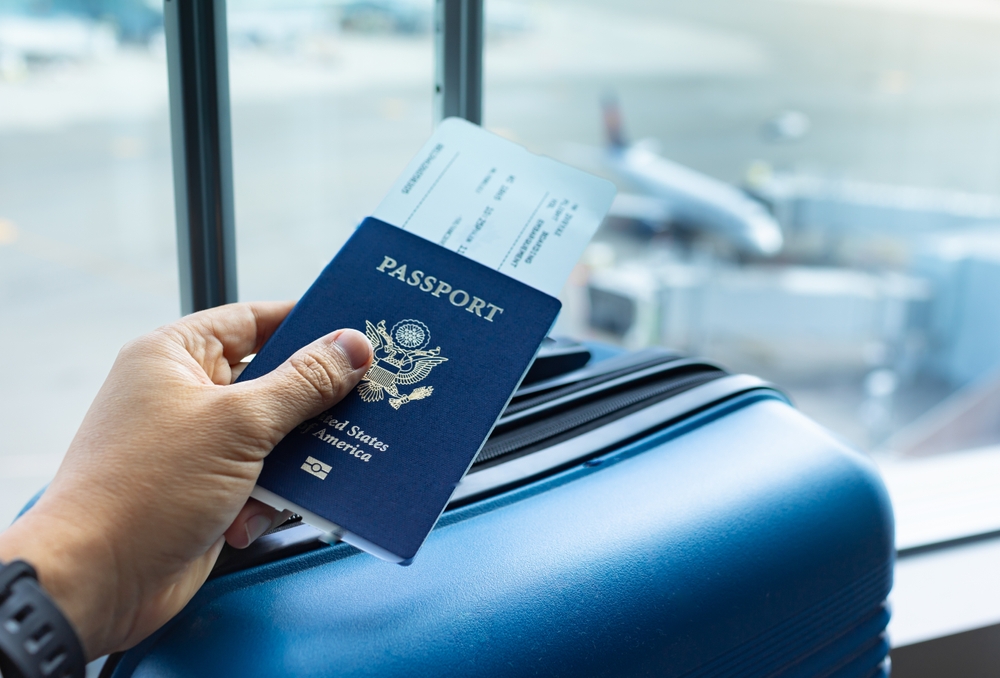

Millions of Americans have summer travel plans mapped out right now. Flights are booked, hotels are confirmed, and passports are sitting in a drawer ready to go. But for a significant number of those travelers, that passport may no longer be valid when they need it most – and they might not find out until it’s too late.
A sweeping federal enforcement crackdown is quietly stripping American passport holders of their right to travel internationally. No criminal charge. No court date. Just a letter, and a canceled document. The reason: unpaid child support. And if you think this only affects a small group of extreme cases, the numbers tell a very different story.
The machinery behind this policy has been running in the background for decades. Most people have never heard of it. But right now, in May and June of 2026, that machinery has been switched into a mode it has never operated in before – and the net is about to get much wider.
A Law That’s Been There All Along
The legal foundation for this enforcement isn’t new. The Child Support Enforcement Passport Denial Program was originally created as part of the Personal Responsibility and Work Opportunity Reconciliation Act of 1996, and it initially applied to anyone owing more than $5,000 in past-due support. The Deficit Reduction Act of 2005 then lowered that threshold to $2,500.
For most of the program’s life, only those who applied to renew their passports were subject to the penalty. That meant a parent with unpaid child support could hold a perfectly valid passport and use it freely – as long as they never had to renew or replace it. The law was on the books, but its teeth were rarely felt by people who weren’t actively at a passport agency.
On May 7, 2026, the U.S. State Department issued a press release stating that effective May 8, 2026, in conjunction with the Department of Health and Human Services (HHS), it would step up enforcement of this 1996 law. The critical shift: instead of waiting for a parent to apply for a passport, renew one, or seek help at a consulate, the State Department now moves against existing valid passports held by people with large unpaid balances. A passport you’ve had for years, sitting validly in your bag, can now simply be canceled.
The Rollout: Who Gets Hit First
The crackdown is unfolding in stages, working its way down from the highest debt levels to lower ones. Revocations began on May 8 and initially focused on parents who owe $100,000 or more in past-due child support, a group that includes about 2,700 passport holders according to figures from the Department of Health and Human Services.
That first wave is just the opening move. The State Department began revoking passports on May 8 for parents owing $100,000 or more in child-support arrears, and effective June 1, enforcement will expand to parents owing $75,000 or more. Anyone with summer travel plans who falls into that bracket and hasn’t settled their debt faces a straightforward outcome: their passport stops working.
The program will eventually reach all 3.5 million noncustodial parents owing at least $2,500, the legal threshold for passport revocation established in 1996 by the Personal Responsibility and Work Opportunity Reconciliation Act. That figure puts the full scope of this enforcement into perspective. We’re not talking about a few thousand outliers. We’re talking about a potential enforcement action that could ultimately affect millions of Americans’ ability to cross a border.
According to the U.S. State Department’s official guidance, if you owe more than $2,500, federal regulations do not allow the State Department to issue a U.S. passport, and it may revoke a valid one already in your possession.
What “Revoked” Actually Means for Travelers
People sometimes assume a passport revocation means they simply can’t renew when the time comes. The reality is harsher than that. “Once a passport is revoked, it may no longer be used for travel,” the State Department confirmed. The physical document in your hands becomes useless at a border crossing or airport checkpoint.
The State Department noted that those with significant debt who are outside the U.S. and have had their passports revoked are eligible only for a limited-validity passport “for direct return to the United States.” So if someone is mid-trip when the revocation lands, their options shrink considerably. A passport holder abroad at the time of revocation will need to visit a U.S. embassy or consulate to obtain an emergency travel document that allows them to return home.
The path back to a valid passport once revoked isn’t quick either. The process for a state and HHS to remove a name from their records takes a minimum of two to three weeks, and the State Department cannot issue a new passport until HHS verifies eligibility. Notices about passport revocations are sent directly to the passport holder via email or to the mailing address on file from their most recent passport application. Anyone traveling internationally should make sure their contact information with the passport agency is current.
If you have children and are trying to understand how unpaid child support can affect a family’s finances long-term, the implications of this policy extend beyond travel alone.
Why the Government Believes This Works
The numbers behind the Passport Denial Program go some way toward explaining why officials are expanding it now. Since the program began in earnest in 1998, states have collected $657 million in arrears, including more than $156 million in over 24,000 individual lump-sum payments over the past five years. That’s a substantial sum recovered for families who were owed it.
In fiscal year 2024, the federal child support enforcement program served 11.6 million cases and collected an estimated $26.7 billion in child support, of which $7.5 billion was for obligations that were past due. Passport denial is one tool among many in that collection effort, but it’s clearly a pressure point that works.
Even the announcement of the expanded crackdown appears to have moved the needle before a single passport was canceled. Since the Associated Press first reported the program’s expansion in February 2026, the State Department said data showed hundreds of parents had taken action and resolved their arrears with state authorities.
“We are expanding a commonsense practice that has been proven effective at getting those who owe child support to pay their debt,” said Assistant Secretary of State for Consular Affairs Mora Namdar in a social media statement. Officials at the Administration for Children and Families took an equally direct tone, stating that holding a U.S. passport is a privilege, not a right.
The Scale of the Unpaid Debt Problem
To understand why enforcement is ramping up, it helps to know how large the unpaid child support problem actually is. According to Census Bureau data from 2022, about 4.7 million custodial parents with legal or informal child support agreements were expected to receive, on average, $6,400 annually. The median amount of child support paid was approximately $4,800. Custodial parents were supposed to collectively receive around $29.9 billion but received only $19.2 billion.
About 30% of parents who are owed child support payments get nothing at all, according to Census Bureau data. One in five children in the U.S. lives in a household that receives child support payments. For many of those families, the money isn’t optional income. Twenty-four percent of custodial parent families live in poverty, compared with 14% of all families with children under 21 years old, according to Census data reported by USAFacts.
The average amount owed among noncustodial parents with child support debt is more than $19,000, and in some instances it isn’t because these parents can’t pay – it’s because they choose not to. That context matters when evaluating how broadly the government is choosing to apply this lever.
Questions About Due Process
Not everyone views the expansion without reservation. Critics have raised questions about whether the enforcement mechanism adequately distinguishes between parents who willfully refuse to pay and those who genuinely can’t afford to, particularly given the complexities of varying income, job loss, and court order changes over time.
The program requires no individualized review of whether arrears resulted from willful nonpayment or inability to pay before a passport is canceled, a gap that legal observers have noted means “the procedural safeguards have not caught up to that shift” from denial to proactive revocation.
For those whose passports are revoked, they must apply for a new passport, and a mandatory federal verification process adds at least two to three weeks to the typical wait time before a new passport can be issued. That delay is fixed, regardless of how quickly a parent settles their balance. Paying the full amount the day a passport is revoked still means weeks without a valid travel document.
There is also a legislative component moving in parallel. A bill called the Ensuring Children Receive Support Act, which passed the House of Representatives, is currently under review by the Senate Finance Committee. The bill would make revocation mandatory rather than discretionary for anyone owing more than $2,500, a change that would require an act of Congress to reverse.
Read More: How Financial Stress Affects Your Health and What to Do About It
What to Do Now
If you owe child support and have international travel planned, the June 1, 2026 deadline for those owing $75,000 or more is the most immediate concern. But anyone in arrears at any level above $2,500 should treat this as urgent, because the enforcement threshold is set to keep dropping until it reaches that floor.
The State Department’s message is direct: “Any American with significant child support debt should arrange payment to the relevant state or states now to prevent passport revocation.” Contact your state’s child support enforcement agency to find out exactly what you owe and what payment options are available, including payment plans.
Keep in mind that paying your balance does not immediately restore your travel rights. The mandatory HHS records update takes a minimum of two to three weeks, so paying the day before a flight will not resolve the problem in time. Act now, not the week before departure. If you are currently abroad and receive a revocation notice, contact the state where you owe child support to arrange payment, then reach out to your nearest U.S. embassy or consulate. You will only be eligible for a limited-validity passport for direct return to the United States until HHS confirms repayment.
The bottom line is that this policy is real, it is active, and the enforcement is expanding. Whether the goal is collecting money owed to children who need it, or protecting travel plans you’ve worked hard to afford, the only safe path is to know exactly where your child support account stands – and to address any balance before the next deadline arrives.
AI Disclaimer: This article was created with the assistance of AI tools and reviewed by a human editor.
Read More: These 10 Countries Will Give You Residency (or a Passport) If You Buy Property