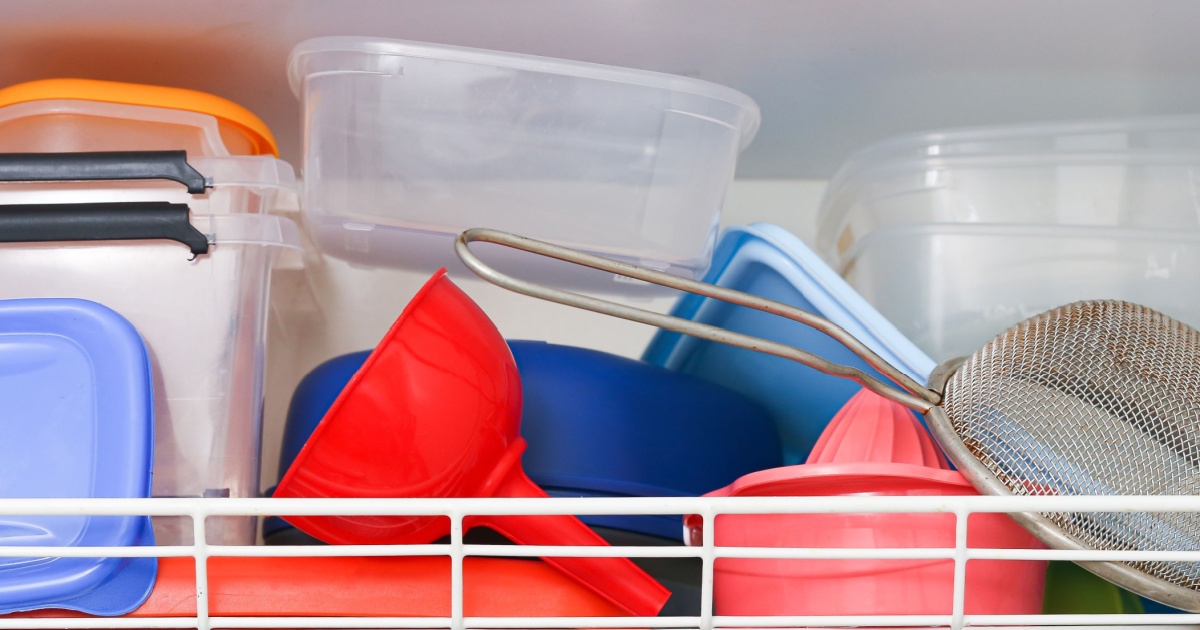

That cloudy plastic container sitting in your kitchen cupboard – the one you’ve reheated leftovers in a hundred times – releases something you can’t see, smell, or taste. And depending on how long you’ve had it, how often you’ve washed it, and whether you’ve ever put it in the microwave, the amount it releases may be staggering.
Oncologists are now speaking plainly about a category of kitchen items that most households use every single day, and the message is consistent: cloudy, scratched, cracked, or heavily used plastic food containers should go. Not because the evidence is perfectly settled, but because the evidence that does exist points in one direction – and the risk is hard to justify when the solution is this straightforward.
Plastic containers and cancer risk are no longer a fringe pairing in clinical conversations. Damaged plastic combined with heat creates conditions that the research community has begun to describe in very specific, quantified terms – and those numbers are not reassuring.
Why Damaged Plastic Containers Are the Biggest Concern
The condition of a plastic container matters enormously. When you heat food or drinks in plastic containers, BPA, phthalates, and other chemicals can leach into them. A scratched or worn container does this far more aggressively than one fresh out of the box. Plastic materials undergo various degradation processes, including oxidation, hydrolysis, photodegradation, mechanical wear, and biodegradation, producing debris of different forms and sizes. Every dishwasher cycle, every scrub with an abrasive sponge, every hairline crack accelerates that breakdown. Speaking to Parade, Dr. Tingting Tan, MD, Ph.D., medical oncologist at City of Hope says, “Cloudy, scratched or cracked plastic containers are usually signs the material is breaking down. One concern is that worn plastic may release more particles or chemical compounds into food, particularly when exposed to heat. Researchers are still studying the long-term effects of microplastics and chemical exposure, but many experts believe reducing unnecessary exposure is a reasonable precaution.”
According to a 2025 Greenpeace report, worn plastic releases nearly double the number of microplastic particles compared to new packaging. Old or scratched plastic containers can leach bisphenol A (BPA), phthalates, per- and polyfluoroalkyl substances (PFAS), and microplastics directly into food. Chemical migration is influenced by factors including plastic type, temperature, food composition, and duration of heating or storage. Fatty or acidic foods – think tomato sauce, citrus, meat – accelerate leaching even further. Dr. Amar Rewari, MD, chief of radiation oncology for Luminis Health, says “Heat is one of the biggest factors because it can increase the movement of chemicals from plastic into food. This is especially true with fatty foods, sauces, soups or foods heated for long periods.”
A 2024 study from the National Center for Health Research notes that many plastic products claim to be “microwave-safe” while health experts warn against heating food in plastic containers – a contradiction that leaves most consumers without clear guidance. Breast Cancer Prevention Partners notes that many people encounter toxic, cancer-causing chemicals through plastics whether they’re aware of the health risks or not, and plastic can harm health at every stage of its lifecycle.
The Microwave Problem Goes Deeper Than You Think
The “microwave-safe” label on a plastic container is one of the more misleading pieces of kitchen guidance in circulation. The term “microwave safe” often means a container will not visibly melt or break, not that it prevents the release of microplastics or chemical additives into food. The label is about structural integrity, not chemical safety.
The numbers researchers have produced on microwave heating are striking. In a 2023 study published in Environmental Science & Technology, scientists heated polypropylene-based and polyethylene-based reusable plastic containers in the microwave for three minutes. Some containers released up to 4.22 million microplastics and 2.11 billion nanoplastics from just one square centimeter of plastic surface.
A more recent analysis reinforces this. Microwaving plastic containers for just five minutes released between 326,000 and 534,000 microplastic and nanoplastic particles – up to seven times more than oven heating. For context, that’s from a single heating session in a single container.
Size determines how far into your body these particles travel. Nanoplastics, far smaller than microplastics, are small enough to pass biological barriers and enter organs and the bloodstream. They can even cross the blood-brain and placental barriers. A 2025 study published in Nature Medicine found that brain tissue analyzed in postmortem samples contained significant levels of microplastics, particularly polyethylene, with concentrations in the brain significantly greater than those in the liver or kidney – a pattern that held in both 2016 and 2024 samples.
Reducing your exposure to plastic containers during food storage and heating starts with understanding that the microwave is the single highest-risk scenario for plastic container use. A Consumer Reports investigation found microplastics in rice, tea, salt, sugar, beer, processed foods, milk, bottled water, and a range of seafood – meaning kitchen habits are one of the few exposure points people can actually control.
BPA, Phthalates, and PFAS: What’s Actually Leaching Into Your Food
Three families of chemicals dominate the concern around plastic containers and cancer. Each operates differently in the body, and each has its own accumulating body of evidence.
BPA (bisphenol A) is used to harden plastics and is found in polycarbonate containers, reusable food storage products, and the inner lining of many canned goods. Certain chemicals in plastic, like BPA and phthalates, throw off the natural balance of hormones in the body by either blocking or mimicking hormones like estrogen. These “endocrine disruptors” may raise breast cancer risk, since estrogen plays a role in the development and growth of hormone receptor-positive breast cancer, according to Breastcancer.org. Epidemiological and mechanistic evidence links exposure to these endocrine disruptors with increased incidence of hormone-related cancers, particularly breast and prostate cancer, through mechanisms involving hormone receptor modulation.
The BPA concern extends to infants. BPA can leach from baby feeding bottles, and this leaching increases with high temperature, vigorous washing with a bottle brush, and dishwasher use, according to research indexed in the National Library of Medicine. Greenpeace’s 2025 commissioned testing also found plastic particles in baby food products from two global brands sold in plastic pouches – including products from Danone and Nestlé, with one Happy Baby Organics pouch estimated to contain more than 11,000 microplastic particles.
Phthalates – the chemicals added to make plastic wraps and containers more flexible – present a separate but equally documented concern. Phthalates are ubiquitous plasticizers known for their endocrine-disrupting properties, notably affecting reproductive health through disruptions of steroidogenesis, gametogenesis, and tissue differentiation, according to a 2025 paper published in Frontiers in Endocrinology. In children and adolescents, the effects can be particularly acute. Exposure to phthalates was identified as a prominent cause of precocious puberty (early puberty), including an earlier onset of menarche (the first menstrual period), based on findings presented at a 2025 endocrinology conference.
PFAS – per- and polyfluoroalkyl substances, often called “forever chemicals” – are found in fluorinated plastic containers and food packaging. Research from the University of Notre Dame found that PFAS were capable of migrating from fluorinated containers into food, creating a direct route of significant exposure to hazardous chemicals linked to prostate, kidney, and testicular cancers, low birth weight, immunotoxicity, and thyroid disease. The U.S. Environmental Protection Agency has formally identified several long-chain PFAS as highly toxic, noting that even small amounts can significantly contribute to people’s long-term exposure and health risk for cancers, impacts to the liver and heart, and immune and developmental damage to infants and children.
What the Cancer Research Actually Shows
Proving direct causation in human populations for chronic chemical exposures is methodologically complex, and researchers are careful to say so. Exposure is cumulative, lifelong, and nearly impossible to isolate in a clinical trial. The recent evidence is nonetheless moving toward stronger associations.
A 2025 meta-analysis found that exposure to microplastic pollutants was a risk factor for overall cancer incidence in case-control studies. The same meta-analysis, published in the International Journal of Surgery, found that phthalates and bisphenol A were associated with higher cancer risk in case-control studies.
Microplastics have a suspected role in harming human reproductive, digestive, and respiratory health and a suggested role in increasing colon and lung cancer risk, according to a 2025 review published in Cancer Cytopathology. The biological mechanism being studied is a chain reaction: micro- and nanoplastics can enter the human body via ingestion or inhalation and accumulate in organs, where they induce oxidative stress, inflammation, and cellular damage that may lead to cancer development.
The PlastChem Report, funded by the Research Council of Norway, identified 16,325 compounds known to be either intentionally or unintentionally present in plastics, with more than 4,200 deemed chemicals of concern. That’s not a small gap in product safety frameworks – it’s a fundamental one.
Consumer Reports experts have noted that many thresholds regulators currently use “do not reflect the most current scientific knowledge, and may not protect against all the potential health effects.” The European Food Safety Authority took formal regulatory action in 2023, declaring BPA exposure a health concern after lowering its tolerable daily intake by a factor of 20,000 – a level that most consumers now routinely exceed.
The Containers You Should Throw Out Now
Visible scratching on the interior surface, a cloudy or hazy appearance from repeated washing, cracks or chips anywhere on the body or lid, and a long history of microwave use are all signs a plastic container should be replaced. Containers made from polystyrene foam should also go – this is the material used in disposable coffee cups and some takeaway boxes, and it contains styrene, a chemical the International Agency for Research on Cancer classifies as a possible human carcinogen.
Any plastic container that has been used to microwave fatty or acidic foods repeatedly is a candidate for replacement, regardless of how intact it appears. When you reheat food in plastic containers, there’s a risk of chemicals migrating from the plastic into food, particularly when the plastic is exposed to high temperatures. Heat weakens the chemical bonds of polymers and increases the mobility of additives within the material, allowing chemicals to break down and escape into food or liquids.
For parents, old baby bottles and food storage pouches deserve special scrutiny. The Greenpeace-commissioned 2025 testing found microplastic particles in every sample analyzed from both Gerber and Happy Baby Organics pouches – with researchers tracing the likely source to the polyethylene lining of the pouches themselves.
Read More: 7 Days of Avoiding Plastic
What to Replace Them With
Glass containers are inherently the less toxic option due to their inert status, which won’t lead to chemical migration between the container and your food. Glass can go from the refrigerator to the microwave (without a plastic lid) without releasing particles or chemicals. Glass containers are leakproof and easy to clean, making them a reliable way to store and preserve food.
Ceramic is equally safe. Materials like stainless steel, glass, and ceramics are inert by definition, meaning they don’t release or absorb chemicals. Ceramic stands out for its heat resistance and surpasses plastic in durability. These containers can withstand high temperatures while resisting scratches and chipping, and they’re safe for use in the oven, microwave, and freezer – making them practical for reheating and storing leftovers.
Stainless steel is a strong option for cold storage and taking food on the go. It’s non-breakable, lightweight, odor-resistant, and highly durable, with no chemical leaching concerns.
One important detail: even glass and ceramic containers often come with plastic lids. All experts advise not to put plastic lids in the dishwasher or microwave, even if they’re listed as safe for these purposes, as exposure to high heat is a known driver of increased microplastic release. Swap to silicone or stainless lids where possible, or simply set plastic lids aside when reheating.
What to Do Now
The case against keeping old, scratched, or frequently microwaved plastic food containers isn’t built on a single study. It’s a convergence: the chemistry of what these containers release, the biology of where those particles go, and an emerging body of epidemiological research linking the chemicals involved to elevated cancer risk. Affordable, widely available alternatives already exist – the decision to switch is practical, not drastic.
Start with the containers you heat food in. Discard any plastic container that looks cloudy, feels rough on the inside, or has spent years cycling through the dishwasher and microwave. Replace them with glass or ceramic for anything involving heat. Keep plastic containers only for cold storage, and even then, avoid putting acidic or fatty foods in them for extended periods. If you buy takeout, transfer the food out of the plastic container before reheating. For parents: switch away from plastic baby food pouches and bottles now, not when the science is “fully settled.” The Greenpeace 2025 data found microplastics in every single pouch tested – and babies, with their developing organs and higher food intake relative to body weight, are among the most vulnerable to these exposures.
Disclaimer: The author is not a licensed medical professional. The information provided is for general informational and educational purposes only and is based on research from publicly available, reputable sources. It is not intended to constitute, and should not be relied upon as, medical advice, diagnosis, or treatment. Always consult a licensed physician or other qualified healthcare provider regarding any medical condition, symptoms, or medications. Do not disregard, avoid, or delay seeking professional medical advice or treatment because of information contained herein.
AI Disclaimer: This article was created with the assistance of AI tools and reviewed by a human editor.