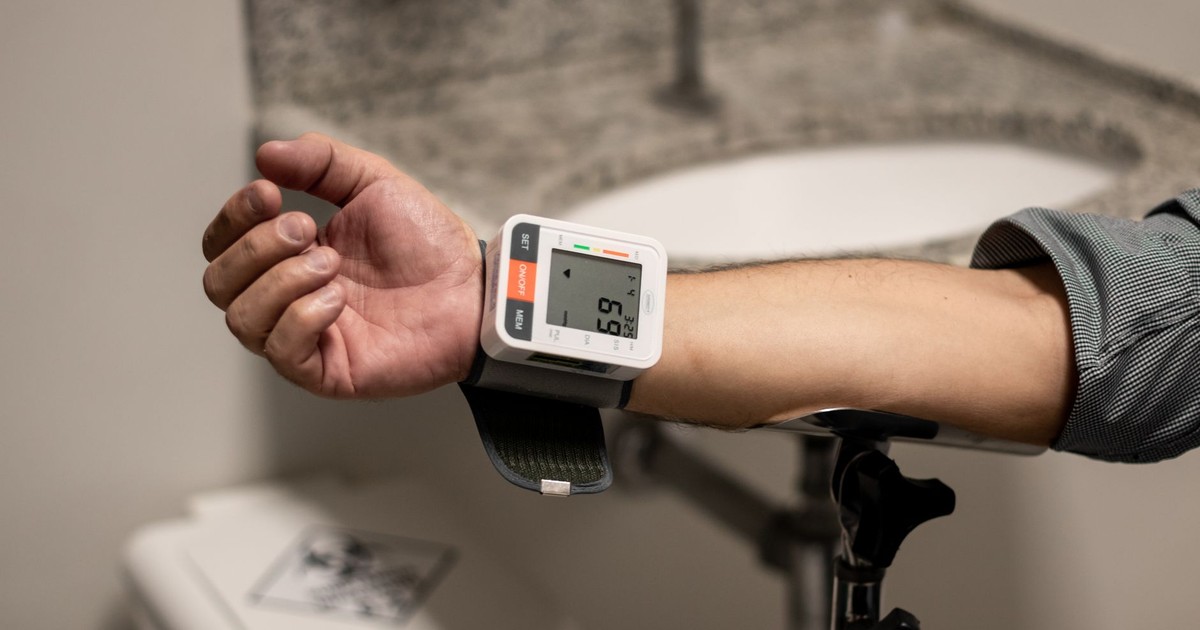

For millions of people, high blood pressure is something to manage rather than something doctors can trace to a single cause. But for a surprising number of patients, there may actually be an underlying hormonal problem driving it, and finding that problem can change how it is treated.
The condition is called primary aldosteronism, and research suggests it may affect between 5% and 20% of people with high blood pressure. Yet many cases are never diagnosed.
Part of the problem may come down to timing.
A 2026 study published in Science Translational Medicine found that the excess hormone production associated with primary aldosteronism isn’t necessarily steady throughout the day. Instead, researchers discovered repeated bursts of aldosterone and related hormones, including surges occurring while patients were asleep.
That creates an unusual diagnostic problem. A routine morning blood test captures only one moment in a hormone cycle that can rise and fall dramatically. In some patients, levels temporarily dropped below diagnostic thresholds even though they had significant disease.
Using a wearable device that sampled hormones around the clock, researchers were able to see what those individual blood tests could not. And their findings could help explain why a common and treatable cause of high blood pressure has been so easy to miss.
What Primary Aldosteronism Actually Is
Primary aldosteronism is a hormone disorder in which the adrenal glands overproduce aldosterone. Researchers from the University of Bristol and the University of Manchester in the UK, the University of Bergen in Norway, and partners in Stockholm and Athens found that patients with the disorder experience bursts of hormone production during the day and night while asleep, when routine blood testing is rarely carried out.
Aldosterone tells the kidneys to retain sodium and helps regulate water balance, so when the adrenal glands produce too much of it, blood pressure climbs – often stubbornly and without a clear explanation. Primary aldosteronism is the most common form of secondary hypertension, which is high blood pressure driven by a specific, identifiable underlying condition rather than by lifestyle factors alone. Targeting that root cause can control blood pressure in ways that generic medications cannot.
The adrenal glands are small organs located above the kidneys. They produce hormones – including cortisol, aldosterone, and adrenaline – that regulate metabolism, blood pressure, and the stress response. In primary aldosteronism, the overproduction of aldosterone may originate from one gland or both. When both glands are involved, doctors typically prescribe medication to block aldosterone’s effects. When one gland is the source, surgical removal of that gland can resolve the problem entirely.
Primary aldosteronism is associated with an increased risk of cardiovascular complications compared with primary hypertension, yet it remains markedly underdiagnosed and undertreated despite effective methods for diagnosing and treating it.
The Clue Hidden in Nighttime Hours
The standard test for primary aldosteronism – a morning blood draw measuring the ratio of aldosterone to another hormone called renin – captures only a single snapshot of a biological system that moves constantly. At certain points, levels drop below the minimum thresholds used to diagnose primary aldosteronism, even in some patients with severe disease, meaning a sample collected at the wrong time could incorrectly appear reassuring.
In a cohort of 60 patients, researchers found pulsatile nocturnal hypersecretion of aldosterone and the hybrid steroids 18-hydroxycortisol and 18-oxocortisol, with a preserved daily rhythm. The hormone surges were happening at night, in recurring bursts, while the broader day-night cycle remained largely intact. The disorder produced repeated surges within that rhythm, including a previously hidden pattern of nighttime secretion.
Dr. Eder Zavala, UKRI Future Leader Fellow at the University of Manchester, said: “By continuously monitoring hormones over 24 hours, we were able to reveal a previously hidden pattern of nocturnal hormone bursts. This gives us a much clearer understanding of the disease and could ultimately help doctors detect it earlier and treat patients more effectively.”
Routine blood testing is rarely carried out while patients are asleep. A clinic appointment at 9 a.m. tells a doctor almost nothing about what a patient’s adrenal glands were doing at 2 a.m.
The Device That Made This Visible
The tool that allowed researchers to track these hidden patterns is called U-RHYTHM. The wearable device, developed at the University of Bristol, automatically samples fluid from beneath the skin every 20 minutes without the need to collect blood. Worn at the waist, it collects tiny fluid samples continuously, allowing scientists to reconstruct a full 24-hour hormone profile while the patient goes about normal daily life and sleeps at home.
That home-based monitoring is critical. Hospital settings alter patient behavior and biology, and keeping someone in a lab for 24 hours to draw blood every 20 minutes would be neither practical nor representative of real-world physiology.
The study included patients from centers in Bristol, Bergen, Stockholm, and Athens. Researchers used computational methods to reconstruct each individual’s hormone pattern from the continuous data, looking specifically at aldosterone and two related biomarkers that serve as indicators of abnormal adrenal activity.
What the Findings Revealed
Rather than finding persistently raised hormone levels, the researchers discovered repeated nighttime bursts of hormone secretion while the day-night rhythm remained intact. These hormone spikes were particularly prominent in patients whose disease was caused by a problem in only one adrenal gland rather than both.
Patients with one-sided disease are often candidates for surgery, making accurate identification of this group particularly valuable. After surgical removal of the affected adrenal gland, the abnormal hormone bursts disappeared – confirming that the nighttime surges were directly linked to the disease rather than harmless biological fluctuations.
Even among some of the most severe cases, there were periods when hormone levels dipped below the minimum thresholds used for diagnosis. That is the scenario that allows a clinician to test a patient with a serious hormonal disorder and receive results that look borderline or even normal.
Current screening tools measure whether a value crosses a fixed numerical threshold at a single point in time. If the disease operates rhythmically, a threshold-based test drawn at the wrong moment in that rhythm will miss it.
If you have high blood pressure that hasn’t responded well to standard medication, speaking to your doctor about adrenal hormone testing options may be worth raising at your next appointment.
Why So Many Cases Go Undetected
Recent updates to major hypertension and endocrine guidelines reflect growing recognition that the condition is far more prevalent than previously understood. For decades, primary aldosteronism was associated with a classic profile: difficult-to-control hypertension accompanied by low potassium and, often, an adrenal growth identifiable on imaging. Many physicians historically used low potassium as a trigger for testing, which means the majority of patients – who have normal potassium levels – go untested entirely.
The 2025 Endocrine Society guideline now recommends screening for primary aldosteronism in all individuals with hypertension. The 2024 European Society of Cardiology guidelines similarly state that screening by renin and aldosterone measurements should be considered in all adults with confirmed hypertension (Class IIa). The 2025 AHA/ACC guidelines also endorse broader case-finding for primary aldosteronism. Whether those guidelines translate to routine clinical practice is another question, as screening rates have been low for years despite earlier versions of similar recommendations.
The nighttime hormone findings add a further layer to this problem. Physicians who are actively looking for primary aldosteronism using the standard aldosterone-to-renin ratio test may still get falsely reassuring results if the test falls during a trough in the patient’s hormone cycle rather than a peak.
The Bigger Picture: Risk Beyond Blood Pressure
Primary aldosteronism isn’t just a cause of hypertension. Excess aldosterone is toxic to the heart and blood vessels over time, independently of blood pressure.
Patients with primary aldosteronism have an increased risk of cardiovascular complications, including stroke, coronary artery disease, atrial fibrillation, heart failure, and renal disease – consequences that persist even when blood pressure appears controlled on medication if the aldosterone excess itself is left untreated.
A 2026 study published in the Journal of the American Heart Association, using data from 681 patients with confirmed primary aldosteronism, found that the loss of physiological nocturnal blood pressure decline is a major contributor to cardiovascular risk, with aldosterone excess directly disrupting circadian blood pressure rhythm. Higher plasma aldosterone concentration was directly and inversely linked to nocturnal systolic blood pressure decline, suggesting that aldosterone acts as a key mediator of the “non-dipper” pattern – blood pressure that fails to drop at night as it normally should in healthy adults. Non-dipping is an independent risk factor for heart attack and stroke.
When the condition originates from one adrenal gland and surgery is appropriate, blood pressure often normalizes entirely, removing the need for lifelong medication.
Read More: Popular Blood Pressure Drug Linked to Higher Risk of Low Potassium and Kidney Problems
What This Means for You
The new findings don’t mean routine blood tests for primary aldosteronism are suddenly obsolete. The study involved only 60 patients, and researchers still need to determine how continuous hormone monitoring could fit into everyday medical care.
What the research does reveal is a potential weakness in relying on a single snapshot of a hormone system that is constantly changing. Some patients with confirmed primary aldosteronism had periods when their hormone levels fell below thresholds used to help identify the condition.
That matters because primary aldosteronism is treatable. Depending on its cause, treatment can involve medications that block aldosterone or, when excess hormone production comes from one adrenal gland, surgery may be an option. It is also associated with greater cardiovascular risk than primary hypertension, making identifying the underlying condition particularly important.
Recognition is already changing. The 2024 European Society of Cardiology guidelines say screening with renin and aldosterone measurements should be considered in all adults with confirmed hypertension, while newer U.S. guidance has also moved toward broader screening.
The wearable technology used in this study isn’t something most patients can access at their doctor’s office today. But it demonstrates why looking at hormones over time may reveal information that a single blood draw misses.
For a condition that may be hiding behind what looks like ordinary high blood pressure, seeing the full 24-hour picture could eventually make it much harder to overlook.
Disclaimer: This information is not intended to be a substitute for professional medical advice, diagnosis, or treatment and is for information only. Always seek the advice of your physician or another qualified health provider with any questions about your medical condition and/or current medication. Do not disregard professional medical advice or delay seeking advice or treatment because of something you have read here.
AI Disclaimer: This article was created with the assistance of AI tools and reviewed by a human editor.
Read More: Can’t Sleep? This Trick Used for Babies Could Help Adults With Insomnia