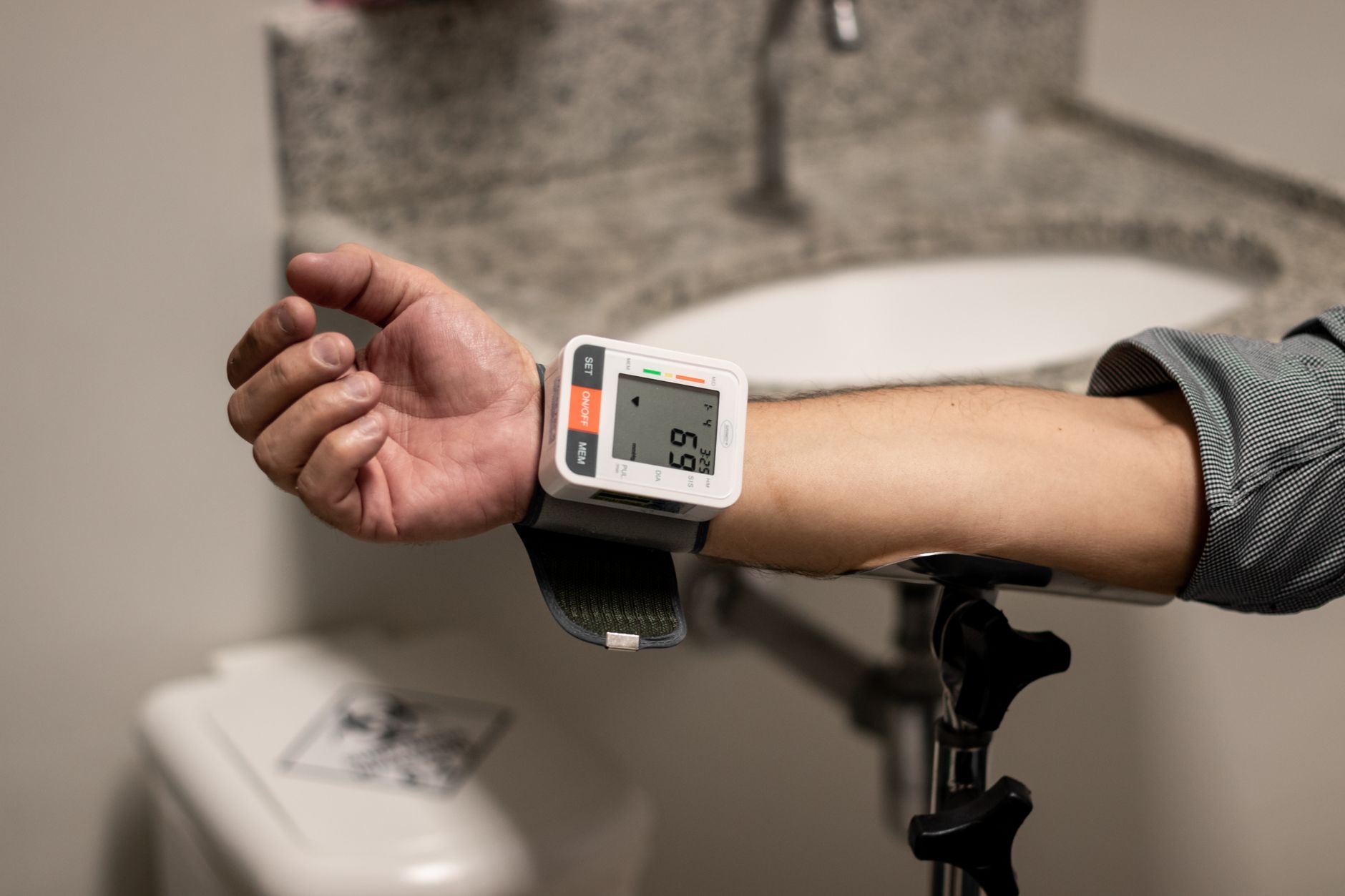

Your doctor checks two numbers when measuring your blood pressure – the top and the bottom. Most people know those numbers by heart and understand, at least roughly, what they mean. What almost no one is told is that a third number lives inside that reading, and it may say more about your brain’s future than either of the two numbers you’ve been watching.
That number is called pulse pressure, and it’s simply the gap between the two figures your cuff already captures. If your blood pressure reads 120/80, your pulse pressure is 40. A trivial subtraction – but the implications of that gap are anything but trivial. Researchers are now building a compelling case that an elevated pulse pressure is one of the clearest early signals of vascular aging, and that it shapes cognitive risk independently of blood pressure itself.
The reason this matters isn’t abstract. The 2025 ACC/AHA Guideline for the Prevention, Detection, Evaluation and Management of High Blood Pressure names blood pressure as the most prevalent and modifiable risk factor for the development of cardiovascular disease, as well as dementia due to damage to blood vessels in the brain. Pulse pressure sits at the center of that connection – and yet most patients leave their doctor’s appointments without ever hearing the term.
What Pulse Pressure Actually Measures
The bottom number in a blood pressure reading is called diastolic pressure – the pressure in the arteries between heartbeats. Subtract that from the top number, and you have the pulse pressure. For a healthy adult with a reading of 120/80 mm Hg, that figure comes out to 40 mm Hg, which is considered normal. Generally, a pulse pressure greater than 40 mm Hg is considered unhealthy.
Checking your pulse pressure may help your care team predict your risk of heart and blood vessel events, such as heart attacks and strokes. That’s because pulse pressure isn’t just a derived statistic. Findings from recent studies tracking patterns of arterial stiffness over time align with growing evidence that uncontrolled hypertension contributes to the development of dementia by accelerating the aging and stiffening of blood vessels.
Put differently, pulse pressure gives you a read on the condition of your arteries that neither the systolic nor diastolic number alone can provide. Stiffness of the body’s largest arteries is the leading cause of increased pulse pressure in older adults. High blood pressure and a buildup of fats, cholesterol, and other substances in and on artery walls can make the arteries stiff. The greater the pulse pressure, the stiffer and more damaged the blood vessels are thought to be.
Why the Number Climbs With Age
Aging does something specific and measurable to blood pressure that most standard health education skips over. Measures of blood vessel health derived from routine blood pressure readings may help identify adults at increased risk for dementia, largely because of what happens to arteries over time. As the arterial walls lose elasticity, they stop absorbing the shock of each heartbeat the way they once did.
The result is a predictable pattern: the top number climbs while the bottom number drifts down, and the gap between them widens. Each heartbeat pushes pressure waves through increasingly rigid pipes – and those waves travel farther and harder than they should. A pulse pressure greater than 60 mm Hg is a risk factor for heart disease, especially for older adults.
The cardiovascular math is stark. Research presented at ACC.26 found that each unit increase in a pulse pressure-heart rate index before age 65 was associated with a 76% higher risk of developing probable dementia or mild cognitive impairment. And at the simpler level of the pulse pressure figure itself, a 10 mm Hg increase in pulse pressure – the difference between a reading of 50 and one of 60 – increases cardiovascular risk by approximately 20%, according to data from the National Institutes of Health.
The Brain Connection
When arteries stiffen, the pressure waves generated by each heartbeat aren’t dampened the way they normally would be. Instead, they penetrate deeper into the body’s smallest vessels, including those feeding the brain. Arterial stiffness is associated with cognitive decline and dementia, with research using carotid artery models characterizing the specific mechanisms through which stiffened vessel walls affect brain tissue.
A 2025 study published in the journal Hypertension found that high pulse pressure disrupts the microstructural integrity of white matter in the brain, slowing processing speed. White matter is the brain’s internal wiring – the network of fiber bundles that connects different regions and allows them to communicate. When that integrity erodes, thinking slows. The study found that this disruption accounted for 72% of the effect on processing speed, even after adjusting for age and other cardiovascular factors.
A separate analysis of data from the SPRINT trial, published in the Journal of the American College of Cardiology, found that elevated cumulative pulse pressure was independently associated with accelerated cognitive decline and dementia risk – an effect that persisted after accounting for standard blood pressure readings.
A 2026 study published in Neurology found that having a higher number of genetic variants associated with elevated pulse pressure was linked to an increased risk of dementia-related death. This doesn’t mean genetic fate is sealed – it means that the biological mechanisms driving high pulse pressure are real enough to leave a detectable signature even in genetic data.
A 2026 study in Frontiers in Aging Neuroscience added another layer, finding that white matter hyperintensities – small bright spots on brain MRI scans that indicate accumulated damage to the brain’s small blood vessels – mediate the relationship between pulse pressure and cognitive decline across the adult lifespan, independent of age itself.
Who Is Most at Risk
“Blood pressure management isn’t just about preventing heart attacks and strokes; it may also be one of the most actionable strategies for preserving cognitive health,” said Newton Nyirenda, MD, epidemiologist at Georgetown University and lead author of two ACC.26 studies on the topic. “We need to start thinking about hypertension management much earlier than we typically have in order to address this in younger adults before damage starts to accumulate.”
The people at greatest risk of an elevated pulse pressure are those over 60, though the process of arterial stiffening begins decades earlier. Nearly half of U.S. adults have high blood pressure, which is often called the “silent killer” because many people don’t know they have it. Since pulse pressure is derived from the same two numbers already being measured, anyone getting their blood pressure checked regularly can calculate it immediately.
There’s also a cumulative dimension to the risk. A 2026 study found that higher cumulative systolic blood pressure was associated with a 21% increased risk of incident dementia – not just a snapshot of blood pressure at one point in time, but the total load carried over years. Pulse pressure that sits elevated for a decade does more damage than a briefly elevated reading that normalizes. This makes early intervention, not just late-life management, the practical goal.
What You Can Do About It
Pulse pressure isn’t a fixed number. Because arterial stiffness is its primary driver, the same lifestyle factors that slow the stiffening of blood vessels directly work to keep pulse pressure in a healthy range.
Aerobic exercise is the most consistently supported intervention. Moderate or vigorous physical activity reduces the risk of arterial stiffness, while a sedentary lifestyle increases it – one ten-year study found that 150 minutes of moderate to vigorous physical activity each week was associated with less arterial stiffness. The mechanism involves a process called nitric oxide upregulation: repeated physical exertion prompts the arterial walls to remodel themselves and maintain elasticity. One exercise intervention increased aerobic capacity and decreased pulse wave velocity – a direct measure of arterial stiffness – without requiring participants to lose body weight.
Diet plays a reinforcing role. Research that looked at dietary patterns across ethnicities and races in U.S. adults found that not eating enough green leafy vegetables is an independent predictor of high arterial pulse pressure. A randomized controlled trial published in the journal Hypertension followed nearly 1,300 adults aged 65 to 79 with high blood pressure, and after a year, those following a Mediterranean diet significantly reduced both their blood pressure and arterial stiffness.
Sodium reduction is a direct and reliable lever. High sodium intake raises systolic blood pressure and forces arteries to accommodate greater pressure with each heartbeat – which, over time, promotes stiffening. The American Heart Association recommends keeping sodium below 2,300 mg per day, with an ideal target of 1,500 mg for most adults, particularly those with high blood pressure – one of the most direct dietary moves for managing the pressure load on arterial walls.
Read More: Major Study Links 99% of Heart Attacks and Strokes With 4 Risk Factors
What This Means for You
Most blood pressure conversations stop at two numbers. Pulse pressure is the third number hiding in plain sight, and the evidence in 2026 makes a strong case for paying attention to it. If your systolic reading has been creeping up while your diastolic has drifted lower – even if both numbers look acceptable on their own – your pulse pressure may have quietly crossed into elevated territory.
The practical step is straightforward: next time you have your blood pressure measured, subtract the bottom number from the top. If the result is consistently above 40, ask your doctor whether arterial stiffness should be part of your cardiovascular conversation. If it’s above 60, that conversation becomes more pressing. The ACC.26 research presented in 2026 reinforces what Nyirenda called “one of the most actionable strategies for preserving cognitive health” – and it starts with numbers you already have access to every time your blood pressure is taken.
Disclaimer: This information is not intended to be a substitute for professional medical advice, diagnosis, or treatment and is for information only. Always seek the advice of your physician or another qualified health provider with any questions about your medical condition and/or current medication. Do not disregard professional medical advice or delay seeking advice or treatment because of something you have read here.
AI Disclaimer: This article was created with the assistance of AI tools and reviewed by a human editor.